Many gardeners ask what plants attract dragonflies, but the real answer is bigger than one flower. Dragonflies are not visiting your garden for nectar. They are fast aerial predators that hunt mosquitoes, flies, gnats, midges, and other small insects.
To bring them in, you need to build a small habitat. That usually means water, pond plants, shoreline cover, sunny perches, and a pesticide-free garden that supports the insects dragonflies eat. The right plants help dragonflies rest, hunt, breed, emerge from the water, and return year after year.
Best Pond and Garden Picks at a Glance
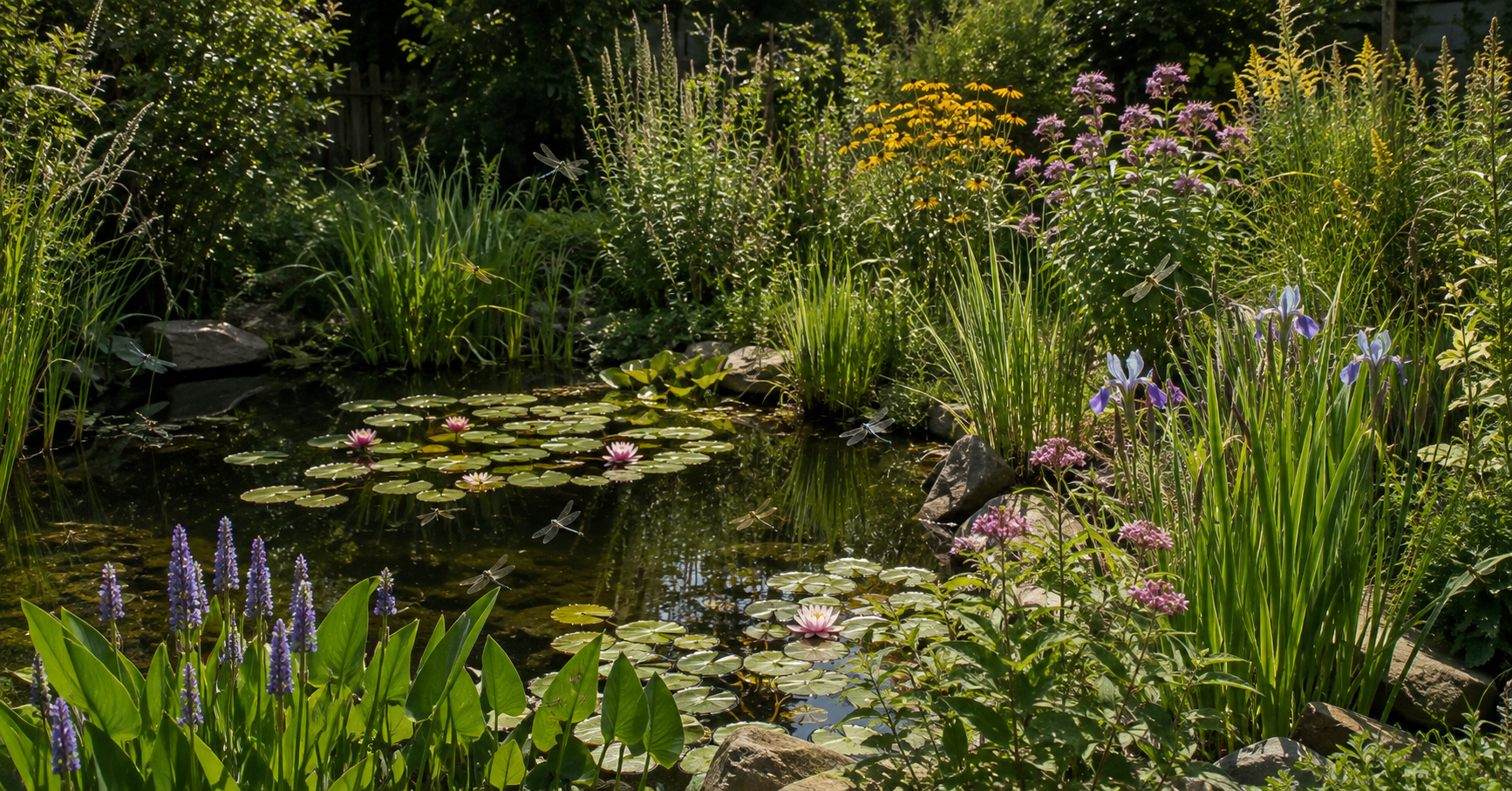
The best answer to what plants attract dragonflies is a mix of pond and garden plants. Use submerged plants such as hornwort, floating plants such as water lilies, emergent plants such as pickerelweed, rushes, sedges, arrowhead, and iris, plus pond-edge plants such as swamp milkweed, cardinal flower, Joe-Pye weed, native grasses, bee balm, black-eyed Susan, goldenrod, asters, and yarrow. Flowers do not feed dragonflies directly, but they support the small insects dragonflies hunt.
Key Takeaways
- What plants attract dragonflies depends on habitat, not just flower colour.
- Dragonflies need water because their young live underwater as nymphs.
- Submerged, floating, and emergent pond plants all help create a better dragonfly habitat.
- Rushes, sedges, iris, pickerelweed, and arrowhead give nymphs places to climb out of the water.
- Native flowers near the pond support small insects that adult dragonflies hunt.
- Sunny rocks, logs, tall stems, and grasses act as perches.
- Use this guide with wildlife-friendly garden design, pollinator-friendly plants, and how to keep pests away from outdoor plants.

Dragonfly Habitat Plants at a Glance
| Plant Type | Examples | How It Helps Dragonflies |
|---|---|---|
| Submerged plants | Hornwort, native pondweed, water starwort | Gives aquatic life cover and supports pond balance |
| Floating plants | Water lily, frogbit where native or permitted | Provides shade, cover, and resting surfaces |
| Emergent plants | Pickerelweed, rushes, sedges, arrowhead, iris | Gives nymphs stems to climb when emerging as adults |
| Marginal plants | Swamp milkweed, cardinal flower, Joe-Pye weed | Creates pond-edge shelter and hunting areas |
| Sunny garden flowers | Bee balm, black-eyed Susan, goldenrod, asters, yarrow | Supports small flying insects that dragonflies eat |
| Perching plants | Native grasses, rushes, sedges, tall stems | Gives adults places to rest, bask, and watch for prey |
What Dragonflies Actually Need
Dragonflies are beautiful, but they are not garden ornaments. They are predators with a water-based life cycle. Adults fly above ponds, meadows, paths, patios, and borders, but their young develop in water.
They need water
Dragonflies lay eggs in or near water. Their young, called nymphs, live underwater before they climb out and transform into adults. A pond, wildlife pool, marshy edge, or large container pond gives them a reason to stay nearby.
They need places to emerge
When nymphs are ready to become adults, they need upright stems, rushes, reeds, iris leaves, sedges, or other surfaces to climb. This is why emergent plants are more important than random flowers.
They need hunting space
Adult dragonflies need open, sunny flight paths. If your pond surface is completely covered with plants, adults may have fewer clear hunting lanes.
They need insects to eat
Dragonflies hunt insects, so a sterile garden with routine insect sprays will not support them well. Native flowers help because they bring in small insects that become part of the food web.
19 Best Plants That Attract Dragonflies
The best plants that attract dragonflies fit into a habitat plan. Choose local native species whenever possible, especially near ponds, streams, wetlands, and drainage areas. Aquatic plants can become invasive if the wrong species escape into natural waterways.
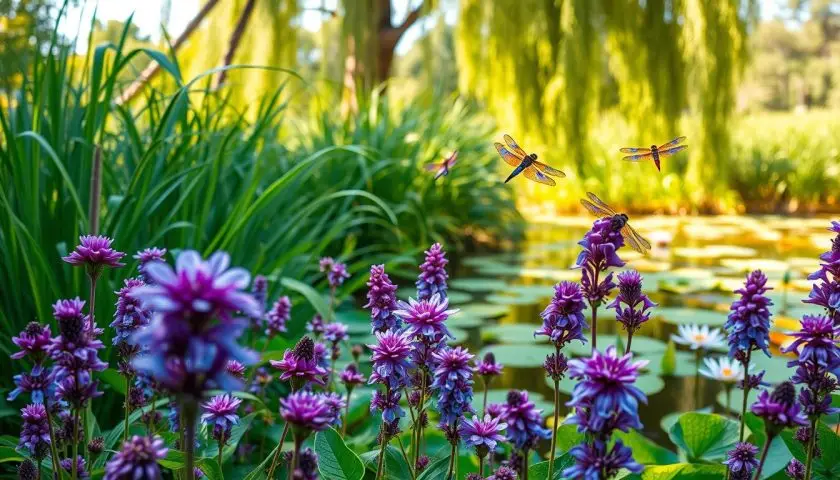
1. Hornwort
Hornwort is a submerged oxygenating plant that can help create a better pond environment. It gives small aquatic creatures cover and adds underwater structure where nymphs can hide and hunt.
- Best use: Submerged plant for ponds and mini ponds.
- Good for: Aquatic cover and pond balance.
- Watch out for: Local restrictions and overgrowth in small ponds.
2. Water Starwort or Native Pondweed
Native submerged plants give pond life shelter below the surface. The exact best plant depends on your region, so ask a local nursery, extension office, or native plant group before buying.
- Best use: Underwater plant diversity.
- Good for: Nymph shelter and aquatic habitat.
- Watch out for: Non-native pondweeds sold without clear labels.
3. Water Lily
Water lilies give floating leaves, shade, and surface cover. They can make a pond look finished while still leaving open water for dragonfly movement.
- Best use: Medium to larger ponds.
- Good for: Surface shade and resting areas.
- Watch out for: Covering too much of the water surface.
4. Frogbit
Frogbit can work in small wildlife ponds where it is native or legally sold. It floats on the surface and can help attract small pond life, but always check local invasive plant rules first.
- Best use: Small ponds and container ponds where appropriate.
- Good for: Floating cover and wildlife value.
- Watch out for: Invasive risk outside its native range.
5. Pickerelweed
Pickerelweed is one of the strongest pond-edge plants for dragonfly habitat. It grows from shallow water, has upright stems, and adds purple-blue flowers that support other insects.
- Best use: Shallow pond margins.
- Good for: Emergent stems, colour, and insect activity.
- Watch out for: Spreading in small ponds without containers.
6. Arrowhead or Duck Potato
Arrowhead, also called duck potato in some regions, grows in wet pond edges and shallow water. Its upright leaves create useful structure for wildlife around the waterline.
- Best use: Margins and shallow pond shelves.
- Good for: Vertical growth and pond-edge cover.
- Watch out for: Regional species differences.
7. Blue Flag Iris
Blue flag iris is a strong pond-edge plant for damp soil and shallow margins. Its upright leaves and flower stems give dragonflies structure for perching and emergence.
- Best use: Moist pond edges and rain garden areas.
- Good for: Upright leaves, flowers, and shoreline texture.
- Watch out for: Choosing the right native iris for your region.
8. Soft Rush
Soft rush gives thin, upright stems that look simple but are useful around ponds. Dragonflies often need vertical perches, and rushes create that structure without taking over the whole view.
- Best use: Wet margins and pond shelves.
- Good for: Perching stems and habitat structure.
- Watch out for: Drying out in ordinary garden soil.
9. Native Sedges
Sedges are excellent for natural pond edges. They hold soil, soften margins, give cover to small wildlife, and provide upright leaves for resting insects.
- Best use: Damp edges, rain gardens, and pond borders.
- Good for: Shelter, texture, and wildlife cover.
- Watch out for: Matching the sedge species to moisture level.
10. Cattail
Cattails can support wildlife and give strong upright growth, but they are too aggressive for many small backyard ponds. Use them only in larger spaces or in controlled baskets where they are appropriate.
- Best use: Large ponds and natural wetland edges.
- Good for: Tall structure and wildlife cover.
- Watch out for: Rapid spreading and pond crowding.
11. Swamp Milkweed
Swamp milkweed grows in moist soil and attracts many insects. It does not feed dragonflies directly, but it helps support the insect activity dragonflies hunt around pond edges.
- Best use: Damp borders and pond-edge planting.
- Good for: Pollinators, structure, and moist garden colour.
- Watch out for: Letting soil dry hard while establishing.
12. Cardinal Flower
Cardinal flower brings bold red blooms to moist soil and pond edges. It supports pollinators and adds vertical growth that helps a dragonfly garden feel alive.
- Best use: Damp borders, rain gardens, and pond edges.
- Good for: Colour, pollinator activity, and upright stems.
- Watch out for: Dry, hot soil.
13. Joe-Pye Weed
Joe-Pye weed is a tall native perennial for moist sunny spaces. It attracts many small insects and gives adult dragonflies nearby hunting and resting structure.
- Best use: Back of a pond border or moist meadow edge.
- Good for: Height, late-season flowers, and insect activity.
- Watch out for: Mature size in small gardens.
14. Bee Balm
Bee balm is a strong native flower for sunny borders. Its blooms attract pollinators and other insects, which helps create the active food web dragonflies need.
- Best use: Sunny garden near a pond or water feature.
- Good for: Pollinators and summer colour.
- Watch out for: Powdery mildew in crowded or dry conditions.
15. Black-Eyed Susan
Black-eyed Susan is easy, bright, and useful in wildlife gardens. It supports garden insects and works well near pond edges that are not constantly wet.
- Best use: Sunny borders and wildlife planting.
- Good for: Low-maintenance flowers and insect activity.
- Watch out for: Overcrowding in rich soil.
16. Goldenrod
Goldenrod supports many late-season insects. This matters because dragonflies hunt into late summer and autumn in many regions, depending on species and weather.
- Best use: Sunny wildlife borders and meadow-style gardens.
- Good for: Late-season insect food web support.
- Watch out for: Choosing garden-friendly native species or cultivars.
17. Native Asters
Native asters flower late and keep garden insect activity going when many summer plants fade. They pair well with goldenrod, grasses, and black-eyed Susan.
- Best use: Late-season sunny borders near ponds.
- Good for: Pollinators and small flying insects.
- Watch out for: Tall forms flopping without support.
18. Yarrow
Yarrow is a tough sunny plant that supports small insects and handles drier garden soil better than many pond-edge plants. Use it in the dry garden zone near the water, not in soggy margins.
- Best use: Sunny dry-to-average borders.
- Good for: Small insects and low-maintenance planting.
- Watch out for: Wet heavy soil.
19. Native Grasses
Native grasses such as switchgrass, little bluestem, or regionally suitable wetland grasses can give dragonflies perches, shelter, and wind protection. They also make a pond garden look more natural.
- Best use: Pond margins, meadow edges, and dry-to-moist borders.
- Good for: Perches, shelter, overwintering stems, and movement.
- Watch out for: Choosing grasses that fit your soil moisture.
Best Plants by Dragonfly Garden Zone
| Garden Zone | Best Plants | Main Purpose |
|---|---|---|
| Open water | Hornwort, native pondweed, water starwort | Underwater cover and habitat |
| Floating surface | Water lily, frogbit where suitable | Surface cover and shade |
| Shallow shelf | Pickerelweed, arrowhead, iris, rushes | Emergence stems and pond-edge structure |
| Damp shoreline | Sedges, swamp milkweed, cardinal flower, Joe-Pye weed | Shelter, flowers, and insect activity |
| Sunny nearby border | Bee balm, black-eyed Susan, goldenrod, asters, yarrow | Supports prey insects and adult hunting routes |
| Dry perch zone | Native grasses, logs, rocks, tall stems | Resting, basking, and hunting perches |
How Dragonfly-Friendly Plants Create a Better Habitat
Dragonfly-friendly plants work because they support different life stages. A plant that helps nymphs underwater is different from a plant that helps adults hunt above the pond.
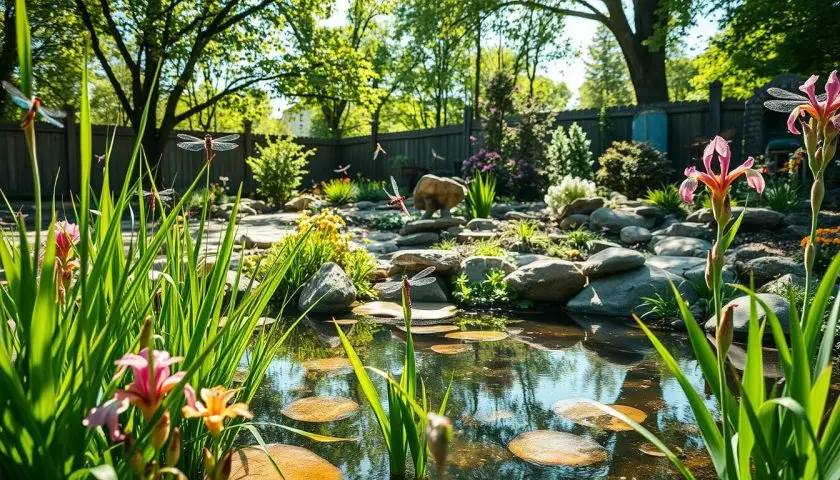
Submerged plants support pond life
Submerged plants create underwater habitat. They also support a more balanced pond ecosystem, which helps aquatic insects and other small life survive.
Emergent plants support transformation
Emergent plants grow from the water and rise above the surface. They are especially useful because nymphs need to climb out of the water before becoming adults.
Shoreline plants create shelter
Pond margins should not be bare and steep. Plants around the edge create shelter, resting places, and hunting routes for adults.
Flowering plants support prey
Dragonflies do not need nectar, but they do need insects. Native flowers bring more flies, midges, bees, small moths, and other insects into the garden, which supports dragonfly hunting.
How to Design a Pond That Dragonflies Can Use
A dragonfly pond should feel natural, not over-cleaned. It needs water, plant diversity, shallow edges, vertical stems, open areas, and nearby shelter.
Keep some open water
Do not let floating plants cover the whole pond. Dragonflies need open water for patrol routes, hunting, and egg-laying behaviour.
Create shallow edges
Steep pond walls are less useful for wildlife. A gentle edge, shallow shelf, or planted container shelf gives plants a place to grow and animals an easier transition zone.
Use different plant heights
Combine low floating plants, medium emergent plants, tall shoreline flowers, and grasses. Different heights create more resting and hunting options.
Add dry perches
Place a few sunny rocks, logs, bamboo stakes, dead stems, or low branches near the pond. Dragonflies often perch to warm up and watch for prey.
Keep one sunny side open
Dragonflies enjoy sunny spaces. Avoid boxing the entire pond in with dense shrubs. Leave open flight paths where adults can patrol.
Small Yard and Container Pond Options
You do not need a large lake to start a dragonfly-friendly garden. A small wildlife pond, half-barrel pond, large watertight planter, or sunken tub can support small pond life if it has plants and clean water.
Best plants for small container ponds
- One submerged oxygenating plant such as hornwort or a suitable native oxygenator.
- One small emergent plant such as a rush, water mint, or regionally suitable shallow-water plant.
- A small floating plant only where it is native or legal.
- A pond-edge pot of swamp milkweed, cardinal flower, sedge, or native grass nearby.
Container pond tips
- Use a watertight container with enough depth to reduce overheating.
- Place it where it gets sun but does not cook all day in extreme heat.
- Add a ramp, stones, or shallow shelf so wildlife can escape.
- Do not add fish to a tiny wildlife pond.
- Top up water gently during dry spells.
For small-space gardening ideas, read container gardening on patios, container garden plants for shade, and small plants that like shade.
Plants That Help Dragonflies Without a Pond
A garden without water can still attract passing dragonflies if there is a pond, wetland, stream, or lake nearby. In that case, your job is to offer hunting space, insects, and perches.
Best no-pond garden plants
- Bee balm.
- Black-eyed Susan.
- Goldenrod.
- Native asters.
- Yarrow.
- Joe-Pye weed.
- Native grasses.
- Swamp milkweed where soil is moist.
No-pond garden tips
- Keep a sunny open area where dragonflies can fly.
- Add tall stems, grasses, and simple perches.
- Avoid insecticides that reduce prey insects.
- Add a small container pond if possible.
- Plant native flowers in groups instead of single scattered plants.
For more wildlife planting, read native plants that thrive in your region, pollinator-friendly plants, and wildlife-friendly garden design.
What to Avoid in a Dragonfly Garden
Some common garden habits make a yard less useful for dragonflies. A little wildness helps, especially around water.
Avoid broad-spectrum insecticides
Dragonflies eat insects. If you spray the garden routinely, you reduce their food supply and may harm beneficial insects directly.
Avoid routine mosquito fogging
Mosquito sprays can affect more than mosquitoes. A better approach is to remove stagnant containers, keep water features balanced, and support natural predators.
Avoid invasive pond plants
Never release aquarium plants or unknown water plants into outdoor water. Some aquatic plants spread aggressively and damage natural habitats.
Avoid over-cleaning the pond
A pond that is stripped bare loses shelter. Remove excess growth, but keep some stems, submerged plants, and edge cover.
Avoid steep bare edges
Bare plastic sides or steep edges are less useful for wildlife. Add shelves, stones, planted margins, and escape routes.
For pest-safe garden planning, read plants that keep bugs away, mosquito repellent plants, and how to keep pests away from outdoor plants.
Planting and Maintenance Tips
Once you choose plants for dragonfly habitat, the next step is keeping them healthy without making the garden too tidy.
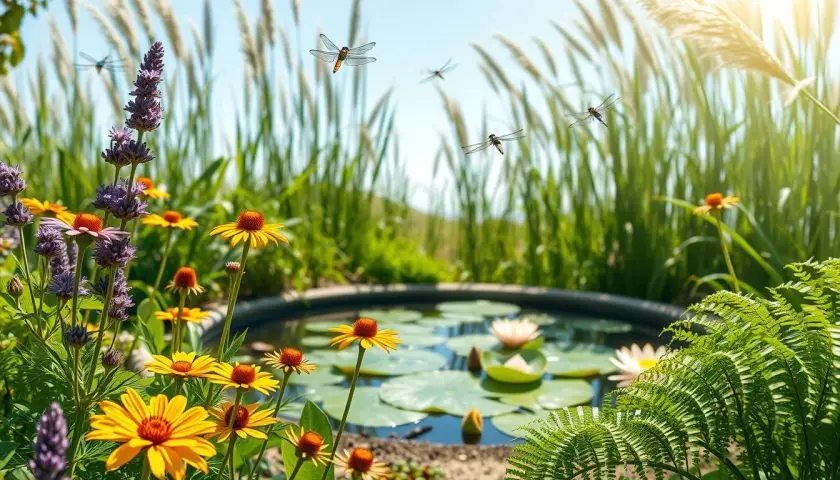
Plant pond species in baskets
Use aquatic baskets for vigorous plants such as pickerelweed, iris, rushes, and cattails. This makes maintenance easier and reduces spreading.
Leave some stems standing
Do not cut every stem to the ground in autumn. Some standing stems provide perches, shelter, and winter structure.
Thin plants gradually
If plants cover too much of the water, thin them in stages. Place removed plant material beside the pond for a short time so small creatures can crawl back.
Top up water carefully
During dry spells, top up small ponds gently. Avoid washing fertilizer, soil, or chemicals into the water.
Use local native plants
A plant that is helpful in one region may be invasive in another. For pond edges, native regional plants are usually the safest choice.
For seasonal care, read garden calendar, seasonal plant care in autumn, and how to keep outdoor plants alive.
Common Problems in Dragonfly Gardens
| Problem | Likely Cause | First Fix |
|---|---|---|
| No dragonflies visiting | No water, no perches, too much shade, or low insect activity | Add water, sunny perches, and native flowers |
| Pond plants taking over | Aggressive aquatic plants or too much nutrient runoff | Use baskets and thin gradually |
| Green water or algae | Too many nutrients, too much sun, or new pond imbalance | Reduce runoff and add balanced plant cover |
| Mosquitoes but no dragonflies | New pond, poor habitat balance, or no nearby dragonfly population | Improve plants and remove stagnant unplanted water |
| Plants yellowing | Wrong depth, poor soil match, nutrient stress, or drought | Check plant type and planting depth |
| Wildlife cannot exit pond | Steep sides or slippery container walls | Add stones, ramps, and planted shelves |
If you have plants but no dragonflies
Check the bigger habitat. Dragonflies need water, sun, prey insects, and safe emergence stems. If you only added flowers far from water, you may attract pollinators but not resident dragonflies.
If mosquitoes increase
New ponds can take time to balance. Remove stagnant buckets, trays, and clogged gutters. Keep the pond planted and avoid leaving shallow, unplanted water sitting around the garden.
If pond plants spread too much
Thin plants before they cover the whole pond. Keep some open water and use containers for vigorous species.
For more problem-solving, read yellow leaves on plants, leaf curl, browning and droop, and root rot guide.
Dragonfly Garden Checklist
| Task | Best Choice | Avoid |
|---|---|---|
| Water source | Wildlife pond, mini pond, or container pond | Unplanted stagnant water |
| Pond plants | Submerged, floating, emergent, and marginal plants | One plant type only |
| Plant origin | Native regional species | Unknown invasive aquatic plants |
| Perches | Rushes, sedges, grasses, rocks, logs, tall stems | Bare pond edges |
| Flowers | Native flowers that support small insects | Sprayed ornamental beds |
| Maintenance | Thin gradually and leave some cover | Total cleanouts every season |
| Pest control | Habitat balance and targeted fixes | Routine broad insecticide spraying |
Common Mistakes When Planting for Dragonflies
| Mistake | What Happens | Better Choice |
|---|---|---|
| Planting flowers only | Adults may pass through but not stay | Add water and pond-edge plants |
| Skipping emergent plants | Nymphs lack easy climbing stems | Use rushes, sedges, iris, arrowhead, or pickerelweed |
| Covering all open water | Less patrol and landing space | Keep open water visible |
| Using invasive pond plants | Plants can escape and harm waterways | Choose native or locally approved pond plants |
| Adding fish to a tiny pond | Fish may eat aquatic larvae and disturb balance | Keep small wildlife ponds fish-free |
| Spraying for mosquitoes | Food web and beneficial insects decline | Reduce standing water and build habitat balance |
| Cleaning too aggressively | Shelter and overwintering habitat disappear | Maintain lightly and in stages |
Helpful PATCH Guides for Dragonfly-Friendly Gardens
Use these related PATCH guides to build a healthier outdoor habitat, choose native plants, manage pests carefully, and create a garden that supports more wildlife.
Wildlife, Pollinator and Pest Guides
- Wildlife-friendly garden design
- Pollinator-friendly plants for urban spaces
- Native plants that thrive in your region
- How to keep pests away from outdoor plants
- Plants that keep bugs away
- Mosquito repellent plants
- Mosquito repellent plants for patio
- Shade plants that repel mosquitoes
- Herbs that keep mosquitoes away
- Plants that keep mosquitoes away
Outdoor Plant and Garden Planning Guides
- Outdoor Plants hub
- Garden calendar
- Seasonal plant care in autumn
- How to keep outdoor plants alive
- Low-maintenance outdoor plants
- Hardy outdoor plants
- Outdoor plants for British winters
- Outdoor plants for coastal and windy spaces
- Top drought-resistant plants
- Outdoor plants for storms and heatwaves
- Create a colorful garden for all seasons
- Color themes for your outdoor garden
- Plants that bloom at night
Container, Shade and Small-Space Guides
- Container gardening on patios
- Container garden plants for shade
- Shade garden pots
- Plants in pots in shade
- Small plants that like shade
- Shade-loving plants for outdoor spaces
- Hardy plants that survive minimal watering
Watering, Soil and Plant Problem Guides
- Plant Care hub
- Complete watering guide
- Worst times to water plants
- Signs you are overwatering
- Best soil mix guide
- Yellow leaves on plants
- Why plant leaves turn yellow
- Leaf curl, browning and droop
- Root rot guide
- How to revive a dying plant
- Pruning basics
Edible and Flower Garden Guides
- Edible flowers to grow outdoors
- Easy outdoor edible plants
- Purple Basil plant
- Patio tomato plants
- How to plant tomatoes in a pot
- Japanese cucumber plant
- Planting potatoes in containers
- Growing potato plants in pots
Frequently Asked Questions
What plants attract dragonflies to a garden?
The best plants to attract dragonflies include hornwort, native pondweed, water lilies, pickerelweed, arrowhead, blue flag iris, rushes, sedges, cattails in large ponds, swamp milkweed, cardinal flower, Joe-Pye weed, bee balm, black-eyed Susan, goldenrod, native asters, yarrow, and native grasses.
Do dragonflies eat nectar from flowers?
No. Dragonflies are predators and do not visit flowers for nectar like bees or butterflies. Flowers help indirectly by attracting small insects that dragonflies hunt.
Can I attract dragonflies without a pond?
You can attract passing adult dragonflies with sunny perches, native flowers, and an insect-rich garden, especially if water is nearby. For a stronger habitat, add a pond, mini pond, or container water feature.
What pond plants are best for dragonflies?
The best pond plants for dragonflies include submerged plants, floating plants, and emergent plants. Good choices include hornwort, native pondweed, water lilies, pickerelweed, arrowhead, iris, rushes, and sedges.
Are water lilies good for dragonflies?
Yes, water lilies can be useful because they provide floating leaves and surface cover. Keep some open water too, because dragonflies need clear space for flying and patrolling.
What flowers attract dragonflies?
Flowers such as bee balm, black-eyed Susan, goldenrod, asters, swamp milkweed, yarrow, cardinal flower, and Joe-Pye weed help dragonflies indirectly by supporting prey insects.
Do dragonflies help with mosquitoes?
Dragonflies eat mosquitoes and other small flying insects, but they are not a complete mosquito-control plan by themselves. Reduce stagnant water, avoid routine sprays, and build a balanced habitat.
Should I add fish to a dragonfly pond?
Fish are not ideal in small wildlife ponds because they may eat aquatic larvae and disturb the balance. A small dragonfly-focused pond is usually better without fish.
Are native plants better for dragonflies?
Yes. Native plants are usually better because they support local insects, fit the local climate, and reduce the risk of invasive pond plants spreading into natural waterways.
What should I avoid when attracting dragonflies?
Avoid broad insecticides, mosquito fogging, invasive aquatic plants, steep bare pond edges, over-cleaning, and removing every stem or perch around the pond.
Final Thoughts
What plants attract dragonflies is really a habitat question. The strongest garden combines water, submerged plants, emergent stems, pond-edge flowers, native grasses, open flight space, and pesticide-free care. Flowers alone may bring more insects, but pond plants and shoreline structure are what make the space useful for the dragonfly life cycle.
University of Maryland Extension explains that dragonflies begin life in water, nymphs can live underwater for up to two years, adults hunt flying insects including mosquitoes, and suitable pond vegetation plus grasses and bushes around the pond margin can help support dragonfly populations: University of Maryland Extension dragonfly guide.
For the best results, start small. Add a mini pond or improve an existing pond edge, then plant native aquatic and shoreline plants. Keep some open water, leave a few stems standing, and avoid broad sprays. Dragonflies notice gardens that feel alive.
Final Recap
The best plants that attract dragonflies are the ones that build a complete pond and garden habitat. Use submerged plants such as hornwort and native pondweed for underwater cover. Add floating plants such as water lilies while keeping open water. Plant emergent species such as pickerelweed, arrowhead, blue flag iris, rushes, sedges, and cattails where suitable so nymphs have stems to climb. Around the pond, grow swamp milkweed, cardinal flower, Joe-Pye weed, native grasses, bee balm, black-eyed Susan, goldenrod, asters, and yarrow to support prey insects, shelter, and perches. Choose native plants where possible, avoid invasive aquatic species, skip broad insecticides, and maintain the pond lightly rather than stripping it bare. With water, plants, perches, and a healthy insect food web, your garden becomes much more attractive to dragonflies.