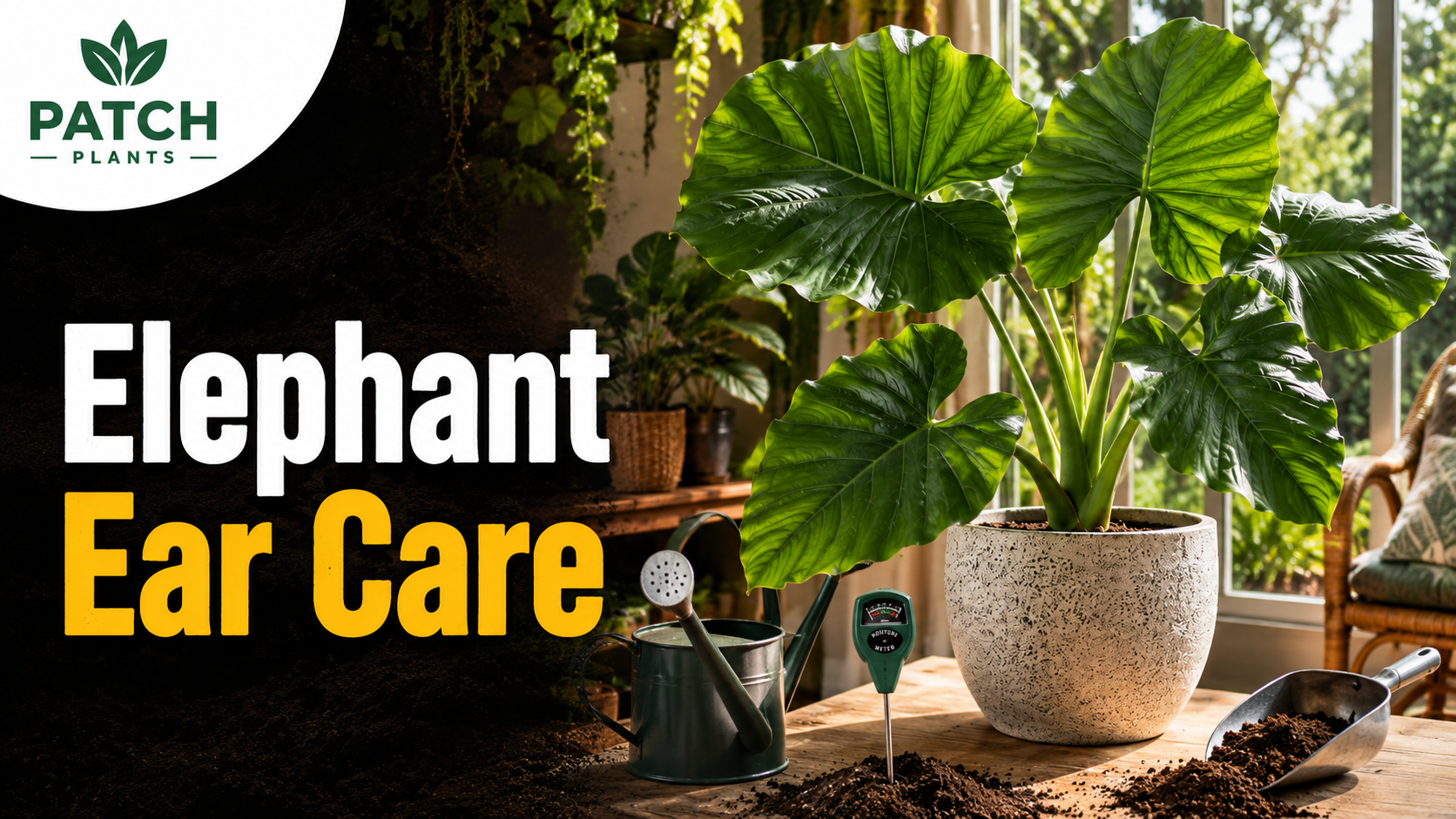
Elephant ear care comes down to warmth, rich moist soil, plenty of water and feed while the plant is growing, and protection from cold. Outdoors, plant after the last frost in a sheltered spot with fertile soil. Indoors, give bright indirect light and keep the compost just moist. In cold climates, bring pots inside or lift and store the tubers before frost.
I am Sawera Shahid, a botanist at Patch Plants. Elephant ears are grown for huge leaves, so they ask for more of everything than most plants: water, food, warmth and space. This guide covers the types, light, watering, soil, feeding, pruning, pests, repotting, dividing and winter care.
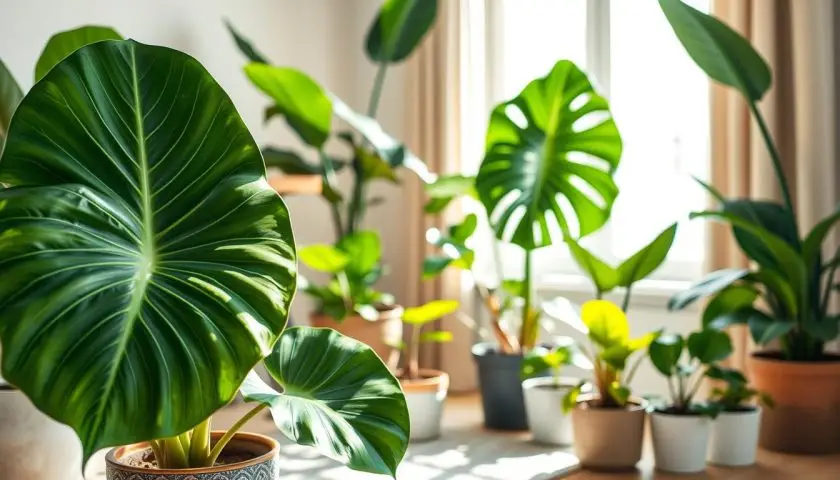
Know Your Elephant Ear: Colocasia, Alocasia or Xanthosoma
Wisconsin Horticulture names three main groups of ornamental elephant ears: Colocasia, Alocasia and Xanthosoma. They are all in the arum family and look alike, but there are useful differences. Colocasia leaves are peltate, meaning the stalk joins near the middle of the leaf’s underside, while Alocasia and Xanthosoma leaves are usually held more upright.
| Type | Typical Use | Care Note |
|---|---|---|
| Colocasia | Beds, large pots, pond edges | Wisconsin Horticulture says most elephant ears can even grow in a few inches of standing water |
| Alocasia | Houseplants, sheltered patios in summer | The RHS says to keep it in bright indirect light and avoid wet compost in winter |
| Xanthosoma | Warm gardens, large containers | Needs warmth, space and fertile, moist soil |
Size varies a lot. Wisconsin Horticulture says cultivars range from 8 inches to over 9 feet, with most between 3 and 5 feet, so check the label before choosing. For a full indoor guide, see elephant ear plant indoors, and for planting from bulbs, see planting elephant ear bulbs.
Elephant Ear Care at a Glance
| Care Area | Indoors | Outdoors |
|---|---|---|
| Light | Bright indirect light | Partial shade, or full sun for dark-leaved types if moist |
| Water | Water when the top 5cm (2in) of compost is dry in the growing season | Copious water, especially in pots |
| Soil | Peat-free houseplant compost with grit | Fertile, moist, organically rich |
| Temperature | Above 16°C (60°F) while growing | Plant after the last frost, growth falters below 50°F |
| Feeding | Liquid feed April to October | Heavy feeder in the growing season |
| Winter | Keep drier and above 10°C (50°F) | Lift, store or protect |
Elephant Ear Light Requirements
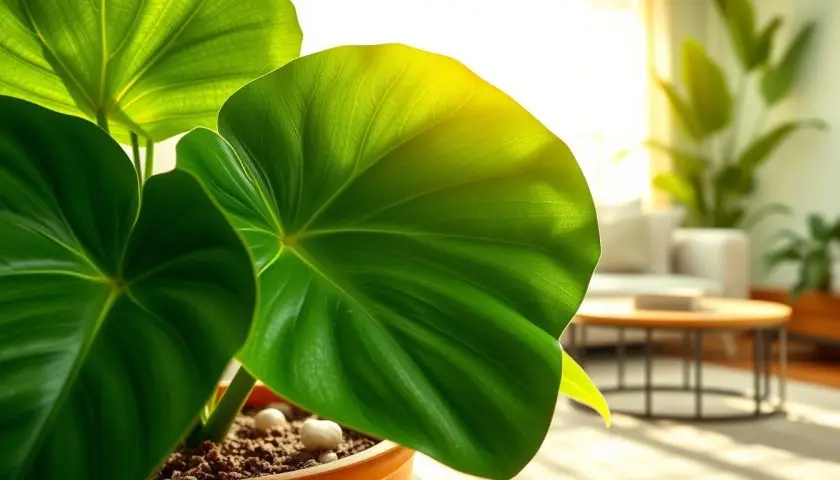
Many elephant ears tolerate partial shade, and Wisconsin Horticulture says darker-leaved varieties are best in full sun for the richest colour. UF/IFAS notes that most prefer full sun if they get plenty of water and fertiliser. In hot climates, morning sun with afternoon shade is a safe middle ground. Indoors, the RHS recommends bright but indirect light, warns that strong sun can scorch the leaves, and notes that low light slows growth.
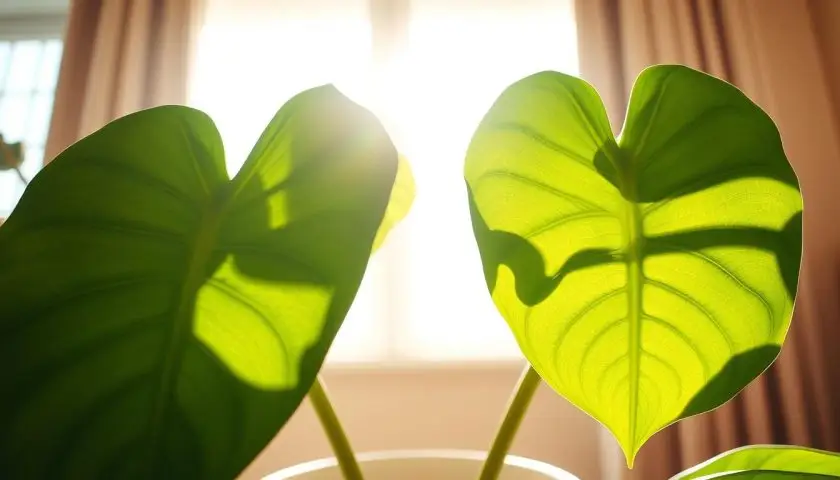
- Too little light: small new leaves, long weak stems, leaning and slow growth.
- Too much sun: brown crispy patches, bleached areas and wilting in afternoon heat.
See our indoor light guide and low light house plants if your room is dim.
Elephant Ear Watering Tips
Wisconsin Horticulture says elephant ears need copious water as they grow, especially in containers. Indoors, the RHS advises watering from April to October when the top 5cm (2in) of compost is dry, turning the pot at each watering, and cutting watering to a minimum in winter because overwatering while the plant rests can rot the roots.
- Outdoors: water deeply rather than lightly, mulch to hold moisture, and check pots daily in heatwaves.
- Indoors: water until it drains, then empty the saucer.
- Underwatered: large leaves droop dramatically and edges turn crisp.
- Overwatered: yellow leaves in wet compost, a soft base and a sour smell.
See our watering guide, worst times to water plants and signs you are overwatering.
Best Soil for Elephant Ear Plants
All elephant ears need fertile, moist soil, according to Wisconsin Horticulture, and Clemson Extension recommends well-drained, moist, organically rich soil. For pots, the RHS suggests a peat-free houseplant compost, or a peat-free multi-purpose compost mixed with horticultural grit at roughly three parts compost to one part grit.
- Clay soil: add compost and grit, or plant on a raised mound if it stays wet.
- Sandy soil: add compost and mulch to hold moisture.
- Pots: use a heavy pot with drainage holes, because tall plants tip over easily.
See our soil mix guide, how to repot a plant and the soil calculator.
Temperature and Humidity for Elephant Ear Care
Elephant ears like warm temperatures and high humidity. Wisconsin Horticulture says they falter when temperatures drop below 50°F for long periods, and that most are hardy only to zone 8a. The RHS advises keeping Alocasia above 16°C (60°F) in the growing season, away from cold draughts. Indoors, humidity can be raised with a gravel tray, grouping plants or a humidifier. Low humidity browns leaf edges and encourages red spider mite, according to the RHS. See humidity hacks and a DIY humidity tray.
Fertilizing in Elephant Ear Care
Wisconsin Horticulture calls elephant ears heavy feeders that need regular fertilising as they grow, particularly in containers. For indoor plants, the RHS suggests a general liquid fertiliser from April to October at the dose on the packet. Stop when growth slows. See fertilizing indoor vs outdoor plants.
Pruning in Elephant Ear Care
No real pruning is needed. The RHS says to remove fading or dead leaves at the base, wearing gloves, and to avoid cutting healthy foliage. Use clean, sharp shears. See pruning basics and how to clean plant leaves.
Elephant Ear Care Problems and Pests
| Problem | Likely Cause | First Fix |
|---|---|---|
| Brown leaf edges | Low humidity, underwatering, wind or sun | Check water and humidity |
| Yellow leaves | Overwatering, low light, cold | Check drainage, light and temperature |
| Drooping | Dry compost or rotten roots | Check moisture before watering |
| Fine webbing | Red spider mite (dry air) | Raise humidity, wipe leaves |
| Mushy base | Root or corm rot | Improve drainage, trim rot |
Check the undersides of leaves weekly, and isolate any plant with pests. Spider mites are the pest the RHS names for Alocasia, and sticky residue or cottony patches point to aphids or mealybugs. See yellow leaves on plants, leaf curl, browning and droop, our root rot guide and how to revive a dying plant.
Repotting and Dividing in Elephant Ear Care
The RHS advises repotting Alocasia every couple of years in spring if roots look overcrowded, moving up only about 5cm (2in) in pot size. The easiest propagation is to separate offsets in spring, or divide the rhizome in late spring or early summer and keep the pieces warm and well lit. Wisconsin Horticulture notes some elephant ears produce small offsets called cormels on the side of the main corm. See repotting mistakes to avoid and houseplant propagation.
Elephant Ear Winter Care
Elephant ear care in winter depends on your climate.
- Tuberous types: after frost kills the foliage, Wisconsin Horticulture says you can dig the plants, dry them and store them like cannas or dahlias. Clemson suggests storing the dried corm in an open container of dry peat moss at about 45 to 55°F and never letting it freeze.
- Houseplant overwintering: Wisconsin Horticulture suggests cutting back all but the top two leaves, keeping the plant at room temperature in bright light and the soil drier, then resuming normal watering and feeding when growth restarts in spring.
- Alocasia in winter: the RHS says keep it cooler and drier, but above 10°C (50°F), and expect some leaf loss.
See our autumn plant care guide, outdoor plants for British winters and garden calendar.
Are Elephant Ears Safe for Pets and Children?
No. The ASPCA lists elephant ears (Colocasia esculenta) as toxic to dogs and cats because of insoluble calcium oxalates, and Wisconsin Horticulture notes that all parts contain calcium oxalate crystals that irritate skin. Wear gloves when pruning or dividing, wash your hands afterwards and keep plants out of reach. UF/IFAS also warns that wild taro is invasive in Florida and should not be planted near waterways. See our cat-friendly and dog-friendly plant guides.
Frequently Asked Questions
What does elephant ear care involve?
Give them warmth, rich moist soil, regular water and feed while growing, bright indirect light indoors or partial shade outdoors, and protection from cold.
Can elephant ears grow indoors?
Yes, especially Alocasia. They need bright indirect light, warmth, humidity and a draining pot. See our guide to elephant ear plant indoors.
Do elephant ears need full sun?
Not always. Many tolerate partial shade, and darker-leaved types do best in full sun if the soil stays moist.
Why are my elephant ear leaves turning yellow?
Common causes are overwatering, too little light, cold or normal ageing of old leaves. Check the compost and temperature first.
How do I overwinter elephant ears?
Dig tubers after frost kills the foliage, dry them and store them cool and frost-free, or bring pots indoors to a bright spot and water less.
Final Thoughts
Good elephant ear care is about matching the plant to the place. As a botanist, my advice is to find out which type you have, give it warmth and steady moisture while it grows, feed it generously and plan ahead for winter. Do that and the leaves will reward you quickly. For more ideas, explore Patch Plants and our outdoor plants and indoor plants sections.
Sources: Wisconsin Horticulture, Elephant ears; RHS, How to grow alocasias; Clemson HGIC, Elephant ears; UF/IFAS Gardening Solutions, Elephant ears; ASPCA, Elephant Ears.