Goldfish plant care comes down to bright filtered light, steady moisture, warmth, humidity and a stable spot. This trailing tropical houseplant is loved for glossy leaves and bright orange-red flowers that look like tiny goldfish along the stems. If yours is leafy but refuses to bloom, the cause is usually too little light, uneven watering, dry air or feeding, and fixing light first usually helps most.
I am Sawera Shahid, a botanist at Patch Plants. Below I cover light, watering, soil, humidity, feeding, trimming, propagation and the problems that stop blooming.
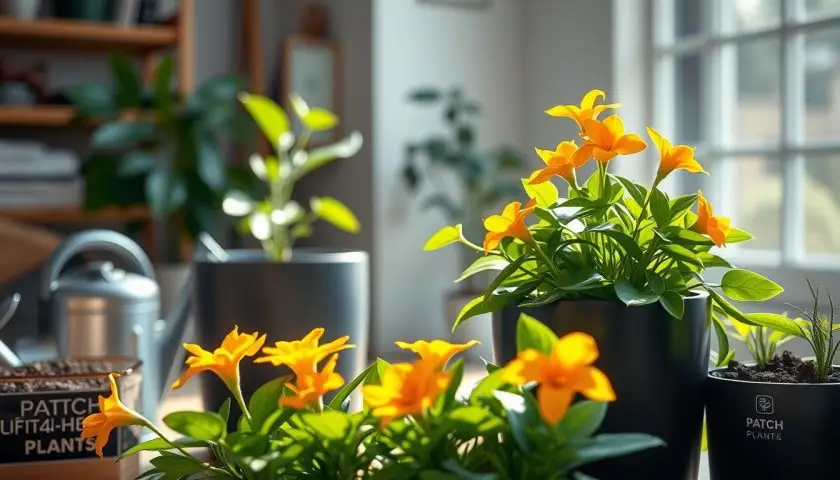
What Is a Goldfish Plant?
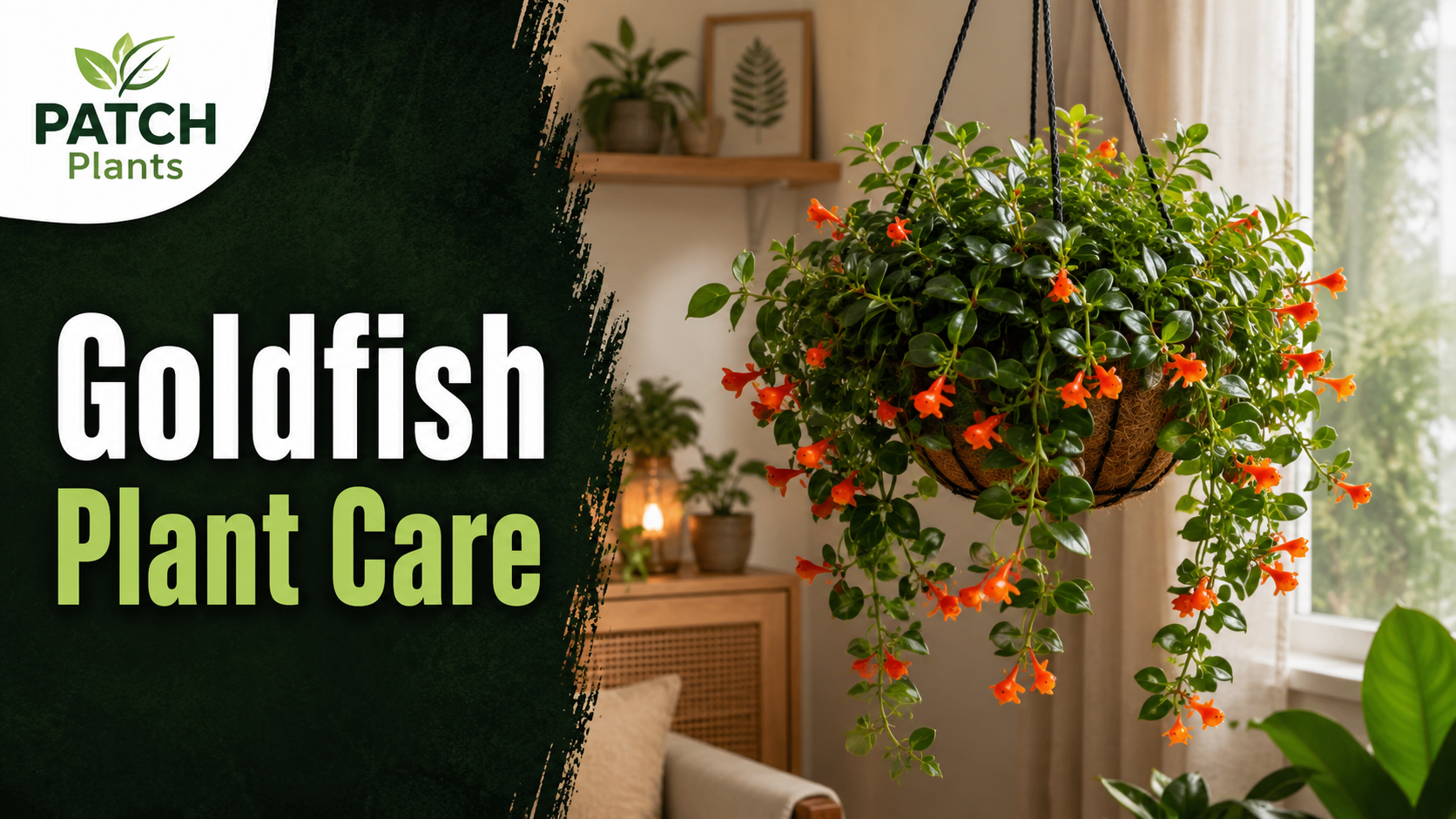
“Goldfish plant” is a common name used for Columnea and sometimes for Nematanthus, both trailing members of the gesneriad family with tubular flowers. The RHS describes the Columnea goldfish plant as growing to about 10cm tall but spreading 0.5 to 1 metre, with bright scarlet flowers, so it suits hanging baskets and raised pots where the stems can spill over the edge.
Once settled it is not difficult, but it dislikes sudden changes, cold drafts, soggy soil and low light. If you enjoy trailing plants, you may also like trailing plants for shelves, low light hanging plants and the closely related black pagoda lipstick plant.
Goldfish Plant Care at a Glance
| Care Area | Best Setup | What to Avoid |
|---|---|---|
| Light | Bright filtered light, protected from strong sun | Dark rooms or harsh direct sun |
| Water | Freely in the growing season, sparingly in winter | Soggy soil or long dry spells |
| Soil | Open, airy, well-draining mix | Heavy compact soil |
| Humidity | Moderate to high | Dry air near heaters |
| Temperature | Warm and stable, not frost-hardy | Cold drafts and sudden drops |
| Trimming | Light tidy-up of long, bare stems | Hard cutting of budded stems |
Goldfish Plant Care for More Blooms
The best route to flowers is strong filtered light, steady care and not moving the plant around.
- Enough light: it can survive in lower light, but it rarely blooms there. An east-facing window with gentle morning light is a good choice.
- Consistent watering: avoid swings between soggy and bone dry.
- Humidity: dry indoor air stresses leaves and can weaken buds.
- Light feeding during active growth.
- Stability: once buds form, avoid moving the plant, which often causes bud drop.
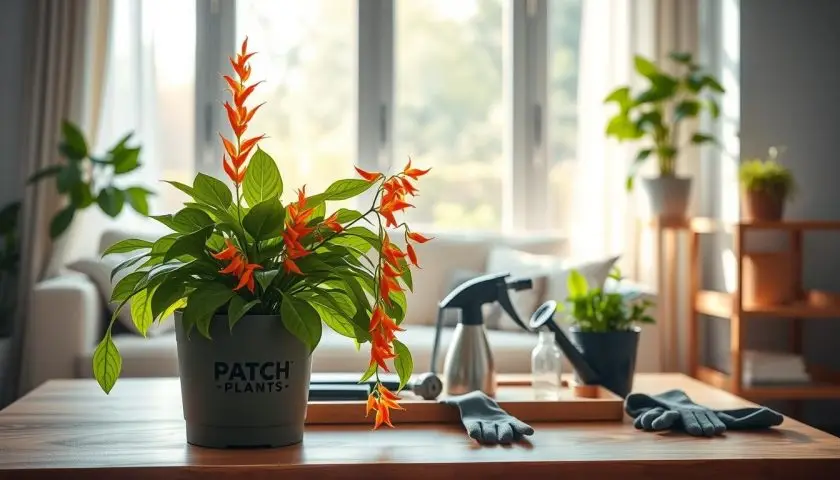
Best Light for Goldfish Plant Care
The RHS advises growing Columnea in bright filtered light with protection from strong sun. Too much shade gives leafy growth with few flowers, while hot afternoon sun through glass can scorch the leaves.
- Near an east-facing window with gentle morning light.
- A few feet back from a bright south-facing window.
- Near a west-facing window behind a sheer curtain.
- Under a grow light on a bright shelf.
Few or no blooms, long thin stems and widely spaced leaves signal too little light, while pale or scorched patches and wilting near hot glass signal too much. See our indoor light guide and low light house plants.
Goldfish Plant Watering Tips
Goldfish plant watering should keep the roots lightly moist, not soaked. The RHS says to water freely but carefully in the growing season, using soft water, and sparingly in winter, noting that overwatering can cause root and stem rot.
- Touch the top layer of the mix.
- If it feels slightly dry, water evenly until it drains.
- Empty the saucer or outer pot.
- Wait until the top layer begins to dry again.
Yellow leaves, soft stems, leaf drop in wet soil and a musty smell point to overwatering. Limp stems, soil pulling from the pot edge and dried buds suggest underwatering. A warm room or hanging basket dries faster than a cool room, so check the soil rather than the calendar. See our watering guide, worst times to water plants and signs you are overwatering.
Best Soil for Goldfish Plant Growth
The best soil for goldfish plant growth is loose and well-draining. The RHS recommends a peat-free, loam-free compost, and because these plants are epiphytic in habit, their roots appreciate air. A simple mix is:
- 2 parts indoor potting mix.
- 1 part perlite or pumice.
- 1 part fine orchid bark.
Use a pot or basket with drainage holes, and repot in spring only when the mix breaks down, roots fill the pot or water stops draining. Choose a pot just slightly larger, because oversized pots hold too much moisture. See the soil mix guide, how to repot a plant and repotting mistakes to avoid.
Temperature and Humidity for Goldfish Plant Care
The RHS rates Columnea as frost-tender, needing minimum temperatures of about 5 to 10°C, but indoors it does best in warm, steady conditions. Avoid cold windowsills, winter drafts and air-conditioning vents, which cause leaf drop and failed buds.
The RHS also says to mist regularly with soft, tepid water to maintain high humidity. Misting helps briefly, but where airflow is poor or the room is cool, wet leaves can cause problems, so a humidifier, pebble tray or plant grouping is more reliable. Keep the plant away from radiators. See humidity hacks without a humidifier and our DIY humidity tray.
Fertilizer for Goldfish Plant Blooms
Feeding is part of good goldfish plant care. It supports stems and flowers but cannot make up for poor light. The RHS suggests a quarter-strength, high-potash liquid feed such as tomato fertiliser with each watering in the growing season. Reduce or stop feeding in autumn and winter when growth slows. Brown leaf tips, white crust on the soil and sudden yellowing after feeding indicate too much. See fertilizing indoor vs outdoor plants.
Pruning Goldfish Plant Stems
The RHS says no pruning is required, so you do not have to cut it. Still, pruning goldfish plant stems lightly can tidy long, bare growth and gives you cuttings.
- Trim just after flowering, not while the plant is full of buds.
- Remove dead or yellow leaves at any time.
- Cut just above a leaf node with clean scissors.
- Take off only what you need, and keep the plant in bright filtered light while it recovers.
For technique, see pruning basics and how to clean plant leaves.
Why Your Goldfish Plant Is Not Blooming
| Problem | What You May Notice | What to Do |
|---|---|---|
| Low light | Leafy growth with few flowers | Move to brighter filtered light |
| Inconsistent watering | Bud drop or limp stems | Water when the top layer starts drying |
| Dry air | Crispy edges and weak buds | Add humidity support |
| No feeding | Slow growth in spring and summer | Feed lightly during active growth |
| Cold drafts | Leaf drop and stalled growth | Move away from cold air |
Yellow leaves usually mean overwatering, poor drainage, low light or cold. Heavy leaf drop often follows a sudden change in temperature, watering or location. Brown tips come from dry air, underwatering, fertiliser buildup or hot sun. For symptom help, read why plant leaves turn yellow, leaf curl, browning and droop, the root rot guide and the plant rescue plan.
Goldfish Plant Pests and Pest Care
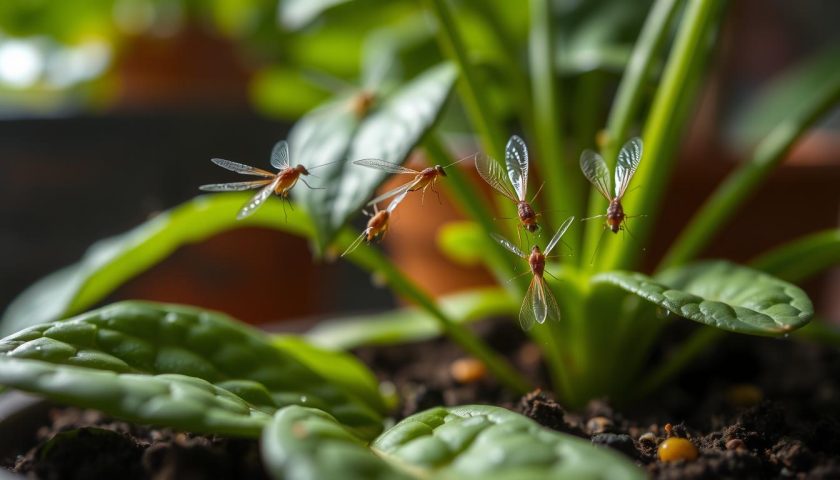
The RHS lists mealybugs, aphids and cyclamen mites as the pests to watch for. Check leaf undersides, stems and buds weekly.
- Aphids: cluster on tender growth and buds, causing sticky residue and curled growth.
- Mealybugs: small white cottony patches where leaves meet stems.
- Spider mites: fine webbing and dull leaves in dry air.
- Scale: small brown bumps that need repeated checks.
Isolate affected plants, wipe or rinse pests off early, and see how to keep pests away from plants and plants that keep bugs away.
Goldfish Plant Propagation
Goldfish plant propagation is done from stem cuttings, which pairs well with light trimming.
- Cut a healthy stem with several nodes and remove the lower leaves.
- Place it in clean water with the leaves above the water line, or push it into moist, airy mix.
- Keep it warm in bright indirect light and change water every few days.
- Pot it up once roots are strong, keeping the mix lightly moist, not soggy.
Our propagation guide covers more.
Are Goldfish Plants Safe for Pets?
The ASPCA lists the gold-fish plant (Hypocyrta nummularia) as non-toxic to dogs and cats. I could not confirm a separate Columnea entry, so check your exact plant on the ASPCA plant list if pets chew leaves.
Seasonal Goldfish Plant Care
- Spring: new growth begins, so resume light feeding and check light.
- Summer: active growth and possible blooms, so water more often in warm rooms.
- Autumn: growth slows, so cut back feeding and avoid cold drafts.
- Winter: lower light and drier air, so water sparingly and improve humidity.
Frequently Asked Questions
What is the basic goldfish plant care routine?
Goldfish plant care indoors means bright filtered light, lightly moist but well-drained soil, warmth, steady humidity and light feeding in the growing season.
How often should I water a goldfish plant?
Water when the top layer of mix begins to dry, then drain fully. Water freely in the growing season and sparingly in winter.
Why is my goldfish plant not blooming?
The usual causes are too little bright filtered light, uneven watering, dry air, no feeding or recent moves. Improve light first.
What is the best soil for a goldfish plant?
An open, airy, well-draining mix, such as potting mix with perlite or pumice and fine orchid bark.
Do I have to prune a goldfish plant?
No. The RHS says pruning is not required, but a light trim after flowering tidies long bare stems and provides cuttings.
Final Thoughts
Goldfish plant care gets easier once you focus on what supports blooming: bright filtered light, steady moisture, open soil, warmth and humidity. If your plant is not flowering, start by improving the light before changing everything else. As a botanist, I also advise leaving the plant in one spot once it settles, feeding gently in spring and summer, and checking for pests regularly. For more flowering options, see blooming indoor plants and our indoor plants section, or explore Patch Plants for the Hoya care guide.
Sources: RHS, Columnea x banksii; ASPCA, Gold-Fish Plant.