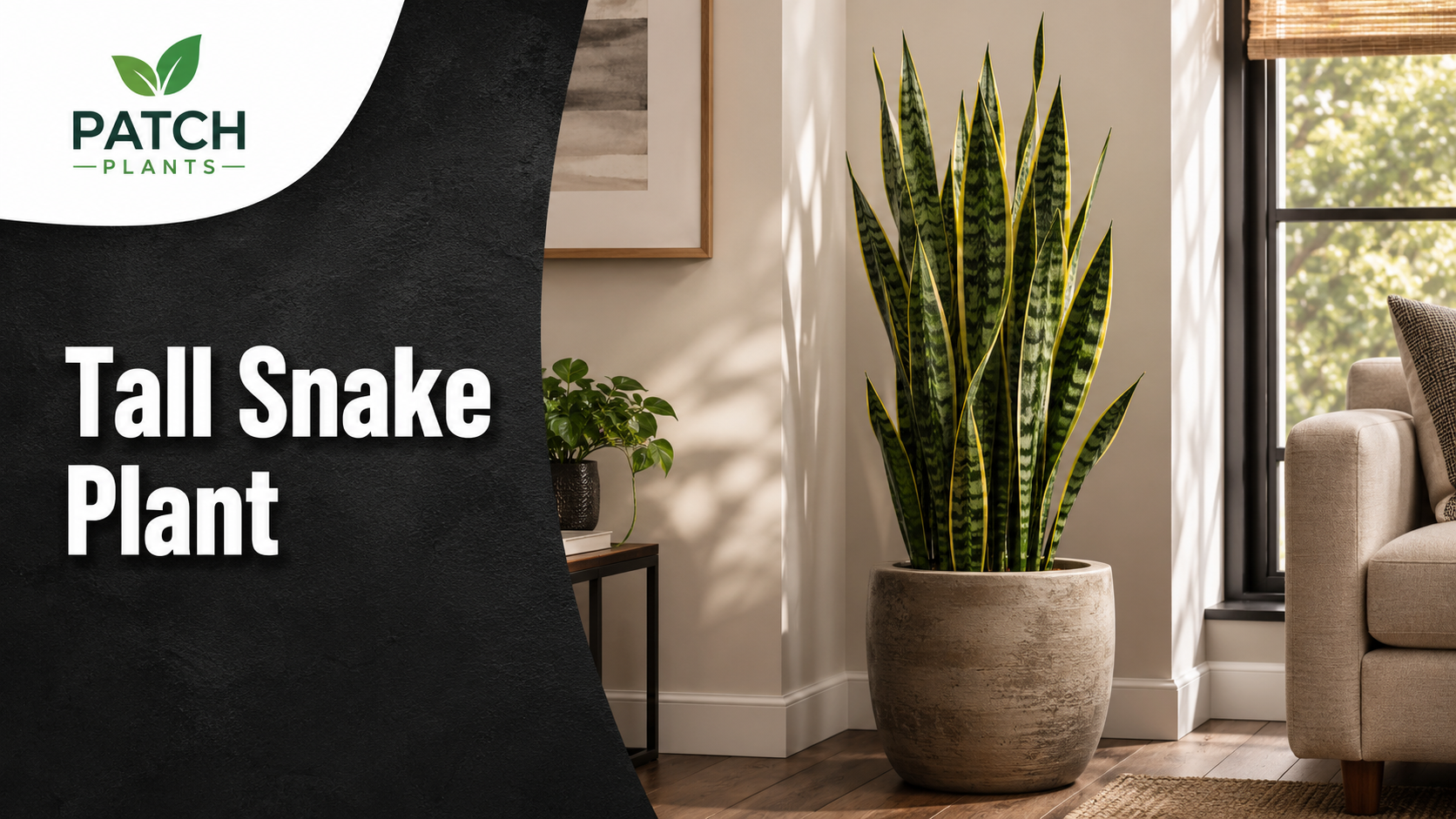
A tall snake plant is one of the easiest ways to add height, structure, and clean vertical lines to an indoor space. Its upright sword-like leaves suit living rooms, bedrooms, offices, hallways, and small apartments where you want a bold plant without a demanding care routine.
Snake plants are often sold as Sansevieria, though many are now botanically placed under Dracaena. You may see names like Sansevieria trifasciata, Dracaena trifasciata, mother-in-law’s tongue, tall sansevieria, or large snake plant. The care is still simple: bright light if possible, dry soil before watering, and a pot that will not tip over.
Care Snapshot
A tall snake plant needs bright indirect light for the strongest upright growth, but it can tolerate lower light better than many houseplants. Use a free-draining soil mix, water only when the soil is dry, choose a stable pot with drainage holes, and avoid overwatering. If the leaves start leaning, check light, roots, soil moisture, and pot weight first.
Key Takeaways
- Tall snake plant varieties are ideal for height, structure, and low-maintenance indoor decor.
- Best tall options include Laurentii, Zeylanica, Moonshine, Black Coral, Bantel’s Sensation, Cylindrica, and Whale Fin.
- Bright indirect light helps snake plants grow taller, straighter, and stronger.
- Low light is tolerated, but growth is slower and tall leaves may lean.
- Water only after the soil dries well. Wet soil is the biggest risk.
- A heavy pot with drainage holes helps keep large snake plants upright.
- This guide connects well with the main snake plant care guide, oversized indoor plants, and low-maintenance plants that thrive.
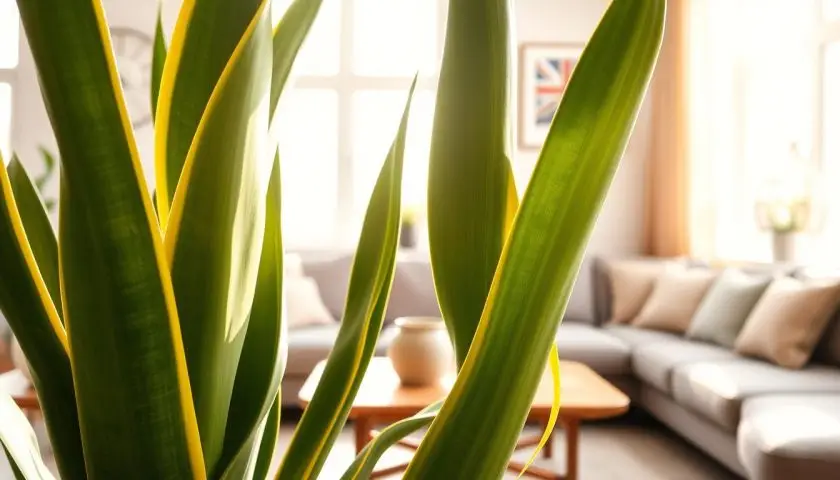
What Is a Tall Snake Plant?
A tall snake plant is any upright snake plant variety that can add noticeable height indoors. Some stay medium-sized, while others can grow several feet tall in good conditions. The leaves are usually thick, stiff, vertical, and patterned with green, silver, yellow, or dark bands.
These plants are popular because they look architectural without needing constant care. They store water in their thick leaves, tolerate dry indoor air better than many tropical plants, and fit many home styles. A tall snake plant can look modern, minimalist, tropical, classic, or sculptural depending on the pot and room.
If you want height without fuss, this plant belongs in the same design group as statement plants for minimalist interiors, indoor plants as room dividers, and best indoor plants for tiny apartments.
Tall Snake Plant Care at a Glance
| Care Area | Best Setup | What to Avoid |
|---|---|---|
| Light | Bright indirect light | Very dark rooms if you want tall strong growth |
| Water | Water after soil dries well | Frequent watering or soggy soil |
| Soil | Free-draining cactus or succulent mix | Dense moisture-heavy compost |
| Pot | Heavy pot with drainage holes | Light unstable pots for large plants |
| Humidity | Normal indoor humidity | Wet humid corners with poor airflow |
| Feeding | Light feeding in spring and summer | Heavy winter feeding |
Best Tall Snake Plant Varieties
Not every snake plant grows to the same height. Some are compact table plants, while others become strong floor plants. If your goal is a large snake plant for height, choose the variety carefully.
| Variety | Look | Best For |
|---|---|---|
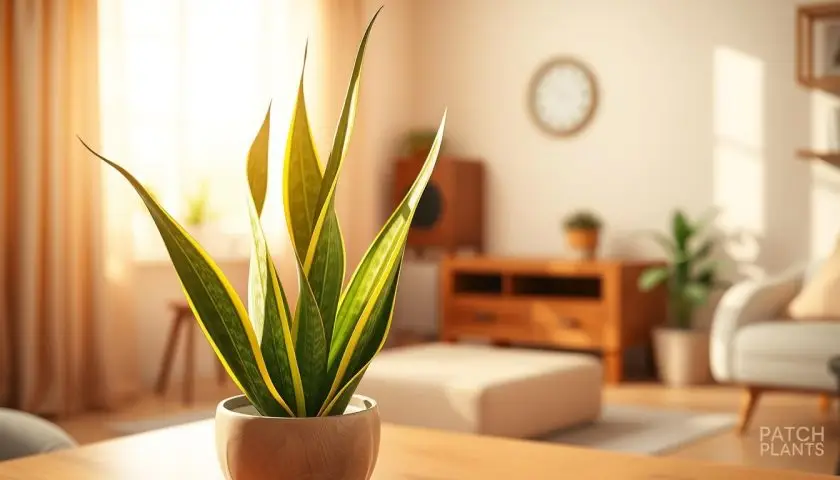
| Sansevieria trifasciata Laurentii | Green leaves with yellow margins | Classic tall snake plant style |
| Sansevieria Zeylanica | Dark green banded upright leaves | Minimalist rooms and bold vertical shape |
| Sansevieria Moonshine | Silvery pale green leaves | Soft modern interiors |
| Sansevieria Black Coral | Deep green leaves with dark banding | Moody rooms and darker decor |
| Bantel’s Sensation | Narrow leaves with white vertical striping | Bright narrow corners |
| Sansevieria Cylindrica | Round spear-like upright leaves | Sculptural plant displays |
| Whale Fin Snake Plant | Broad paddle-shaped leaves | Statement plant collectors |
1. Sansevieria trifasciata Laurentii
Laurentii is the classic tall snake plant with green centers and yellow edges. It has strong upright leaves and works well as a floor plant in a living room, bedroom, office, or hallway. If you want one recognizable snake plant for home decor, this is usually the safest choice.
2. Sansevieria Zeylanica
Zeylanica has a darker, more understated look than Laurentii. Its green banded leaves suit modern rooms, neutral spaces, and minimalist interiors. It is a good option when you want height without bright yellow edges.
3. Sansevieria Moonshine
Moonshine is loved for its pale silvery-green foliage. It can look very clean and soft in bright rooms. It usually shows its best color in stronger indirect light, while lower light can make the leaves darker and less silvery.
4. Sansevieria Black Coral
Black Coral has dark, dramatic leaves with subtle banding. It looks good in darker pots, warm wood interiors, and modern rooms. It is a strong choice when you want a tall ornamental snake plant with a deeper tone.
5. Bantel’s Sensation
Bantel’s Sensation has narrow leaves with pale vertical lines. Its slim shape makes it useful for tight spaces, corners, and small apartments. It looks more delicate than Laurentii but still gives upright height.
6. Sansevieria Cylindrica
Cylindrica has round, spear-like leaves instead of flat sword-shaped leaves. It looks more sculptural and less leafy, so it works well in minimalist displays. Its care is similar: bright light if possible, very careful watering, and a draining mix.
7. Whale Fin Snake Plant
Whale Fin is not always the tallest in the traditional sense, but its broad leaf makes a big visual statement. It is ideal if you want one dramatic leaf shape rather than many thin upright leaves.
Best Light for a Tall Snake Plant Indoors
A tall snake plant can tolerate low light, but it grows better in bright indirect light. If you want your plant to grow taller, produce strong new leaves, and stay upright, place it where it gets more usable light.
Low light does not usually kill a snake plant quickly. The problem is that growth slows, soil dries more slowly, and tall leaves may become weaker or start leaning. Bright indirect light gives better shape and stronger vertical growth.
Best indoor light positions
- Near an east-facing window with gentle morning light.
- A few feet back from a bright south-facing window.
- Near a west-facing window with filtered afternoon light.
- In a bright office with steady artificial light and some natural light.
- Beside a balcony door or bright hallway window.
Signs your snake plant needs more light
- Leaves lean toward the window.
- New growth is thin or weak.
- The plant stops growing for long periods.
- Soil stays damp for too many days after watering.
- Variegated leaves lose some brightness.
Can a tall snake plant live in low light?
Yes, it can live in low light, but low light should not be confused with no light. A windowless room is not ideal unless you use a grow light. If you want a snake plant for a darker room, water much less often and expect slower growth.
For more placement help, read complete guide to indoor light, low light house plants, and office-friendly plants for fluorescent lighting.
How to Water a Tall Snake Plant
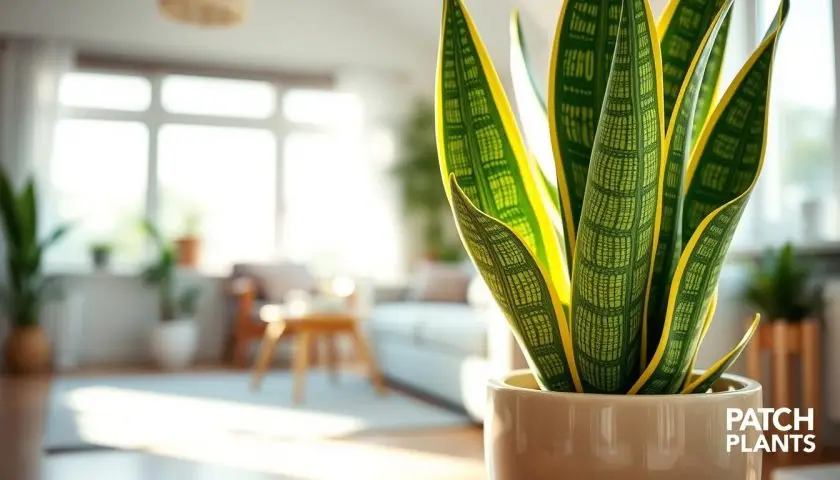
Tall snake plant care goes wrong most often because of overwatering. These plants store water in their leaves and prefer to dry well between watering. A large snake plant may look tough, but wet soil can still damage the roots.
Simple watering routine
- Push your finger or moisture meter into the soil.
- Water only when the soil is dry, not just dry on the surface.
- Water evenly until excess drains from the bottom.
- Empty the saucer or outer pot after watering.
- Wait until the soil dries again before watering next time.
How often should you water?
Indoors, a tall snake plant may need water every two to four weeks, but this is only a rough guide. In bright warm rooms, it may dry faster. In low light or winter, it may need much less. Soil dryness matters more than the calendar.
Overwatering signs
- Leaves turn soft or mushy near the base.
- Leaves lean suddenly even though the pot is wet.
- Yellowing appears with damp soil.
- The pot smells musty or sour.
- Roots look brown, black, or mushy.
Underwatering signs
- Leaves wrinkle or pucker.
- Leaf edges curl inward.
- Soil pulls away from the pot edge.
- The plant feels very light when lifted.
- Leaf tips may dry after long neglect.
For better watering habits, use complete watering guide, worst times to water plants, and signs you are overwatering.
Best Soil and Pot for a Large Snake Plant
A large snake plant needs a potting mix that drains fast and lets air reach the roots. Heavy soil holds too much moisture, especially in deep floor pots. This increases the risk of root rot and leaning leaves.
Best soil mix
- 2 parts cactus or succulent mix.
- 1 part perlite or pumice.
- 1 part coarse sand, fine bark, or gritty houseplant mix.
Best pot type
Choose a pot with drainage holes. For tall snake plants, pot weight also matters. A heavy ceramic, terracotta, or weighted planter helps stop tall leaves from pulling the plant over.
Pot size
Snake plants often do well slightly snug. Do not move a small plant into a huge pot. Oversized pots hold extra moisture around the roots, which can lead to rot. Move up only one pot size when repotting.
For more support, read best soil mix for every plant type, how to repot a plant, and repotting mistakes to avoid.
Temperature and Humidity for Tall Sansevieria
Tall sansevieria plants prefer warm, steady indoor conditions. They usually handle normal home humidity well and do not need the high humidity that many tropical plants demand. In fact, wet humid corners with poor airflow are not ideal.
Temperature tips
- Keep the plant away from cold winter windows.
- Avoid freezing drafts near doors.
- Do not place it directly beside heating or cooling vents.
- Move it away from cold glass during winter nights.
- Keep conditions stable after repotting or moving.
Humidity tips
Normal indoor humidity is usually fine. Snake plants are drought-tolerant and do not need regular misting. If the room is very damp, focus on airflow and make sure the soil dries properly.
How to Make a Snake Plant Grow Taller
If you want to know how to make snake plant grow taller, focus on long-term consistency rather than quick tricks. Height comes from variety, light, root health, steady care, and time.
Choose a tall variety first
A compact bird’s nest snake plant will not become a tall floor plant. Start with naturally taller types like Laurentii, Zeylanica, Black Coral, or Cylindrica if height is your main goal.
Give brighter indirect light
Bright indirect light helps the plant produce stronger leaves. Low light may keep the plant alive, but it usually will not produce the fastest or strongest upright growth.
Keep roots healthy
Healthy roots support tall leaves. Avoid soggy soil, oversized pots, and repeated watering before the mix dries.
Rotate the pot
Rotate your snake plant every few weeks so one side does not lean toward the light. This keeps the plant more balanced.
Do not overfeed
Light fertilizer during spring and summer can support growth, but too much fertilizer will not force healthy height. Overfeeding can stress the roots.
Fertilizer for Tall Snake Plant Growth
Snake plants are light feeders. They can grow well without frequent fertilizer, especially if they are in a good potting mix. Feeding is most useful during spring and summer when the plant is actively growing.
How to feed
- Use a balanced houseplant fertilizer at diluted strength.
- Feed only during active growth.
- Do not fertilize dry soil.
- Reduce or stop feeding in winter.
- Flush the pot occasionally if fertilizer salts build up.
Signs of too much fertilizer
- Brown leaf tips.
- White crust on the soil surface.
- Weak or distorted new growth.
- Sudden yellowing after feeding.
For more help, read fertilizing indoor vs outdoor plants.
Repotting a Tall Snake Plant
Repotting a tall snake plant is mainly about stability and drainage. These plants do not need frequent repotting, but they may eventually crowd the pot, crack plastic containers, or become too top-heavy.
Signs it needs repotting
- Roots are pushing out of drainage holes.
- The pot is bulging or cracked.
- The plant dries too fast after watering.
- The plant tips over easily.
- The soil has become compacted or slow-draining.
Repotting steps
- Choose a pot one size larger with drainage holes.
- Use a free-draining cactus or succulent-style mix.
- Remove the plant gently from the old pot.
- Check roots for mushy or rotten areas.
- Place the root ball at the same depth.
- Fill around the roots and firm lightly.
- Wait a few days before watering if roots were damaged.
Tall Snake Plant Propagation
Tall snake plant propagation can be done by division or leaf cuttings. Division is usually the best method if you want a new plant that keeps the same look as the parent plant.
Division method
Division is best during repotting. Snake plants grow from rhizomes under the soil. You can separate a section with roots and leaves, then pot it into its own container.
- Remove the plant from its pot.
- Look for natural clumps or rhizome sections.
- Use clean tools if you need to cut.
- Keep roots attached to each division.
- Pot divisions into dry, free-draining mix.
- Wait before heavy watering.
Leaf cutting method
Leaf cuttings can work, but variegated types may not always keep their yellow edges from cuttings. This method is slower than division.
- Cut a healthy leaf into sections.
- Keep track of which end is the bottom.
- Let cut ends callus for a day or two.
- Place the bottom end into a draining mix.
- Keep lightly moist, not wet.
- Wait patiently for roots and new shoots.
Why Is My Tall Snake Plant Leaning?
A tall snake plant can lean for several reasons. The leaves may be reaching for light, the roots may be damaged, the pot may be too light, or the plant may simply be unevenly balanced.
| Cause | What You May Notice | What to Do |
|---|---|---|
| Low light | Leaves lean toward window | Move to brighter indirect light and rotate pot |
| Overwatering | Soft leaves, wet soil, mushy base | Check roots and let soil dry |
| Unstable pot | Whole plant tips over | Use a heavier pot with drainage |
| Root crowding | Pot bulges or roots escape | Repot or divide the plant |
| Uneven growth | One side heavier than the other | Rotate and reposition plant |
Common Tall Snake Plant Problems
Yellow leaves
Yellow leaves often point to overwatering, poor drainage, cold stress, or root problems. If the soil is wet, do not water again until you check the roots and drainage.
Mushy leaves
Mushy leaves are a warning sign. They usually mean the plant has stayed too wet or too cold. Remove damaged leaves and inspect the roots for rot.
Brown tips
Brown tips can come from inconsistent watering, old damage, fertilizer buildup, dry air, or stress. Trim only the dry dead tip if needed.
Wrinkled leaves
Wrinkled leaves usually mean the plant has been too dry for too long. Water deeply, let the excess drain, and adjust your routine.
Slow growth
Slow growth is normal in low light or winter. If you want faster growth, increase light, keep the plant warm, and avoid overwatering.
For problem-solving, read why plant leaves turn yellow, leaf curl, browning and droop, root rot guide, and how to revive a dying plant.
Common Pests on Tall Snake Plants
Snake plants are not pest magnets, but stressed plants can still get pests. Check leaves, leaf bases, and the soil surface during your normal care routine.
Mealybugs
Mealybugs look like small white cottony patches. They often hide near leaf bases and tight folds.
Spider mites
Spider mites are more likely in dry, warm indoor air. Look for fine webbing, tiny specks, and dull leaf surfaces.
Scale
Scale insects look like small brown bumps stuck to leaves. They can be stubborn, so repeated checks matter.
Fungus gnats
Fungus gnats usually mean the soil is staying wet too often. Let the mix dry more and improve drainage.
For pest support, use how to keep pests away from plants and plants that keep bugs away.
Where to Place a Tall Snake Plant at Home
A tall snake plant works best where its upright shape can be seen clearly. It is useful in narrow corners, beside furniture, near entryways, and in rooms where trailing plants would feel messy.
| Room | Why It Works | Watch Out For |
|---|---|---|
| Living room | Adds height beside sofas or shelves | Pets, children, low light corners |
| Bedroom | Clean vertical shape and calm look | Cold windows in winter |
| Home office | Low-maintenance plant for work areas | Dry air near vents |
| Hallway | Good for narrow upright styling | Too little natural light |
| Bathroom | Can work if there is bright natural light | Windowless bathrooms and wet soil |
For styling ideas, read how to style indoor plants by room, decorate your bedroom with plants, and create an indoor jungle without overcrowding.
Tall Snake Plant Safety Around Pets and Children
Snake plants should be kept away from pets and small children who may chew leaves. They are not a good floor-level choice if your cat, dog, rabbit, or toddler tends to bite houseplants.
Safety tips
- Place the plant where pets cannot reach it.
- Pick up broken leaves quickly.
- Use a stable pot so the plant does not topple.
- Keep it out of children’s play areas.
- Choose pet-safer plants if chewing is a known issue.
For safer home planning, read how to make your plants cat-friendly and how to make your plants dog-friendly.
Common Mistakes with Tall Snake Plant Care
| Mistake | What Happens | Better Choice |
|---|---|---|
| Watering too often | Root rot and mushy leaves | Wait until soil dries well |
| Using a pot with no drainage | Water collects around roots | Use drainage holes every time |
| Keeping it too dark | Slow growth and leaning leaves | Use brighter indirect light |
| Using a light unstable pot | Plant tips over | Choose a heavier container |
| Overpotting | Soil stays wet too long | Move up only one pot size |
| Heavy winter feeding | Root stress and brown tips | Feed lightly only in active growth |
Tall Snake Plant Care Checklist
| Task | How Often | What to Check |
|---|---|---|
| Check light | Seasonally | Leaning, weak growth, slow drying soil |
| Check soil moisture | Before watering | Soil should be dry before watering |
| Empty saucer | After watering | No standing water |
| Rotate pot | Every few weeks | Even upright growth |
| Clean leaves | Every month | Dust, pests, marks |
| Feed lightly | Spring and summer | Only during active growth |
| Repot or divide | When crowded | Roots, pot stability, soil quality |
Helpful PATCH Guides for Tall Snake Plant Care
Use these related PATCH guides to improve light, watering, soil, styling, safety, and long-term indoor plant care.
Snake Plant and Specific Plant Guides
- Snake Plant care guide
- ZZ Plant care guide
- Pothos care guide
- Spider Plant care guide
- Dracaena care guide
- Rubber Plant care guide
- Fiddle Leaf Fig care guide
- Bird of Paradise care guide
- Monstera care guide
- Philodendron care guide
Indoor Plant Guides
- Indoor Plants hub
- Oversized indoor plants
- Statement plants for minimalist interiors
- Indoor plants as room dividers
- Best indoor plants for tiny apartments
- Best indoor plants for beginners
- Best indoor plants for first-time plant parents
- Low-maintenance plants that thrive
- Air-purifying indoor plants
- Colorful foliage indoor plants
Light, Water and Soil Guides
- Complete guide to indoor light
- Low light house plants
- Office-friendly plants for artificial light
- Complete watering guide
- Worst times to water plants
- Signs you are overwatering
- Best soil mix guide
- How to repot a plant
- Repotting mistakes to avoid
- Self-watering pots guide
Problem-Solving Guides
- Plant Care hub
- Root rot guide
- How to revive a dying plant
- Leaf curl, browning and droop
- Why plant leaves turn yellow
- How to clean plant leaves
- Pruning basics
- Fertilizing indoor vs outdoor plants
Styling and Room Guides
- Style indoor plants by room
- Decorate your bedroom with plants
- Create an indoor jungle without overcrowding
- Trailing plants for shelves
- Scandi home with plants
- Feng Shui indoor plants
Bathroom, Humidity and Safety Guides
- Best bathroom plants
- Plants for bathroom no light
- Bathroom plants for mold
- Humidity hacks without a humidifier
- DIY humidity tray
- Cat-friendly plant safety
- Dog-friendly plant safety
Frequently Asked Questions
What are the best tall snake plant varieties?
The best tall snake plant varieties include Sansevieria Laurentii, Zeylanica, Moonshine, Black Coral, Bantel’s Sensation, Cylindrica, and Whale Fin. Laurentii and Zeylanica are usually the safest choices for classic upright height.
How do you care for a tall snake plant indoors?
Care for a tall snake plant indoors by giving it bright indirect light, a free-draining soil mix, a stable pot with drainage holes, and water only when the soil has dried well.
Can a tall snake plant grow in low light?
Yes, it can tolerate low light, but it grows more slowly there. For taller, stronger, straighter leaves, bright indirect light is better.
How often should I water a tall snake plant?
Water when the soil is dry. Indoors, this may be every two to four weeks, but timing changes with light, season, pot size, and room temperature.
Why is my tall snake plant leaning?
A tall snake plant may lean because of low light, overwatering, root rot, a light pot, uneven growth, or top-heavy leaves. Check soil moisture and roots first if the leaning is sudden.
How can I make my snake plant grow taller?
Choose a naturally tall variety, place it in bright indirect light, keep roots healthy, avoid overwatering, feed lightly in the growing season, and rotate the pot for even growth.
What soil is best for a tall snake plant?
A free-draining cactus or succulent mix is best. You can improve drainage with perlite, pumice, coarse sand, or fine bark.
Should I repot a large snake plant often?
No. Snake plants do not need frequent repotting. Repot when roots crowd the pot, the pot becomes unstable, or the soil breaks down.
Is tall snake plant propagation hard?
No. Division is the easiest and fastest method. Leaf cuttings also work, but they are slower and may not preserve variegation in some varieties.
Final Thoughts
A tall snake plant is a great choice if you want height, structure, and easy indoor care. Choose a naturally upright variety, give it more light than the bare minimum, water only when the soil is dry, and use a heavy draining pot so the plant stays stable.
RHS explains that sansevierias are drought-tolerant houseplants that can grow in a wide range of indoor positions, from full sun to light shade, but they need free-draining compost and should not be overwatered: RHS guide to growing sansevierias.
If your plant starts leaning or turning soft, do not fix it by adding more water. Check light, drainage, root health, and pot stability first. Most tall snake plant problems begin with too much moisture or too little light.
Final Recap
A tall snake plant is a low-maintenance indoor plant with upright sword-like leaves and strong architectural shape. The best tall snake plant varieties include Laurentii, Zeylanica, Moonshine, Black Coral, Bantel’s Sensation, Cylindrica, and Whale Fin. For the best growth, place it in bright indirect light, use free-draining soil, water only when dry, choose a heavy pot with drainage holes, and avoid overwatering. If leaves lean, turn yellow, wrinkle, or become mushy, check light and soil moisture before making changes. With steady care, a large snake plant can stay upright, stylish, and healthy for years.