Key Takeaways
- Cleaning plant leaves is not just cosmetic — dust blocks photosynthesis, clogs stomata, attracts pests, and slows plant growth significantly over time
- The best way to clean plant leaves is a soft damp microfiber cloth with lukewarm water — gentle, effective, and safe for almost all plant types
- Always support the leaf from underneath while wiping — never wipe without support as the weight of your hand can snap the leaf from the stem
- Clean both sides of every leaf — the underside is where dust, pest eggs, and spider mites most commonly accumulate and where cleaning is most often neglected
- How often to clean indoor plant leaves: every two to three weeks for most houseplants — more frequently near heating vents, in dusty rooms, or in homes with pets
- How to make plant leaves shiny naturally: regular damp cloth cleaning, banana peel wipe, or a dilute mild soap solution — never commercial leaf shine sprays which block stomata
- Different leaf types need different cleaning methods — large waxy leaves suit damp wiping, delicate fuzzy leaves need a dry soft brush, and sturdy plants can be rinsed under water
- White spots on plant leaves are usually hard water mineral deposits — switch to filtered or rainwater for cleaning and misting to prevent recurrence
- Never use commercial leaf shine sprays, oils, mayonnaise, or alcohol on plant leaves — these block stomata, damage leaf surfaces, and reduce the plant’s photosynthetic capacity
- Regular leaf cleaning is one of the simplest and most impactful maintenance habits available — it improves plant health, reduces pest risk, and keeps your collection looking genuinely beautiful
Introduction
Cleaning plant leaves is one of the most overlooked aspects of houseplant care — and one of the most impactful. A thin layer of dust on leaf surfaces does not just make a plant look dull. It actively reduces the plant’s ability to photosynthesize by blocking light absorption, clogs the microscopic pores (stomata) through which plants breathe, and creates ideal conditions for spider mites and other pests that thrive in dusty, undisturbed leaf surfaces.
Learning how to clean plant leaves correctly — which methods work for which leaf types, how often to clean, what to use, and what to avoid — makes a measurable difference to plant health and appearance. This complete guide covers everything from basic damp cloth technique to plant-specific cleaning methods, natural leaf shine approaches, seasonal cleaning considerations, and how to diagnose and address specific leaf surface problems.
For context on the broader relationship between leaf health and plant wellbeing, our leaf curl, browning and droop guide covers what different leaf symptoms indicate, and our why plant leaves turn yellow guide explains how dust and blocked stomata contribute to yellowing and poor plant health over time.
Why Cleaning Plant Leaves Matters: The Science
Understanding why cleaning plant leaves is important — rather than simply cosmetic — explains why it deserves a regular place in any plant care routine.
Photosynthesis and Light Absorption
Photosynthesis happens primarily in the leaf surface cells that contain chlorophyll. When dust accumulates on the leaf surface, it physically blocks light from reaching these cells — reducing the plant’s ability to convert light into energy. Studies in horticultural science have shown measurable reductions in photosynthetic efficiency in dusty houseplants compared to clean specimens, even under identical light conditions.
The practical result: dusty plants grow more slowly, produce fewer and smaller leaves, and have less energy available for flowering and new growth. Cleaning plant leaves is one of the simplest ways to improve a plant’s access to energy without changing its environment at all.
Stomata Function and Breathing
Plant leaves breathe through microscopic pores called stomata — predominantly on the underside of leaves. Stomata regulate gas exchange (carbon dioxide in, oxygen and water vapour out) and are critical to healthy plant metabolism. Dust, pollution, mineral deposits, and sticky residue all clog stomata over time, progressively reducing the plant’s ability to breathe, regulate temperature, and manage water loss.
This is why cleaning the underside of leaves is just as important as cleaning the top surface — the underside is where most stomata are located and where cleaning is most commonly neglected.
Pest Prevention
Dusty, undisturbed leaf surfaces are the preferred environment for spider mites — one of the most common and damaging indoor plant pests. Regular cleaning removes the dust that provides mite habitat, the early-stage egg deposits that precede infestations, and the sticky honeydew residue left by aphids and scale insects. Cleaning plant leaves regularly is genuinely one of the most effective non-chemical pest prevention strategies available.
Our plants that keep bugs away guide covers broader pest management strategies. For specific pest identification and treatment, our how to keep pests away from outdoor plants guide covers the most common pest scenarios.
Signs It Is Time to Clean Your Plant Leaves
Knowing when cleaning plant leaves is overdue prevents the cumulative health decline that develops when cleaning is deferred too long.
- Visible dust film: You can see a grey or brownish film on the leaf surface — or write on it with a fingertip
- Dull or matte appearance: Waxy-leaved plants that should be glossy have lost their natural sheen
- Slower than expected growth: Reduced photosynthetic efficiency from dust accumulation manifests as slower growth before visible dust is obvious
- Water beading on the surface: Water runs off rather than spreading evenly — indicates significant surface residue build-up
- Sticky residue on leaves: Honeydew from aphids or scale insects — clean immediately and inspect for pest infestation
- White spots or white residue: Usually hard water mineral deposits from previous waterings or misting — clean and switch to filtered water
- Tiny moving specks on undersides: Spider mites — clean immediately and treat for infestation
For all plants — whether a peace lily in the living room, a monstera by the window, or a snake plant in the hallway — regular visual checks during routine watering are the most practical way to catch cleaning needs before they become plant health issues.
How to Clean Plant Leaves: Methods by Leaf Type
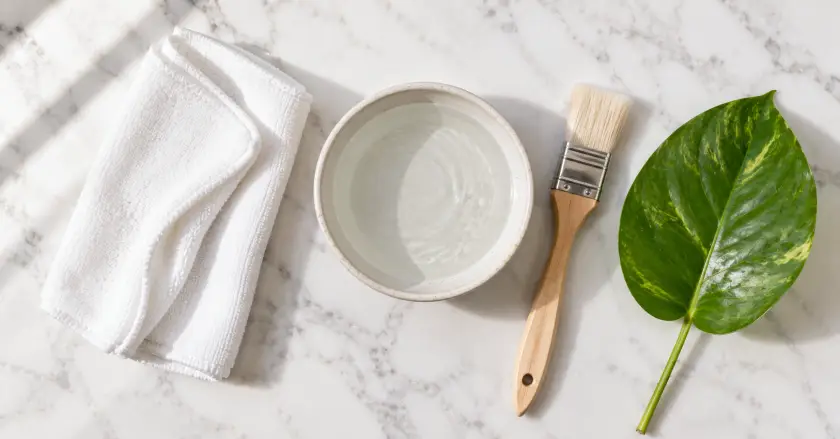
The best method for cleaning plant leaves depends on the leaf type — its size, texture, surface coating, and sensitivity. Using the wrong method can cause more damage than leaving the dust in place.
Method 1: Damp Cloth Wipe — For Large Waxy Leaves
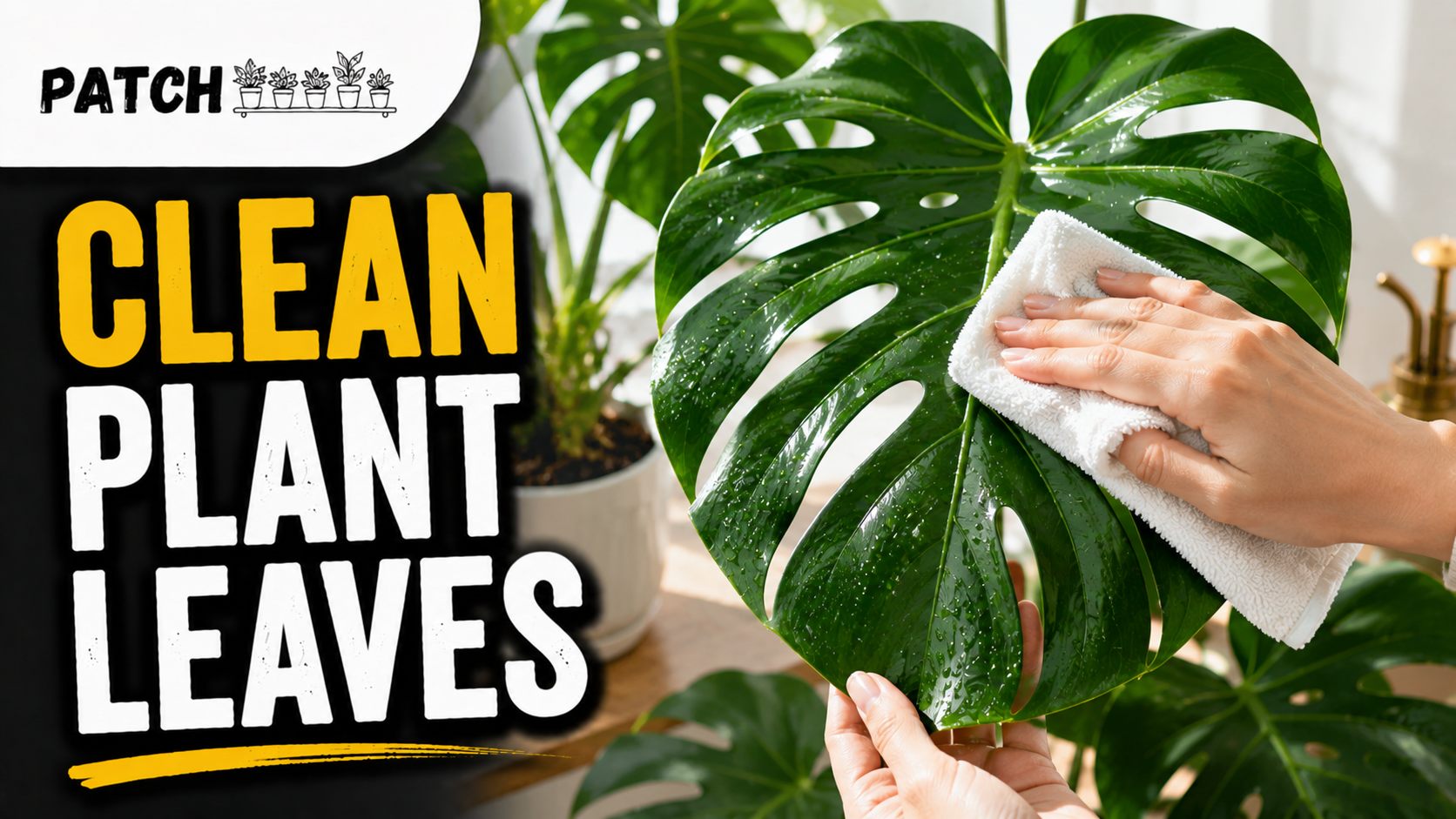
This is the most universally effective method for cleaning plant leaves and works for the majority of common houseplants. It removes dust, residue, and early pest deposits without introducing chemicals or excessive moisture.
What you need: A soft microfiber cloth or lint-free cloth, lukewarm water (never cold — cold water can cause leaf spotting).
Step by step:
- Dampen the cloth thoroughly with lukewarm water and wring out so it is damp but not dripping
- Place your non-dominant hand underneath the leaf to support it
- Wipe from the base of the leaf toward the tip in one smooth stroke — never scrub in circular motions
- Turn the leaf over and wipe the underside with equal attention
- Move to the next leaf — rinse the cloth as needed
This method works excellently for rubber plants, monsteras, fiddle leaf figs, peace lilies, pothos, philodendrons, and snake plants.
Method 2: Water Rinse — For Sturdy Plants
For robust, moisture-tolerant houseplants, rinsing under a gentle shower of lukewarm water is one of the most efficient methods for cleaning plant leaves — it reaches all surfaces simultaneously, removes dust and residue thoroughly, and doubles as a humidity boost.
Take the plant to a sink, bath, or shower and run a gentle stream of lukewarm water over the foliage for thirty to sixty seconds. Allow to drain completely before returning to its position. Never return a wet plant to direct strong sunlight — water droplets can act as lenses and cause leaf scorching.
This method works well for spider plants, pothos, Boston ferns, calatheas, philodendrons, and bird of paradise. Do not use for succulents, cacti, or any plant that dislikes water on its foliage.
Method 3: Soft Brush — For Delicate and Fuzzy Leaves
Some plants have delicate, hairy, or textured leaf surfaces that cannot tolerate water or damp cloth contact without damage. These need dry cleaning with a very soft brush.
A clean paintbrush, soft makeup brush, or dedicated plant cleaning brush all work well. Brush gently along the leaf surface in one direction — from base to tip — dislodging dust without pressing into or wetting the surface.
This method is essential for hoyas with textured surfaces, African violets (whose fuzzy leaves spot badly when wet), begonias, and some calathea varieties with raised leaf textures. For succulents — particularly those with a powdery glaucous coating on the leaves — use only a very soft dry brush and avoid any contact with the powdery bloom as it is a natural protective coating that does not regenerate once removed.
Method 4: Natural Leaf Cleaner Solutions — For Residue and Stickiness
Plain water sometimes cannot remove stubborn residue — hardened mineral deposits, sticky honeydew from pests, or accumulated grime on plants that have not been cleaned for an extended period. A natural leaf cleaner solution handles these situations without chemical risk.
Mild soap solution: One drop of mild, unscented dish soap in 500ml of water. Wipe on with a damp cloth, then immediately wipe off with a second cloth dampened with plain water. Never leave soap on leaf surfaces — it blocks stomata.
Dilute white vinegar: One part white vinegar to ten parts water. Effective for hard water mineral deposits on sturdy leaves. Test on one leaf first — vinegar is too acidic for sensitive plants. Wipe off immediately with plain water.
Banana peel: The inside of a banana peel removes dust and leaves a subtle natural shine on large waxy leaves — the natural oils and sugars in the peel are plant-safe and mild. Wipe the soft inside surface across the leaf in one direction, then wipe off any residue with a damp cloth.
For more general guidance on natural plant care approaches, our complete guide to watering tips and humidity hacks guide cover the fundamentals of keeping houseplants in optimal health alongside leaf cleaning.
How to Make Plant Leaves Shiny Naturally
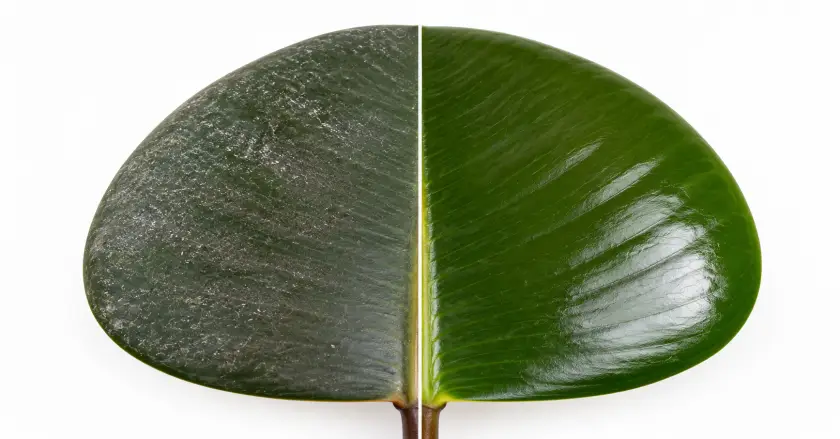
One of the most common questions about cleaning plant leaves is how to achieve that healthy, glossy shine — particularly on plants like rubber plants, monsteras, and peace lilies whose waxy leaves are naturally glossy when clean and healthy.
Why Commercial Leaf Shine Products Are Harmful
Commercial leaf shine sprays are among the most commonly used and most damaging products in houseplant care. They create an artificial gloss by depositing a wax or oil-based film on the leaf surface — a film that blocks stomata, prevents proper gas exchange, and accumulates grime more rapidly than a clean leaf surface. Despite their appeal, leaf shine sprays actively harm the plants they are used on over time and should be avoided entirely.
The same applies to popular DIY shine remedies such as mayonnaise, coconut oil, baby oil, and olive oil — all of these leave oily residues that clog stomata and create ideal conditions for fungal growth on leaf surfaces.
Safe Natural Methods for Shiny Plant Leaves
Regular damp cloth cleaning: The most effective single method for maintaining naturally glossy leaves. A clean, dust-free leaf surface reflects light dramatically better than a dusty one — the apparent gloss is the leaf’s natural surface, not a coating. Clean regularly and the natural shine maintains itself.
Banana peel wipe: The mild natural oils and sugars in a banana peel leave a subtle safe shine on large waxy leaves. Wipe the inside of the peel across the leaf surface in one direction, then remove excess with a damp cloth. This works well for rubber plants, monsteras, and fiddle leaf figs.
Milk solution (very dilute): A small amount of milk diluted in water (roughly one part milk to ten parts water) can enhance leaf gloss on waxy-leaved plants. Wipe on and off with a damp cloth to remove all residue. Use sparingly — milk left on leaves in warm conditions can cause bacterial issues.
The deepest truth about how to make plant leaves shiny is that true leaf gloss is a reflection of plant health. A well-watered, well-lit, adequately fed plant with clean leaves is genuinely more glossy than a stressed or dusty plant, regardless of what you apply to the surface. Our complete guide to indoor light and fertilising guide cover the foundational care factors that underpin genuine leaf health and gloss.
Cleaning Plant Leaves by Specific Plant Type
Different plant species have specific leaf characteristics that affect how cleaning plant leaves should be approached.
How to Clean Rubber Plant Leaves
Rubber plant leaves are large, waxy, and prone to impressive dust accumulation due to their size. Damp cloth wiping is ideal — support each large leaf from below, wipe from base to tip, and follow with a banana peel wipe for natural shine. Clean monthly at minimum. Our rubber plant care guide covers care in full.
How to Clean Monstera Leaves
Monstera deliciosa leaves are large, split, and deeply lobed — making thorough cleaning challenging. Use a damp cloth for the main leaf surfaces, then use a soft brush to reach into the splits and crevices along the deep cuts. Support the leaf carefully during cleaning as mature monstera leaves are heavy. Our monstera care guide covers care and growth management.
How to Clean Snake Plant Leaves
Snake plant leaves are upright, firm, and relatively easy to clean. Wipe each leaf from base to tip with a damp cloth — the smooth surface cleans easily. Pay particular attention to the base of the leaves where they emerge from the soil — dust and debris accumulates there. Our snake plant care guide covers care in full.
How to Clean Orchid Plant Leaves
Orchid leaves are firm and waxy but sensitive to cold water and chemical residue. Use a cloth dampened with room temperature water only — never cold — and wipe gently. Clean the top surface and check the underside for scale insects, which commonly target orchids at the leaf-to-stem junction. Our orchid care guide covers the specific care requirements of phalaenopsis and other indoor orchids.
How to Clean Fiddle Leaf Fig Leaves
Fiddle leaf fig leaves are large, textured with prominent veining, and highly visible — making cleaning particularly impactful on appearance. Wipe each leaf with a damp cloth, taking care along the veins where dust accumulates. A banana peel follow-up brings out the natural waxy gloss. Avoid water spray cleaning for fiddle leaf figs — they dislike excess moisture and temperature fluctuation. Our fiddle leaf fig care guide covers its specific sensitivities.
How to Clean Peace Lily Leaves
Peace lily leaves are medium-sized, smooth, and dark green — they show dust clearly against their deep colour. Damp cloth cleaning works excellently. Peace lilies benefit significantly from regular cleaning as dust buildup is very visible and affects their typically glossy appearance noticeably. Our peace lily care guide covers all aspects of care.
How to Clean Calathea Leaves
Calathea leaves have delicate patterned surfaces that require gentle handling. Damp cloth cleaning with lukewarm water works for most varieties — wipe very gently without pressure to avoid disturbing the surface pattern. For varieties with raised or textured surfaces, use a very soft brush. Never use cold water as calatheas are sensitive to temperature. Our calathea care guide covers its specific care needs.
How to Clean Pothos Leaves
Pothos leaves are small to medium, heart-shaped, and tolerate a range of cleaning methods. Damp cloth wiping is ideal for individual leaves. For a plant that has grown long and trailing, a gentle shower rinse is more practical than wiping each leaf individually. Our pothos care guide covers care for this versatile trailing plant.
How to Clean ZZ Plant Leaves
ZZ plant leaves are naturally very glossy and show dust clearly against their high-shine surface. Wipe each small leaflet with a damp cloth — the firm glossy surface cleans beautifully. Regular cleaning keeps the ZZ plant’s natural polish at its most impressive. Our ZZ plant care guide covers care in full.
How to Clean Boston Fern Leaves
Boston ferns have fine, delicate fronds that cannot be wiped individually. A gentle lukewarm shower rinse is the most practical cleaning method — it reaches all fronds simultaneously and provides the humidity boost ferns love. Our Boston fern care guide covers humidity and care requirements in detail.
How to Clean Philodendron Leaves
Philodendron leaves vary by variety from small heart-shaped to large split-lobed. Most suit damp cloth cleaning — wipe each leaf from base to tip, supporting from underneath. For large split-leaved varieties like philodendron gloriosum, use a soft brush in the splits. Our philodendron care guide covers the main varieties.
How to Clean Hoya Plant Leaves
Hoya leaves are thick and waxy — they clean beautifully with a damp cloth. The waxy surface resists dust more effectively than most plants, so cleaning is needed less frequently. Never clean with oils or chemical products as these can interfere with the natural waxy coating. Our hoya care guide covers care in detail.
How to Clean Aloe Vera Plant Leaves
Aloe vera leaves are thick, succulent, and textured. Wipe with a damp cloth carefully along the smooth central face of each leaf. Avoid getting water into the central rosette as pooled water there can cause rot. Do not clean the leaf edges where the soft spines are located. Our aloe vera care guide covers care requirements.
Diagnosing Leaf Surface Problems
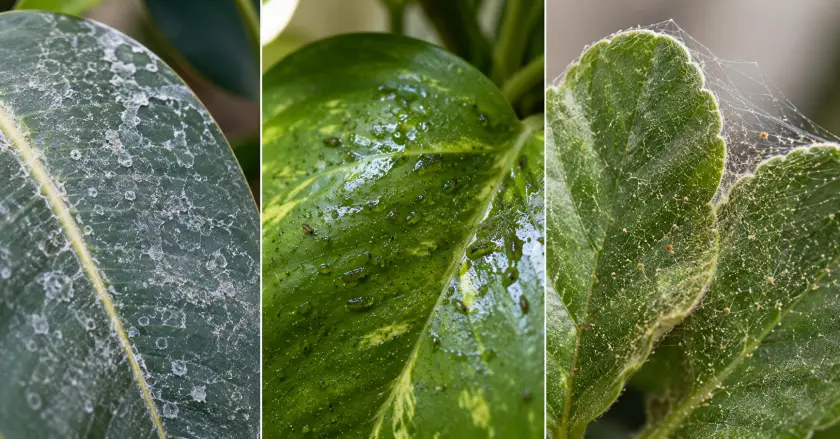
Not everything on plant leaves is dust. Recognising what specific deposits or marks indicate helps direct the correct response.
White Spots and White Residue on Plant Leaves
White spots or a white chalky residue on plant leaves is almost always hard water mineral deposits — calcium and magnesium left behind when tap water evaporates from the leaf surface after misting or splashing during watering. It is purely cosmetic and easily removed with a damp cloth or dilute vinegar solution. Prevent recurrence by using filtered water, rainwater, or distilled water for cleaning and misting.
If the white residue has a cottony or fluffy appearance and resists simple wiping — this is mealybugs rather than mineral deposits. Treat with isopropyl alcohol applied with a cotton bud or neem oil spray.
Tiny White Specks That Move
Tiny moving white or yellowish specks on leaf undersides, often accompanied by fine webbing, indicate spider mite infestation. Cleaning plant leaves with a damp cloth removes adults and eggs effectively if caught early. Follow with neem oil spray for ongoing treatment. Our plants that keep bugs away guide covers pest management in detail.
Sticky Residue on Leaves
Sticky residue — particularly if it appears on leaves below other leaves or on surfaces under the plant — is honeydew, a by-product of aphid, scale, or mealybug feeding. Clean with a mild soap solution and inspect thoroughly for the pest causing it. Our pest management guide covers treatment approaches.
Brown Spots on Leaves After Cleaning
Brown spots appearing after cleaning typically indicate cold water damage (always use lukewarm water), physical damage from rough cloths, or sunscorch from placing wet plants in direct sun. Our leaf curl, browning and droop guide covers full diagnosis of all leaf spot types.
Seasonal Leaf Cleaning Schedule
Different seasons create different cleaning demands for houseplant leaves. Building seasonal awareness into your cleaning plant leaves routine significantly reduces the cumulative buildup that makes plants look tired.
Winter: Central heating dramatically increases dust circulation in indoor air. Radiators and fan heaters move air constantly, depositing dust on leaves faster than at any other time of year. Clean every two weeks during winter for most houseplants. Our humidity hacks guide covers the related issue of dry winter air and how to manage it alongside leaf cleaning.
Spring: Pollen season deposits fine powdery pollen on any leaf surface near open windows. Clean thoroughly in early spring before the growing season begins — a fresh clean start gives plants the best light absorption conditions as they begin their most active growing period. This is also the ideal time to check for early pest activity that may have developed over winter. Our garden calendar 2026 covers seasonal plant care tasks month by month.
Summer: Lower dust accumulation indoors but higher pest activity. Regular cleaning every two to three weeks is the minimum. Outdoor plants benefit from rain cleaning but may need attention after dry spells when dust accumulates without natural washing.
Autumn: Falling leaves outdoors, increased window closing, and the beginning of the heating season all contribute to dust increase. Clean thoroughly before the winter heating season begins to establish a clean baseline.
Aftercare: Keeping Leaves Clean Longer
A few practical adjustments significantly extend how long leaves stay clean between cleaning sessions.
Positioning: Plants near air vents, heating units, and fans accumulate dust dramatically faster than plants in still air positions. Moving plants slightly away from direct air flow reduces cleaning frequency substantially. Our how to style indoor plants by room guide covers plant positioning principles that consider air flow alongside light and aesthetics.
Watering technique: Watering at the base of the plant rather than overhead prevents soil splashing onto lower leaves — a common cause of dirty leaf surfaces on floor-level plants. Our complete watering guide covers correct watering technique in detail.
Humidity management: Plants kept at appropriate humidity levels for their species produce healthier, more resilient leaf surfaces that resist dust adhesion better than stressed, dry plants. Our DIY humidity tray guide covers simple humidity management for indoor plant collections.
Pet considerations: Homes with cats and dogs see significantly more dust and dander on plant leaves. If you keep pets, weekly cleaning for accessible plants is more realistic than the standard two-to-three-week cycle. Our cat-friendly plants guide and dog-friendly plants guide cover pet-safe plant choices for households where plants and animals share space.
Article Summary
| Topic | Key Points |
|---|---|
| Why clean plant leaves | Improves photosynthesis, clears stomata, prevents pests, restores natural shine |
| Best method for most plants | Damp microfiber cloth with lukewarm water — wipe base to tip, support leaf underneath |
| For delicate/fuzzy leaves | Dry soft brush only — no water contact |
| For sturdy plants | Gentle lukewarm water rinse in sink or shower |
| How to make leaves shiny naturally | Regular cleaning, banana peel, dilute mild soap — never leaf shine sprays or oils |
| How often to clean | Every 2–3 weeks indoors, more in winter or dusty rooms |
| White spots on leaves | Hard water deposits — use filtered water, wipe with damp cloth or dilute vinegar |
| Sticky residue on leaves | Pest honeydew — clean and inspect for aphids, scale or mealybugs |
| What to avoid | Commercial leaf shine, oils, mayonnaise, alcohol, cold water, rough cloths |
| Seasonal note | Winter needs most frequent cleaning — central heating increases dust dramatically |
Related Guides
- Leaf Curl, Browning and Droop Guide
- Why Plant Leaves Turn Yellow
- Plants That Keep Bugs Away
- How to Keep Pests Away from Outdoor Plants
- Complete Guide to Watering Tips
- Humidity Hacks Guide
- DIY Humidity Tray Guide
- Complete Guide to Indoor Light
- Air-Purifying Indoor Plants
- How to Revive a Dying Plant
- Signs You Are Overwatering
- 35 Low-Maintenance Plants That Will Thrive
Final Thoughts
Cleaning plant leaves is one of the smallest acts in plant care and one of the most consistently rewarding. The moment a dull, dusty monstera leaf is wiped clean — the deep green colour restored, the waxy surface catching light again — is one of those instant gratification moments that plant keeping reliably provides.
It does not require specialist products, significant time, or expertise. A soft cloth, some lukewarm water, and a few minutes every two to three weeks is all it takes to give every plant in your collection the light access, clean stomata, and fresh surface it needs to perform at its best.
According to the Royal Horticultural Society, regular leaf cleaning is one of the most recommended maintenance practices for indoor houseplants — improving both plant health and the visual impact of any indoor plant collection without any cost beyond the time it takes.
Wipe regularly. Use gentle methods. Skip the shine sprays. Let your plants breathe.
Frequently Asked Questions
What is the best way to clean plant leaves?
The best way to clean plant leaves is to wipe them gently with a soft damp microfiber cloth using lukewarm water. This removes dust without scratching leaf surfaces or introducing chemicals. Always support the leaf from underneath while wiping and clean both the top surface and the underside. For sturdy plants, a gentle lukewarm water rinse is equally effective.
How often should I clean indoor plant leaves?
Clean indoor plant leaves every two to three weeks as a general maintenance routine. In dusty rooms, near heating vents, or in homes with pets, weekly wiping may be needed. The clearest indicator is visual — if the leaf surface looks dull or you can see a dust film, cleaning is overdue. Our leaf curl, browning and droop guide covers how to interpret other leaf surface signs.
How do you make plant leaves shiny naturally?
The most effective way to make plant leaves shiny naturally is regular cleaning with a damp cloth — the plant’s natural leaf surface gloss is revealed when dust is removed. A banana peel wipe adds safe natural shine. A very dilute mild soap solution followed by a plain water wipe also works. Never use commercial leaf shine sprays, oils, or mayonnaise — these block stomata and harm plant health over time.
What should I use to clean plant leaves?
Use a soft microfiber cloth dampened with lukewarm water for most plant leaves. For stubborn residue, add one drop of mild dish soap per 500ml water and wipe off with clean water immediately afterwards. A soft dry brush suits delicate or fuzzy leaves like African violets. Never use commercial leaf shine sprays, cooking oils, mayonnaise, or alcohol-based products.
Why do my plant leaves have white spots or white residue?
White spots or white chalky residue on plant leaves is almost always hard water mineral deposits left when tap water evaporates from leaf surfaces. Wipe off with a damp cloth and switch to filtered or rainwater for misting. White cottony deposits indicate mealybugs — treat with isopropyl alcohol on a cotton bud rather than plain wiping. Our plants that keep bugs away guide covers pest treatment in detail.