🌿 Key Takeaways
- Best indoor plants for beginners are those that tolerate irregular watering, low light, inconsistent humidity, and the occasional period of neglect — the top choices include snake plant, pothos, peace lily, ZZ plant, and spider plant
- Best indoor plants for beginners low light include snake plant, ZZ plant, pothos, and peace lily — all thrive in positions that would kill most other houseplants
- Best indoor plants for beginners with cats must be non-toxic — spider plant, calathea, Boston fern, and orchids are beautiful, easy to grow, and completely safe for cats
- Best indoor plants for beginners with dogs follow similar safety rules — money trees, spider plants, and Boston ferns are excellent dog-safe beginner choices
- Indoor hanging plants for beginners include pothos, spider plant, and string of hearts — all trail beautifully and tolerate the inconsistent care that beginners inevitably provide
- Tall indoor house plants for beginners include snake plant, ZZ plant, and bird of paradise — all dramatic, structural, and genuinely low-maintenance
- Indoor vining plants and indoor climbing plants like pothos and heartleaf philodendron are ideal beginner choices — they communicate their needs clearly and recover quickly from mistakes
- Browse our full indoor plant care guides for complete care information on every plant recommended in this guide
Why Choosing the Right Beginner Plant Makes All the Difference
Every experienced plant owner has a story about the plant that started everything — the one that survived despite imperfect care, that rewarded their attention with visible growth, that made them believe they could actually do this. For most, that plant was one of the best indoor plants for beginners: a snake plant that kept going despite irregular watering, a pothos that trailed magnificently from a high shelf with almost no intervention, or a peace lily that drooped dramatically when thirsty and bounced back within hours of being watered.
The difference between a beginner who gives up after killing three plants and one who builds a thriving collection is almost always the initial plant choice. The best plants for beginners indoors are not simply “easy” in a vague sense — they are specifically designed by evolution to survive the conditions that beginner plant owners consistently create: inconsistent watering, suboptimal light, occasional neglect, and the uncertainty of someone still learning what their specific home environment requires.
This complete guide covers 25 of the best indoor plants for beginners — organized by category, with specific guidance on light, watering, soil, and display, plus targeted recommendations for best indoor plants for beginners with cats, best indoor plants for beginners with dogs, best indoor plants for beginners low light, and the best indoor hanging plants, tall indoor house plants, indoor vining plants, and indoor climbing plants for anyone just starting their plant journey.
What Makes a Plant Beginner-Friendly? — The Key Criteria
The 5 Characteristics of the Best Indoor Plants for Beginners
Not every plant that is marketed as “easy” genuinely qualifies as a best beginner indoor plant. True beginner-friendliness requires all five of these characteristics simultaneously:
1. Drought tolerance: The ability to survive missed or irregular waterings without immediate, irreversible decline. The most common beginner mistake is inconsistent watering — sometimes too frequent, sometimes too infrequent. Best indoor plants for beginners tolerate both errors.
2. Low light tolerance: Most homes have fewer truly bright positions than plant owners expect. Best indoor plants for beginners low light varieties thrive in the medium-to-low light that most indoor positions actually provide — without the leaf drop, etiolation, or decline that afflicts more light-demanding species in darker homes.
3. Clear communication: The best beginner plants signal their needs visibly — wilting when thirsty (and recovering quickly when watered), showing yellowing when overwatered, displaying obvious growth when conditions are correct. This feedback loop helps beginners learn quickly.
4. Pest resilience: Beginners are less likely to catch pest infestations in their earliest stages. The best plants for beginners indoors are naturally less susceptible to common pests — or recover more readily when infestations are detected late.
5. Wide temperature tolerance: Indoor temperatures fluctuate — drafts from windows, heat from radiators, air conditioning in summer. Best beginner indoor plants tolerate the temperature variability of real homes without the dramatic stress responses that more sensitive tropical species show.
Best Indoor Plants for Beginners — Complete List of 25
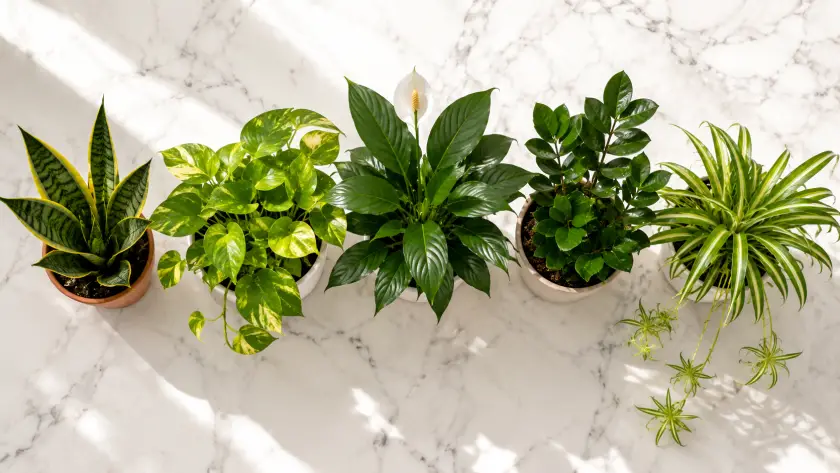
Category 1 — The Absolute Best Beginner Plants (Virtually Indestructible)
1. Snake Plant (Sansevieria trifasciata) — The Ultimate Beginner Plant
The snake plant is consistently ranked as the single best best indoor plant for beginners by plant experts worldwide — and for good reason. This architectural succulent tolerates conditions that would kill virtually any other houseplant:
Why snake plant is perfect for beginners:
- Survives 3–4 weeks without watering in cool conditions
- Thrives in everything from near-darkness to bright indirect light
- Tolerates dry indoor air, temperature fluctuations, and neglect
- Grows slowly but steadily — rewarding patience without demanding attention
- One of the most effective tall indoor house plants available — reaching 60–120cm with upright architectural leaves
Light: Low to bright indirect — one of the few genuinely low-light tolerant plants Water: Every 2–4 weeks in summer, monthly in winter — when soil is completely dry Soil: Cactus mix with perlite — fast draining essential Display: Floor plant, shelf plant, or desk plant — works everywhere
Our complete snake plant care guide covers every aspect of snake plant growing — from the correct soil and watering frequency to propagation and troubleshooting yellowing leaves.
2. Pothos (Epipremnum aureum) — The Best Beginner Vining Plant
Pothos is the definitive best indoor hanging plants for beginners — a trailing vine that communicates its needs clearly (wilting when thirsty, bouncing back immediately when watered) and grows with extraordinary speed under almost any indoor conditions.
Why pothos is perfect for beginners:
- One of the clearest communicators in the plant world — wilts dramatically when thirsty, recovers within hours of watering
- Tolerates low light but grows faster in bright indirect light
- The ultimate indoor vining plants for shelves and hanging baskets — trails magnificently
- Available in multiple varieties — golden pothos, neon pothos, marble queen, satin pothos
Light: Low to bright indirect — adapts to almost any position Water: When top 2 inches of soil are dry — every 7–14 days typically Soil: General potting mix with perlite Display: Hanging baskets, high shelves — allows long trailing stems
For complete pothos growing guidance covering all varieties and care requirements, our pothos plant care guide is the definitive resource. For display inspiration, our guide on trailing plants that look stunning on shelves and bookcases covers optimal pothos display positions.
3. Peace Lily (Spathiphyllum) — Best Beginner Flowering Plant
The peace lily is one of the best indoor flowering plants for beginners — producing elegant white flowers while simultaneously being extraordinarily forgiving of imperfect care.
Why peace lily is perfect for beginners:
- Droops dramatically when thirsty — providing unmissable watering reminders
- Recovers completely within hours of watering — no permanent damage from missed waterings
- One of the few flowering plants that thrives in lower light
- Beautiful white spathes (flowers) appear reliably even without supplemental feeding
Light: Low to medium indirect — one of the best flowering plants for darker rooms Water: When leaves begin to droop slightly — every 7–10 days typically Soil: General potting mix with coco coir Display: Floor or shelf plant, bathroom, bedroom
Important: Peace lily is toxic to cats and dogs — keep out of reach of pets. Our cat-friendly plants guide covers safe alternatives if you have pets.
Our complete peace lily care guide covers peace lily growing in full detail — including why it droops, how to encourage flowering, and the specific care differences between spring, summer, and winter.
4. ZZ Plant (Zamioculcas zamiifolia) — Most Drought-Tolerant Beginner Plant
The ZZ plant is the best indoor plant for beginners who travel frequently, work long hours, or know they will sometimes forget to water. Its underground rhizomes store water — allowing it to survive extraordinary periods of neglect.
Why ZZ plant is perfect for beginners:
- Stores water in underground rhizomes — survives 6+ weeks without watering
- One of the most genuinely low-light tolerant plants available
- Slow growing but extremely long-lived — a ZZ plant with minimal care outlasts many higher-maintenance plants
- Glossy, architectural dark green leaves add dramatic visual impact
Light: Low to bright indirect — tolerates near-darkness Water: Every 3–4 weeks in summer, every 6–8 weeks in winter Soil: Cactus mix with perlite — excellent drainage essential Display: Dark corners, office spaces, anywhere with minimal light
For display ideas for ZZ plants in difficult dark spaces, our guide on indoor plants that double as natural room dividers covers structural dark-tolerant plants including ZZ plant.
5. Spider Plant (Chlorophytum comosum) — Best Beginner Pet-Safe Plant
The spider plant is simultaneously one of the best indoor plants for beginners with cats, best indoor plants for beginners with dogs, and one of the most forgiving plants available for any beginner regardless of pet ownership.
Why spider plant is perfect for beginners:
- Completely non-toxic to cats and dogs — ASPCA confirmed safe
- Produces cascading spiderettes (baby plants) that can be propagated freely
- Extremely tolerant of inconsistent watering — recovers quickly from both over and underwatering
- One of the most effective indoor hanging plants for beginners — spiderettes cascade beautifully
Light: Low to bright indirect — extremely adaptable Water: When top inch of soil is dry — every 7–10 days Soil: General potting mix Display: Hanging baskets, high shelves — spiderettes trail spectacularly
Pet safety: Spider plant is the go-to recommendation for pet-owning beginners. For comprehensive pet-safe plant guidance, our guides on cat-friendly plants and dog-friendly plants cover the complete selection of non-toxic beginner plant options.
For guidance on displaying spider plants alongside other trailing species, our guide on low-light hanging plants for shelves, showers, and ceilings covers the best hanging plant combinations for beginners.
Category 2 — Best Beginner Plants for Low Light
6. Pothos — Low Light Champion
Already covered above — pothos genuinely thrives in positions where most plants decline. Its leaves darken slightly in low light (a natural adaptation to capture more of the available light) but growth continues and the plant remains healthy. Our complete guide to indoor light explains exactly what “low light” means in measurable terms and how to optimize any position for best indoor plants for beginners low light species.
7. Cast Iron Plant (Aspidistra elatior) — Literally Indestructible
The cast iron plant earned its common name honestly — it tolerates conditions that defeat even the most forgiving houseplants. Dark corners, irregular watering, temperature extremes, and neglect are met with steady, if slow, growth.
Light: Deep shade to low indirect — one of the few plants that genuinely thrives in dark corners Water: Every 2–3 weeks — highly drought tolerant Display: Dark hallways, north-facing rooms, under stairwells
8. Heartleaf Philodendron — Best Beginner Indoor Climbing Plant
The heartleaf philodendron is one of the most recommended indoor climbing plants for beginners — its heart-shaped leaves and vigorous vining growth make it visually impressive, while its care requirements are nearly as forgiving as pothos.
Why it is perfect for beginners:
- Grows rapidly in both low and bright indirect light
- Communicates watering needs clearly through wilting and rapid recovery
- Excellent indoor vining plants choice — climbs naturally when given support
- Very similar care to pothos — making it a natural progression once confidence is established
Light: Low to bright indirect Water: When top inch is dry — every 7–10 days Display: Climbing on a moss pole, trailing from shelves, hanging baskets
For display ideas combining indoor climbing and vining plants, our guide on how to create an indoor jungle without overcrowding covers vertical climbing plant displays for beginners.
Category 3 — Best Large Indoor Plants for Beginners
9. Snake Plant — Best Large Beginner Plant (Already Covered)
The snake plant naturally grows to 60–120cm — making it one of the best large indoor plants for beginners as well as the overall beginner plant champion. No other plant combines its height, architectural impact, and extraordinary resilience.
10. ZZ Plant — Structural Statement for Dark Corners
ZZ plants grow slowly but can eventually reach 60–90cm — making them effective tall indoor house plants for positions that cannot support more light-demanding large species.
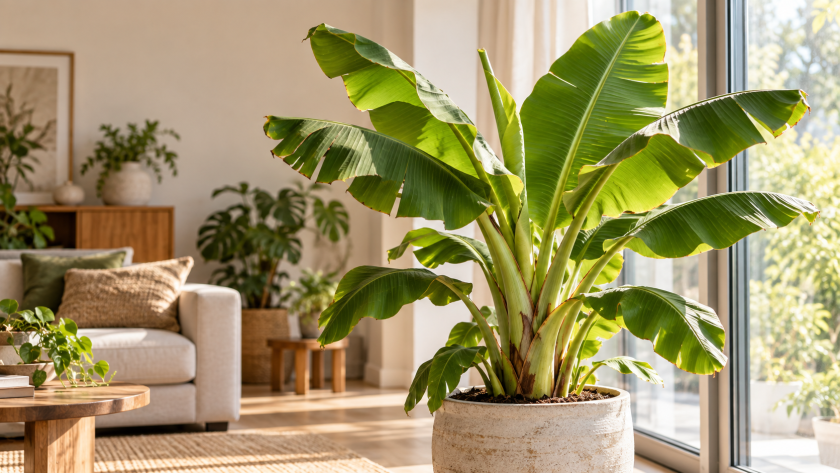
11. Bird of Paradise (Strelitzia reginae) — Dramatic Large Beginner Plant
The bird of paradise is one of the most dramatic largest indoor house plants and large leaf indoor plant options available — its enormous paddle-shaped leaves creating genuine tropical impact. Despite its exotic appearance, it is surprisingly forgiving of beginner care when placed in adequate light.
Light: Bright direct or indirect — needs the most light of any large beginner plant Water: When top 2 inches are dry — every 7–10 days in summer Display: Bright living room floor plant — needs space for its large spreading leaves
12. Rubber Plant (Ficus elastica) — Best Large Leaf Indoor Plant for Beginners
The rubber plant is one of the most recommended large leaf indoor plant species for beginners wanting structural, dramatic houseplants. Its large, glossy leaves — in green, burgundy, or variegated forms — make an immediate visual statement.
Why it is perfect for beginners:
- More forgiving of inconsistent watering than fiddle leaf fig (the classic alternative)
- Grows steadily to 1–2 metres indoors — becoming a genuine statement plant
- Leaves clean easily — important for photosynthesis efficiency
Light: Bright to medium indirect — more tolerant of lower light than fiddle leaf fig Water: When top 2 inches are dry — every 7–14 days Display: Living room floor plant, bright corner, beside large windows
For guidance on cleaning large rubber plant leaves, our guide on how to clean plant leaves without damaging them covers the correct technique for large glossy leaves. Our guide on colorful foliage indoor plants covers the burgundy and variegated rubber plant varieties that add dramatic color to beginner collections.
13. Elephant Ear Plant Indoor (Alocasia/Colocasia)
Elephant ear plant indoor varieties produce some of the most dramatic large leaves available in any houseplant — enormous, architectural, and genuinely tropical in appearance. While slightly more demanding than the absolute easiest beginner plants, modern compact varieties like Alocasia ‘Polly’ are accessible for motivated beginners.
Light: Bright indirect — needs consistent light for its large leaves Water: When top inch is dry — keep consistently moist in summer Humidity: Prefers higher humidity — our humidity hacks guide covers solutions for humidity-loving plants
Category 4 — Best Indoor Hanging Plants for Beginners
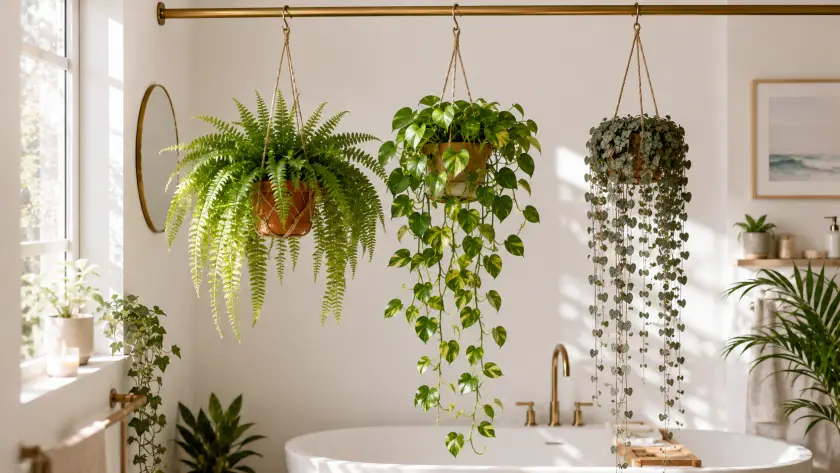
14. String of Hearts (Ceropegia woodii) — Most Beautiful Beginner Hanging Plant
The string of hearts produces delicate trailing stems with small heart-shaped leaves in green and silver — one of the most visually charming indoor hanging plants available and genuinely forgiving of the inconsistent watering that beginners provide.
Light: Bright indirect — needs more light than pothos for best growth Water: When soil is completely dry — every 10–14 days; very drought tolerant Display: Hanging basket, high shelf — long trailing stems cascade beautifully
15. Boston Fern (Nephrolepis exaltata) — Best Humidity-Loving Hanging Plant
The Boston fern is one of the most recommended best indoor hanging plants for beginners for humid rooms — particularly bathrooms with natural light, where its feathery fronds drape beautifully in hanging baskets.
Light: Bright indirect — good bathroom window or bright shelf Water: Keep consistently moist — never fully dry Humidity: Needs higher humidity — perfect bathroom plant Pet safety: Non-toxic to cats and dogs
Our guide on the best plants for your bathroom covers Boston fern as the top bathroom hanging plant recommendation. For complete fern care alongside other moisture-loving species, our soil mix guide covers the specific potting mix that keeps Boston ferns thriving.
16. Hoya (Hoya carnosa) — Best Long-Term Beginner Hanging Plant
Hoyas are among the most rewarding indoor hanging plants for beginners willing to be patient — they grow slowly but produce extraordinary clusters of waxy flowers (called umbels) that smell incredible and persist for weeks. They are nearly indestructible once established and incredibly long-lived.
Light: Bright indirect — needs consistent light for flowering Water: When completely dry — drought tolerant like succulents Display: Hanging basket, trailing from shelves — long stems over years Pet safety: Non-toxic — excellent for pet households
For guidance on fragrant indoor plants that include flowering hoyas, our guide on indoor plants that smell amazing without being overpowering covers hoya alongside the most fragrant houseplants for beginners.
Category 5 — Best Indoor Vining and Climbing Plants for Beginners
17. Heartleaf Philodendron — Best Indoor Climbing Plant for Beginners (Revisited)
As both an indoor vining plant and an indoor climbing plant, heartleaf philodendron represents the ideal beginner’s first climbing houseplant. Given a moss pole, it climbs naturally — producing progressively larger leaves as it ascends, mimicking its natural forest floor-to-canopy growth.
18. Pothos on a Moss Pole — Transforming a Trailing Plant Into a Climber
Pothos — the best beginner trailing plant — transforms into a spectacular indoor climbing plant when given a moss pole or trellis for support. Climbing pothos produce leaves 3–4 times larger than trailing specimens, creating a dramatically different visual impact from the same plant.
For guidance on setting up moss poles and climbing support structures, our guide on how to create an indoor jungle without overcrowding covers climbing plant display setups for beginners.
19. Indoor Lavender Plant — Herb and Ornamental Combined
Indoor lavender plant growing is more challenging than outdoor lavender — this Mediterranean herb needs the brightest available indoor light and excellent airflow to thrive indoors. However, a sunny south-facing windowsill provides adequate conditions, and the combination of fragrance, pollinators attracted during outdoor placement, and the dual culinary-ornamental use makes indoor lavender plant growing deeply rewarding.
Light: Full sun — most demanding light requirement of any beginner herb Water: When completely dry — extremely drought tolerant Soil: Cactus mix or gritty free-draining mix Air: Needs excellent air circulation — avoid still, stagnant air
For guidance on light requirements for sun-loving indoor herbs like indoor lavender plant, our complete guide to indoor light covers south-facing window optimization and grow light supplementation for high-light herbs.
20. Rosemary Plant Indoors — The Most Practical Beginner Herb
Rosemary plant indoors provides year-round culinary use while requiring minimal care beyond a sunny windowsill position and infrequent but thorough watering. As both an ornamental plant with needle-like evergreen foliage and a genuinely productive culinary herb, rosemary plant indoors offers the most practical value of any beginner plant.
Light: Bright direct sun — south-facing windowsill ideal Water: When completely dry — highly drought tolerant Soil: Cactus or gritty mix — excellent drainage essential Fragrance: One of the most pleasantly aromatic rosemary plant indoors benefits
For comprehensive guidance on growing herbs indoors including rosemary plant indoors care, our guide on growing your own easiest outdoor edible plants for beginners covers herbs in both indoor and outdoor container situations.
Category 6 — Best Indoor Plants for Beginners with Cats
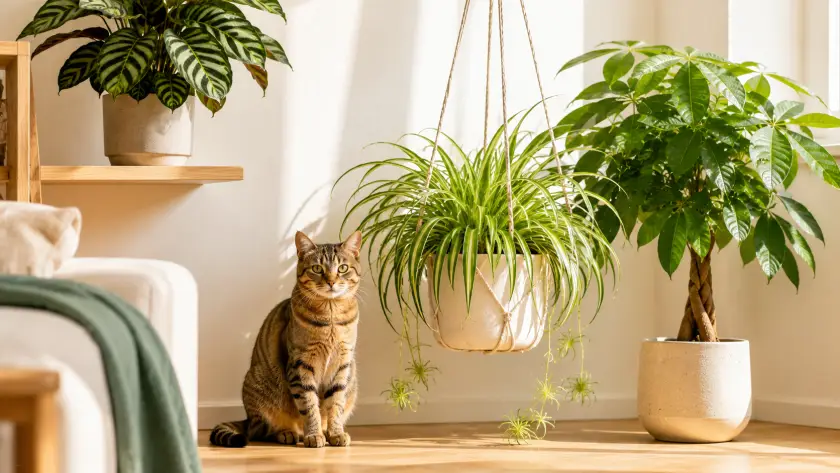
21. Calathea — Most Beautiful Pet-Safe Beginner Plant
Calatheas produce some of the most extraordinary leaf patterns in the houseplant world — purple undersides, intricate geometric markings, and velvety textures — while being completely non-toxic to cats and dogs. They are slightly more demanding than the absolute easiest beginner plants but well within reach for motivated beginners.
Light: Low to medium indirect — excellent for darker rooms Water: Keep consistently moist — never fully dry Humidity: Prefers higher humidity — bathroom positions work well Pet safety: Non-toxic to cats and dogs ✅
For complete guidance on pet-safe plant selection, our guide on how to make your plants cat-friendly covers calathea alongside all other non-toxic beginner plant options for cat households.
22. African Violet — Best Pet-Safe Flowering Beginner Plant
African violets produce continuous flowers in purple, pink, white, and bicolor forms — making them the best flowering option for beginners with cats or dogs who want color without toxicity risk.
Light: Bright indirect — east or west facing windowsill Water: Keep slightly moist — water at soil level to avoid crown rot Pet safety: Non-toxic to cats and dogs ✅
23. Money Tree (Pachira aquatica) — Lucky, Beautiful, and Pet-Safe
The money tree is simultaneously one of the best indoor plants for beginners with cats, best indoor plants for beginners with dogs, and one of the most visually distinctive beginner plant choices — its braided trunk and umbrella canopy of five-lobed leaves creating a genuinely exotic appearance.
Light: Bright indirect — tolerates some lower light Water: When top 2 inches are dry — every 7–14 days Pet safety: Non-toxic to cats and dogs ✅
Our complete money tree care guide covers money tree growing in full detail — including the specific care adjustments that keep its distinctive braided trunk healthy over the long term.
Category 7 — Best Indoor Tropical Plants for Beginners
24. Begonias as Indoor Plants — Colorful and Forgiving
Begonias as indoor plants offer extraordinary color diversity — from the plain-green wax begonias to the dramatic spotted rex begonias — while being genuinely forgiving of beginner care mistakes.
Why begonias are perfect for beginners:
- Enormous variety — hundreds of species in every color, leaf pattern, and growth form
- Most begonia species tolerate the inconsistent watering typical of beginners
- Best indoor flowering plants for beginners — most begonia types produce continuous flowers throughout the growing season
- Rex begonias provide extraordinary foliage even without flowers
Light: Bright indirect — east or west facing windows Water: When top inch is dry — consistent but not excessive moisture Display: Windowsills, bright shelves, bathroom positions with natural light
For guidance on the most colorful beginner-friendly indoor plants including begonias as indoor plants, our guide on colorful foliage indoor plants that aren’t just green covers the full range of colorful beginner plant options.
25. Aloe Vera — Most Practical Beginner Succulent
Aloe vera rounds out our list of best indoor plants for beginners as the most practically useful succulent available — its healing gel providing genuine first aid value alongside its architectural desert aesthetic.
Why aloe vera is perfect for beginners:
- Extremely drought tolerant — survives 3–4 weeks without water
- One of the most visually striking succulents for windowsill display
- Provides instantly accessible burn-soothing gel for kitchen first aid
- Produces pups (baby plants) that provide free new plants as the collection grows
Light: Bright indirect to some direct sun Water: Only when completely dry — every 2–3 weeks in summer Soil: Cactus mix with pumice — fast draining essential
Pet safety: Aloe vera is toxic to cats and dogs — keep out of reach in pet households. For pet-safe succulent alternatives, our cat-friendly plants guide identifies non-toxic succulent alternatives.
Our complete aloe vera care guide covers every aspect of aloe growing — from the correct soil and watering frequency to gel harvesting and propagation from pups.
Indoor Plant Potting Soil for Beginners — Getting the Foundation Right
Indoor Plant Potting Soil — Why It Matters More Than Most Beginners Realize
Indoor plant potting soil choice is the most commonly overlooked factor in beginner plant care — and one of the most impactful. Using the same potting mix for all plants is one of the most common beginner mistakes:
General beginner soil guide:
| Plant Type | Indoor Plant Potting Soil Recommendation |
|---|---|
| Succulents (aloe, snake plant) | Cactus mix + 30% perlite |
| Tropical plants (pothos, peace lily) | General potting mix + perlite + coco coir |
| Ferns (Boston fern) | Coco coir + perlite + compost |
| Begonias | Peat-based mix + perlite |
| Herbs (rosemary, lavender) | Gritty cactus mix |
Never use garden soil for indoor plants — it compacts severely in containers and introduces pests. Our comprehensive soil mix guide for every plant type covers exact ratios and DIY recipes for every beginner plant category.
Watering Guide for Beginners — The Most Important Skill
How to Water Beginner Plants Correctly
Incorrect watering causes more beginner plant deaths than any other single factor. The universal rule: always check soil before watering — never water on a fixed schedule.
The finger test: Push your finger 2 inches into the soil. Water only when dry at 2 inches for most plants. For succulents, wait until the entire pot feels dry. For ferns, water before reaching 2-inch dryness.
Never water in the evening — our guide on the worst times to water your plants explains exactly why morning watering produces consistently healthier results for every beginner plant.
Overwatering signs: Yellow leaves, mushy stems, foul-smelling soil. Our guide on signs you are overwatering and how to correct it covers the complete overwatering correction process.
Complete watering system: Our complete watering guide for healthy thriving plants gives beginners a comprehensive watering system covering every plant type and seasonal adjustment.
For self-watering solutions that reduce watering stress for beginners, our honest review of self-watering pots — do they really work? helps beginners decide whether self-watering systems suit their lifestyle.
Light Guide for Beginners — Matching Plants to Positions
Understanding Indoor Light for Beginners
Light is the second most common cause of beginner plant failure — either choosing sun-demanding plants for dark rooms or placing shade-loving plants in blazing direct sun.
Quick beginner light guide:
| Room/Position | Light Level | Best Beginner Plants |
|---|---|---|
| South-facing window | Bright direct | Aloe vera, rosemary, lavender, succulents |
| East/West window | Bright indirect | Pothos, peace lily, spider plant, money tree |
| North-facing window | Low indirect | Snake plant, ZZ plant, cast iron plant |
| Dark corner | Very low | ZZ plant, cast iron plant |
| Office (fluorescent) | Artificial | Snake plant, pothos, ZZ plant |
Our complete guide to indoor light covers exactly how to measure and optimize light levels for every beginner plant. For office-specific guidance, our office-friendly plants guide covers the best beginner indoor plants for artificial lighting conditions.
Displaying Beginner Plants — Room by Room Guide
Bedroom — Best Beginner Plants for Night Spaces
Bedroom plant choices for beginners should prioritize air quality, calming aesthetics, and minimal care requirements. Our guide on how to decorate your bedroom with plants covers the best beginner-friendly bedroom plant displays — with snake plant, pothos, and spider plant consistently topping the recommendations.
Home Office — Best Beginner Plants for Work Spaces
Office plants for beginners must survive artificial lighting and the irregular attention that busy work schedules allow. Our guide on improving your home office with plants covers the best beginner indoor plants for home office environments specifically.
Bathroom — Best Beginner Plants for Humid Rooms
Bathrooms with natural light suit moisture-loving beginner plants perfectly. Boston ferns, spider plants, and peace lilies all benefit from the ambient humidity that shower steam provides. Our guide on the best plants for your bathroom covers the top 33 bathroom plant recommendations — most of which overlap with best indoor plants for beginners.
Kitchen — Best Beginner Plants and Herbs for Cooking Spaces
Kitchen plants for beginners combine ornamental appeal with practical herb growing. For display inspiration combining decorative plants with kitchen herb gardens, our guide on how to style indoor plants by room covers kitchen and hallway plant styling for beginners.
Living Room — Statement Beginner Plants
Living room plants for beginners should make a visual impact while requiring manageable care. Our guide on indoor plants that double as natural room dividers covers large, structural beginner plants — including snake plant and ZZ plant — that create dramatic living room focal points.
Essential Beginner Plant Care Skills
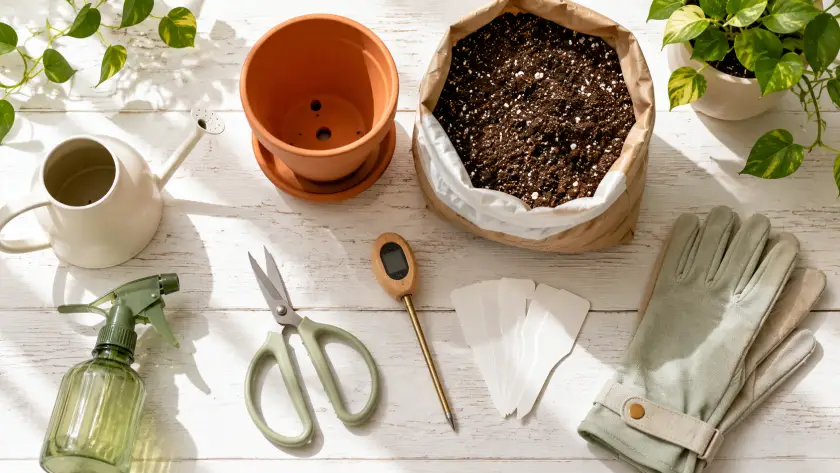
Repotting — When and How
Beginners often avoid repotting — but it is essential when plants become root-bound. Our complete repotting guide covers every step from identifying root-bound signs through the correct repotting technique and transplant shock aftercare.
Repotting mistakes beginners make: Our guide on repotting mistakes to avoid covers the most common errors — particularly going up too many pot sizes at once.
Propagation — Growing More Plants for Free
All the best indoor plants for beginners propagate readily — giving beginners free new plants as their confidence grows. Our guide on how to propagate houseplants easily at home covers propagation methods for every beginner plant on this list.
Troubleshooting Yellow Leaves
Yellow leaves are the most common beginner concern — almost always indicating overwatering. Our guide on why your plant leaves are turning yellow covers the complete diagnostic process.
Identifying Root Rot
Root rot from overwatering is the most common serious beginner plant problem. Our guide on root rot — how to identify, prevent and treat it covers the complete rescue process for overwatered beginner plants.
Reviving Struggling Plants
When a beginner plant is severely declining, our step-by-step guide on how to revive a dying plant covers emergency recovery applicable to every plant on this list.
Understanding Leaf Signals
Plants communicate through their leaves. Our guide on leaf curl, browning, and droop — what your plant is telling you teaches beginners to read the signals every plant gives before problems become serious.
Feeding Beginner Plants
Fertilizing is optional for beginners but improves growth significantly. Our guide on fertilizing indoor vs outdoor plants — what’s the difference covers beginner-friendly feeding schedules for every plant type.
Managing Humidity
Many beginner plants — particularly tropical species — need higher humidity than typical homes provide. Our guide on humidity hacks for happy plants without a humidifier and DIY humidity tray guide cover practical humidity solutions for beginners.
Should Beginners Talk to Their Plants?
It sounds whimsical — but research suggests speaking to plants makes owners more attentive and observant, catching watering issues, pest problems, and nutrient deficiencies earlier. Our guide on should you talk to your plants — the science behind it covers the genuine science behind plant-human interaction — recommended reading for any beginning plant owner wanting to build the observation habits that make collections thrive.
Building Your Collection — What to Add After Your First Plants
From Beginner to Intermediate — The Natural Progression
Once your best indoor plants for beginners are thriving, the natural next step is expanding your collection with slightly more demanding — but far more rewarding — species:
Next level plants after mastering beginner care:
- Christmas cactus — the spectacular winter bloomer that rewards patience
- Aloe vera — if you haven’t already — the most practically useful succulent
- Trailing plants for shelves — expanding your hanging and trailing display
- Air-purifying plants — adding functional environmental benefits to your collection
- Rare houseplants worth the hunt — for when beginner plants are thoroughly mastered
Creating a Feng Shui Beginner Collection
Many best indoor plants for beginners have powerful Feng Shui significance — particularly the money tree (abundance), snake plant (protective energy), and peace lily (calming energy). Our guide on Feng Shui indoor plants to attract positive energy covers how to position beginner plants for maximum positive energy flow.
Creating an Indoor Jungle as a Beginner
Once confident with individual plants, beginners often want to create full indoor jungle displays. Our guide on how to create an indoor jungle without overcrowding covers the plant selection, spacing, and display principles that create impressive jungle-style indoor gardens from beginner-friendly species.
Frequently Asked Questions
What Is the Absolute Best Indoor Plant for Beginners?
Best indoor plant for beginners — the single top recommendation — is the snake plant (Sansevieria trifasciata). It tolerates more neglect, more darkness, more irregular watering, and more environmental variability than any other commonly available houseplant. It grows slowly but steadily, communicates problems clearly through yellowing, and lives for decades with minimal intervention. Best beginner indoor plants second tier: pothos, ZZ plant, spider plant, and peace lily — all extraordinary choices for different situations and aesthetic preferences.
What Are the Best Indoor Plants for Beginners with Cats?
Best indoor plants for beginners with cats — non-toxic options confirmed safe by the ASPCA: spider plant, Boston fern, calathea, prayer plant, orchids, African violet, and money tree. All are beautiful, widely available, genuinely easy to grow, and completely safe for cat households. Our comprehensive cat-friendly plants guide covers the complete list of non-toxic beginner plant options alongside placement strategies for keeping cats and plants safely coexisting.
What Are the Best Indoor Plants for Beginners with Dogs?
Best indoor plants for beginners with dogs — non-toxic options: spider plant, Boston fern, calathea, orchids, African violet, money tree, and hoya. The overlap with cat-safe plants is significant — most ASPCA-listed non-toxic plants are safe for both dogs and cats. Our dog-friendly plants guide covers dog-specific plant safety considerations and display strategies.
What Are the Best Indoor Plants for Beginners Low Light?
Best indoor plants for beginners low light — plants that genuinely thrive in darker positions: snake plant (the champion), ZZ plant, pothos, heartleaf philodendron, peace lily, and cast iron plant. All of these grow — not just survive — in positions that most plants would decline in within weeks. Our complete guide to indoor light covers how to measure and optimize any position for low-light beginner plants.
What Are the Best Indoor Hanging Plants for Beginners?
Best indoor hanging plants for beginners: pothos (the easiest), spider plant (pet-safe and produces spiderettes), string of hearts (delicate and beautiful), hoya (long-lived and eventually flowers), and Boston fern (for humid bathrooms). All trail beautifully and tolerate the inconsistent care that beginners typically provide. Our guide on low-light hanging plants for shelves, showers, and ceilings covers hanging plant display ideas for beginner collections.
What Are the Best Tall Indoor House Plants for Beginners?
Best tall indoor house plants for beginners: snake plant (architectural and nearly indestructible — to 120cm), ZZ plant (slow growing but dramatic — to 90cm), rubber plant (fast growing large leaf impact — to 150cm+), and bird of paradise (most dramatic but needs bright light). All can be grown successfully by beginners — the choice depends primarily on available light.
What Indoor Vining and Climbing Plants Are Best for Beginners?
Indoor vining plants and indoor climbing plants for beginners: heartleaf philodendron and pothos are the clear top recommendations — both grow vigorously, communicate their needs clearly, tolerate inconsistent watering, and work equally well as trailers or climbers when given a moss pole for support. Our guide on how to create an indoor jungle without overcrowding covers climbing plant setups for beginners.
Related Guides on Patch Plants
- 🐍 Snake Plant Care Guide — Complete Sansevieria Tips
- 🌿 Pothos Plant Care Guide — Every Variety Complete
- 🌸 Peace Lily Care Guide — Complete Spathiphyllum Tips
- 🌵 Aloe Vera Care Guide — Complete Home Growing Guide
- 💰 Money Tree Care Guide — The Luckiest Indoor Plant
- 🐱 How to Make Your Plants Cat-Friendly
- 🐕 How to Make Your Plants Dog-Friendly
- 🌿 Trailing Plants That Look Stunning on Shelves
- 🌱 Low-Light Hanging Plants for Shelves and Ceilings
- 💡 Complete Guide to Indoor Light and Grow Lights
- 💧 Complete Watering Guide for Healthy Thriving Plants
- 🪴 Best Soil Mix for Every Plant Type
- 🔬 Root Rot — How to Identify, Prevent and Treat It
- 🌿 How to Repot a Plant — Complete Guide
- 🌱 Air-Purifying Indoor Plants That Actually Work
- 🌿 How to Create an Indoor Jungle Without Overcrowding
- 🌿 Feng Shui Indoor Plants for Positive Energy
- 🌱 Browse All Indoor Plant Guides
Final Thoughts
The best indoor plants for beginners are not just easy — they are teachers. Every snake plant that survives a forgotten watering teaches you about drought tolerance. Every peace lily that droops and recovers teaches you to read plant communication. Every spider plant that produces cascading spiderettes teaches you the satisfaction of propagation.
Best plants for beginners indoors give you permission to learn by doing — to make mistakes without catastrophic consequences, to experiment with different positions and watering frequencies until you find what works in your specific home with your specific lifestyle.
Start with one plant from this list. Give it the care described here. Watch it grow. Then add another. The collection builds naturally — each new plant teaching new skills that make the next plant easier.
The best beginner indoor plants are not a destination — they are a beginning. The confidence they build, the observation habits they develop, and the satisfaction they deliver are the foundation on which every thriving plant collection is built.
According to the Royal Horticultural Society, beginning with appropriate plant choices and building care skills gradually is the most reliable pathway to long-term success with indoor plants — making the initial plant selection the single most important decision any new plant owner makes. 🌿