🌿 Key Takeaways
- Monstera plant care centers on three rules — bright indirect light, water only when top 2 inches dry, and well-draining potting mix with perlite
- Monstera care for beginners is genuinely accessible — Monstera deliciosa is one of the most forgiving large tropical plants available for indoor growing
- Monstera deliciosa care requires bright indirect light to develop the iconic fenestrations (natural leaf holes) that make this plant so visually dramatic
- Monstera adansonii care needs higher humidity than deliciosa — its smaller, hole-filled leaves lose moisture faster and benefit from 60%+ humidity
- Monstera thai constellation care and thai constellation monstera care requires the brightest available indirect light — its cream variegation reduces photosynthetic capacity
- Swiss cheese monstera care — the common name covers both M. deliciosa and M. adansonii — both need similar care with adansonii preferring slightly more humidity
- Mini monstera care (Rhaphidophora tetrasperma) is not a true monstera but follows near-identical care — fast growing, trailing or climbing, very forgiving
- Monstera albo care requires the brightest indirect light available — heavy white variegation dramatically reduces photosynthesis capacity
- Browse our full indoor plant care guides for companion plant ideas that pair beautifully with monstera displays
Why Monstera Is the Most Iconic Houseplant of the Modern Era
Monstera plant care has become one of the most searched plant topics globally — and the reason is simple: no other widely available houseplant combines dramatic visual impact, genuine size potential, and accessible care requirements in the way that Monstera deliciosa does. Its enormous, deeply fenestrated leaves have become the defining image of contemporary indoor plant culture — appearing on everything from wallpaper to ceramics to fashion.
How to care for a monstera plant is genuinely beginner-accessible — the standard green deliciosa tolerates lower light, irregular watering, and inconsistent humidity better than many other large tropical species. Its variegated relatives — monstera thai constellation, monstera albo, and other rare varieties — are significantly more demanding, but the care principles remain the same with higher stakes.
This complete monstera care guide covers every major variety — from monstera deliciosa care and monstera adansonii care to the rare monstera albo care, monstera peru care, monstera obliqua care, and mini monstera care — with specific guidance on light, watering, soil, humidity, propagation, and troubleshooting.
Monstera Varieties — Complete Guide
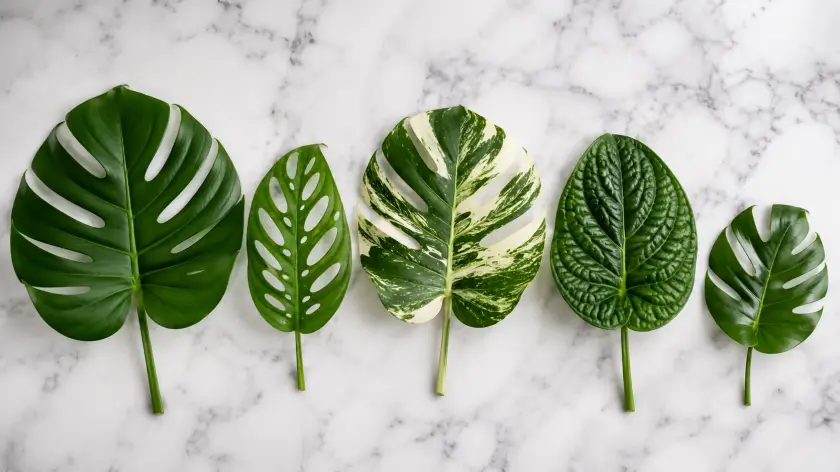
Monstera Deliciosa — The Classic Swiss Cheese Plant
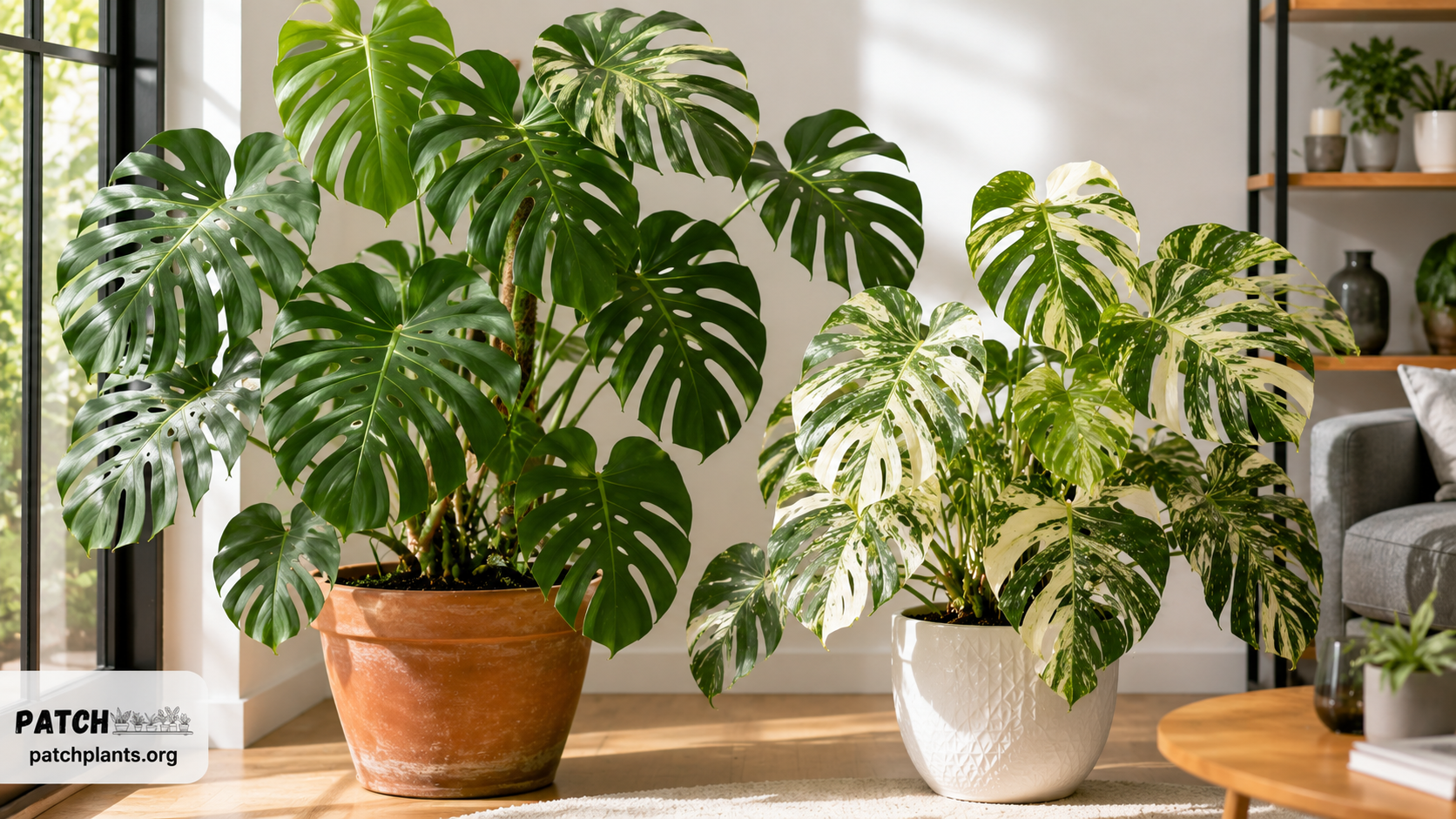
Monstera deliciosa is the variety most people picture when they think of monstera — its large, glossy, deep-cut and hole-filled leaves growing to enormous sizes in ideal conditions. Monstera deliciosa care is the most forgiving of all monstera varieties — making it the natural starting point for beginners.
Care summary: Bright indirect light, water every 7–10 days when top 2 inches dry, humid conditions preferred but tolerates average indoor humidity.
Fenestration development: The iconic holes (fenestrations) develop as the plant matures — young leaves are solid heart-shaped and hole-free. Adequate bright indirect light is the primary driver of fenestration development. Plants in low light produce smaller, less fenestrated leaves. Our complete guide to indoor light covers exactly how to optimize light levels for maximum monstera leaf development.
Monstera Adansonii — The Swiss Cheese Vine
Monstera adansonii care differs from deliciosa in several important ways — adansonii is a vining species with smaller leaves featuring oval holes rather than deep cuts, and it needs higher humidity and more consistent moisture.
Monstera adansonii care specifics:
- Light: Bright indirect — similar to deliciosa but slightly more sensitive to direct sun
- Water: When top inch is dry — slightly more frequently than deliciosa
- Humidity: 60%+ preferred — leaves are thinner and lose moisture faster
- Growth habit: Trailing or climbing — beautiful in hanging baskets or on moss poles
For humidity management for monstera adansonii care and other moisture-loving tropical species, our guides on humidity hacks for happy plants and DIY humidity tray guide cover the most effective solutions.
Monstera Thai Constellation — The Most Sought-After Variety
Monstera thai constellation care and thai constellation monstera care is among the most discussed plant care topics online — because this variety’s extraordinary cream-splashed variegation makes it one of the most visually dramatic and valuable houseplants available.
Thai constellation monstera care requirements:
- Light: Brightest available indirect light — cream variegation contains no chlorophyll, requiring maximum light from green portions
- Water: When top 2 inches dry — same as deliciosa but slower growing
- Growth rate: Significantly slower than standard deliciosa — reduced photosynthetic capacity slows all biological processes
- Stability: Unlike monstera albo, Thai constellation variegation is stable — produced by a tissue culture mutation that does not revert
Monstera thai constellation plant care note: This variety rarely needs repotting due to its slow growth — check roots every 2–3 years rather than annually.
For light optimization for high-variegation plants including monstera thai constellation care, our complete guide to indoor light covers grow light supplementation that dramatically improves variegated monstera performance in darker homes.
Monstera Albo — The Rarest Mainstream Variety
Monstera albo care (formally Monstera deliciosa ‘Albo Variegata’) is the most demanding and expensive mainstream monstera variety — its white-and-green sectoral variegation creating the most dramatic visual impact of any monstera cultivar.
Monstera albo plant care specifics:
- Light: Maximum bright indirect light — white portions are entirely non-photosynthetic
- Water: When top 2 inches dry — identical to deliciosa in frequency
- Variegation stability: Unlike Thai constellation, albo variegation is unstable — can revert to all-green or all-white (which dies without chlorophyll)
- Risk factor: All-white sections cannot photosynthesize — if a stem produces all-white growth, cut back to the last green-and-white node
For guidance on displaying rare and expensive monstera varieties including monstera albo care setups, our guide on how to create an indoor jungle without overcrowding covers spatial planning for large specimen plants.
Monstera Peru — The Textured Dark Variety
Monstera peru care (Monstera karstenianum) is one of the most underrated monstera varieties — its deeply textured, bullate (puckered) dark green leaves creating extraordinary tactile and visual interest without the care demands of variegated varieties.
Monstera peru care requirements:
- Light: Bright indirect — tolerates slightly lower light than deliciosa
- Water: Allow top 2 inches to dry — similar drought tolerance to deliciosa
- Growth habit: Compact vining — works excellently on small moss poles
- Availability: Increasingly common and significantly more affordable than variegated varieties
Monstera Adansonii — The Swiss Cheese Vine (Expanded)
Monstera adansonii plant care is particularly popular among collectors who want the monstera aesthetic in a more compact, trailing format. Unlike deliciosa which grows upright, adansonii trails naturally — making it one of the most effective trailing plants for shelves and bookcases available for plant collectors.
Mini Monstera — Rhaphidophora Tetrasperma
Mini monstera care is technically not monstera care at all — Rhaphidophora tetrasperma is a separate genus that resembles a miniature monstera but is more closely related to pothos. However, mini monstera care follows near-identical principles to monstera adansonii care — making it an excellent entry point before investing in more expensive monstera varieties.
Mini monstera care advantages:
- Significantly cheaper than true monstera varieties
- Faster growing — reaches impressive size within 1–2 years
- More forgiving of lower humidity than adansonii
- Non-toxic to pets — unlike true monstera
For guidance on low-light hanging plant options that work alongside mini monstera care in similar care conditions, our guide on low-light hanging plants for shelves, showers, and ceilings covers the best companion species.
Other Notable Monstera Varieties
Monstera obliqua care — extremely rare, paper-thin leaves that are more hole than leaf. Far more demanding than any mainstream variety — very high humidity (80%+) essential.
Monstera siltepecana care — silver-blue juvenile leaves that mature to fenestrated dark green. One of the most beautiful juvenile-form monsteras available.
Monstera standleyana care / Monstera standleyana albo care — vining monstera with lance-shaped leaves and cream variegation. Lower light than deliciosa, trailing habit makes it excellent for hanging baskets.
Monstera burle marx flame care — rare variety with elongated leaves and distinctive flame-like growth pattern. Similar care to deliciosa but slower growing.
Monstera cobra care — distinctive upright growth with lance-shaped dark leaves. One of the most architecturally striking monstera varieties for statement plant displays.
Complete Monstera Plant Care Guide
Monstera Care at a Glance
| Care Factor | Standard Monstera | Variegated Varieties |
|---|---|---|
| Light | Bright indirect | Brightest indirect available |
| Watering | Top 2 inches dry | Same — more careful |
| Temperature | 18–27°C | 18–27°C |
| Humidity | 50–70% | 60–70%+ |
| Soil | Well-draining + perlite | Same |
| Fertilizer | Monthly spring/summer | Half strength only |
| Pot | Terracotta or ceramic + drainage | Same |
| Toxicity | Toxic to cats and dogs | Same |
Monstera Plant Care Indoor — Light Requirements
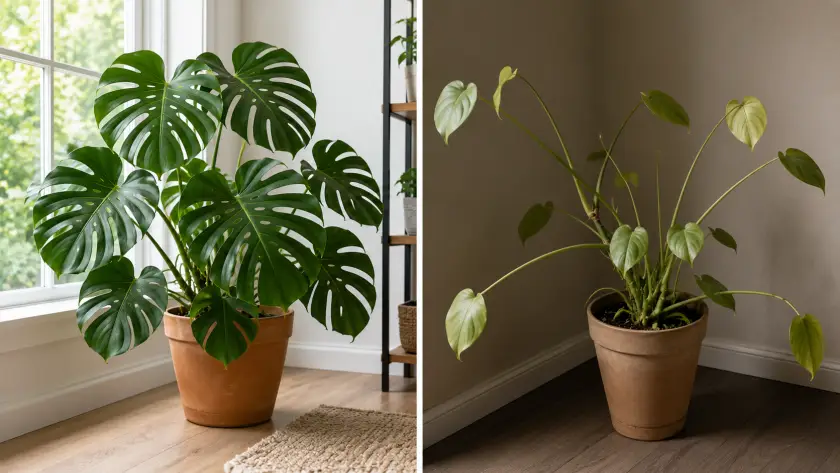
Monstera plant care indoor light is the most critical factor determining leaf size, fenestration development, and growth rate. The difference between a monstera in adequate light and one in insufficient light is dramatic — smaller leaves, no holes, pale color, and leggy stretched growth in low light versus large, deeply fenestrated, vivid green leaves in bright indirect light.
Light requirements by variety:
- Monstera deliciosa: 1–2 metres from a bright window — east or west facing ideal
- Monstera adansonii: Bright indirect — similar to deliciosa but avoid harsh direct afternoon sun
- Monstera thai constellation: As close to a bright window as possible without direct sun exposure
- Monstera albo: Maximum bright indirect — supplement with grow lights in darker homes
- Monstera peru: Tolerates slightly lower light than deliciosa — good for less-bright rooms
Signs of insufficient light:
- New leaves smaller than established leaves
- Solid leaves without fenestrations despite plant maturity
- Long, stretched stems with widely spaced leaves
- Pale, washed-out leaf color
For complete light optimization guidance including grow light supplementation for monstera plant care indoor in darker positions, our complete guide to indoor light covers everything from measuring light levels to choosing the right supplemental grow lights.
How to Care for Monstera Plant — Watering
How to care for monstera plant watering follows the finger test universally — push your finger 2 inches into the soil and water only when dry at that depth. This applies to all monstera varieties regardless of the specific type.
Monstera plant care tips for watering:
- Water thoroughly until drainage flows from the bottom
- Never leave monstera standing in water — empty saucers within 30 minutes
- Use filtered or rainwater when possible — tap water mineral buildup causes brown leaf tips over time
- Reduce watering frequency by 50% in winter
Overwatering signs in monstera:
- Yellow leaves — particularly lower leaves first
- Mushy stems at the base
- Foul-smelling soil
For comprehensive overwatering diagnosis and treatment, our guides on signs you are overwatering, root rot — how to identify, prevent and treat it, and why your plant leaves are turning yellow cover every watering-related problem in detail.
For optimal watering timing, our guide on the worst times to water your plants explains exactly why morning watering produces consistently healthier results.
Best Soil for Monstera Plant Care
Monstera plant care soil must balance moisture retention (monstera roots do not like to completely dry out like cacti) with drainage adequate to prevent waterlogging.
Best monstera potting mix:
2 parts general potting mix 1 part perlite 1 part coco coir Optional: small amount of pine barkThe bark addition improves aeration and prevents compaction in large deep pots — particularly important for mature monstera deliciosa care specimens in pots over 30cm diameter.
Our complete soil mix guide covers exact ratios and DIY recipes for monstera and every other indoor plant type.
Monstera Care Indoors — Temperature and Humidity
Monstera care indoors temperature requirements are straightforward — standard room temperatures (18–27°C) suit all mainstream varieties. Avoid positions beside cold drafts, heating vents, or air conditioning units that create temperature fluctuations.
Humidity by variety:
- Monstera deliciosa: 50–60% — tolerates average indoor humidity
- Monstera adansonii: 60–70% — benefits from consistent humidity management
- Monstera thai constellation: 60–70%
- Monstera albo: 60–70%
- Mini monstera: 50–60% — more tolerant than adansonii
For humidity management solutions, our guides on humidity hacks for happy plants and DIY humidity tray cover pebble tray, grouping, and misting approaches.
Monstera Plant Care Tips — Fertilizing
Monstera plant care tips for feeding:
- Feed monthly in spring and summer with balanced liquid fertilizer at half strength
- Stop feeding completely in autumn and winter
- Variegated varieties (monstera albo care, thai constellation monstera care) need even lower fertilizer concentration — quarter strength maximum
- Over-fertilizing causes brown leaf tips and white soil surface crust
For complete fertilizing guidance, our guide on fertilizing indoor vs outdoor plants covers monstera-specific feeding schedules.
Monstera Repotting — When and How
Monstera repotting frequency varies by variety — standard deliciosa grows fast and may need annual repotting when young, while variegated varieties grow much more slowly.
Signs repotting is needed:
- Roots emerging from drainage holes
- Soil drying within 2–3 days of watering
- Plant becoming severely top-heavy
Our complete repotting guide covers the specific technique for monstera’s large root system — including how to handle aerial roots without damaging them. Our guide on repotting mistakes to avoid covers the most common errors — particularly over-potting monstera into pots too large.
How to Care for Monstera Plants — Aerial Roots
How to care for monstera plant aerial roots confuses many beginners — those thick, cord-like roots emerging from the stem above soil level are normal and beneficial, not a sign of a problem.
What to do with monstera aerial roots:
- Tuck into the soil if they are reaching downward — they will provide additional moisture absorption
- Wrap around a moss pole if the plant is climbing — aerial roots attach naturally to moist moss
- Never cut them off — they contribute to plant health and moisture absorption
- Mist them occasionally in dry conditions — aerial roots absorb atmospheric moisture
Monstera Propagation — Complete Guide
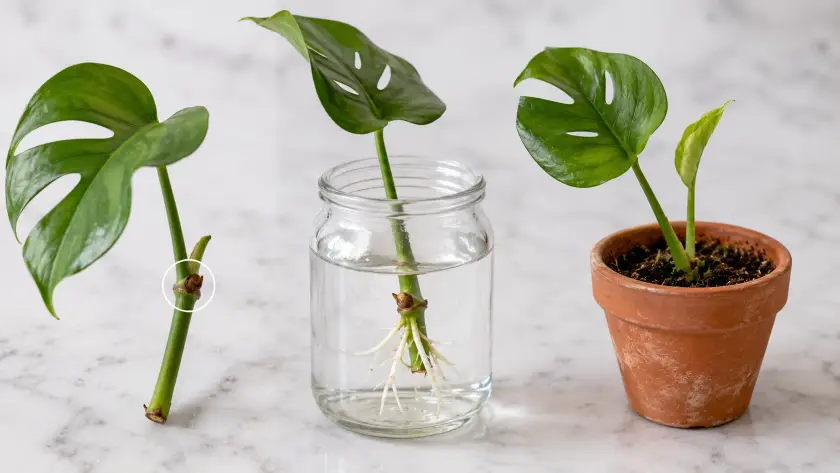
How to care for monstera plant cuttings during propagation requires understanding the node — the small brown bump on the stem from which both leaves and roots emerge. A cutting without a node will never root regardless of how long it is kept in water or soil.
Monstera propagation steps:
- Identify a healthy stem with at least one node and one leaf
- Cut just below the node with clean scissors
- Place in water — submerging the node but keeping leaves above water
- Change water every 7–10 days
- Roots develop in 2–6 weeks
- Transfer to moist potting mix once roots reach 3–5cm
For complete propagation guidance covering all houseplant types including monstera, our guide on how to propagate houseplants easily at home covers water and soil propagation methods in full detail.
Monstera Plant Care Indoor — Displaying and Styling
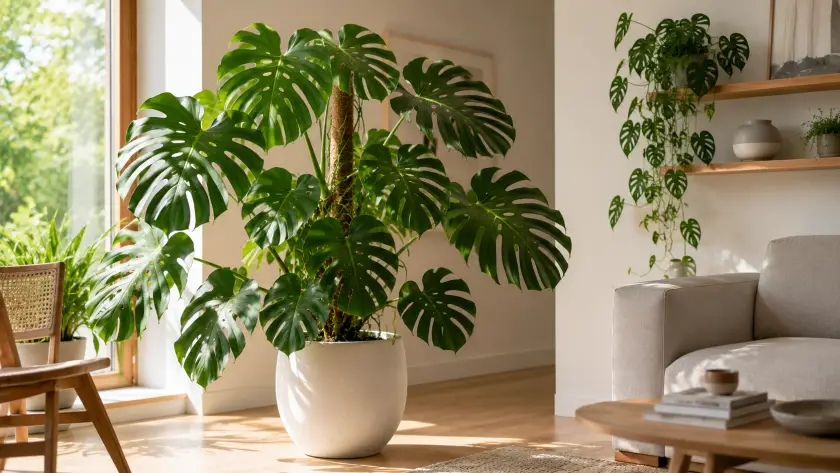
Monstera plant care indoor display options are extensive — the plant’s dramatic size and architectural leaf form makes it one of the most impactful statement plants available for any room.
Best display positions:
Living room floor plant: A mature deliciosa in a large terracotta or ceramic pot creates the most dramatic living room statement plant available. For guidance on integrating large specimen plants into room displays, our guide on how to create an indoor jungle without overcrowding covers plant density and spatial arrangement.
Room divider: Large monstera on shelving units creates natural spatial definition between living and dining areas. Our guide on indoor plants that double as natural room dividers covers monstera as one of the most effective room divider plant options.
Bedroom: Monstera adds tropical atmosphere without demanding attention. Our guide on how to decorate your bedroom with plants covers bedroom monstera positioning.
Home office: Monstera’s air-purifying properties and visual impact make it excellent for home offices. Our guide on improving your home office with plants covers office monstera care.
Styling guidance: Our guide on how to style indoor plants by room covers monstera placement principles for every room type.
Monstera Care — Pet Safety
Monstera plant care pet safety is critical — all true monstera varieties contain calcium oxalate crystals that are toxic to cats and dogs, causing oral irritation, drooling, vomiting, and difficulty swallowing.
For complete pet-safe plant guidance and non-toxic monstera alternatives, our guides on cat-friendly plants and dog-friendly plants cover safe positioning strategies and non-toxic alternatives for pet households.
Monstera Troubleshooting — Common Problems
| Problem | Most Likely Cause | Solution |
|---|---|---|
| Yellow leaves | Overwatering | Check soil, reduce watering frequency |
| Brown leaf tips | Low humidity or mineral water | Increase humidity, use filtered water |
| No fenestrations | Insufficient light | Move to brighter position |
| Leggy growth | Too little light | Brighter indirect light or grow lights |
| Mushy stems | Root rot | Emergency repot — check root rot guide |
| Leaves curling | Underwatering or low humidity | Water check + humidity increase |
| Pale leaves | Too much direct sun or insufficient nutrients | Indirect light + monthly feeding |
For comprehensive leaf symptom diagnosis, our guide on leaf curl, browning, and droop — what your plant is telling you covers every visible monstera leaf symptom.
For severely struggling monstera plants, our step-by-step how to revive a dying plant guide covers emergency recovery.
Monstera Care for Beginners — Quick Start Guide
Monstera care for beginners starting with their first plant:
Choose your variety wisely: Start with standard Monstera deliciosa — the most forgiving variety and the most affordable. Build confidence before investing in monstera albo or monstera thai constellation varieties that cost significantly more and have less margin for care errors.
Start with a moss pole: Monstera naturally climbs — providing a moss pole from the start encourages upright growth and larger, more fenestrated leaves than trailing or ground-spreading specimens.
Observe before adjusting: Allow 4–6 weeks in a new position before deciding the light is inadequate. Monstera takes time to adjust to new environments. For guidance on reading plant health signals during adjustment periods, our guide on should you talk to your plants — the science behind it covers the observation habits that help beginners read plant health signals accurately.
Connect with other monstera growers: The monstera community is one of the most active in houseplant culture — sharing care tips, propagation cuttings, and variety identification support.
For beginners starting their indoor plant journey with monstera as the flagship plant, our guide on best indoor plants for beginners covers the companion beginner plants that pair beautifully with monstera in mixed collections.
Frequently Asked Questions
How to Care for a Monstera Plant — The Basics?
How to care for a monstera plant in three rules: bright indirect light (1–2 metres from a bright window), water when the top 2 inches of soil are dry (every 7–14 days depending on season), and use well-draining potting mix with perlite. Beyond these basics, monstera plant care is genuinely forgiving — this tropical species tolerates inconsistent care better than many popular houseplants.
How to Care for Monstera Deliciosa Specifically?
Care of monstera deliciosa centers on maximising fenestration development — the iconic leaf holes that make this plant so distinctive. Provide the brightest available indirect light (east or west-facing window), water every 7–10 days when top 2 inches are dry, maintain 50–60% humidity, and give it a moss pole to climb. Monstera deliciosa care indoors in a bright position with a climbing support produces the most dramatically beautiful specimens.
What Is Thai Constellation Monstera Care?
Thai constellation monstera care requires the brightest available indirect light — its cream-and-green variegated leaves contain significantly less chlorophyll than standard deliciosa, meaning the plant must generate all its energy from the green portions alone. Monstera thai constellation care otherwise follows standard deliciosa principles — same soil, same watering approach — but with slower growth, higher light demands, and higher purchase cost justifying more careful attention.
How to Care for Monstera Adansonii?
Monstera adansonii care requires consistently higher humidity than deliciosa — its thinner, more perforated leaves lose moisture faster. Provide bright indirect light, water when the top inch is dry (slightly more frequently than deliciosa), maintain 60%+ humidity using a pebble tray or humidifier, and give it a trailing or climbing position where its distinctive oval-holed leaves can display fully.
Is Monstera Toxic to Cats and Dogs?
Yes — all true monstera varieties contain calcium oxalate crystals that cause oral irritation, drooling, and vomiting in cats and dogs. Keep monstera in positions inaccessible to pets. Our cat-friendly plants guide covers non-toxic alternatives with similar visual impact for pet households.
How Often Should I Water My Monstera?
How to take care of a monstera watering — check every 5–7 days using the finger test. Water when the top 2 inches are completely dry — typically every 7–10 days in spring and summer, every 10–14 days in autumn, and every 14–21 days in winter. Never water on a fixed schedule without checking soil first. Our complete watering guide covers the complete monstera watering system.
Can Monstera Grow in Low Light?
Monstera deliciosa tolerates medium-low light but does not thrive in it — leaves remain small and unfenestrated. Monstera plant care indoor in truly low light positions produces disappointing results regardless of how perfectly other care factors are managed. Supplement with grow lights if natural light is insufficient — our indoor light guide covers grow light selection and placement for monstera.
Related Guides on Patch Plants
- 🌿 Pothos Plant Care Guide — Complete Variety Guide
- 🌱 ZZ Plant Care Guide — Every Variety Complete
- 🐍 Snake Plant Care Guide — Complete Sansevieria Tips
- 🌸 Peace Lily Care Guide — Complete Spathiphyllum Tips
- 🌱 Best Indoor Plants for Beginners — 25 Easy Picks
- 🌿 Trailing Plants That Look Stunning on Shelves
- 🌱 Low-Light Hanging Plants for Shelves and Ceilings
- 💡 Complete Guide to Indoor Light and Grow Lights
- 💧 Complete Watering Guide for Healthy Thriving Plants
- 🪴 Best Soil Mix for Every Plant Type
- 🔬 Root Rot — How to Identify, Prevent and Treat It
- 🌿 How to Repot a Plant — Complete Guide
- 🌱 How to Propagate Houseplants Easily at Home
- 🐱 How to Make Your Plants Cat-Friendly
- 🐕 How to Make Your Plants Dog-Friendly
- 🌿 How to Create an Indoor Jungle Without Overcrowding
- 🌱 Browse All Indoor Plant Guides
Final Thoughts
Monstera plant care is one of the most rewarding experiences in indoor gardening — because this plant delivers visible, rapid, dramatic results that reward attentive care more visibly than almost any other houseplant. A monstera leaf unfurling from its tight scroll into a fully expanded, fenestrated adult leaf is one of the most satisfying moments in any plant collection — and it happens regularly when monstera care indoors conditions are correct.
Monstera care for beginners starts with one plant — the standard deliciosa — in the brightest available indirect light position. Master its signals, learn its rhythm, and build the confidence to eventually add a monstera adansonii, a monstera thai constellation, or the extraordinary monstera albo. Each variety teaches something new while building on the same fundamental principles.
Get the light right. Water when dry. Keep it humid. Give it something to climb. And watch this extraordinary plant reward you with leaves that get more spectacular with every new growth.
According to the Royal Horticultural Society, Monstera deliciosa is among the most recommended statement houseplants for UK homes — combining dramatic visual impact, genuine air-purifying properties, and more accessible care requirements than its exotic appearance suggests. 🌿