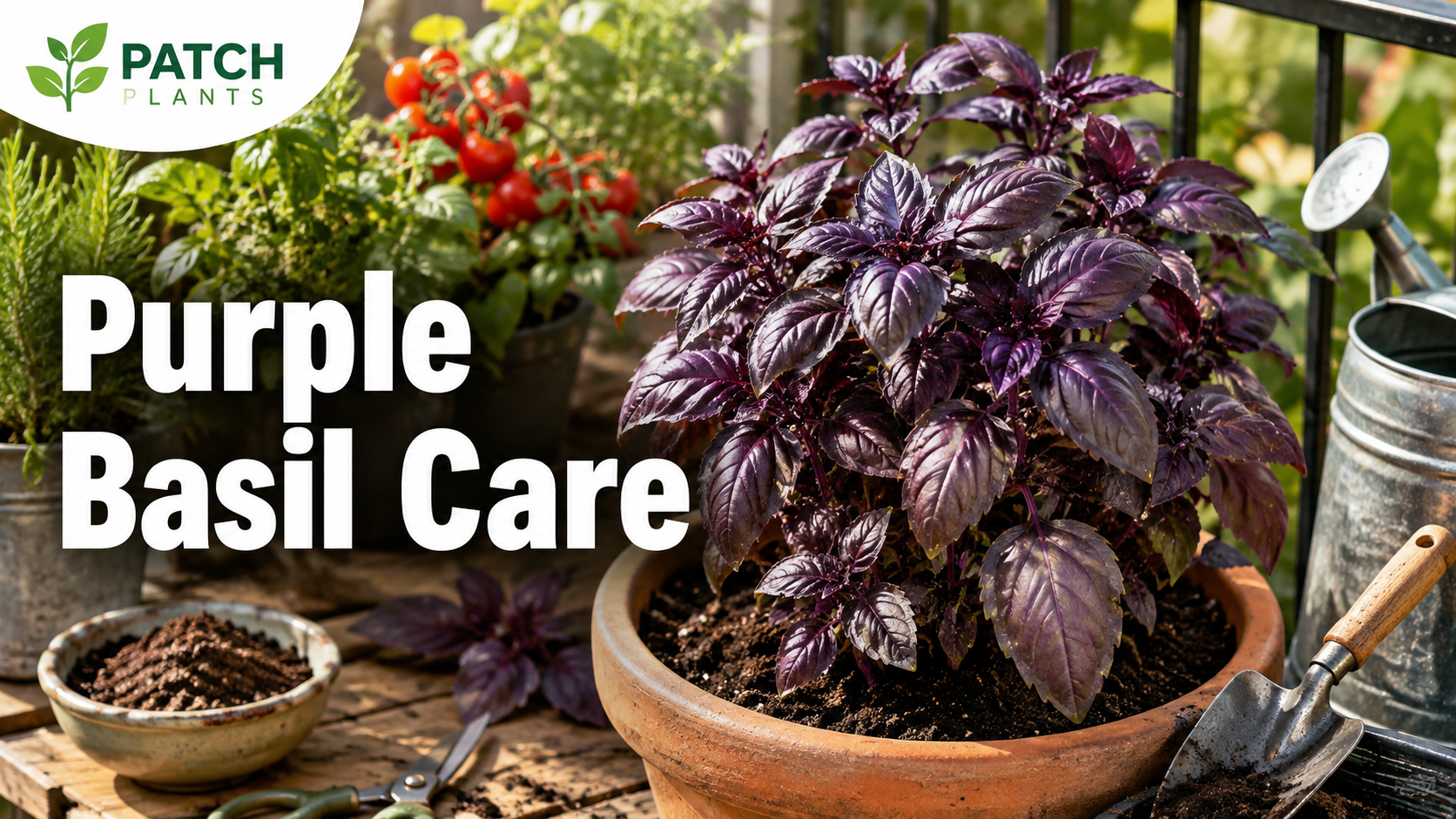
A purple basil plant gives you more than a useful kitchen herb. It brings dark purple leaves, warm clove-like basil aroma, edible colour, and strong contrast in herb gardens, balcony pots, raised beds, and sunny kitchen windowsills.
Purple basil is usually grown as a warm-season annual. It likes full sun, warmth, moist but well-drained soil, and regular harvesting. With steady pruning, one small plant can give you fresh leaves for salads, pesto, tomato dishes, infused vinegar, and garnishes all summer.
Growing Snapshot
The best way to grow a purple basil plant is to plant it after frost, place it in full sun, use well-draining soil, water when the top layer begins to dry, and pinch stems often. Keep plants warm, avoid soggy soil, do not overfeed, and harvest before flower spikes fully open if you want the best leaf texture and flavour.
Key Takeaways
- A purple basil plant needs warmth, full sun, and moist but well-drained soil.
- Purple basil leaves are edible and useful for salads, pesto, vinegars, oils, pasta, and garnishes.
- Pinching stems keeps the plant bushy and delays flowering.
- Containers work well if they have drainage holes and a sunny location.
- Indoor purple basil needs a very bright window or grow light.
- Good airflow helps reduce basil disease problems, especially in humid weather.
- Use this guide with easy outdoor edible plants, container gardening on patios, and complete watering tips.
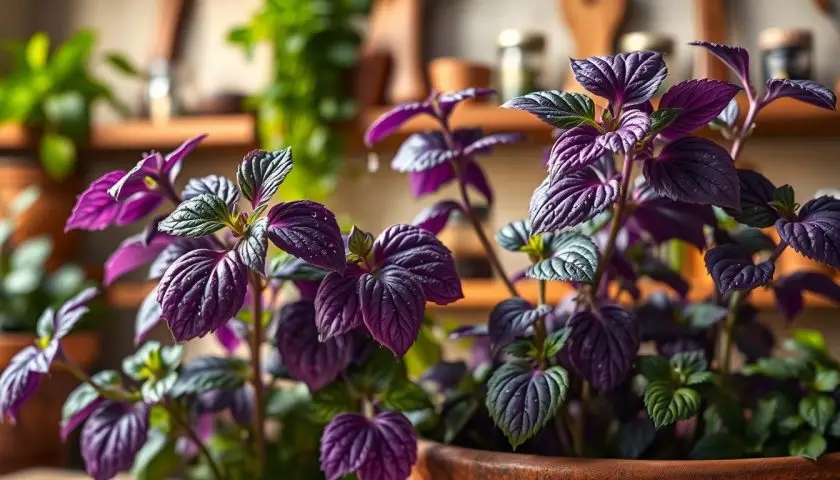
Purple Basil Plant Care at a Glance
| Care Area | Best Choice | Common Mistake |
|---|---|---|
| Light | Full sun, at least 6 hours daily | Growing in a dim window |
| Temperature | Warm, frost-free conditions | Planting outside too early |
| Soil | Moist but well-drained soil | Heavy soggy mix |
| Water | Water when top layer begins to dry | Letting it wilt repeatedly |
| Feeding | Light feeding if growth slows | Heavy fertilizing that weakens flavour |
| Pruning | Pinch often above leaf pairs | Letting it flower too early |
| Harvest | Cut small amounts regularly | Stripping most leaves at once |
What Makes Purple Basil Different?
Purple basil is a form of basil grown for both flavour and foliage colour. The leaves range from burgundy-purple to almost black-purple depending on variety, light, temperature, and plant health. It is still basil, but it makes a stronger visual statement than regular green sweet basil.
Most purple basil plants belong to Ocimum basilicum types. They usually grow as tender annual herbs, with aromatic leaves and flower spikes that appear if the plant is not pinched regularly.
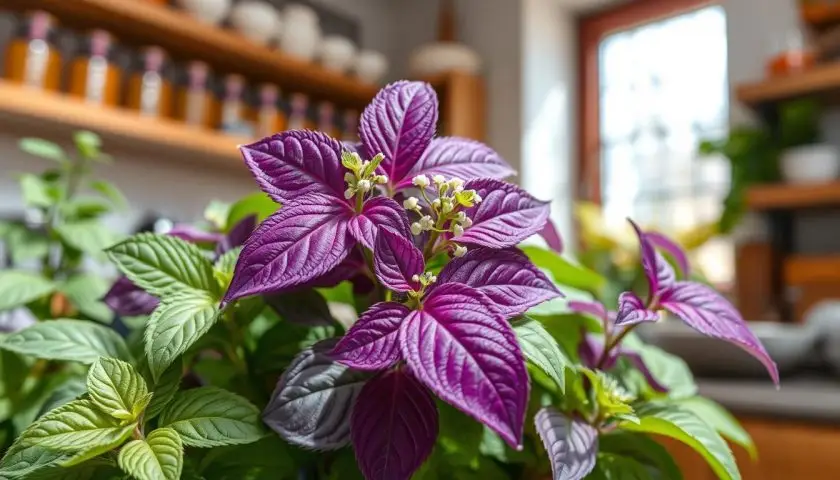
Purple basil vs green basil
| Feature | Purple Basil | Green Sweet Basil |
|---|---|---|
| Leaf colour | Purple, burgundy, bronze, or dark red-purple | Bright to deep green |
| Flavour | Basil flavour, often slightly spicier or more clove-like | Classic sweet basil flavour |
| Best uses | Garnishes, salads, vinegars, colour contrast | Pesto, sauces, tomato dishes, general cooking |
| Garden value | Decorative edible foliage | Reliable culinary herb |
| Care needs | Warmth, sun, pruning, drainage | Warmth, sun, pruning, drainage |
Popular purple basil varieties
- Dark Opal Basil: A classic purple basil with deep colour and strong ornamental value.
- Purple Ruffles Basil: Frilled leaves with dramatic texture and colour.
- Red Rubin Basil: Dark red-purple leaves and a strong basil scent.
- Osmin Purple Basil: Deep colour and compact growth for pots.
- Amethyst Basil: Very dark leaves when grown in strong light.
Choose Seeds, Cuttings, or a Nursery Plant
You can start a purple basil plant from seed, buy a young plant, or root a cutting from a healthy plant. Seeds give you more variety choice. Nursery plants give faster harvests. Cuttings are useful when you want to keep a favourite plant going.
Starting from seed
Purple basil seeds are a good choice if you want several plants for containers, herb beds, or gifts. Check the seed packet for variety name, sowing depth, expected germination time, and spacing.
Buying a nursery plant
Choose a compact, healthy plant with strong stems and clean leaves. Avoid plants that are yellowing, badly wilted, root-bound, or already covered in flower spikes.
Rooting a cutting
Cut a nonflowering stem, remove the lower leaves, and place it in water or moist potting mix. Once roots develop, move the cutting into a small pot with drainage.
Best Light for Purple Basil
Purple basil needs strong light to grow well and keep rich colour. Outdoors, choose full sun. Indoors, choose your brightest window or use a grow light.
Outdoor light
- Choose a sunny garden bed, balcony, patio, or container spot.
- Aim for at least 6 hours of direct sun daily.
- Give slight afternoon protection only in extreme heat.
- Avoid deep shade because plants become weak and leggy.
Indoor light
- Use a bright south-facing or west-facing window where possible.
- Add a grow light if leaves fade or stems stretch.
- Rotate the pot every few days for even growth.
- Keep the plant away from cold glass in winter.
For more light support, read complete guide to indoor light, house plants that like direct sunlight, and office-friendly plants for artificial light.
Best Soil and Pot for Purple Basil
Purple basil likes soil that stays lightly moist but drains well. In pots, use a light container mix instead of heavy garden soil. In beds, improve compacted soil with compost before planting.
Best potting mix
- 2 parts quality potting mix.
- 1 part compost or worm castings.
- 1 part perlite, pumice, or fine bark if drainage needs improving.
- A small amount of slow-release herb or vegetable fertilizer if needed.
Best container
- Use a pot with drainage holes.
- Choose at least a medium pot for one plant.
- Avoid tiny pots that dry out too fast.
- Avoid closed decorative pots with standing water.
- Use a wider container if growing basil with other herbs.
For soil and containers, read best soil mix guide, how to repot a plant, and self-watering pots guide.
How to Plant Purple Basil From Seed
Growing purple basil from seed is simple once the weather is warm. Basil dislikes cold soil and frost, so do not rush outdoor sowing too early.
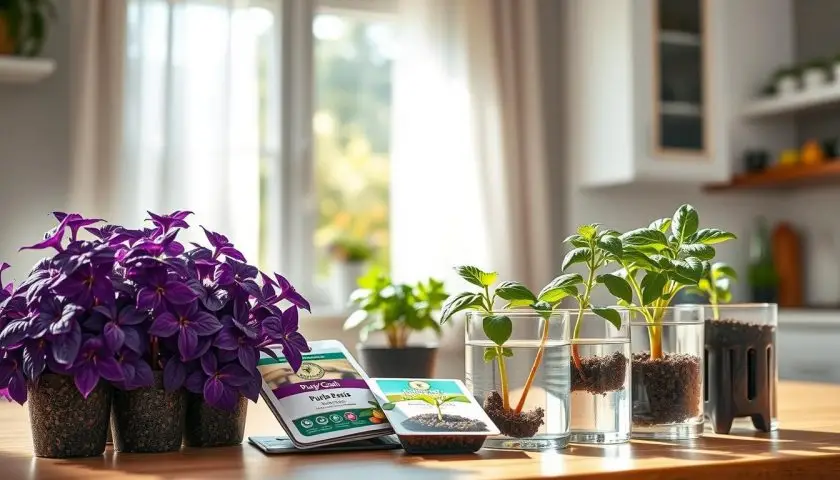
Seed-starting steps
- Fill seed trays or small pots with moist seed-starting mix.
- Sow seeds shallowly according to the packet.
- Keep the mix warm and lightly moist.
- Place seedlings under strong light once they sprout.
- Thin crowded seedlings so the strongest plants remain.
- Harden off seedlings before moving them outdoors.
- Transplant after frost risk has passed.
Hardening off seedlings
Seedlings grown indoors need time to adjust to outdoor sun, wind, and temperature. Move them outside for short periods over 7 to 10 days before planting full-time.
Spacing purple basil
Give purple basil enough room for airflow and harvesting. In small pots, grow one plant per container. In beds, leave enough space between plants so leaves dry quickly after rain.
How to Plant Purple Basil in Pots or Beds
Plant purple basil after cold nights have passed. Whether you are planting in a container or garden bed, the goal is warm soil, good drainage, and easy access for harvesting.
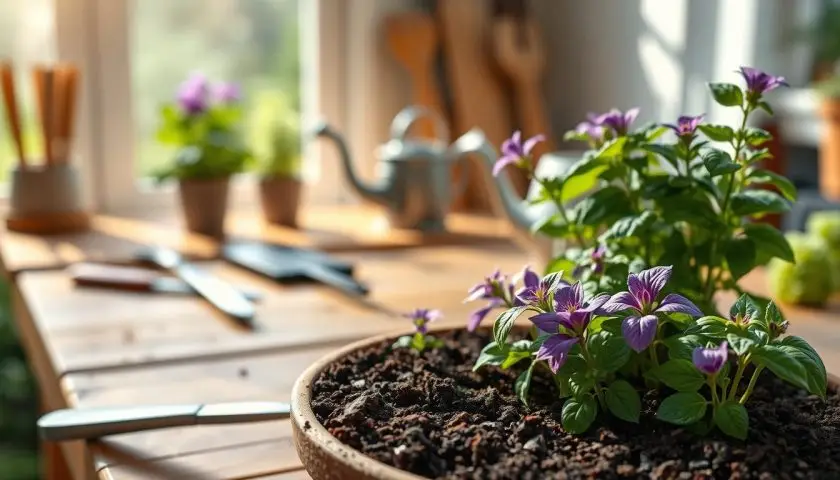
Planting steps
- Choose a sunny, warm location.
- Prepare moist but well-drained soil.
- Water the nursery plant before transplanting.
- Dig a hole about the same depth as the root ball.
- Place the plant at the same soil level.
- Backfill gently without burying the stem deeply.
- Water well after planting.
- Mulch lightly if growing outdoors in hot weather.
Container growing tips
- Place pots where you can water and harvest easily.
- Check containers often because they dry faster than garden beds.
- Use a saucer only if you empty it after watering.
- Move pots during storms or extreme heat if needed.
For outdoor pot help, read container gardening on patios, container garden plants for shade, and how to keep outdoor plants alive.
Purple Basil Watering
Purple basil watering should be steady, not extreme. Basil does not like drying to the point of collapse, but it also suffers in soggy soil.
| Growing Situation | Watering Need | Care Tip |
|---|---|---|
| New seedlings | Light, even moisture | Do not blast seedlings with heavy watering |
| Outdoor pots | Check often in heat | Containers dry quickly in sun and wind |
| Garden beds | Deep watering when dry | Mulch helps keep moisture steady |
| Indoor pots | Water when top layer begins to dry | Low light slows drying |
| Flowering plants | Steady moisture | Stress can reduce leaf quality |
Underwatering signs
- Leaves droop or wilt.
- Leaf edges look dry.
- Pot feels very light.
- Soil pulls away from the pot edge.
- Growth slows during hot weather.
Overwatering signs
- Yellow leaves with wet soil.
- Soft stems near the base.
- Musty smell from the potting mix.
- Fungus gnats around the pot.
- Roots turning brown or mushy.
For watering help, read complete watering guide, worst times to water plants, and signs you are overwatering.
Feeding Purple Basil
Purple basil does not need heavy fertilizer. Too much feeding can push soft leafy growth and may reduce flavour. Start with compost-rich soil, then feed lightly only if the plant is growing weakly in a container.
Simple feeding routine
- Mix compost into soil before planting.
- Use a light liquid herb or vegetable feed if growth slows.
- Feed container basil more than garden basil if nutrients wash out.
- Avoid heavy nitrogen feeding.
- Do not fertilize a stressed or root-rotted plant.
For feeding basics, read fertilizing indoor vs outdoor plants.
Pruning Purple Basil for Bushy Growth
Pruning purple basil is the difference between one tall stem and a full leafy plant. The more correctly you pinch, the more branching you encourage.
When to start pruning
Start once the plant has several pairs of true leaves and is growing strongly. Do not heavily prune tiny seedlings that are still settling.
How to pinch basil
- Find a stem with several leaf pairs.
- Cut or pinch just above a pair of leaves.
- Leave enough foliage for the plant to keep growing.
- Repeat on other stems as the plant becomes fuller.
- Use harvested tips fresh in the kitchen.
Remove flower buds
Flowering is natural, but it can make leaves smaller and tougher. Pinch flower buds when you want more leaves. Let a few flowers mature only if you want seeds or pollinator value.
For pruning support, read pruning basics and how to clean plant leaves.
How to Harvest Purple Basil
Harvesting purple basil regularly keeps the plant productive. Small frequent harvests are better than stripping most of the plant at once.
Harvesting tips
- Harvest in the morning after dew dries.
- Cut stems above a leaf pair.
- Take tips rather than only single leaves.
- Do not remove more than one-third of the plant at once.
- Harvest before flower spikes fully open for tender leaves.
- Use clean scissors for thicker stems.
How to store fresh leaves
Use purple basil soon after harvesting for the best colour and flavour. For short storage, wrap leaves loosely in a slightly damp paper towel and keep them cool, but avoid crushing them.
Drying and freezing
Purple basil can be dried or frozen, but colour and texture change. For freezing, chop leaves into herb cubes with water or oil. For drying, harvest before flowers fully open and dry leaves gently away from harsh sun.
Purple Basil Uses in the Kitchen
Purple basil uses go beyond decoration. It can be used wherever basil flavour and colour make sense, though its dark leaves may change the look of sauces and pesto.
Easy ways to use purple basil
- Scatter fresh leaves over tomato salads.
- Add to pasta just before serving.
- Blend into purple basil pesto.
- Use as a garnish for soups and grain bowls.
- Infuse vinegar for dressings and marinades.
- Add to sandwiches and wraps.
- Freeze in herb cubes for later cooking.
Purple basil pesto tip
Purple basil pesto can turn darker than green pesto. Use fresh leaves, do not overheat them, and add lemon or vinegar if you want a brighter taste.
Infused vinegar
Purple basil can colour vinegar beautifully. Use clean leaves, clean jars, and proper food-safe storage. Strain before using if leaf pieces become dark or soft.
Growing Purple Basil Indoors
Growing purple basil indoors is possible, but light is the biggest challenge. Basil grown indoors usually gives smaller harvests than outdoor plants unless the lighting is strong.
Indoor setup
- Use a bright south-facing or west-facing window.
- Add a grow light if natural light is weak.
- Keep the room warm.
- Use a draining pot.
- Water when the top layer begins to dry.
- Pinch stems often to prevent legginess.
Indoor problems to watch
- Leggy stems from low light.
- Yellow leaves from overwatering.
- Fungus gnats in wet potting mix.
- Leaf drop from cold windows.
- Pests brought indoors from outdoor plants.
For indoor herb support, read rosemary plant indoors, small low light indoor plants, and how to style indoor plants by room.
Purple Basil Companion Plants
Purple basil companion plants are usually other warm-season edible plants that enjoy sun, good drainage, and regular harvesting. Basil is especially easy to place near tomatoes and peppers in containers or garden beds.
Good companion choices
- Tomatoes.
- Peppers.
- Eggplants.
- Parsley in a separate moisture-balanced pot.
- Oregano in a nearby container.
- Marigolds for edible garden colour.
- Lettuce only where basil does not shade it too much.
Container pairing tip
Pair plants with similar water needs. Do not place basil in the same small pot with a drought-loving herb that wants to dry hard for long periods.
For edible growing ideas, read patio tomato plants, how to plant tomatoes in a pot, Japanese cucumber plant, and growing potato plants in pots.
Common Purple Basil Problems
Most purple basil problems are linked to cold, low light, overwatering, poor drainage, overcrowding, or pests. Check the growing conditions before adding more fertilizer or treatments.
| Problem | Likely Cause | First Fix |
|---|---|---|
| Yellow leaves | Overwatering, low light, cold, old leaves, disease | Check soil moisture and drainage |
| Wilting | Dry soil, heat stress, wet roots, transplant shock | Check soil before watering |
| Leggy stems | Too little light or not enough pinching | Move brighter and prune above leaf pairs |
| Pale purple colour | Low light, weak growth, variety differences | Increase light gradually |
| Leaf spots | Wet foliage, poor airflow, disease | Improve spacing and avoid overhead watering |
| Early flowering | Heat, stress, age, lack of pruning | Pinch buds and harvest regularly |
Yellow leaves
One old lower leaf can yellow naturally. Many yellow leaves at once usually mean the plant is stressed by water, roots, low light, cold, or disease.
Wilting
Wilting can mean the plant is dry, but it can also happen when roots are damaged in wet soil. Touch the soil before watering again.
Downy mildew
Basil downy mildew often shows as yellowing leaves and fuzzy growth on leaf undersides. Reduce risk by spacing plants well, improving airflow, avoiding overcrowding, and removing badly infected plants.
For more plant problem help, read yellow leaves on plants, leaf curl, browning and droop, root rot guide, and how to revive a dying plant.
Pests on Purple Basil
Purple basil can attract aphids, whiteflies, spider mites, slugs, snails, and leaf-chewing insects. Pests are easier to manage when you catch them early.
Common pests
- Aphids: Small soft insects on new growth.
- Whiteflies: Tiny white insects that fly up when leaves are disturbed.
- Spider mites: Fine webbing and speckled leaves, often in hot dry conditions.
- Slugs and snails: Ragged holes in leaves, especially outdoors.
- Leaf miners: Pale winding trails inside leaves.
Simple pest routine
- Inspect leaves before harvesting.
- Look under leaves and around stem tips.
- Remove small pest clusters by hand or with a water rinse.
- Trim badly damaged leaves.
- Use only edible-plant-safe treatments if needed.
- Follow all product labels carefully.
For broader pest support, read how to keep pests away from outdoor plants.
Saving Purple Basil Seeds and Cuttings
Purple basil is usually grown as an annual, but you can save seeds or take cuttings before frost. This helps you continue a favourite plant into the next season.
Saving seeds
- Let a healthy plant flower.
- Allow flower spikes to mature and dry on the plant if weather allows.
- Cut dry spikes and place them in a paper bag.
- Shake or crush gently to release seeds.
- Remove chaff as much as practical.
- Store seeds in a labelled envelope or jar in a cool, dry, dark place.
Taking cuttings before frost
Before cold weather arrives, take healthy nonflowering cuttings and root them indoors. Keep them warm with strong light. This can give you fresh basil longer than leaving the outdoor plant to frost.
Seasonal Purple Basil Care
| Season | Main Task | Care Tip |
|---|---|---|
| Spring | Sow or transplant after frost | Do not rush basil into cold soil |
| Summer | Water, pinch, and harvest | Harvest often to delay flowering |
| Late summer | Watch flowers and pests | Pinch buds unless saving seeds |
| Autumn | Take cuttings or collect seeds | Protect before frost |
| Winter | Grow indoors only with strong light | Use a grow light if needed |
For seasonal planning, read garden calendar, seasonal plant care in autumn, and how to keep outdoor plants alive.
Purple Basil Plant Care Checklist
| Task | How Often | What to Watch |
|---|---|---|
| Check sunlight | Before planting and seasonally | Leggy growth and fading colour |
| Check soil moisture | Before watering | Dry top layer or wet soggy mix |
| Pinch stems | Weekly during active growth | Tall single stems and flower buds |
| Harvest | Often once established | Cut above leaf pairs |
| Inspect pests | Several times weekly outdoors | Aphids, whiteflies, mites, slugs |
| Check airflow | After plants fill out | Crowded leaves and fungal risk |
| Save seeds or cuttings | Late season | Healthy plants before frost |
Common Mistakes With Purple Basil
| Mistake | What Happens | Better Choice |
|---|---|---|
| Planting before frost risk passes | Cold damage and stalled growth | Wait for warm weather |
| Growing in low light | Leggy stems and weaker colour | Use full sun or grow light |
| Letting soil stay soggy | Root rot and yellow leaves | Use drainage and check moisture |
| Never pruning | Tall plant with fewer side shoots | Pinch above leaf pairs |
| Overfeeding | Soft growth and weaker flavour | Feed lightly only when needed |
| Overcrowding plants | Poor airflow and disease risk | Space plants properly |
| Harvesting too much at once | Slow recovery | Take frequent small harvests |
Helpful PATCH Guides for Purple Basil Plant Care
Use these related PATCH guides to improve edible gardening, container growing, watering, sunlight, pest care, and plant problem-solving.
Edible and Container Gardening Guides
- Easy outdoor edible plants
- Container gardening on patios
- Patio tomato plants
- How to plant tomatoes in a pot
- Japanese cucumber plant
- Planting potatoes in containers
- Growing potato plants in pots
- Edible flowers to grow outdoors
Outdoor Plant Guides
- Outdoor Plants hub
- How to keep outdoor plants alive
- Garden calendar
- Seasonal plant care in autumn
- Low-maintenance outdoor plants
- Outdoor plants for storms and heatwaves
- How to keep pests away from outdoor plants
- Color themes for your outdoor garden
Light, Water, Soil and Feeding Guides
- Complete guide to indoor light
- House plants that like direct sunlight
- Complete watering guide
- Worst times to water plants
- Signs you are overwatering
- Best soil mix guide
- Fertilizing indoor vs outdoor plants
- Self-watering pots guide
Plant Problem Guides
- Plant Care hub
- Yellow leaves on plants
- Why plant leaves turn yellow
- Leaf curl, browning and droop
- Root rot guide
- How to revive a dying plant
- How to clean plant leaves
- Pruning basics
Indoor Herb and Small-Space Guides
- Indoor Plants hub
- Rosemary plant indoors
- Tropical house plants
- Small low light indoor plants
- Low light house plants
- Best indoor plants for tiny apartments
- Best indoor plants for beginners
- Style indoor plants by room
Frequently Asked Questions
How do you care for a purple basil plant?
Give purple basil full sun, warm temperatures, moist but well-drained soil, steady watering, light feeding, good airflow, and regular pinching. Do not let the soil stay soggy or the plant flower too early if you want lots of leaves.
Can purple basil grow indoors?
Yes. Purple basil can grow indoors if it has strong light, warmth, drainage, and careful watering. A sunny south-facing or west-facing window may work, but a grow light is often better for steady indoor harvests.
How much sun does purple basil need?
Purple basil grows best with at least 6 hours of direct sun daily. Low light can make stems leggy and leaf colour weaker.
How often should I water purple basil?
Water when the top layer of soil begins to dry. Keep the soil evenly moist, but do not let the roots sit in soggy potting mix.
Should I pinch flowers off purple basil?
Yes, pinch flower buds if you want more leafy growth. Let some flowers mature only if you want seeds or want to support pollinators.
How do I harvest purple basil?
Cut stems just above a leaf pair. Take frequent small harvests rather than stripping the plant. This encourages branching and keeps the plant productive.
What are the best purple basil uses?
Use purple basil in salads, pesto, pasta, tomato dishes, herb vinegar, infused oil, sandwiches, grain bowls, drinks, and colourful garnishes.
Why is my purple basil turning green?
Some purple basil plants turn greener in low light, weak growth, or because of natural variety differences. Move the plant to stronger light gradually and keep it healthy.
Why are my purple basil leaves yellow?
Yellow leaves can come from overwatering, poor drainage, cold stress, low light, old leaves, pests, or disease. Check soil moisture and airflow first.
Can I save purple basil seeds?
Yes. Let flower spikes mature on a healthy plant, collect the dry spikes, separate the seeds, and store them in a labelled container in a cool, dry, dark place.
Final Thoughts
A purple basil plant is one of the easiest ways to add edible colour to a sunny container, herb bed, or kitchen garden. Treat it like basil first: give it warmth, sun, drainage, steady water, and regular pinching. The purple leaves are a bonus, but healthy growth is what gives you the best harvest.
University of Maryland Extension explains that basil is an annual herb with leaves that can range from green to dark purple, grows best in full sun with 6 or more hours of direct summer sun, needs moist but well-drained soil, should be planted after frost, and benefits from pinching stems for bushy growth: University of Maryland Extension basil growing guide.
For the best results, harvest little and often, remove flower buds unless saving seed, and keep the plant in the brightest warm spot you can provide. Fresh purple basil looks beautiful, tastes useful, and earns its place in both ornamental and edible gardens.
Final Recap
Purple basil is a tender annual herb grown for dark purple edible leaves, basil flavour, and decorative value. Grow it after frost in full sun, using moist but well-drained soil or a draining container mix. Water when the top layer begins to dry, feed lightly only when needed, and pinch stems often to keep the plant bushy. Harvest by cutting above leaf pairs and use the leaves fresh in salads, pesto, pasta, herb vinegar, oils, and garnishes. Indoors, give purple basil a very bright window or grow light. Watch for yellow leaves, wilting, leggy growth, downy mildew, aphids, whiteflies, spider mites, slugs, and root rot. Take cuttings or save seeds before frost if you want to continue growing purple basil into the next season.