🌿 Key Takeaways
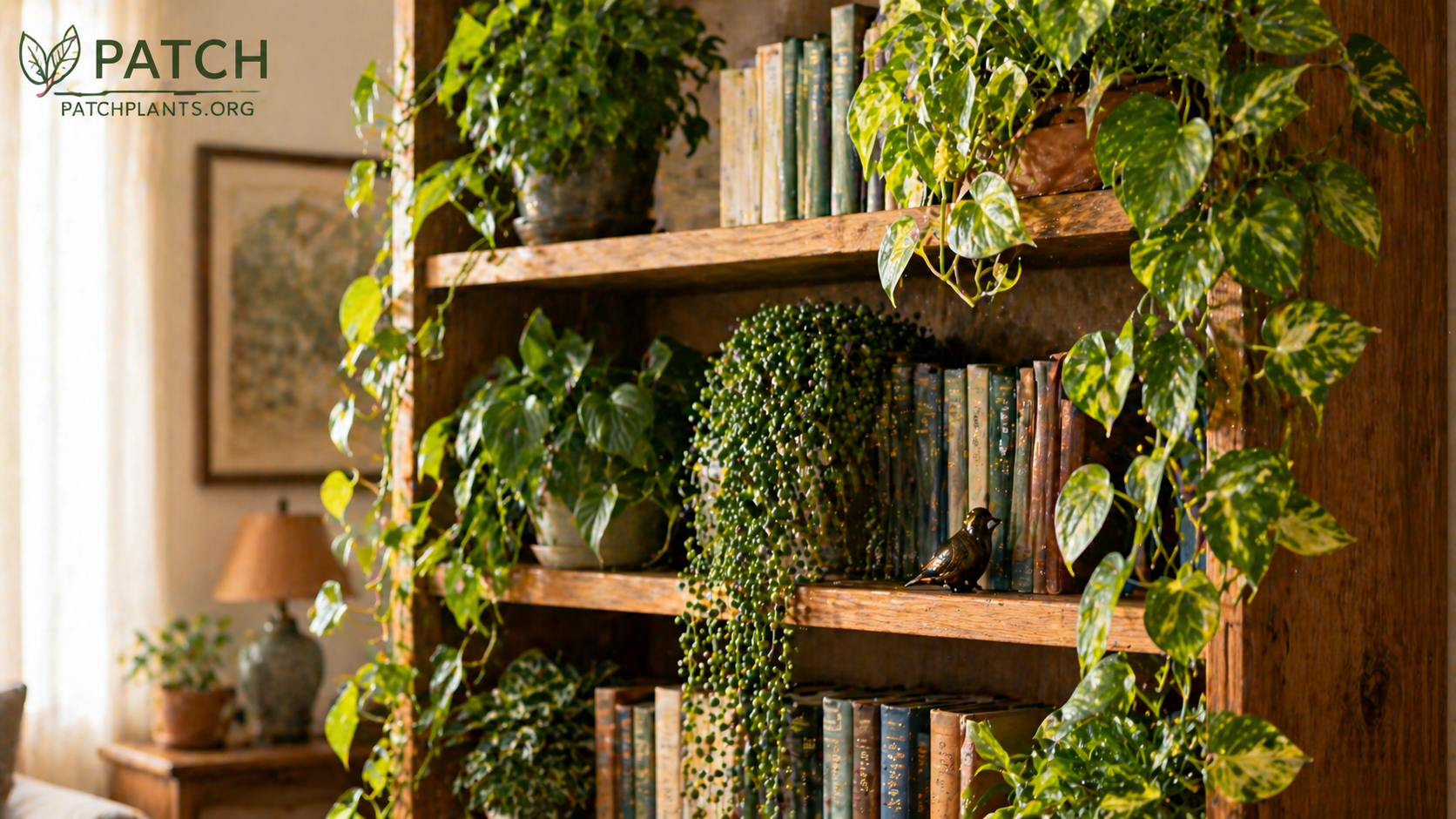
- Trailing plants on shelves and bookcases add natural movement, depth, and softness that upright houseplants alone cannot achieve
- Vine plants and cascading varieties look best when placed on high shelves — height amplifies their natural trailing habit dramatically
- The best plant shelf companions include pothos, heartleaf philodendron, string of pearls, English ivy, and spider plant offshoots
- How to display plants on shelves is about contrast — pair cascading vine plant varieties with upright bushy plants for maximum visual impact
- Plant stand, plant rack, and corner plant shelf placement dramatically affects how trailing plants grow and how they look
- What are vine plants good for beyond decoration? They improve air quality, soften hard interior lines, and create a sense of living, breathing movement in any room
- Many trailing varieties are perfect low-light hanging plants — our guide on low-light hanging plants for shelves and showers covers the best shade-tolerant options
- Browse our full indoor plant collection for more shelf-worthy houseplant ideas
Why Trailing Plants Transform Shelves and Bookcases
There is something uniquely satisfying about a plant that refuses to stay contained — one that stretches, drapes, and spills over the edge of a shelf with effortless elegance. Trailing plants have exactly that quality. They bring movement, softness, and a sense of living energy into spaces that might otherwise feel rigid, predictable, and flat.
Shelves and bookcases are inherently boxy. Straight lines, right angles, rows of books and objects arranged in neat order — functional and organized, but visually static. The moment you introduce a vine plant trailing over an edge, something shifts. The eye follows the cascading stems downward. The rigid geometry of the shelf softens. The space begins to feel designed rather than simply organized.
This complete guide covers everything you need to know about trailing plants on shelves — which varieties work best, how to choose the right plant shelf and plant stand setups, how to style them for maximum impact, and how to keep them thriving in any indoor environment. Whether you are building a full indoor jungle or adding greenery to a single bookcase, trailing plants are the element that makes everything feel intentional.
What Are Vine Plants? — Understanding Trailing Plant Growth
What Are Vine Plants and How Do They Grow?
What are vine plants exactly — and what distinguishes them from other houseplant types? Vine plants are species that naturally grow by extending long stems horizontally or downward, producing leaves at regular intervals along the vine rather than from a central rosette or upright trunk.
In nature, vine plants and climbing plants use this growth habit to reach sunlight by climbing trees, rocks, and other structures. Indoors, without structures to climb, these same stems trail downward — creating the cascading effect that makes them so visually stunning on shelves, plant rack systems, and high plant stand placements.
House Plants Climbers vs Trailing Plants — What’s the Difference?
House plants climbers and trailing plants are closely related but behave differently depending on their support situation:
Climbing houseplants — given a moss pole, trellis, or houseplant supports — grow upward, attaching to the structure with aerial roots or tendrils. The same plant without support trails downward instead. Pothos and heartleaf philodendron are classic examples — they climb when given houseplant supports and trail when placed on high shelves without them.
True trailing plants — like string of pearls and string of hearts — only grow downward, producing long pendant stems that hang naturally without needing support structures.
What Type of Plant Is This? — Identifying Trailing Varieties
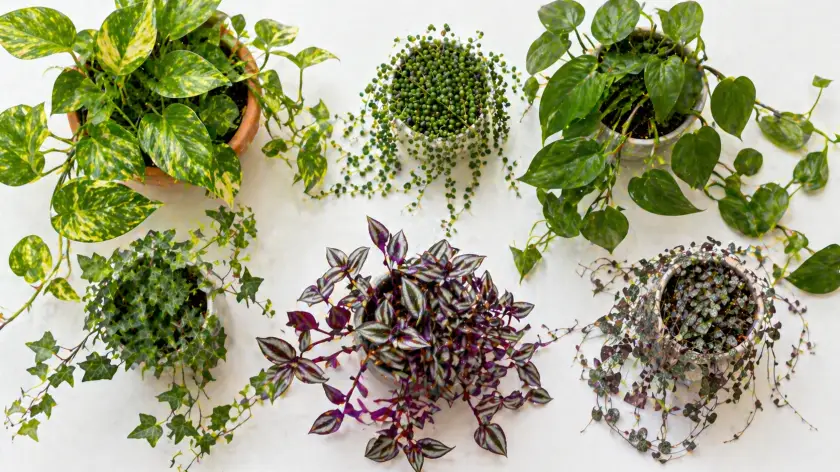
What type of plant is this is one of the most frequently searched questions when people encounter a beautiful cascading plant in a home or shop. The most commonly encountered vine plants and trailing houseplants are:
- Pothos (Epipremnum aureum) — heart-shaped leaves, rapid growth
- Heartleaf Philodendron — similar to pothos, slightly more velvety leaves
- String of Pearls — bead-like spherical leaves on thin stems
- English Ivy (Hedera helix) — classic lobed leaves, storybook aesthetic
- String of Hearts — delicate heart-shaped leaves with purple undersides
- Spider Plant offshoots — arching stems with baby plantlets at the tips
- Tradescantia — fast-growing, often purple or striped foliage
The 10 Best Trailing Plants for Shelves and Bookcases
1. Pothos — The King of Shelf Trailing Plants
Pothos (Epipremnum aureum) is the single most reliable vine plant for shelves and bookcases — and for good reason. It grows rapidly, tolerates a wide range of light conditions from bright indirect to genuinely low light, forgives irregular watering, and produces long, dramatic vines that cascade beautifully from any height.
On a tall bookcase, pothos vines can reach 60–90cm in length within a single growing season — creating a living curtain of heart-shaped green or variegated leaves that transforms the entire piece of furniture.
Shelf placement: Top shelf of any plant rack or bookcase — allows maximum vine length development Light: Low to bright indirect — one of the most adaptable trailing plants available Watering: Every 7–10 days — let top inch dry completely first Pot type: Any pot with drainage — works beautifully in a plant pot stand or hanging planter
Pothos is also one of the most effective air-purifying indoor plants — absorbing formaldehyde and benzene while decorating your shelves.
2. String of Pearls — The Most Dramatic Shelf Plant
String of Pearls (Senecio rowleyanus) is the showstopper of the trailing plant world. Its perfectly round, bead-like leaves strung along delicate stems create a jewelry-like cascade that looks unlike anything else in the houseplant world.
It requires more care than pothos — needing bright indirect light and careful watering — but when positioned correctly on a high plant shelf where the stems can hang freely, it creates one of the most visually stunning plant displays possible indoors.
Shelf placement: High shelf near a bright window — needs light to maintain bead density Light: Bright indirect to some morning direct sun Watering: Every 14 days — allow soil to dry completely between waterings Pot type: Small terracotta pot on a plant pedestal or high plant rack
3. Heartleaf Philodendron — The Soft, Romantic Trailer
The heartleaf philodendron produces heart-shaped leaves that are slightly more velvety and matte than pothos — giving it a softer, more romantic aesthetic that works beautifully in bedroom and living room plant shelf displays.
It grows rapidly, tolerates lower light than most trailing plants, and produces long cascading vines that drape elegantly over bookcase edges. Like pothos, it can also be given houseplant supports to climb upward if you prefer a vertical display rather than a trailing one.
Shelf placement: Top shelf of bookcase or corner plant shelf — softer trailing style than pothos Light: Low to moderate indirect light Watering: Every 7–10 days Pot type: Any pot with drainage — works well in a plants holder or plant pot stand
4. English Ivy — The Classic Bookcase Vine Plant
English Ivy (Hedera helix) brings an almost literary quality to bookshelves — its classic lobed leaves trailing across books and frames in a way that feels both timeless and slightly dramatic. It suits homes with traditional, rustic, or scholarly aesthetics particularly well.
Ivy needs more light than pothos or philodendron — placing it near a window is important for healthy growth indoors. It is one of the most effective house plants climbers when given houseplant supports, but trails beautifully from a plant shelf without any support structure.
Shelf placement: Near a window — needs consistent indirect light Light: Bright indirect light — does not tolerate deep shade Watering: Every 7 days — prefers slightly more consistent moisture than succulents Pot type: Ceramic or terracotta — avoid plastic which retains too much moisture
5. Spider Plant Offshoots — The Most Underrated Shelf Trailer
Spider plants (Chlorophytum comosum) are not typically thought of as trailing plants — but their long arching stems tipped with baby plantlets (spiderettes) create one of the most charming and distinctive trailing displays available on a plant shelf.
Position the mother plant on a high plants stand or shelf and allow the arching stems to extend outward — each one ending in a miniature plant that hangs in mid-air. The effect is playful, dynamic, and constantly changing as new offshoots appear.
Shelf placement: High shelf or tall plant stand — allows arching stems to extend freely Light: Bright to moderate indirect light Watering: Every 7 days Pot type: Any pot with drainage — plant trays underneath are helpful as they like consistent moisture
6. Tradescantia — The Most Colorful Trailing Plant
Tradescantia species — particularly Tradescantia zebrina (purple and silver striped) and Tradescantia fluminensis (bright green) — are among the most colorful trailing plants available for shelves. Their rapid growth, tolerance of average indoor conditions, and striking foliage make them one of the best choices for adding color to a bookcase display.
For more colorful foliage options that work alongside tradescantia in a mixed shelf display, our guide on colorful foliage indoor plants that aren’t just green gives excellent companion plant suggestions.
Shelf placement: Top shelf — grows rapidly and produces long colorful trails quickly Light: Bright indirect light for best color intensity Watering: Every 7 days Pot type: Any pot with drainage holes and plant trays underneath
7. String of Hearts — The Delicate Romantic Trailer
String of Hearts (Ceropegia woodii) produces delicate heart-shaped leaves with purple undersides on thin, wire-like stems — creating one of the most refined and feminine trailing displays possible on a plant shelf. It is slower growing than pothos but produces a uniquely elegant aesthetic that suits minimalist and Scandinavian interior styles.
Shelf placement: High shelf near a bright window — light is important for leaf color intensity Light: Bright indirect light Watering: Every 14 days — a semi-succulent that stores water in its leaves Pot type: Small terracotta — avoid overwatering
8. Monstera Adansonii — The Swiss Cheese Vine
Monstera adansonii is the smaller, more trailing cousin of the famous monstera deliciosa — producing distinctive fenestrated (hole-patterned) leaves on long trailing vines. It grows more freely as a trailing plant than the standard monstera, making it perfect for plant rack and bookcase placement where its unusual leaves create a dramatic focal point.
For rare and unusual trailing varieties worth seeking out, our guide on rare houseplants worth the hunt covers specialist sourcing for unusual trailing species.
Shelf placement: High bookcase shelf or plant pedestal — dramatic trailing effect Light: Bright indirect light Watering: Every 7–10 days Pot type: Any pot with drainage — benefits from houseplant supports if you want it to climb
9. Hoya — The Waxy Long-Distance Trailer
Hoyas (Hoya carnosa and related species) are slow-growing but ultimately spectacular trailing plants that produce thick, waxy leaves on long vines — and occasional clusters of perfectly formed, often fragrant flowers. A mature hoya trailing from a high plant stand or bookcase is one of the most impressive indoor plant displays possible.
For scented trailing plant combinations, our guide on indoor plants that smell amazing covers the best fragrant options to pair with hoyas on a plant shelf.
Shelf placement: High bookcase shelf — long vines develop over time Light: Bright indirect light Watering: Every 10–14 days — allow to dry between waterings Pot type: Small terracotta — hoyas prefer being slightly pot-bound
10. Peperomia Prostrata — The Miniature Trailing Gem
Peperomia prostrata (String of Turtles) produces tiny round leaves marked with patterns that resemble turtle shells on delicate trailing stems. It is one of the most charming small-scale trailing plants available — perfect for smaller shelves, desk plant pot stand setups, or mixed arrangements where larger trailing plants would overwhelm the space.
Shelf placement: Medium shelf or desk plant tables — scale matches smaller displays Light: Bright to moderate indirect light Watering: Every 10–14 days Pot type: Small ceramic or terracotta pot
Plant Stand, Plant Shelf, and Display Options — Choosing the Right Setup
Plant Stand Options for Trailing Plants
A plant stand elevates trailing plants to the height they need to cascade effectively. The right plants stand choice depends on the plant size, trailing length, and room aesthetic.
Tall Plant Stand
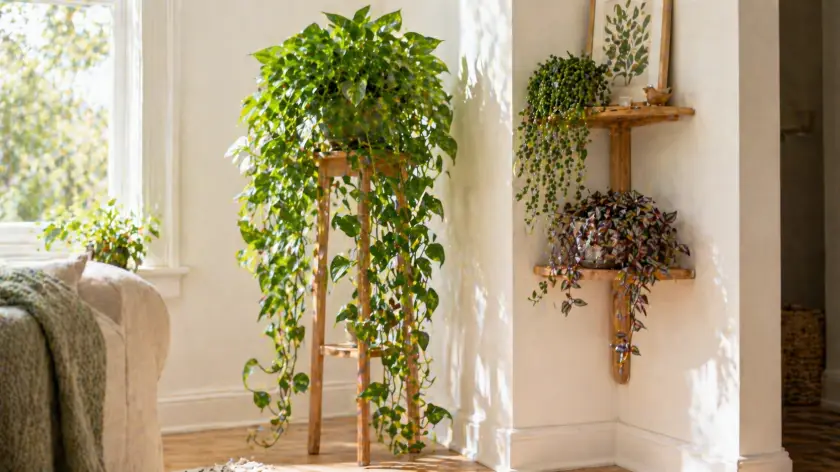
A tall plant stand — typically 80–120cm high — is the single best furniture choice for maximizing trailing plant impact. At this height, pothos and philodendron vines can cascade dramatically toward the floor, creating a living waterfall effect that works as a focal point in any room.
Corner Plant Shelf
A corner plant shelf — either wall-mounted or freestanding — uses otherwise dead corner space to display trailing plants effectively. Corners amplify the three-dimensional effect of trailing vines — the plant cascades outward into the room from a position that draws the eye naturally.
Floor Plant Stand
A floor plant stand placed beside a bookcase or beside furniture creates an interesting layered display — the trailing plant at mid-height bridges the visual gap between floor plants and shelf plants. Our guide on how to style indoor plants by room covers room-by-room display strategies using floor plant stand and shelf combinations.
Plant Rack and Racking for Plants
A plant rack — a multi-tiered display structure designed specifically for plants — allows you to display multiple trailing and upright plants together in a cohesive arrangement. Racking for plants works particularly well in larger rooms where a single bookcase display would feel insufficient.
Plant Pedestal
A plant pedestal — a single-column stand typically 60–90cm high — elevates one showcase plant to eye level or above. A string of pearls or hoya on a plant pedestal in a living room corner is one of the most elegant plant displays possible in a home environment.
Plant Shelf Types — Wall-Mounted vs Freestanding
Plant shelf options divide broadly into wall-mounted and freestanding categories — each with distinct advantages for trailing plant display.
Wall-mounted plant shelf: Saves floor space, works in small rooms, creates a gallery-wall effect when multiple shelves are arranged at different heights. Ideal for lightweight trailing plants like string of hearts and peperomia.
Freestanding plant shelf / bookcase: Accommodates larger, heavier pots. Allows trailing plants to cascade over multiple shelf levels for maximum dramatic effect. Best for pothos, philodendron, and monstera adansonii.
Outdoor plant shelves: For protected outdoor spaces — patios, covered balconies — outdoor-rated plant shelf units allow trailing plants to be displayed outside during warm months. Our guide on the best plants for container gardening on patios covers outdoor trailing plant display in detail.
How to Display Plants on Shelves — Styling Guide
How to Display Plants for Maximum Visual Impact
How to display plants effectively on shelves is as much about styling as it is about plant selection. The best shelf plant displays follow consistent principles that any plant owner can apply regardless of budget or experience.
The Rule of Contrast — Combining Trailing and Upright Plants
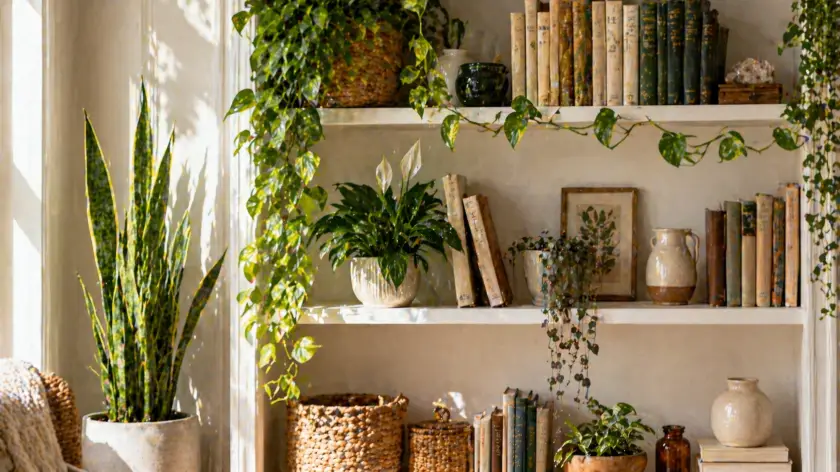
The single most powerful how to display plants principle is contrast. Trailing vine plants look most dramatic when placed alongside upright, structural houseplants that provide visual anchor points.
Best contrast combinations for shelves:
- Pothos (trailing) + Snake Plant (upright) — the most classic combination. The snake plant care guide covers keeping your upright companion thriving alongside trailing varieties.
- String of Pearls (trailing) + Peace Lily (upright) — delicate beads against bold glossy leaves. See our peace lily care guide for keeping your peace lily thriving beside trailing plants.
- Heartleaf Philodendron (trailing) + Money Tree (upright) — soft romantic cascades against sculptural trunk. Our guide on caring for a money tree covers keeping this companion healthy.
- Tradescantia (trailing, colorful) + ZZ Plant (upright, dark green) — vibrant color contrast against deep glossy green
The Rule of Three — Grouping Plants on Shelves
Group plants in odd numbers for the most visually balanced shelf displays. Three plants — one trailing, one upright, one bushy plants variety — creates a natural, organic arrangement that feels designed without looking staged.
Bushy plants with dense, rounded growth habits work particularly well as the middle element in a three-plant shelf grouping — providing visual mass between the height of the upright plant and the cascading length of the trailing vine.
Height Variation — The Most Important Display Principle
The plant shelf displays that look most impressive all share one characteristic — dramatic height variation. Use plant tables, plant pot stand risers, and stacked books to place individual plants at different heights within a single shelf display.
This creates visual depth and layering — making a standard bookcase look like a carefully curated indoor garden rather than a collection of randomly placed pots.
Using a Bench for Plants — An Underused Display Idea
A bench for plants — a low, wide surface placed in front of a bookcase or below a plant shelf — creates a beautiful two-tier display. Tall trailing plants on the bookcase cascade downward toward floor plants displayed on the bench, creating a layered, immersive green display that uses the full vertical range of the room.
Can Herbs Grow Inside? — Trailing and Climbing Herbs for Shelves
Growing Herbs Inside on Shelves
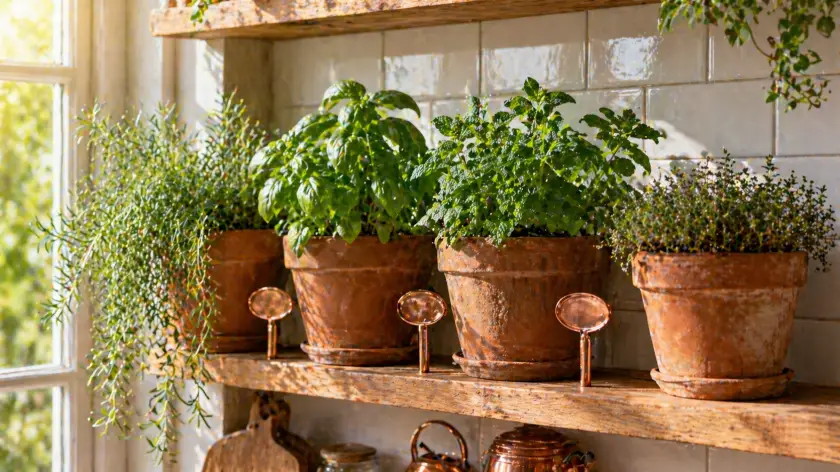
Can herbs grow inside on shelves and plant rack systems? Yes — and combining edible herbs with ornamental trailing plants on the same plant shelf is one of the most practical and attractive approaches to indoor growing.
Growing Herbs Inside — Best Varieties for Shelves
Growing herbs inside successfully on shelves requires choosing varieties that suit your available light and shelf dimensions.
Best herbs for indoor shelf growing:
- Trailing rosemary — naturally cascades over pot edges, intensely fragrant, needs bright light
- Thyme — low growing and slightly trailing, suits small herb planter setups on kitchen shelves
- Mint — grows vigorously in a contained herb planter, pairs well with other trailing plants but needs its own pot to prevent spreading
- Oregano — produces trailing stems when pot-bound, works well on a plant shelf near a sunny window
- Creeping basil — lower growing than standard basil, suits compact shelf displays
Herb Planter Options for Shelves
Herb planter choices for shelf displays include ceramic window boxes (for multiple herbs in one container), individual terracotta pots on a plant rack, and hanging herb planters suspended from wall-mounted hooks above a kitchen counter.
Growing plant combinations that mix edible herbs with ornamental trailing plants create some of the most genuinely useful and beautiful shelf displays possible in a home environment. Our guide on growing your own easiest outdoor edible plants covers herb growing in detail — many of the same principles apply to indoor herb shelf displays.
Caring for Trailing Plants on Shelves
Watering Trailing Plants Correctly
Watering is the most common challenge for trailing plants on shelves and plant stand displays — primarily because elevated positions make pot inspection less intuitive.
Key watering rules for shelf trailing plants:
Always bring shelf plants down for watering rather than watering in place — pouring water on a high shelf risks damage to books, furniture, and flooring. Use plant trays under all shelf pots to catch drainage.
Check soil moisture before every watering using the finger test — push one finger into the top inch of soil. Dry at 1 inch depth means water now. Still moist means wait.
Never water trailing plants in the evening — moisture sitting in soil overnight creates root rot conditions. Our guide on the worst times to water your plants explains exactly why morning watering produces the healthiest results. For a complete watering system across all trailing varieties, our complete watering guide covers timing, frequency, and technique.
Using Plant Trays and Plants Holder Accessories
Plant trays placed beneath shelf pots serve two purposes — catching drainage water that would otherwise damage shelves, and creating a small water reservoir that slowly evaporates, raising local humidity around the trailing plant. Combined with pebbles in the tray (our DIY humidity tray guide covers this exactly), plant trays become an effective passive humidity management system.
A plants holder — any container, cradle, or bracket designed to hold a pot — is essential for wall-mounted plant shelf displays where standard flat shelving cannot accommodate round pots safely.
Light Management for Shelf Trailing Plants
High shelves are often further from windows than floor positions — meaning less light reaches plants placed on plant rack and bookcase systems. Assess light levels at actual shelf height before choosing your trailing plant — hold a white piece of paper at shelf level and observe the shadow it casts. A sharp, clear shadow indicates good indirect light. A faint, barely visible shadow indicates low light conditions.
For consistently low-light shelf positions, choose pothos, heartleaf philodendron, or tradescantia — all of which tolerate low light better than most vine plants. For a comprehensive guide to understanding indoor light across different positions and room orientations, our complete guide to indoor light covers everything you need.
Pruning and Propagating Trailing Plants
Trailing plants on shelves benefit from regular pruning — cutting back vines that have become excessively long, sparse, or leggy encourages bushier, denser growth from the base. Pruned cuttings from most trailing varieties root easily in water or soil — giving you free new plants for expanding your display.
Our step-by-step guide on how to propagate houseplants at home covers propagation techniques for pothos, philodendron, tradescantia, and other common trailing varieties.
Soil and Potting for Shelf Trailing Plants
Potting plants in the right mix is critical for shelf displays where overwatering risk is higher due to less frequent monitoring. Use well-draining potting mix — our guide on the best soil mix for every plant type covers the exact mixes for different trailing plant species.
Self-watering pots can help manage watering frequency for shelf plants — particularly useful for trailing varieties in hard-to-reach positions. Our honest review of self-watering pots gives you everything you need before investing.
Troubleshooting Trailing Plants on Shelves
Yellow leaves on trailing plants almost always indicate overwatering — particularly common in shelf positions where drainage cannot be checked easily. Our guide on why plant leaves turn yellow gives the complete diagnostic process.
Brown leaf tips on shelf trailing plants often indicate low humidity — elevated shelf positions experience drier air than floor positions. Increase humidity using plant trays with pebbles or group multiple plants together. Our humidity hacks guide covers every practical solution.
If a trailing plant is showing signs of serious distress, our guide on how to revive a dying plant gives you a step-by-step rescue plan. For root rot specifically — the most serious risk for shelf trailing plants in poor drainage situations — our guide on root rot identification and treatment covers the complete recovery process.
Trailing Plants for Specific Rooms and Shelf Types
Trailing Plants for Bathroom Shelves
Bathrooms provide naturally high humidity — ideal for moisture-loving trailing plants. The best plants for your bathroom includes several trailing varieties that thrive in bathroom shelf conditions. Best choices: pothos, heartleaf philodendron, and tradescantia — all love the humidity from showers and baths.
Trailing Plants for Office Shelves
Office environments present specific challenges — fluorescent lighting, dry air, and reduced natural light. Our guide on office-friendly plants that survive fluorescent lighting identifies the trailing varieties that perform best under office conditions. For a complete office greenery setup, our guide on the 35 best office plants covers plant stand and plant rack placement for maximum office impact.
Trailing Plants for Bedroom Shelves
Bedroom shelf trailing plants should prioritize air-purifying properties and night-time oxygen production. Our guide on decorating your bedroom with plants covers the best trailing plants for bedroom shelves and optimal placement for both aesthetics and air quality.
Trailing Plants for Living Room Bookcases
Living rooms offer the most flexibility for trailing plant displays — larger shelving units, more floor space for tall plant stand and floor plant stand setups, and often better natural light. Our guide on indoor plants as natural room dividers covers how to use bookcase trailing plant displays as semi-transparent room dividers in open-plan living spaces.
Outdoor Plant Shelves — Taking Trailing Plants Outside
Outdoor plant shelves on covered patios and balconies allow many indoor trailing plants to be moved outside during warm months — where higher light levels and fresh air dramatically accelerate growth and improve plant health. Our guide on year-round balcony plants covers which trailing varieties handle outdoor balcony conditions best across different seasons.
Trailing Plants and Feng Shui — The Energy Dimension
Vine plants and trailing plants hold specific significance in Feng Shui practice. Their downward-flowing growth is associated with the water element — promoting calm, flow, and the gentle release of stagnant energy in a space.
Trailing plants placed in the eastern area of a room (health sector) are considered particularly auspicious — their cascading growth symbolizes abundance flowing downward into the home. Our guide on Feng Shui indoor plants covers the most auspicious trailing plant placement positions in detail.
Are Trailing Plants Safe for Pets?
Several popular trailing plants are toxic to cats and dogs — an important consideration for pet-owning households. Pothos and English Ivy are toxic if ingested by pets — causing oral irritation, drooling, and digestive upset. Spider plants and tradescantia are considered mildly toxic.
Place toxic trailing plants on genuinely inaccessible high shelves if you have pets. For complete safe alternatives and placement strategies, our guides on cat-friendly plants and dog-friendly plants give comprehensive lists of pet-safe trailing alternatives.
Frequently Asked Questions
Which Trailing Plants Are Best for Beginners?
Pothos and heartleaf philodendron are the two best trailing plants for beginners — both are forgiving of irregular watering, tolerate low light, grow quickly enough to stay motivating, and produce long dramatic vines on any plant shelf or plant stand. String of pearls is stunning but requires more consistent care and brighter light — save it for once you are comfortable with the basics.
Can Trailing Plants Grow in Low Light?
Yes — several trailing plants tolerate low light conditions well. Pothos, heartleaf philodendron, and tradescantia all grow in lower light than most houseplants, though growth slows and leaf color may be less vivid. Our dedicated guide on low-light hanging plants for shelves and showers covers the best shade-tolerant trailing varieties in detail.
How Do I Keep Trailing Vines from Looking Messy?
Prune regularly — cutting back leggy or overly long stems encourages bushier growth from the base. Train vines to loop back over the plant shelf rather than hanging straight down for a fuller, more intentional look. Use houseplant supports like small hooks or decorative clips to guide vine direction. Our guide on how to clean plant leaves without damaging them also covers maintaining the neat appearance of trailing plant foliage between pruning sessions.
What Is the Best Plant Stand for Trailing Plants?
A tall plant stand (80–120cm) maximizes trailing plant impact by giving vines the maximum possible distance to cascade. A corner plant shelf is ideal for maximizing space efficiency while creating dramatic trailing displays. For multiple plants, a plant rack or multi-tier plants stand allows you to display trailing and upright varieties together in a cohesive arrangement.
Can I Mix Trailing Plants with Upright Houseplants on the Same Shelf?
Absolutely — in fact, mixing is strongly recommended. Pairing cascading vine plants with upright bushy plants and structural specimens creates the contrast that makes shelf plant displays look genuinely designed. Place upright plants at the back of the shelf and trailing plants at the front edge or on the highest shelf — allowing vines to cascade forward and downward past the upright varieties.
What Are the Best Plant Trays and Accessories for Shelf Displays?
Plant trays filled with pebbles and water improve local humidity around shelf trailing plants while protecting shelf surfaces from drainage. A plants holder or pot cradle is essential for wall-mounted shelf displays. Houseplant supports like moss poles and wire frames allow climbing varieties to grow upward when you want vertical rather than trailing growth. Plant tables and risers within shelves add height variation that makes displays look more professional and intentional.
How Do I Fertilize Trailing Plants on Shelves?
Fertilize trailing plants monthly during spring and summer with a balanced liquid fertilizer diluted to half strength. Stop feeding in autumn and winter when growth slows. Our guide on fertilizing indoor vs outdoor plants covers the exact feeding requirements for common trailing plant varieties.
Related Guides on Patch Plants
- 🌿 Low-Light Hanging Plants for Shelves, Showers & Ceilings
- 🏠 How to Style Indoor Plants by Room
- 🌱 How to Create an Indoor Jungle Without Overcrowding
- 🐍 Snake Plant Care Guide — Complete Sansevieria Tips
- 🌸 Peace Lily Care Guide — Complete Spathiphyllum Tips
- 🌿 Colorful Foliage Indoor Plants That Aren’t Just Green
- 🌿 Indoor Plants That Double as Natural Room Dividers
- 🌱 Browse All Indoor Plant Guides
Final Thoughts
Trailing plants on shelves and bookcases are one of the most transformative things you can do to a room — and one of the most accessible. A single pot of pothos on a high plant shelf costs less than a new throw cushion but changes a space far more dramatically. A string of pearls on a plant pedestal, a heartleaf philodendron cascading from a tall plant stand, or a mixed plant rack display combining trailing vine plants with upright structural houseplants — each of these creates something that no piece of furniture or wall art can fully replicate.
Trailing plants move. They grow. They respond to light and care in ways that make every week slightly different from the last. And that quality — the quality of genuine aliveness — is what makes them not just decorative objects but genuine companions in a space.
Start with one vine plant on your highest shelf. Watch it grow. Prune it when it gets long and propagate the cuttings. Within a year you will have enough trailing plants to fill every shelf in your home — and a very different relationship with the spaces you live in.
According to the Royal Horticultural Society, trailing and climbing houseplants are among the most effective categories of indoor plants for improving perceived air quality, reducing stress levels, and increasing satisfaction with home environments — making them one of the highest-return additions you can make to any living space. 🌿