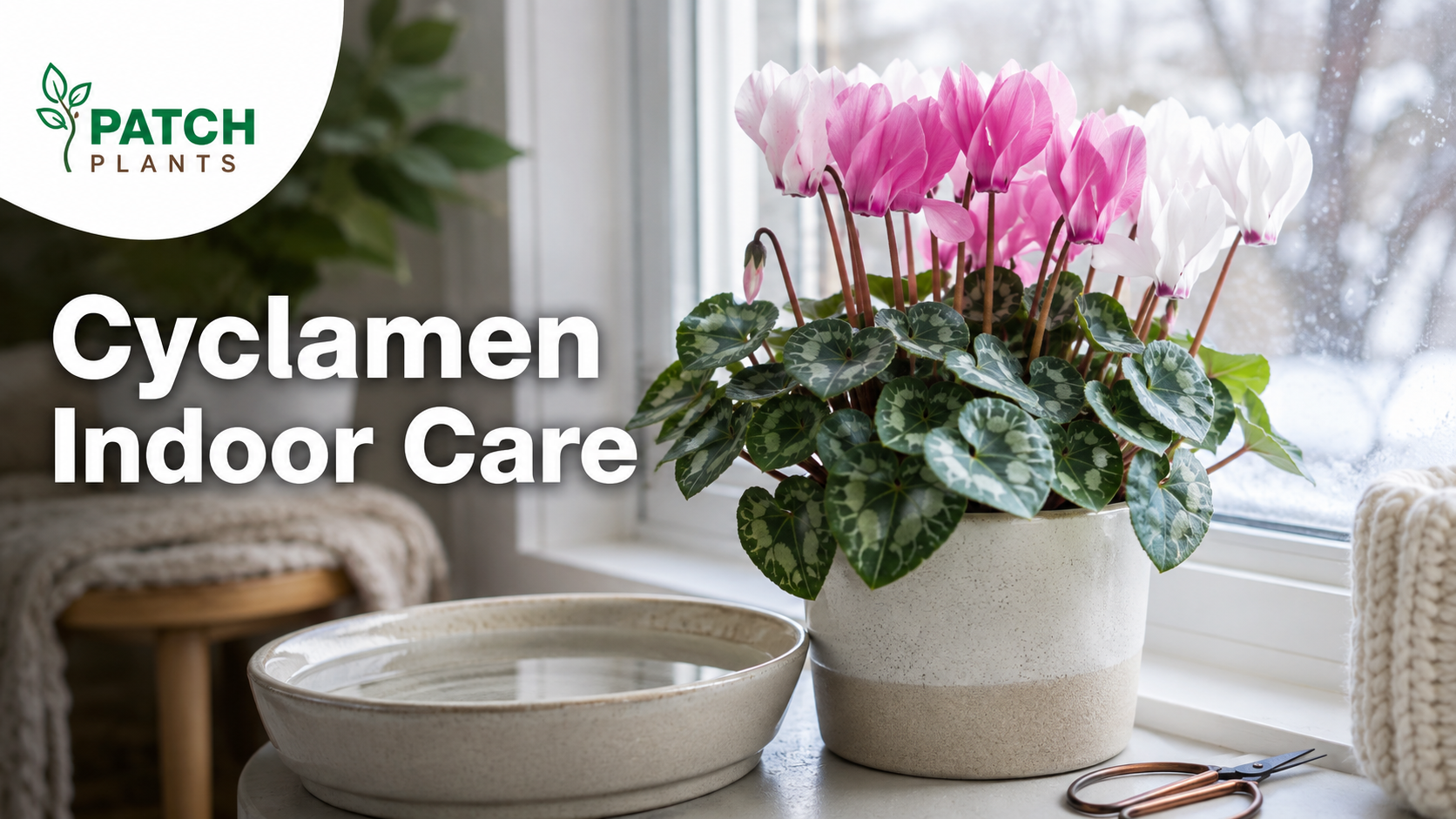
Caring for a cyclamen plant indoors is easier when you stop treating it like a regular leafy houseplant. Cyclamen has a seasonal rhythm. It grows, blooms, slows down, drops leaves, rests, and then starts again when conditions are right.
Most indoor cyclamen struggle because homes are too warm, the crown gets wet, or the plant is watered on a fixed schedule. Give it cool air, bright indirect light, careful watering, and a proper rest period, and this winter-flowering plant can last much longer than a short gift display.
Care Snapshot
The best approach to caring for a cyclamen plant indoors is simple: keep it cool, place it in bright indirect light, water from below when the upper mix begins to dry, keep water away from the crown, remove faded flowers, and reduce watering when leaves naturally yellow after flowering. Dormancy is normal, not automatic plant death.
Key Takeaways
- Caring for a cyclamen plant indoors starts with cool temperatures and bright indirect light.
- Florist cyclamen usually dislikes hot rooms, radiators, fireplaces, and heat vents.
- Bottom watering helps keep the crown and corm dry.
- Yellow leaves after flowering often mean dormancy, not failure.
- Use a loose, well-draining potting mix and a pot with drainage holes.
- Stop feeding when the plant enters dormancy.
- Use this guide with Cyclamen care, blooming indoor plants, and complete watering tips.
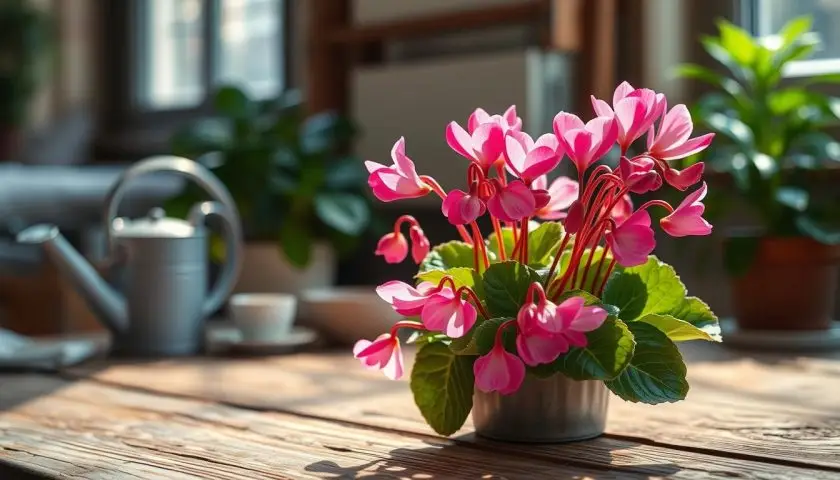
Indoor Cyclamen Care at a Glance
| Care Area | Best Choice | Common Mistake |
|---|---|---|
| Light | Bright indirect light | Hot direct afternoon sun |
| Temperature | Cool room, especially at night | Keeping near radiators or vents |
| Water | Bottom-water when upper mix dries | Pouring water into the crown |
| Soil | Loose, well-draining potting mix | Dense wet soil |
| Humidity | Moderate humidity with airflow | Misting flowers and crown |
| Feeding | Light feeding during active growth | Feeding during dormancy |
| Dormancy | Reduce water and let the corm rest | Throwing away a resting plant |
Choose a Healthy Cyclamen for Indoor Growing
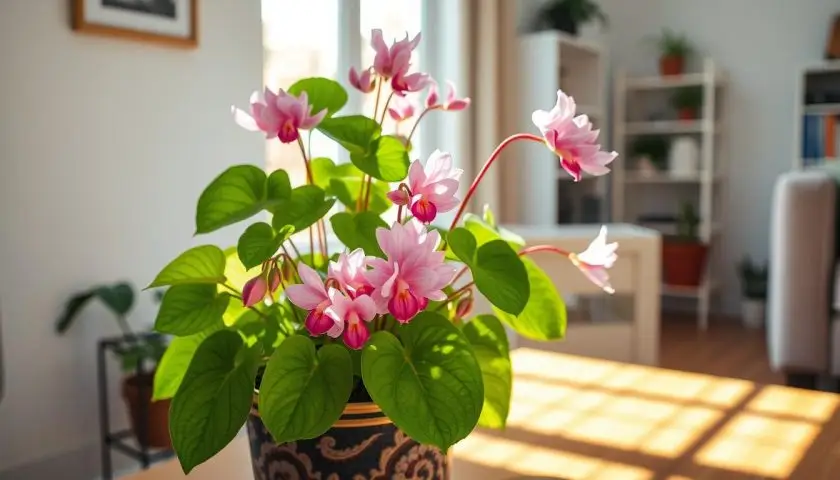
Good indoor cyclamen care begins before the plant comes home. A weak plant from the shop can decline quickly, even if your care is careful. Choose a plant with strong leaves, many unopened buds, and no signs of rot.
Look for firm leaves
Healthy cyclamen leaves should feel firm and sit neatly above the pot. Avoid plants with many yellow, mushy, collapsed, or spotted leaves.
Choose plants with unopened buds
A plant with many unopened buds will usually flower longer at home than one already in full bloom. Check deep in the centre of the plant for tight buds.
Check the corm and crown
The top of the corm should not look buried, wet, soft, or mouldy. A soggy centre is a warning sign because cyclamen are prone to crown and corm rot.
Avoid overheated shop plants
Cyclamen often suffer when displayed near shop doors, heaters, or warm lights. Pick the freshest plant you can, then carry it home carefully so cold wind does not shock the flowers.
Florist Cyclamen vs Hardy Cyclamen
Most indoor cyclamen sold as houseplants are florist cyclamen, usually Cyclamen persicum hybrids. Hardy cyclamen are different garden plants and are usually grown outdoors.
| Type | Best Use | Care Note |
|---|---|---|
| Florist cyclamen | Indoor winter display | Needs cool indoor conditions and careful watering |
| Mini cyclamen | Small pots, shelves, desks | Dries faster because the pot is smaller |
| Hardy cyclamen | Outdoor shade gardens | Better for garden beds, woodland edges, and cool outdoor pots |
For a broader indoor and outdoor guide, read Cyclamen care. For more flowering houseplants, visit blooming indoor plants and house plants with white flowers.
Set Up the Right Indoor Location
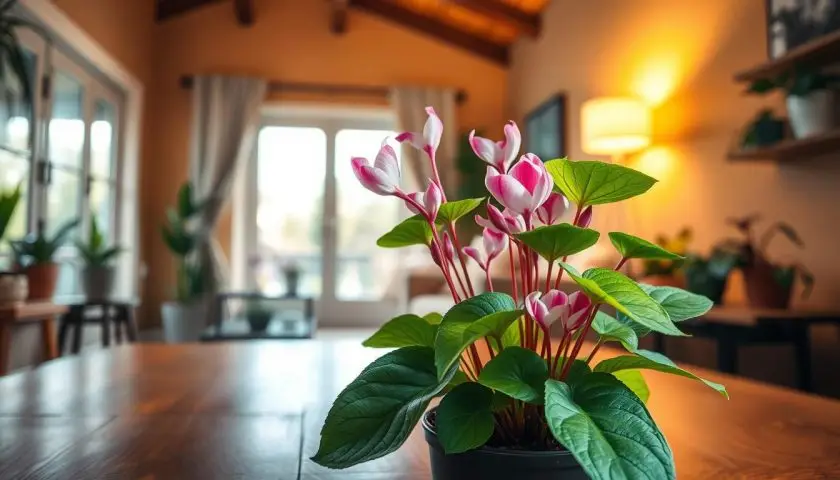
The right location can double the useful life of a cyclamen display. A cool, bright, airy spot is better than the warmest room in the house.
Give bright indirect light
Place cyclamen near an east-facing window, a bright north-facing window, or a filtered bright window. It needs enough light to keep flowers strong, but hot direct sun can scorch leaves and shorten bloom time.
Avoid hot afternoon sun
South or west windows can work only if the plant is set back or filtered by a sheer curtain. If flowers fade quickly and leaves yellow near the glass, heat and direct sun may be the problem.
Keep it in a cool room
Cyclamen flowers last longer in cool conditions. A bedroom, cool hallway, enclosed porch, bright stair landing, or cool windowsill often works better than a warm living room.
Move away from heat sources
Keep cyclamen away from radiators, heat vents, fireplaces, heated floors, and appliances. Warm dry air pushes the plant toward early decline.
For more light support, read complete guide to indoor light, low light house plants, and house plants that like direct sunlight.
Prepare the Best Soil and Pot
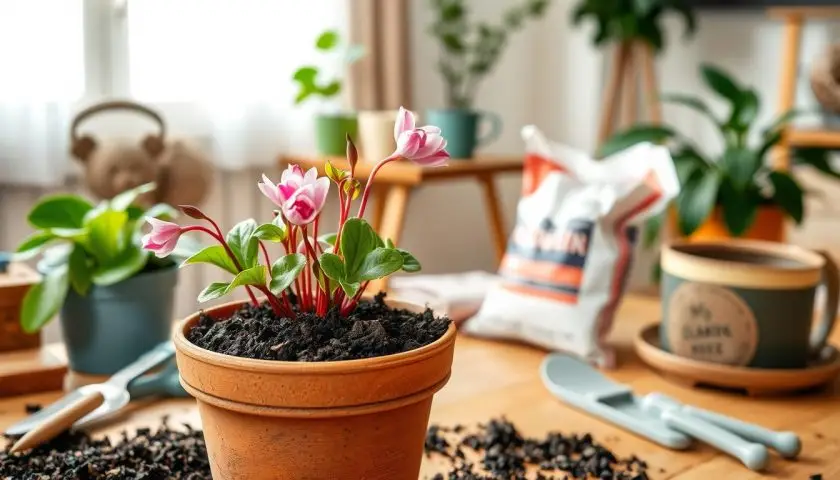
Cyclamen roots need moisture and oxygen at the same time. Dense wet soil causes problems, especially around the corm. The pot should drain freely and never hold standing water around the roots.
Use a loose potting mix
A good cyclamen potting mix should hold light moisture but drain quickly. A standard indoor potting mix can work better when loosened with perlite, fine bark, pumice, or grit.
Simple indoor cyclamen mix
- 2 parts quality indoor potting mix.
- 1 part perlite, pumice, or fine grit for drainage.
- 1 part fine bark or composted organic matter for structure.
- Optional small amount of balanced slow-release feed if the plant is not resting.
Choose drainage holes every time
Use a pot with drainage holes. Decorative cover pots are fine only if the inner nursery pot drains fully and you empty any trapped water after watering.
Keep the corm top visible
When repotting, do not bury the corm deeply. Keep the top portion near or slightly above the soil line so the crown stays dry and less prone to rot.
For soil and repotting help, read best soil mix guide, how to repot a plant, and repotting mistakes to avoid.
Water a Cyclamen Without Causing Root Rot
Cyclamen watering indoors is where most problems begin. The plant likes even moisture during active growth, but the crown and corm should not stay wet.
Check before watering
Touch the top of the potting mix before watering. If the upper mix still feels damp, wait. If it is starting to dry, water carefully.
Use bottom watering
- Place the pot in a shallow bowl or sink with room-temperature water.
- Let the mix absorb water from the drainage holes for a short time.
- Remove the pot once the upper mix feels lightly moist.
- Let it drain completely.
- Never leave the pot sitting in water after watering.
Avoid watering the crown
Do not pour water into the centre of the plant. Water trapped around the crown can cause rot, especially in cool rooms with slower drying.
Water less as dormancy begins
When flowering ends and leaves begin to yellow naturally, reduce water gradually. A resting corm needs barely enough moisture to avoid shrivelling, not regular soaking.
| Growth Stage | Watering Need | What to Avoid |
|---|---|---|
| Full bloom | Even light moisture | Dry-to-soggy swings |
| Leafy growth | Water when upper mix dries | Wet crown and standing water |
| Yellowing after bloom | Gradually reduce water | Forcing more water into a resting plant |
| Dormancy | Barely moist or mostly dry | Regular soaking |
| New growth returns | Restart careful watering | Flooding before roots are active |
For more watering support, read complete watering tips, worst times to water plants, and signs you are overwatering.
Manage Humidity Without Wetting the Plant
Cyclamen likes fresh, cool air more than a steamy, wet crown. Moderate humidity can help, but misting is usually not the best method.
Use a pebble tray carefully
Place the pot above a tray of pebbles and water, making sure the pot base does not sit in the water. This raises moisture around the plant without soaking the roots.
Do not mist flowers or the crown
Misting can leave water on petals, leaves, and the corm. In cool rooms, that moisture may sit too long and encourage fungal issues.
Improve airflow
Keep some space between cyclamen and other plants. Good airflow helps reduce gray mold, leaf spotting, and stale damp conditions.
For humidity guidance, read humidity hacks without a humidifier, DIY humidity tray, and misting for plants.
Feed Cyclamen During Active Growth
Indoor cyclamen does not need heavy fertilizer. Feeding helps during active leaf and flower production, but too much fertilizer can push weak leaves or stress the roots.
When to feed
Feed only while the plant is actively growing leaves and flowers. Use a diluted balanced liquid houseplant fertilizer every few weeks, or follow the product label at a gentle rate.
When to stop feeding
Stop fertilizing when leaves begin to yellow naturally and the plant enters dormancy. A resting corm is not using nutrients in the same way.
Signs of overfeeding
- Brown leaf edges after feeding.
- Soft weak leaf growth.
- White crust on the soil surface.
- Sudden wilting despite damp soil.
- Few flowers with too much leafy growth.
For feeding basics, read fertilizing indoor vs outdoor plants.
Keep Blooms and Leaves Healthy
Cyclamen flowers and stems are delicate. Tidy the plant often, but handle it gently so you do not snap healthy stems.
Remove spent flowers
Remove faded flowers close to the base. Some growers twist and pull old stems gently; others use clean scissors. The goal is to remove decaying tissue before it invites rot.
Remove yellow leaves for the right reason
A few old yellow leaves are normal. Many yellow leaves at once may mean heat, water stress, poor drainage, pests, or normal dormancy.
Keep the pot clean
Do not leave fallen petals or dead leaves sitting on wet soil. They can encourage fungus gnats, mould, and crown problems.
For leaf care, read how to clean plant leaves, pruning basics, and yellow leaves on plants.
Understand Cyclamen Dormancy Indoors
Cyclamen dormancy indoors is the part that confuses many plant owners. After flowering, leaves may yellow and collapse. This can be natural if it happens after the bloom cycle and the corm still feels firm.
Signs dormancy is normal
- The plant has already flowered for weeks.
- Leaves gradually yellow rather than suddenly rot.
- The corm stays firm.
- The plant is in a warm season or post-bloom period.
- No foul smell or mushy crown is present.
How to care during dormancy
- Remove dead flowers and leaves.
- Reduce watering gradually.
- Keep the pot in a cool, shaded place.
- Do not feed while the plant rests.
- Check occasionally so the corm does not shrivel badly.
- Wait for new growth before restarting normal care.
How to restart a dormant cyclamen
When small new leaves appear, move the plant back to bright indirect light. Resume light watering slowly. Once growth is active, feeding can restart at a gentle rate.
Repot Indoor Cyclamen Safely
Cyclamen does not need frequent repotting. Repot only when the mix has collapsed, drainage is poor, roots are crowded, or the plant is restarting after dormancy.
Best time to repot
The best time is usually before active growth resumes, not while the plant is covered in flowers. Repotting during full bloom can cause stress and flower drop.
Repotting steps
- Choose a slightly larger pot only if needed.
- Use fresh, loose, well-draining mix.
- Remove the plant gently from its old pot.
- Trim only damaged, mushy, or dead roots.
- Set the corm so the top is not buried deeply.
- Water lightly and let the pot drain fully.
- Keep in bright indirect light and cool conditions while it settles.
Avoid oversized pots
A large pot holds extra wet soil around a small root system. This can increase root rot risk, especially in cool rooms.
Common Indoor Cyclamen Problems
Most indoor cyclamen problems come from heat, wet crowns, poor drainage, low light, dry soil, pests, or misunderstanding dormancy.
| Problem | Likely Cause | First Fix |
|---|---|---|
| Yellow leaves | Dormancy, heat, overwatering, underwatering, old leaves | Check timing, soil moisture, and room temperature |
| Drooping flowers | Warm room, dry soil, wet roots, cold shock | Move cooler and check soil before watering |
| Mushy crown | Water in crown or soggy mix | Stop overhead watering and inspect for rot |
| Leaves curling | Dryness, heat, pests, mites, low humidity | Inspect leaf undersides and adjust care |
| Brown flower edges | Age, dry air, heat, water on petals | Remove old flowers and improve placement |
| No rebloom | No dormancy, low light, warm room, weak corm | Follow rest period and restart care slowly |
Yellow leaves
If yellowing happens after weeks of flowering, it may be normal dormancy. If it happens soon after buying the plant, check for heat, overwatering, dry soil, or poor drainage.
Drooping flowers
Flowers may droop when the plant is too warm, too dry, or stressed by wet roots. Move it to a cool bright spot and check soil moisture before watering.
Root rot and crown rot
Rot often comes from waterlogged soil or water sitting in the centre of the plant. A mushy corm, foul smell, or collapsing stems are serious warning signs.
For more troubleshooting, read leaf curl, browning and droop, root rot guide, and how to revive a dying plant.
Pests and Diseases on Indoor Cyclamen
Cyclamen can get pests and fungal issues indoors, especially if the plant is crowded, wet, or stressed.
Common pests
- Cyclamen mites: Distorted new growth, curled leaves, and damaged buds.
- Aphids: Soft insects on flower stems and new growth.
- Spider mites: Speckled leaves and fine webbing in dry air.
- Fungus gnats: Small flies around wet potting mix.
- Mealybugs: White cottony clusters near leaf bases and stems.
Common disease risks
- Gray mold: Fuzzy growth on old flowers, leaves, or damp plant debris.
- Crown rot: Soft, wet centre of the plant.
- Root rot: Wilting and yellowing even when soil is damp.
- Leaf spots: Often worse with wet leaves and poor airflow.
Simple prevention routine
- Keep the crown dry.
- Remove dead leaves and flowers quickly.
- Do not crowd cyclamen tightly among other plants.
- Use clean pots and tools.
- Check new plants before placing them near your collection.
- Isolate problem plants early.
For plant hygiene and pest prevention, read how to clean plant leaves and Plant Care hub.
Seasonal Indoor Cyclamen Care
| Season or Stage | Main Task | Care Tip |
|---|---|---|
| Buying in bloom | Choose a cool bright spot | Avoid heat and water the crown carefully |
| Active flowering | Water and deadhead | Bottom-water and remove spent blooms |
| After flowering | Watch for dormancy | Reduce water as leaves naturally yellow |
| Dormant rest | Keep cool and mostly dry | Do not fertilize |
| New growth | Restart light and water | Resume care gradually |
For seasonal plant care, read garden calendar, seasonal plant care in autumn, and Christmas Cactus maintenance.
Indoor Cyclamen Care Checklist
| Task | How Often | What to Watch |
|---|---|---|
| Check light | When placing the plant | Weak blooms or sun scorch |
| Check room temperature | Daily during bloom | Heat from radiators and vents |
| Check soil moisture | Before watering | Wet mix or dry wilted leaves |
| Bottom-water | As needed | Drain fully after watering |
| Remove spent flowers | As flowers fade | Rotting stems near the crown |
| Inspect pests | Weekly | Mites, aphids, fungus gnats |
| Adjust dormancy care | After bloom cycle | Natural yellowing and reduced growth |
Common Mistakes When Caring for a Cyclamen Indoors
| Mistake | What Happens | Better Choice |
|---|---|---|
| Keeping it in a hot room | Flowers fade quickly and leaves yellow | Use a cool bright room |
| Watering into the crown | Crown rot risk increases | Bottom-water and drain fully |
| Using a pot without drainage | Roots stay wet and rot | Use drainage holes |
| Misting flowers | Petals spot and fungal risk rises | Use a pebble tray if needed |
| Feeding during dormancy | Resting corm is stressed | Stop feeding until new growth returns |
| Throwing away a dormant plant | You lose a plant that may rebloom | Check if the corm is firm and resting |
Helpful PATCH Guides for Indoor Cyclamen Care
Use these related PATCH guides to improve watering, light, humidity, soil, repotting, flowering, and indoor plant problem-solving.
Cyclamen and Flowering Houseplant Guides
- Cyclamen care
- Blooming indoor plants
- House plants with white flowers
- Indoor plants with red flowers
- Indoor plants with orange flowers
- Christmas Cactus maintenance
- Christmas Cactus care tips
- Goldfish Plant care
Light, Water and Soil Guides
- Complete guide to indoor light
- Low light house plants
- Small low light indoor plants
- Complete watering guide
- Worst times to water plants
- Signs you are overwatering
- Best soil mix guide
- How to repot a plant
- Repotting mistakes to avoid
Humidity and Indoor Care Guides
- Humidity hacks without a humidifier
- DIY humidity tray
- Misting for plants
- How to clean plant leaves
- Pruning basics
- Fertilizing indoor vs outdoor plants
Plant Problem Guides
- Plant Care hub
- Yellow leaves on plants
- Why plant leaves turn yellow
- Leaf curl, browning and droop
- Root rot guide
- How to revive a dying plant
Indoor Plant Choice Guides
- Indoor Plants hub
- Best indoor plants for beginners
- Best indoor plants for first-time plant parents
- Tropical house plants
- Low light plants for bathroom
- Best plants for your bathroom
- Best indoor plants for tiny apartments
Frequently Asked Questions
What are the most important basics for caring for a cyclamen plant indoors?
The most important basics are cool temperatures, bright indirect light, careful watering, good drainage, and a dry crown. Indoor cyclamen usually lasts longer in a cool room than in a warm living room.
How do I choose a healthy indoor cyclamen?
Choose a plant with firm patterned leaves, many unopened buds, no mushy crown, no mould, and no sour smell from the potting mix. Avoid plants sitting in water or displayed near heaters.
What light does an indoor cyclamen need?
Indoor cyclamen does best in bright indirect light. An east-facing window, bright north-facing window, or filtered bright window is usually better than hot direct afternoon sun.
How should I water cyclamen indoors?
Bottom-water when the upper potting mix begins to dry. Let the pot absorb water through the drainage holes, then drain it fully. Avoid pouring water into the crown.
Should I fertilize indoor cyclamen?
Yes, but only lightly during active leaf and flower growth. Use a diluted balanced houseplant fertilizer and stop feeding when the plant enters dormancy.
Why are my cyclamen leaves turning yellow?
Yellow leaves can mean natural dormancy, especially after flowering. They can also mean too much heat, overwatering, underwatering, poor drainage, pests, or old leaves.
Is my cyclamen dead or dormant?
If the leaves have died back but the corm is still firm, the plant may be dormant. If the corm is mushy, foul-smelling, or collapsing, rot is more likely.
Should I mist a cyclamen plant indoors?
No. Misting can leave water on flowers, leaves, and the crown. Use a pebble tray for humidity if needed, but keep the pot above the water line.
When should I repot indoor cyclamen?
Repot only when needed, ideally before active growth resumes rather than during full bloom. Keep the top of the corm from being buried deeply.
How can I make cyclamen bloom again indoors?
Let the plant rest after flowering, reduce watering during dormancy, keep the corm cool, then restart watering and bright indirect light when new leaves appear.
Final Thoughts
Caring for a cyclamen plant indoors is mostly about giving it the opposite of a hot, dry living room. It wants cool air, bright indirect light, careful watering, and a clean dry crown. Once you understand its rest period, yellowing leaves after flowering feel much less alarming.
Wisconsin Horticulture explains that cyclamen do best with cool temperatures and bright indirect light, that many growers prefer bottom watering, and that plants often enter dormancy for two to three months after flowering: Wisconsin Horticulture cyclamen guide.
For best results, treat your cyclamen as a seasonal plant with a cycle, not as a plant that should look the same all year. Cool conditions and patient dormancy care are what give it the best chance of blooming again.
Final Recap
Caring for a cyclamen plant indoors means giving it bright indirect light, cool temperatures, drainage, careful bottom watering, and a natural dormancy period after flowering. Choose a healthy plant with firm leaves and many buds. Keep it away from radiators, heat vents, fireplaces, and hot afternoon sun. Use a loose potting mix and a pot with drainage holes. Water from below when the upper mix begins to dry, then let the pot drain completely. Keep water away from the crown and corm. Feed lightly during active growth, remove spent flowers and yellow leaves, and stop feeding when dormancy begins. If leaves yellow after flowering but the corm stays firm, the plant may simply be resting. Restart care when new leaves appear, and watch for mites, aphids, gray mold, crown rot, and root rot.