
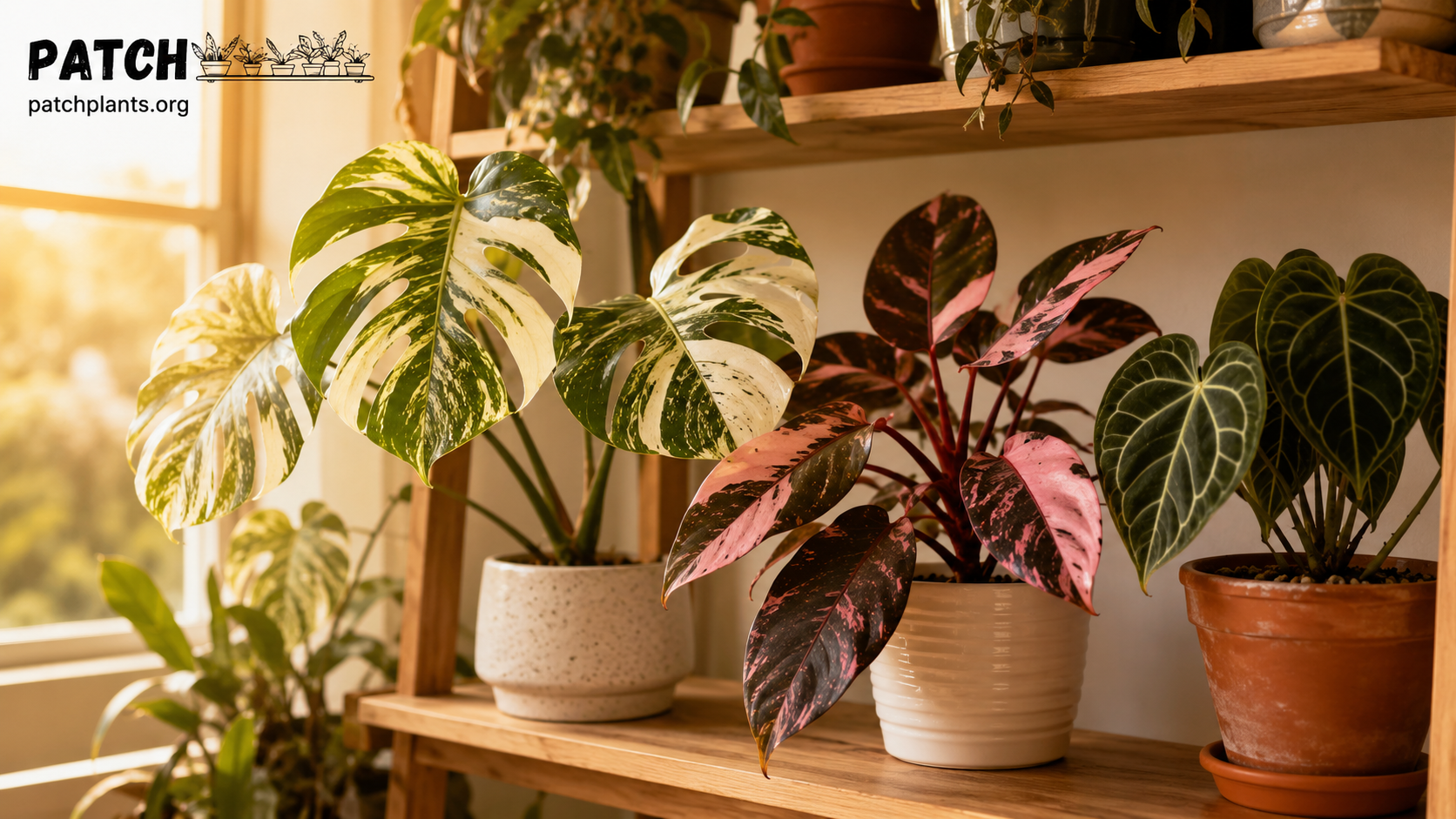
🌿 Key Takeaways
- Rare houseplants aren’t just decorations — they’re living collectables that combine exclusivity, unusual foliage, and genuine horticultural challenge into one of the most rewarding pursuits in modern indoor gardening.
- The most sought-after rare indoor houseplants in 2025 include variegated monsteras, pink princess philodendrons, rare aroids, and unusual hoyas — all commanding premium prices due to limited propagation and exceptionally high demand.
- Rare houseplants for sale can be found through specialist nurseries, reputable online sellers like Etsy, local plant swap events, and plant community groups — always buy from established sellers with verified reviews to avoid scams.
- Rare tropical houseplants including anthuriums, rare orchids, and exotic aroids typically require higher humidity, stable warmth, and bright indirect light — conditions that replicate their rainforest origins.
- Beautiful rare houseplants don’t always mean expensive — some of the most stunning rare and unusual houseplants are simply uncommon in certain regions, making local plant swaps and specialist nurseries worth exploring before spending big online.
- Rare houseplant cuttings rather than full plants are often the most affordable entry point into collecting — rooting a cutting from a reputable seller costs a fraction of buying a mature specimen and produces the same plant over time.
- Easy rare houseplants do exist — variegated pothos, certain hoya varieties, and smaller philodendrons offer unusual foliage with forgiving care requirements, making them ideal starting points for new collectors.
- Rare houseplant seeds are available for some species but require patience, humidity, and specific germination conditions — cuttings and divisions are generally more reliable routes to establishing rare specimens quickly.
- Building a rare houseplant collection rewards gradual, considered growth over impulse buying — one well-cared-for rare specimen makes more visual impact than a shelf of struggling plants purchased faster than care skills can keep up.
- Whether you’re searching for rare houseplants near me at local garden centres or buying online, understanding basic care requirements before purchase significantly improves survival rates and long-term success with rare species.
Introduction
It starts innocently enough. One plant. Maybe a money tree because someone swore it brings luck, or a pothos because every article said it was impossible to kill. And then, somehow, you find yourself standing in a specialist nursery with your phone raised to a price tag, wondering whether a single variegated leaf cutting is really worth more than your weekly grocery shop. It almost certainly is. Welcome to the world of rare houseplants.
Rare houseplants occupy a fascinating intersection between horticulture and collecting culture. They’re part living art, part treasure hunt, part community — and the pursuit of them has grown from a niche hobby into a genuine global movement. The pandemic accelerated it dramatically, but the appetite for rare and unusual houseplants hasn’t faded. If anything, 2025 has brought new species into the spotlight, new varieties into collectors’ wishlists, and new ways to find them that didn’t exist five years ago.
This guide covers 15 of the best rare indoor houseplants worth hunting — from attainable rarities that beginners can realistically source and care for, through to genuinely extraordinary specimens that require patience, skill, and occasionally a waiting list. Every plant comes with honest care guidance, realistic sourcing advice, and notes on which varieties justify their price tag and which are simply riding a hype cycle. If you’re new to houseplants entirely, our best indoor plants for beginners guide provides the essential foundation before diving into the rare end of the spectrum.
What Makes a Houseplant “Rare”?
Before diving into specific plants, it’s worth understanding what actually makes houseplants rare — because the term gets used loosely, and not everything labelled rare in a garden centre genuinely qualifies.
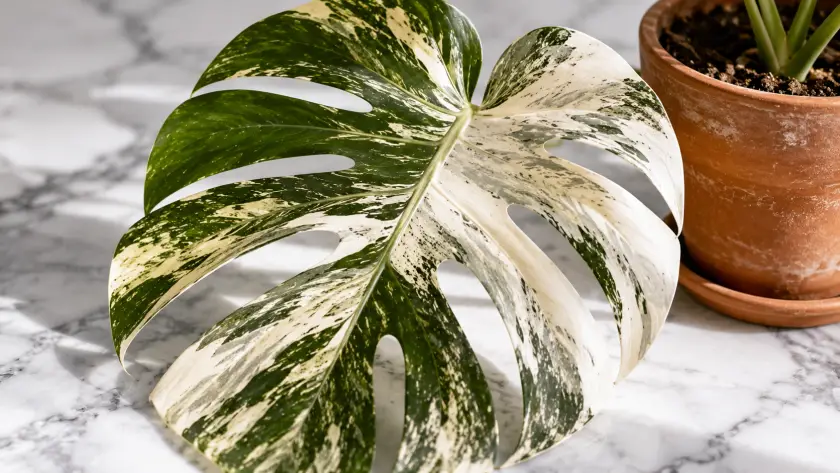
True rarity in houseplants comes from one or more of these factors. First, limited propagation — some plants are notoriously difficult to multiply, either because they root slowly, require specialist conditions, or produce very few natural offshoots. Second, unstable genetics — variegated plants like the monstera albo produce their white patterning through a genetic mutation that doesn’t reliably pass to cuttings, making each plant genuinely unique.
Third, geographic rarity — plants common in one country may be virtually impossible to find in another due to import restrictions, climate requirements for commercial growing, or simply lack of demand in that market. Fourth, deliberate exclusivity — certain cultivars are developed and released in very limited numbers by specialist breeders, creating artificial scarcity that drives both demand and price.
Understanding these distinctions helps navigate the market for rare houseplants for sale more intelligently — and avoid paying rare plant prices for species that are simply less stocked at mainstream garden centres. For a broader overview of what exceptional indoor plants look like at their best, our guide on colorful foliage indoor plants covers the most visually striking options across both common and uncommon categories.
15 Rare Houseplants Worth Hunting in 2025
1. Monstera Albo Variegata — The White Marble Monstera
If there is a single plant that defines the rare houseplant collecting movement of the last five years, it is the monstera albo variegata. Large, architecturally split leaves display white or cream marbling in patterns that vary completely from leaf to leaf — no two plants are ever identical. The variegation results from a genetic mutation affecting chlorophyll production, meaning it cannot be reliably predicted or controlled, and cuttings don’t always inherit the same degree of variegation as the parent plant.
This genetic unpredictability is precisely what makes each specimen unique and what keeps prices consistently high. A well-variegated cutting with two nodes routinely commands £100–£400 depending on variegation quality and availability. Full plants with mature leaves can exceed £1,000 at specialist sellers. If you’re considering a monstera albo, our monstera care guide covers the foundational care principles — albo care follows the same requirements but with even less tolerance for low light, which accelerates reversion toward plain green growth.
- Light: Bright indirect — essential for variegation retention
- Humidity: 60%+ preferred — see humidity hacks
- Pet safety: ⚠️ Toxic to cats and dogs — cat guide
- Rarity level: ⭐⭐⭐⭐⭐ Extremely rare
2. Philodendron Pink Princess — The Bubblegum Beauty
The pink princess philodendron (Philodendron erubescens ‘Pink Princess’) produces deep, near-black green leaves splashed with vivid bubblegum pink variegation — a colour combination that looks almost too dramatic to be natural. It is, however, entirely real, and entirely extraordinary. Like the monstera albo, variegation levels vary between plants — heavily variegated specimens with large pink sections command premium prices, while predominantly green plants are considerably more affordable.
The pink princess is one of the more approachable rare expensive houseplants in terms of care — it’s a philodendron at heart, which means it shares the same broadly forgiving care principles as its more common relatives. Our philodendron care guide covers the fundamentals that apply directly to pink princess care with minor adjustments for its higher light requirements.
- Light: Bright indirect — insufficient light causes variegation to fade toward green
- Water: When top 2cm dries — watering guide
- Soil: Well-draining aroid mix — soil guide
- Pet safety: ⚠️ Toxic — dog-friendly alternatives
- Rarity level: ⭐⭐⭐⭐ Very rare
3. Anthurium Crystallinum — The Velvet Leaf Aroid
Anthuriums represent some of the most beautiful rare houseplants available, and Anthurium crystallinum sits near the top of the wishlist for serious collectors. Its large, velvety, deep green leaves display silvery-white veins that catch light in an almost iridescent way — creating a texture that looks sculpted rather than grown. It’s one of the most striking rare tropical houseplants you can grow indoors with the right conditions.
Anthurium crystallinum requires high humidity, warm temperatures, and excellent air circulation — conditions that mirror its Colombian rainforest origins. It rewards the effort with genuinely extraordinary foliage that makes every other plant in the room look ordinary by comparison. Our humidity hacks guide covers practical solutions for maintaining the 60-70% humidity this plant genuinely needs.
- Light: Bright indirect — 1–2 metres from a bright window
- Humidity: 60–70% essential
- Temperature: 18–27°C — no cold drafts
- Rarity level: ⭐⭐⭐⭐ Very rare
4. Hoya Kerrii Variegata — The Heart Plant
The standard hoya kerrii — single heart-shaped leaf in a tiny pot — is common enough. The variegated version, however, is an entirely different proposition. Hoya kerrii variegata produces full trailing vines of heart-shaped leaves with creamy white edges and green centres, creating a romantic, whimsical display that earns its rare houseplant status genuinely rather than through marketing.
Hoya kerrii variegata is one of the best easy rare houseplants for beginners moving into collecting — it shares the forgiving drought-tolerant nature of all hoyas while offering genuinely unusual variegated foliage. It grows slowly, but its care requirements are considerably more forgiving than anthuriums or variegated monsteras. For propagation guidance, our complete propagation guide covers hoya stem cuttings in detail.
- Light: Bright indirect to filtered direct
- Water: Allow to dry completely — very drought tolerant
- Pet safety: ✅ Generally non-toxic
- Rarity level: ⭐⭐⭐ Moderately rare
5. Calathea White Fusion — The Painted Masterpiece
Among rare and unusual houseplants with genuinely spectacular foliage, calathea white fusion stands apart. Its leaves display a complex watercolour pattern of white, green, and lavender — no two leaves carrying the same arrangement of colour. It’s arguably the most visually complex leaf pattern available in any commonly cultivated indoor plant, and it has earned cult status among collectors of beautiful rare houseplants.
White fusion is the most demanding calathea variety available, requiring consistent humidity above 60%, filtered water, and stable temperatures to maintain its extraordinary patterning. Our calathea care guide covers the fundamental calathea care principles — white fusion follows all the same requirements but with considerably less tolerance for any deviation.
- Light: Bright indirect — patterns fade severely in low light
- Water: Filtered or rainwater only — overwatering guide
- Humidity: 60%+ non-negotiable
- Rarity level: ⭐⭐⭐⭐ Very rare
6. Monstera Thai Constellation — Stable Variegation
Where monstera albo variegation is unstable and unpredictable, the Thai constellation was developed in Thai laboratory tissue culture specifically to produce stable, consistent cream-yellow speckled variegation across every leaf. The result is a monstera that reliably produces beautifully marked leaves with a galaxy-like constellation pattern — and because the variegation is tissue culture-stable, every cutting produces consistently variegated offspring.
Thai constellation has become slightly more accessible than albo variegata as tissue culture production has scaled, but it remains firmly in rare expensive houseplants territory with quality specimens commanding £200–£800. Its care needs match standard monstera requirements — our monstera care guide covers everything needed to keep Thai constellation thriving indoors.
- Rarity level: ⭐⭐⭐⭐ Very rare
7. Alocasia Dragon Scale — Textured Like Armour
Alocasia baginda ‘Dragon Scale’ produces leaves with a deeply textured, almost reptilian surface — dark green with silvery primary veins and a dimensional quilted texture that photographs like nothing else in the plant world. It’s one of the most cool rare houseplants for collectors who want impact without relying purely on variegation.
Dragon scale is a rare tropical houseplant from Borneo that needs high humidity and warm stable conditions. It grows from a corm and can go dormant in winter — a normal behaviour that alarmed many new owners before the plant community widely understood the species. Our revive a dying plant guide covers the distinction between dormancy and genuine decline.
- Light: Bright indirect
- Humidity: 60-70%
- Pet safety: ⚠️ Toxic to cats and dogs
- Rarity level: ⭐⭐⭐ Moderately rare
8. Variegated String of Pearls — Rare Succulent Gem
The variegated string of pearls is one of the rarest succulent varieties available — standard green string of pearls is common enough, but the variegated form, with cream and green patterned beads, is genuinely difficult to source and noticeably more demanding to care for. It appears regularly on lists of rare houseplants for sale on Etsy and specialist succulent shops, often selling within hours of being listed.
As a rare succulent, it needs the same fast-draining soil and dry-between-watering approach as standard string of pearls, but with even more light to sustain the variegated cells’ reduced photosynthetic capacity. Place in the brightest available south-facing window position for best results.
- Light: Full sun or very bright indirect — essential for variegation
- Water: Completely dry between waterings
- Pet safety: ⚠️ Toxic to cats and dogs
- Rarity level: ⭐⭐⭐⭐ Very rare
9. Begonia Maculata — Polka Dot Drama
Begonia maculata is one of the most visually striking plants available at any price point — angel wing leaves in deep olive green decorated with perfectly spaced silver polka dots, with vivid crimson-red undersides. It has crossed from the rare houseplant category into wider availability in recent years, but quality specimens with dense spotting and strong growth remain genuinely impressive additions to any rare houseplant collection.
Begonia maculata rewards bright indirect light, consistent moisture, and good humidity — conditions it shares with many rare tropical houseplants. It’s one of the best choices for anyone building a rare houseplant collection because it offers extraordinary visual impact with care requirements that experienced growers can manage confidently. See our 33 best bathroom plants guide — begonia maculata thrives in the humid conditions of a well-lit bathroom.
- Light: Bright indirect
- Water: Keep evenly moist — watering guide
- Pet safety: ⚠️ Toxic to cats and dogs
- Rarity level: ⭐⭐⭐ Moderately rare
10. Philodendron Gloriosum — The Velvet Giant
Philodendron gloriosum produces enormous heart-shaped leaves in deep matte green with striking white veins — each leaf growing larger than the last on a creeping rhizome that spreads horizontally along the soil surface rather than climbing. It’s one of the most popular rare houseplants among serious collectors, valued for its sheer size and dramatic vein patterning.
Unlike climbing philodendrons, gloriosum needs a wide shallow pot to accommodate its horizontal growth habit — an unusual requirement that trips up many new owners. Our philodendron care guide covers the fundamental care principles, and our repotting guide covers the specific considerations for rhizomatous growers.
- Light: Bright indirect
- Humidity: 60%+ preferred
- Pet safety: ⚠️ Toxic
- Rarity level: ⭐⭐⭐⭐ Very rare
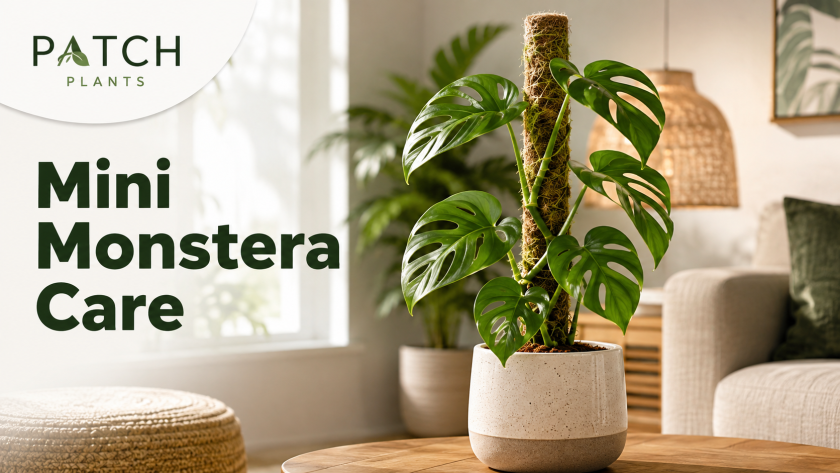
11. Rhaphidophora Tetrasperma — The Mini Monstera
Rhaphidophora tetrasperma is frequently mislabelled as a mini monstera or philodendron ginny — it’s neither, belonging to an entirely different genus. Its small, fenestrated leaves genuinely resemble miniature monstera deliciosa leaves, making it one of the most appealing unique houseplants for sale for collectors who want the monstera aesthetic in a more compact, faster-growing package.
It has become more widely available recently but remains uncommon enough to be considered among rare indoor houseplants in many markets. Fast-growing, easy to propagate, and considerably more forgiving than true rare monsteras — rhaphidophora tetrasperma is an excellent gateway plant into the world of rare aroids. Our propagation guide covers stem cutting techniques that work beautifully for this species.
- Light: Bright indirect
- Water: When top 2cm dries
- Rarity level: ⭐⭐⭐ Moderately rare
12. Orchid — Rare Fragrant Varieties
Standard phalaenopsis orchids are anything but rare. But certain orchid species and hybrids qualify as genuinely exotic rare houseplants — Brassavola nodosa (Lady of the Night), Oncidium Sharry Baby, and various Dracula species produce extraordinary flowers and, in some cases, remarkable fragrance that makes them among the most special plants a collector can own.
Rare orchid varieties represent some of the best rare houseplants for sale at specialist orchid nurseries, where they’re available as divisions, flask-grown seedlings, or mature blooming specimens. For more on fragrant plant choices that complement rare orchid varieties, our best smelling indoor plants guide covers the most rewarding fragrant options across all plant categories.
- Pet safety: ✅ Non-toxic to cats and dogs
- Rarity level: ⭐⭐⭐–⭐⭐⭐⭐⭐ depending on variety
13. Ficus Elastica Tineke — Variegated Rubber Plant
The standard rubber plant is common. The variegated Ficus elastica ‘Tineke’ — with cream, white, pink, and green leaves — is considerably rarer and considerably more striking. It combines the architectural presence and easy-going care of a standard rubber plant with foliage that looks genuinely extraordinary in any room.
Tineke is one of the best cheap rare houseplants relative to its visual impact — when available, it’s priced more accessibly than variegated aroids while delivering comparable visual drama. Our rubber plant care guide covers all the care principles that apply directly to Tineke. See also our 20 oversized indoor plants guide for how large specimen rubber plants can anchor a room.
- Light: Bright indirect — variegation fades in low light
- Water: Allow top 3cm to dry between waterings
- Rarity level: ⭐⭐⭐ Moderately rare
14. ZZ Raven — The Black Variety
The standard ZZ plant is one of the most reliable low-maintenance houseplants available. ZZ Raven (Zamioculcas zamiifolia ‘Raven’) produces the same architectural glossy foliage in near-black — new growth emerges bright lime green before darkening dramatically to an almost purple-black as it matures. This colour development makes it one of the most visually dynamic rare indoor houseplants currently available.
ZZ Raven has become slightly more accessible in recent years but remains uncommon enough to genuinely surprise visitors. Its care is identical to standard ZZ plant — one of the most forgiving houseplants available — making it an ideal easy rare houseplant for collectors who want something unusual without difficult care requirements. Our ZZ plant care guide covers everything needed.
- Light: Low to bright indirect — genuinely tolerant
- Water: Allow to dry completely — very drought tolerant
- Pet safety: ⚠️ Mildly toxic
- Rarity level: ⭐⭐⭐ Moderately rare
15. Variegated Monstera Adansonii — The Swiss Cheese Vine
The standard monstera adansonii is widely available. The variegated form — with cream and white marbling across its characteristically hole-fenestrated leaves — is one of the most rare houseplants in the trailing vine category, combining the charm of a cascading adansonii with the extraordinary visual impact of unstable variegation. It’s an ideal specimen for high shelves or hanging planters, trailing beautifully while providing the drama of a rare collector’s piece.
Variegated adansonii care follows standard monstera principles with the same heightened light requirement as all variegated varieties. Our low-light hanging plants guide covers display ideas for trailing rare plants in any room.
- Light: Bright indirect — non-negotiable for variegation
- Pet safety: ⚠️ Toxic to cats and dogs
- Rarity level: ⭐⭐⭐⭐⭐ Extremely rare
How to Care for Rare Houseplants
Light Requirements
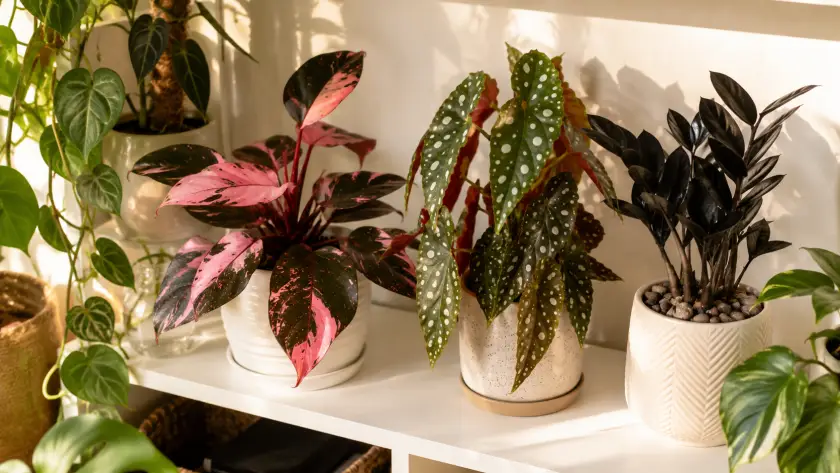
The majority of rare tropical houseplants — variegated monsteras, philodendrons, anthuriums, calatheas — require bright indirect light as a non-negotiable care fundamental. Insufficient light is the most common reason rare plant variegation fades, reverting toward plain green growth as the plant compensates for reduced photosynthetic capacity by producing more chlorophyll. Our complete indoor light guide covers how to identify and optimise the best light positions for sensitive rare plants in every room type.
Watering Rare Houseplants
Most rare indoor houseplants prefer consistent moisture without waterlogging — a balance that requires soil moisture checking rather than schedule-based watering. Overwatering causes root rot that progresses rapidly in the compact root systems of many rare species, and recovery is rarely guaranteed. Our overwatering signs guide and complete watering guide are essential reading before investing in expensive rare specimens.
Humidity for Rare Tropical Plants
Most rare tropical houseplants require 50–70% humidity — significantly above the 30–40% typical of most homes. A cool-mist humidifier is the most reliable solution, though grouping plants together and using pebble trays also helps. Our humidity hacks guide covers every affordable technique for creating tropical-level conditions indoors.
Soil and Fertilizing
Rare aroids and tropical species need well-draining, aerated soil mixes rather than dense standard potting compost. Our best soil mix guide covers custom mixes for every rare plant type. Feed monthly during spring and summer with balanced liquid fertilizer at half strength — over-fertilizing rare plants causes irreversible root burn. See our fertilizing guide for exact seasonal schedules.
Repotting
Rare plants need repotting every 1–2 years as roots fill their container. Choose a pot only 5cm larger — excess soil volume stays wet too long and causes root rot. Our how to repot guide and repotting mistakes guide are essential reading before touching rare specimens.
Where to Buy Rare Houseplants
Specialist Nurseries
The most reliable source for rare houseplants for sale remains specialist indoor plant nurseries — either physical locations or online shops with verified track records. Quality control is generally higher than online marketplaces and plants arrive in better condition.
Etsy and Online Marketplaces
Etsy rare houseplants searches reveal hundreds of sellers offering cuttings, rooted plants, and full specimens across every rare category. Always check seller reviews, look for photo evidence of healthy parent plants, and ask questions before purchasing. Unrooted cuttings are the most affordable entry point.
Plant Swaps and Community Groups
Local plant swap events and Facebook plant community groups regularly surface rare houseplants near me opportunities that don’t appear in any online shop — members propagating their own collections often trade or sell cuttings at prices far below commercial rates. These are among the best sources for cheap rare houseplants that are genuinely rare rather than simply uncommon at mainstream retailers.
Rare Houseplant Seeds
Some rare species are available as rare houseplant seeds through specialist seed suppliers. Seeds require patience — germination can take weeks and seedlings grow slowly — but represent the most affordable route to certain species unavailable as cuttings.
Pet Safety and Rare Houseplants
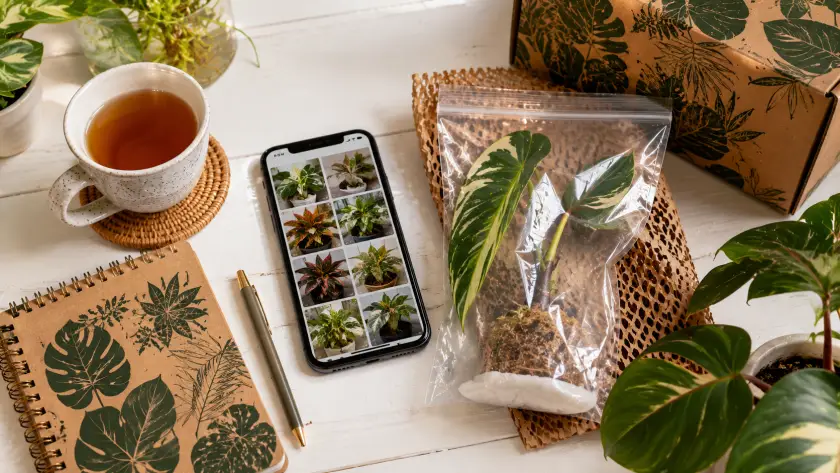
Many of the most popular rare houseplants — including variegated monsteras, philodendrons, anthuriums, and alocasias — are toxic to cats and dogs. Before investing in rare specimens, always verify toxicity and plan placement accordingly.
⚠️ Toxic rare houseplants (keep out of reach):
- All monstera varieties — toxic
- All philodendron varieties — toxic
- Alocasia — toxic
- Anthurium — toxic
- ZZ varieties (Raven included) — mildly toxic
✅ Rare houseplants safe for pets:
- Rare orchid varieties — non-toxic
- Hoya kerrii variegata — generally non-toxic
- Begonia maculata — non-toxic to cats (mildly toxic to dogs in large quantities)
For comprehensive pet safety guidance, our cat-friendly plants guide and dog-friendly plants guide cover every safe option if you want unusual plants without toxicity concerns.
How to Display Your Rare Houseplant Collection
A well-curated rare houseplant collection deserves thoughtful display. The goal is positioning that serves the plant’s light requirements while creating the visual impact that makes rare plants worth owning.
Shelf displays work beautifully for smaller rare aroids and philodendrons — position at eye level against a white or neutral wall to make leaf patterns the focal point. Our room-by-room plant styling guide covers plant display principles for every room type.
Bedroom placement of rare plants with calming foliage — anthuriums, calatheas — creates genuinely beautiful sleeping spaces. See our bedroom plant decorating guide for specific positioning ideas.
Bathroom placement suits high-humidity rare tropicals like anthurium crystallinum and begonia maculata — the naturally elevated humidity from showers reduces the humidifier burden considerably. Our 33 best bathroom plants guide covers the best humid-room positioning strategies.
For inspiring large-specimen displays, our 20 oversized indoor plants guide covers how mature rare specimens like large monstera albos become genuine room anchors. If you’re building a full indoor garden around your rare collection, our air-purifying indoor plants guide covers complementary species that improve air quality while adding visual depth to a collection.
FAQ: Rare Houseplants
1. What makes a houseplant truly rare? True rarity in rare houseplants comes from limited propagation capacity, genetic instability (as in variegated varieties), geographic rarity due to import restrictions, or deliberate limited release by specialist breeders. Plants labelled rare at mainstream garden centres are often simply less stocked rather than genuinely rare — true rare specimens come primarily from specialist nurseries, reputable online sellers, and community plant swaps.
2. Where can I find rare houseplants near me? The best sources for rare houseplants near me are specialist indoor plant nurseries, local plant swap events, and plant community Facebook groups where collectors sell cuttings from their own collections. Check Instagram and local plant groups for swap events in your area — these consistently surface cheap rare houseplants that online sellers price far higher for equivalent specimens.
3. Are rare houseplants harder to care for? Not always — some easy rare houseplants like ZZ Raven, hoya kerrii variegata, and rhaphidophora tetrasperma are genuinely forgiving despite their unusual appearance. However, many rare tropical houseplants including anthuriums, calathea white fusion, and variegated monsteras require higher humidity, filtered water, and more consistent care than common houseplants. Start with easier rare varieties and build care confidence before investing in demanding specimens.
4. How do I buy rare houseplants online safely? When you buy rare houseplants online, always check seller reviews thoroughly, look for photos of the actual plant being sold (not stock images), verify that the seller ships with heat packs in cold weather, and ask about their packaging methods before purchasing. Etsy rare houseplants searches reveal both excellent specialist sellers and opportunistic sellers — reviews are the most reliable quality indicator.
5. What are the best rare houseplants for beginners? The best rare houseplants for beginners entering the collecting world are ZZ Raven (near-black foliage with standard ZZ care), variegated pothos (widely available, forgiving, unusual), rhaphidophora tetrasperma (fast-growing, easy to propagate), and hoya kerrii variegata (drought-tolerant, slow but reliable). All offer genuine rarity or unusual appearance without the demanding care requirements of premium variegated aroids.
6. How much do rare houseplants cost? Rare expensive houseplants range enormously in price. A ZZ Raven or variegated pothos might cost £15–£40. Rhaphidophora tetrasperma and begonia maculata typically fall in the £25–£80 range. Philodendron pink princess runs £80–£300 for well-variegated specimens. Monstera albo cuttings command £100–£500 and mature plants significantly more. Prices have softened from pandemic highs for some species but the most extremely rare houseplants remain consistently expensive due to propagation difficulty.
7. Can I propagate rare houseplants from cuttings? Yes — rare houseplant cuttings are the most accessible and affordable entry point into collecting expensive species. Most rare aroids, philodendrons, and monsteras root readily from node cuttings in either water or moist sphagnum moss. Rare houseplant seeds are available for some species but are slower and less reliable. Our complete propagation guide covers every cutting and division technique in detail.
8. What are the rarest houseplants in the world? The rarest house plants in collector culture include monstera obliqua (genuinely rare in cultivation, not just expensive), Amorphophallus titanum (titan arum — grown in botanical gardens), certain Dracula orchid species, and some Anthurium species with extremely limited propagation. For practical collecting purposes, the most rare houseplants realistically available through specialist nurseries and rare indoor plants for sale channels are variegated monsteras, rare anthuriums, and unusual aroid species from specialist importers.
Related Guides
- Monstera Care Guide
- Philodendron Care Guide
- Complete Calathea Plant Care Guide: How to Grow Every Popular Variety
- Pothos Care Guide
- ZZ Plant Care Guide
- Rubber Plant Care Guide
- Fiddle Leaf Fig Care Guide
- Snake Plant Care Guide
- Spider Plant Care Guide
- Peace Lily Care Guide
- Aloe Vera Care Guide
- Money Tree Care Guide
- Christmas Cactus Care Guide
- Air Purifying Indoor Plants
- Colorful Foliage Indoor Plants
- Best Indoor Plants for Beginners
- Best Smelling Indoor Plants
- 35 Low Maintenance Plants
- 20 Oversized Indoor Plants
- Low-Light Hanging Plants
- 33 Best Bathroom Plants
- Complete Indoor Light Guide
- Complete Watering Guide
- Signs You’re Overwatering
- Humidity Hacks Guide
- Best Soil Mix Guide
- Fertilizing Guide
- How to Repot a Plant
- Repotting Mistakes to Avoid
- How to Propagate Houseplants
- Why Leaves Turn Yellow
- Leaf Curl Browning and Droop
- How to Revive a Dying Plant
- Cat-Friendly Plants Guide
- Dog-Friendly Plants Guide
- Style Indoor Plants by Room
- Decorate Bedroom with Plants
- Best Low Maintenance Outdoor Plants
- Browse All Indoor Plants →
- Browse All Outdoor Plants →
- Browse All Plant Care Guides →
🌿 Final Thoughts
The world of rare houseplants is unlike any other corner of indoor gardening. It combines the patience of horticulture with the thrill of collecting, the satisfaction of nurturing with the pride of ownership — and occasionally the humbling experience of watching an expensive plant struggle despite your best efforts. That last part is worth accepting early, because rare plants teach as much through failure as through success.
Start thoughtfully. One or two well-chosen rare indoor houseplants that match your current care skills and home conditions will reward you far more than a shelf of struggling specimens purchased faster than your knowledge can keep up. Build the collection gradually, invest in understanding each plant’s specific needs, and let each new leaf feel like the genuine achievement it is.
The rare houseplant collection that impresses most isn’t necessarily the most expensive or the most extensive — it’s the one where every plant is genuinely thriving, every leaf is expressing its full potential, and every visitor stops to ask, “What is that plant?”
According to the Royal Horticultural Society (RHS), many rare tropical houseplants now available to collectors were historically found only in specialist botanical garden collections — their increasing availability through specialist nurseries and community propagation represents a genuine democratisation of plant collecting that continues to expand the boundaries of what is possible to grow at home. 🌿
[…] Rare houseplants worth hunting […]
Your point of view caught my eye and was very interesting. Thanks. I have a question for you.
[…] Rare houseplants […]
[…] Rare houseplants […]
[…] Rare houseplants […]
Consiglio vivamente agency.ernesto.it per la gestione delle mie esigenze online legate al settore delle piante rare e sostenibili. La loro professionalità e attenzione ai dettagli hanno reso tutto più semplice, permettendomi di concentrarmi sulla crescita della mia collezione senza preoccupazioni. Sono un partner affidabile e competente, che offre soluzioni efficaci e personalizzate. Grazie alla loro assistenza, sono riuscito a ottimizzare la presenza del mio business e a raggiungere un pubblico più ampio nel mondo delle piante rare e chemioterapia. Non posso che raccomandare agency.ernesto.it a chi cerca un servizio professionale e orientato al risultato.
[…] Rare houseplants […]