Key Takeaways
- Oversized indoor plants transform rooms in ways that small houseplants cannot — they add genuine architectural scale, fill corners that furniture can’t reach, and create the layered lush atmosphere that defines well-designed interiors with greenery.
- Large leaf indoor plants — monstera, bird of paradise, fiddle leaf fig, alocasia, and rubber plant — are the most visually impactful oversized indoor plants available, with individual leaves often larger than a human hand creating instant botanical drama.
- Tall plants for home interiors — snake plant zeylanica, dracaena marginata, fiddle leaf fig, Norfolk Island pine, and parlor palm — add vertical dimension to rooms without requiring the floor space that wide-spreading large indoor plants demand, making them ideal for smaller rooms with high ceilings.
- Most oversized indoor plants are less demanding than their dramatic scale suggests — ZZ plant, snake plant, dracaena, and parlor palm all reach impressive sizes with minimal care requirements, tolerating low light, infrequent watering, and inconsistent attention.
- Big home plants positioned in corners create the illusion of a larger, more verdant space — placing a large monstera or bird of paradise in an empty corner fills it more effectively than any piece of furniture and adds the organic visual warmth that hard furnishings alone cannot provide.
- Indoor plants with large leaves — alocasia, monstera, banana plant, and bird of paradise — benefit most from humidity support in typical home conditions, as their large surface area increases transpiration and makes them more susceptible to the low humidity symptoms (brown tips, curling edges) that smaller-leaved plants tolerate more easily.
- Large house plants need appropriately scaled containers — planting a large specimen in an undersized pot restricts root development, causes instability as top-heavy foliage overcomes a small base, and forces more frequent repotting than correct initial sizing would require.
- Largest indoor plants — banana plant, bird of paradise, Norfolk Island pine, Australian umbrella tree, and fiddle leaf fig tree — can reach ceiling height in ideal conditions, making ceiling clearance an important consideration when selecting oversized indoor plants for specific rooms.
- Big leafy tropical plants require bright indirect light in most cases — the same large leaf surface area that makes them visually spectacular is also the reason they need more light for photosynthesis than smaller-leaved drought-adapted plants.
- Oversized indoor plants are investments — slow-growing large specimens from garden centres cost significantly more than small starter plants, but purchasing smaller specimens and growing them to full size over 2–5 years produces the same result at a fraction of the cost, with the added satisfaction of watching the transformation.
Introduction
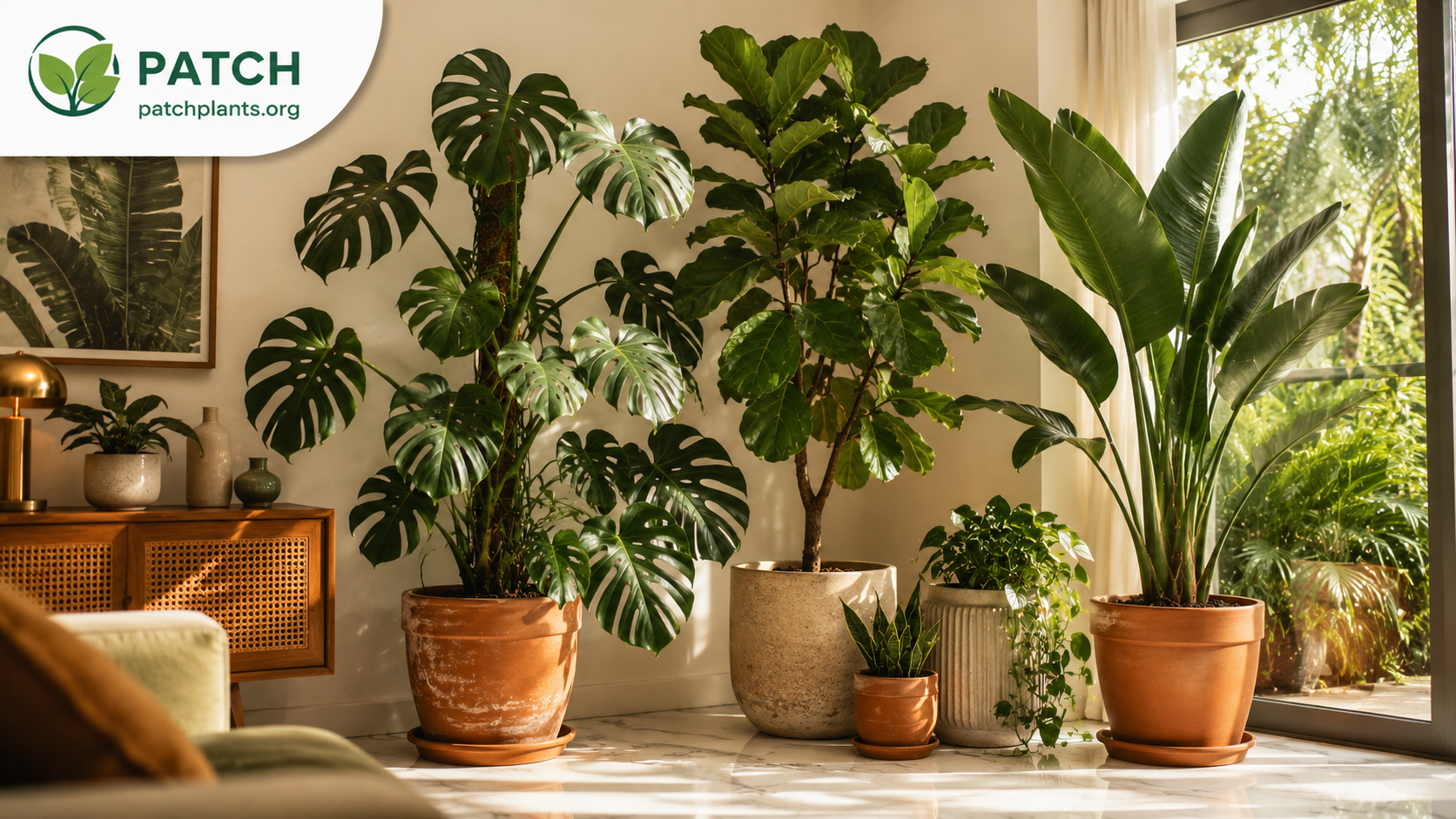
Oversized indoor plants do something genuinely different from their smaller counterparts — they don’t just add greenery, they change the scale and character of a room entirely. A towering large leaf indoor plant in the corner of a living room creates a focal point that pulls the eye in a way that a small potted plant on a shelf never can. A cluster of big home plants around a sofa creates the impression of a garden room rather than simply a furnished space. And the right tall plants for home interiors fills the vertical dimension that most rooms waste entirely, creating a layered botanical environment that feels genuinely designed rather than randomly arranged.
The reassuring truth about large indoor plants is that many of the most dramatically impressive species are among the least demanding in terms of care. The ZZ plant, snake plant, dracaena, and parlor palm all reach impressive floor-to-ceiling heights with minimal intervention — they tolerate low light, infrequent watering, and the kind of inconsistent attention that smaller, more demanding species respond to badly. The most demanding of the oversized indoor plants — fiddle leaf fig, alocasia, banana plant — reward the extra attention they require with growth so dramatic it changes the room weekly during peak growing season.
This complete guide to 20 oversized indoor plants covers every major large specimen suitable for home growing — from the most beginner-friendly large house plants through the most dramatically beautiful big leafy tropical plants — with light requirements, watering needs, and positioning guidance for each. For care specifics on individual species, our dedicated care guides cover each plant in complete detail.
The 20 Best Oversized Indoor Plants
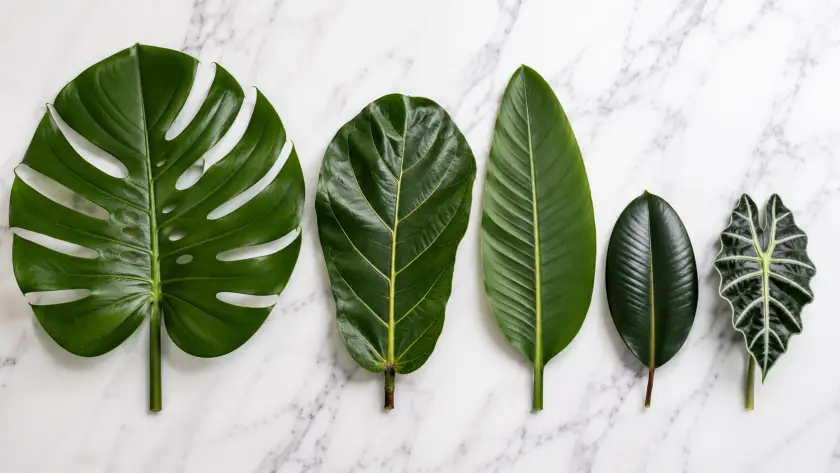
1. Monstera Deliciosa — The Iconic Large Leaf Indoor Plant
Monstera deliciosa is the defining oversized indoor plant of contemporary interior design — its iconic split and perforated leaves, which can reach 60–90cm in width on a mature specimen, have become synonymous with the botanical home aesthetic. More importantly, monstera is genuinely manageable — it grows steadily in the bright indirect light available near most windows, tolerates the humidity of typical homes, and communicates its needs clearly through its leaves.
Monstera can reach 2–3m indoors in good conditions over several years, producing progressively larger and more dramatically split leaves as it matures. Young plants in smaller containers have solid, unsplit leaves — the characteristic fenestrations develop only as the plant matures, making patience worthwhile. Support with a moss pole or coir support to encourage upward rather than sprawling growth in smaller spaces.
Light: Bright to medium indirect — tolerates lower light but produces smaller less split leaves Water: Every 10–14 days in summer, every 21 days in winter — allow top 5cm to dry Size: 2–3m height indoors Pet safe: ⚠️ Toxic
Full care at our monstera care guide.
2. Fiddle Leaf Fig Tree — The Most Dramatic Large Indoor Plant
The fiddle leaf fig (Ficus lyrata) produces the largest individual leaves of any common oversized indoor plant — glossy, violin-shaped leaves that can reach 50cm in length on a mature specimen, carried on an upright trunk that reaches 2–3m in ideal conditions. The sculptural quality of a mature fiddle leaf fig is unmatched — it looks genuinely architectural rather than simply decorative.
The fiddle leaf fig has a reputation for difficulty that is partly deserved — it dislikes being moved, reacts dramatically to low humidity with brown patches, and drops leaves if positioned near cold drafts. But in a bright, stable, reasonably humid position (south or west-facing window, away from heating vents), it rewards with the most stunning growth trajectory of any large leaf indoor plant available. Start with a position it can stay in permanently — fiddle leaf figs sulk badly when repositioned repeatedly.
Light: Bright indirect — south or west-facing window Water: Every 10–14 days — allow top 5cm to dry, never let roots sit in water Size: 2–3m height indoors Pet safe: ⚠️ Toxic
Full care at our fiddle leaf fig care guide.
3. Bird of Paradise — Best Large Leaf Statement Plant
Bird of paradise (Strelitzia reginae) produces paddle-like leaves on upright stems that reach 1.5–2m height indoors, creating one of the most dramatically tropical-looking of all oversized indoor plants. The broad, blue-green leaves split along their length in response to wind in their native South African habitat — indoors this same splitting occurs naturally as the plant matures, adding to the wild, architectural character.
Bird of paradise needs genuine bright light — ideally 4–6 hours of direct or very bright indirect sun — to grow at its best and potentially flower. In lower light it survives but grows slowly and may lose the upright vigor that defines its best form. It tolerates moderate dryness between waterings once established and benefits from the higher humidity support that all big leafy tropical plants appreciate. Position in the brightest available spot.
Light: Bright direct to bright indirect — south-facing window ideal Water: Every 10–14 days in summer, every 21 days in winter Size: 1.5–2m height indoors Pet safe: ⚠️ Toxic
Full care at our bird of paradise care guide.
4. Rubber Plant — Large Indoor Plant for Beginners
The rubber plant (Ficus elastica) — particularly the deep burgundy-leaved varieties — is among the most beginner-friendly of all oversized indoor plants while offering genuinely spectacular aesthetics. The thick, glossy leaves in deep green, burgundy, or variegated patterns grow on upright stems that reach 2–3m over time, developing a tree-like form with age.
Rubber plants tolerate a wider range of conditions than most large leaf indoor plants — they handle lower light better than fiddle leaf fig, require less frequent watering than monstera, and adapt to typical home humidity without the brown-tip issues that plague calathea and other moisture-demanding large plants. Wipe leaves monthly with a damp cloth — the large glossy surface accumulates dust that reduces photosynthesis efficiency.
Light: Medium to bright indirect Water: Every 14–21 days — allow soil to dry almost completely between waterings Size: 2–3m height indoors Pet safe: ⚠️ Toxic
Full care at our rubber plant care guide.
5. Alocasia Regal Shield — Most Dramatic Large Leaf Houseplant
Alocasia produces the most dramatic individual leaves of any houseplant with large leaves available in mainstream plant retail — shield-shaped, deeply veined leaves in deep green that can reach 60–90cm in length on a mature plant, growing on upright stems that give the plant a bold, architectural form. Unlike monstera which sprawls and trails, alocasia grows in a tight, structured upright cluster that suits smaller footprint positions beautifully.
Alocasia requires higher care investment than most oversized indoor plants — it needs consistent moisture (not waterlogged but never completely dry), high humidity (it performs best in 60%+ relative humidity), and bright indirect light. Use our humidity hacks guide and DIY humidity tray guide to support the humidity requirements.
Light: Medium to bright indirect — no direct sun Water: Every 7–10 days — keep consistently moist but not waterlogged Size: 1–1.5m height indoors Pet safe: ⚠️ Toxic
6. Dracaena Marginata — Best Tall Plant for Home Low Light
Dracaena marginata (Madagascar Dragon Tree) is among the most architectural of all tall plants for home growing — its slender trunk with clusters of spiky, red-edged leaves at the top creates a silhouette that looks genuinely sculptural from across a room. Over time it develops branching trunks that give it the character of an aged tree, making mature specimens among the most beautiful of all large indoor plants.
Dracaena is one of the most low-maintenance of all oversized indoor plants — it genuinely tolerates low light (though grows slowly in poor light), requires watering only every 2–3 weeks, and adapts to typical home temperature and humidity without developing the stress symptoms that demand more from care. Use filtered water rather than tap water — dracaena is fluoride-sensitive and develops brown tips from fluoride accumulation in tap water. See our leaf curl browning and droop guide for brown tip diagnosis.
Light: Low to medium indirect — one of the most shade-tolerant large indoor plants Water: Every 14–21 days — allow top half of soil to dry between waterings Size: 1.5–2.5m height indoors Pet safe: ⚠️ Toxic
Full care at our dracaena care guide.
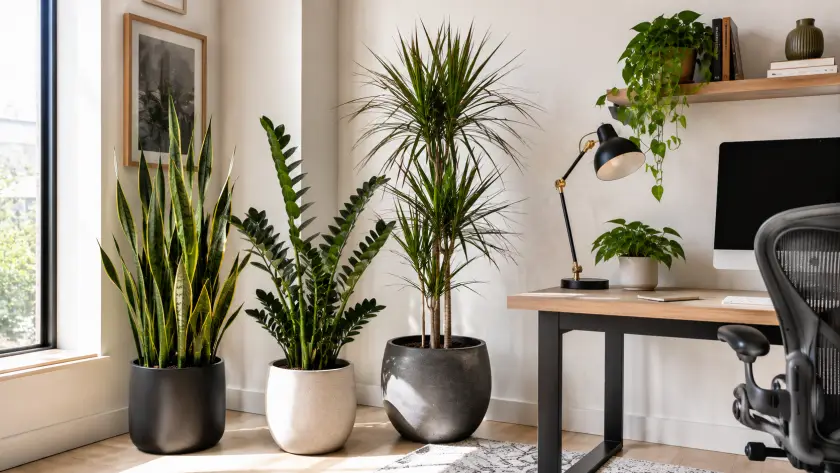
7. Snake Plant Zeylanica — Tallest Low-Maintenance Indoor Plant
Sansevieria zeylanica (and the broader snake plant family) represents the most extreme combination of impressive size and minimal care requirements in the oversized indoor plants category. The Zeylanica variety grows upright sword-like leaves to 90–120cm in height, creating a strong vertical statement in corners and alongside furniture. Large floor specimens with multiple established leaves are among the most structurally striking of all large house plants.
Snake plant tolerates virtually any indoor light condition from near-windowless to bright indirect, requires watering only every 3–4 weeks in summer and monthly in winter, and handles the full range of typical home temperatures and humidity levels without complaint. It is genuinely the most forgiving of all tall plants for home growing — the only reliable way to damage a snake plant is to overwater it. See our signs of overwatering guide.
Light: Any light condition — genuinely the most adaptable Water: Every 3–4 weeks in summer, monthly in winter Size: 90–120cm height indoors Pet safe: ⚠️ Toxic
Full care at our snake plant care guide.
8. ZZ Plant — Best Large Indoor Plant for Dark Rooms
Zamioculcas zamiifolia (ZZ plant) offers the most genuinely dark-tolerant of all large indoor plants — its glossy, deep green leaflets on arching stems grow steadily (if slowly) even in positions that most other oversized indoor plants would find inadequate. The ZZ plant’s water-storing rhizomes mean it tolerates extended periods between waterings that would cause root stress in most other species.
A mature multi-stem ZZ plant in a large pot reaches 90–120cm with dense, lush growth that looks genuinely impressive despite requiring almost no care. The glossy leaf texture catches light beautifully and stays pristine without the regular cleaning that large-leaved species like rubber plant require. It is the most recommended of all big home plants for offices and rooms with north-facing windows or minimal natural light. See our best indoor plants for beginners guide.
Light: Low to medium — genuinely tolerates very low light Water: Every 3–4 weeks in summer, every 6 weeks in winter Size: 90–120cm height in large containers Pet safe: ⚠️ Toxic
Full care at our ZZ plant care guide.
9. Banana Plant — The Most Tropical of All Oversized Indoor Plants
The banana plant (Musa) produces the largest individual leaves of any indoor houseplant — paddle-shaped leaves 1–1.5m in length on a mature specimen that creates an immediate and unmistakable tropical jungle atmosphere indoors. No other oversized indoor plant transforms a room’s character as dramatically or as quickly — banana plants grow at extraordinary speed in good light, producing a new leaf every 1–2 weeks during peak growing season.
The banana plant requires the most demanding conditions of any large indoor plants on this list — it needs bright direct light for 4–6 hours daily, high humidity (60%+), consistent moisture, and regular feeding during the growing season. In a bright conservatory or sunroom with south-facing glazing, it excels. In typical lower-light home conditions it survives but loses its characteristic vigor. Our humidity hacks guide covers the humidity support it needs.
Light: Bright direct to very bright indirect — south-facing window essential Water: Weekly in summer with high humidity maintained Size: 2–3m height indoors in ideal conditions Pet safe: ✅ Non-toxic
10. Philodendron ‘Lickety Splitz’ — Best Large Leaf Philodendron
Philodendron ‘Lickety Splitz’ produces deeply split, textured leaves that spread outward in a dramatic, sprawling form — one of the most visually distinctive of all large leaf indoor plants for those who want something beyond the standard monstera aesthetic. The split leaves create a wild, architectural look that works particularly well in open-plan spaces where it can spread freely.
Philodendron in this large-leaved variety is more tolerant of lower humidity than alocasia or banana plant, making it more suitable for typical home conditions. It grows in low to medium light and requires watering approximately once weekly in summer. Like all philodendrons, it benefits from a support structure as it grows — our philodendron care guide covers support and training in detail.
Light: Low to medium indirect Water: Weekly in summer, every 10–14 days in winter Size: 1–1.5m spread Pet safe: ⚠️ Toxic
11. Peace Lily — Best Flowering Large Indoor Plant
Peace lily (Spathiphyllum) in its larger varieties reaches 90–120cm — the large, glossy deep-green leaves and regular white blooms make it one of the most elegant of all large indoor plants for positions where a flowering specimen is wanted. It combines genuine size with the most impressive flowering performance of any shade-tolerant big home plants available.
Peace lily is among the best air-purifying oversized indoor plants and thrives in the bathroom and kitchen humidity that other large plants find challenging. Its dramatic drooping when underwatered makes watering timing obvious — see our peace lily care guide for the complete care approach, and our signs of overwatering guide for avoiding the overwatering that is its primary care challenge.
Light: Low to medium indirect — one of the most shade-tolerant flowering large indoor plants Water: Every 7–10 days — water when leaves just begin to droop Size: 90–120cm in large varieties Pet safe: ⚠️ Toxic
Full care at our peace lily care guide.
12. Money Tree — Large Indoor Plant for Bright Spaces
The money tree (Pachira aquatica) with its characteristic braided trunk and bright green palmate leaves is among the most recognisable of all large indoor plants — a mature specimen with a thick braided stem and full canopy of leaves is a genuinely beautiful object as well as a thriving plant. It reaches 1.5–2m indoors in good conditions.
Money tree is more tolerant of inconsistent watering than its tropical origin suggests — it prefers the soil to dry significantly between waterings and resists the overwatering that affects most big leafy tropical plants. It performs best in bright indirect light and benefits from quarterly rotation to ensure even growth across all sides. See our money tree care guide.
Light: Medium to bright indirect Water: Every 14 days in summer, every 21 days in winter Size: 1.5–2m height indoors Pet safe: ✅ Non-toxic
13. Parlor Palm — Best Large Indoor Plant for Low Light
Parlor palm (Chamaedorea elegans) is among the most reliable of all tall plants for home low-light growing — its soft, feathery fronds on upright canes reach 1.2–1.8m in good conditions, creating a graceful tropical atmosphere without the light demands of most large palms. It is one of the few genuinely impressive large indoor plants that performs well in north-facing rooms.
Parlor palm is completely non-toxic and tolerates moderate overwatering better than most palms, making it the most beginner-friendly of the large palm species. It grows slowly but steadily, maintaining its refined form without the aggressive pruning that faster-growing oversized indoor plants require. See our 33 best bathroom plants guide for bathroom placement guidance.
Light: Low to medium indirect Water: Weekly in summer, every 10–14 days in winter Size: 1.2–1.8m height Pet safe: ✅ Non-toxic
14. Norfolk Island Pine — Most Unusual Tall Plant for Home
Norfolk Island pine (Araucaria heterophylla) — often sold as a living Christmas tree — can grow into a genuinely towering indoor specimen reaching 2–3m when given adequate time and care. Its tiered, symmetrical branches of soft green needles create a form unlike any other oversized indoor plant and work particularly well in rooms where a very tall, narrow plant is needed.
Norfolk Island pine needs consistent moisture (it dislikes drying out completely unlike most large conifers) and bright indirect light. It grows slowly but steadily, maintaining its beautiful symmetrical form without pruning. It is among the largest indoor plants available that suits a narrow vertical footprint.
Light: Bright indirect — north or east-facing window if south is unavailable Water: Weekly — keep soil consistently moist but not waterlogged Size: 2–3m height over many years indoors Pet safe: ⚠️ Mildly toxic to pets
15. Ficus Audrey — Most Elegant Large House Plant
Ficus benghalensis ‘Audrey’ has become the sophisticated alternative to the fiddle leaf fig — its rounded, velvet-textured leaves in deep green on an upright trunk create an equally impressive large indoor plant with significantly more tolerance for inconsistent care. It grows to 2–3m in ideal conditions and develops the strong, tree-like form that makes large ficus specimens so architecturally striking.
Ficus Audrey prefers less relocation than fiddle leaf fig and adapts more readily to typical home humidity — it is the more beginner-appropriate of the two large ficus options for those wanting a dramatic tall plants for home statement without the high care demands.
Light: Bright indirect — south or west-facing window Water: Every 10–14 days — allow top 5cm to dry Size: 2–3m height indoors Pet safe: ⚠️ Toxic
16. Australian Umbrella Tree — Best Large Plant for High Ceilings
Schefflera actinophylla (Australian umbrella tree) earns its name from the radiating, umbrella-like leaflets that form its distinctive canopy — a mature specimen reaching 2–3m creates a genuine tree-like presence indoors that suits rooms with high ceilings magnificently. It is one of the most dramatic of all big home plants for rooms with 3m+ ceiling height.
The umbrella tree is relatively low-maintenance for its size — it tolerates lower light than most large leaf indoor plants, requires watering only every 2 weeks, and adapts to typical home humidity without developing significant stress symptoms. It is one of the largest indoor plants that rewards minimal care with impressive results.
Light: Bright indirect — tolerates medium light Water: Every 14 days — allow top half of soil to dry Size: 2–3m+ height indoors Pet safe: ⚠️ Toxic
17. Olive Tree — Best Oversized Indoor Plant for Bright Sunny Rooms
The indoor olive tree (Olea europaea) brings Mediterranean character to any bright, sunny room — its silvery-green leaves and gnarled, characterful trunk create a distinctive aesthetic unlike any other large indoor plants available. In rooms with direct sun access (south-facing conservatories, bright living rooms), it provides a specimen unlike any tropical big home plants alternative.
The olive tree requires genuine bright light — 4–6 hours of direct sun daily — and very well-draining soil with infrequent watering. It is one of the few oversized indoor plants that actively benefits from being moved outdoors in summer. In well-lit homes it is unexpectedly low-maintenance given its character. See our best low-maintenance outdoor plants guide for outdoor seasonal placement guidance.
Light: Bright direct — south-facing window essential Water: Every 14 days — very well-draining soil, allow to dry between waterings Size: 1–2m height indoors depending on pot size Pet safe: ✅ Non-toxic
18. Mass Cane — Best Beginner Oversized Indoor Plant
Dracaena massangeana (Mass Cane or Corn Plant) is the most popular of all oversized indoor plants for offices and commercial spaces — its thick, woody cane-like stems topped with arching green-and-yellow striped leaves reach 1.5–2m in height and create a tropical, sculptural presence that suits modern and traditional interiors equally well.
Mass cane is genuinely one of the most forgiving large indoor plants available — it tolerates low light, requires watering only every 2 weeks, and handles the dry air of offices and centrally-heated homes better than most tropical big home plants. Use filtered water to prevent the fluoride sensitivity browning that affects all dracaena family plants. See our dracaena care guide.
Light: Low to medium indirect Water: Every 14 days — allow soil to dry significantly between waterings Size: 1.5–2m height Pet safe: ⚠️ Toxic
19. Peruvian Apple Cactus — Dramatic Tall Plant for Bright Rooms
The Peruvian Apple Cactus (Cereus repandus) offers a completely different aesthetic from the leafy oversized indoor plants on this list — tall, columnar, spined columns reaching 2–3m indoors over many years that create a dramatic, architectural desert statement. It is the most drought-tolerant of all largest indoor plants and requires almost no care once established in the right position.
The Peruvian cactus needs the brightest possible position — south-facing direct sun is essential — and watering only when soil is completely dry (every 3–6 weeks in summer, monthly or less in winter). See our succulent care guide and top drought-resistant plants guide for related drought-tolerant large plant options.
Light: Bright direct — south-facing window essential Water: Only when soil is completely dry — every 3–6 weeks Size: 2–3m+ height over many years Pet safe: ⚠️ Spines are a physical hazard
20. Meyer Lemon Tree — Functional Oversized Indoor Plant
The Meyer lemon tree is the most functionally rewarding of all oversized indoor plants — it produces fragrant blossoms and edible fruit alongside its ornamental bright green foliage, reaching 1.5–2m in a large container. The scent of citrus blossom in a room is transformative, and the combination of decorative and productive qualities makes the Meyer lemon unique among large indoor plants.
It requires genuine bright light — south-facing direct sun for 6+ hours daily — and consistent moisture management. It is more demanding than most big home plants but rewards with harvests and fragrance that purely decorative specimens cannot match. Bring outside in summer for best fruiting results.
Light: Bright direct — south-facing essential Water: Weekly — keep consistently moist, never waterlogged Size: 1.5–2m height in large containers Pet safe: ⚠️ Mildly toxic to pets
How to Style Oversized Indoor Plants by Room
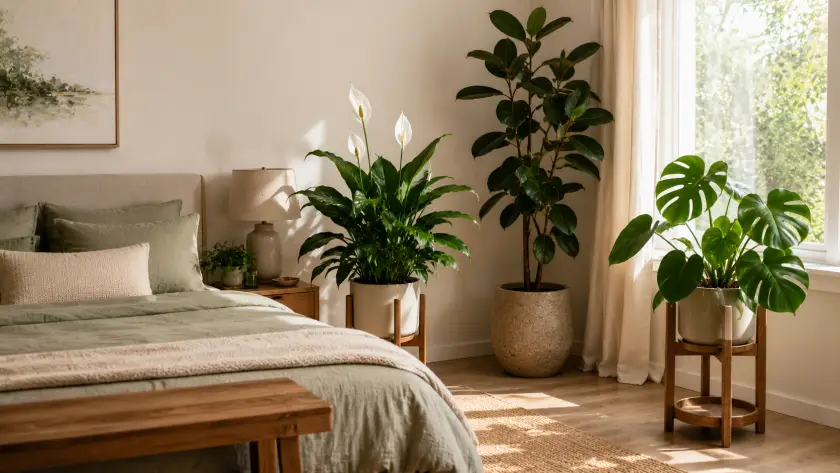
Living room: The primary space for oversized indoor plants statement pieces. A monstera or fiddle leaf fig beside a sofa creates an immediate botanical room anchor. Bird of paradise in a bright corner beside a window provides both light requirements and visual drama. Use our style indoor plants by room guide for room-specific positioning.
Bedroom: Large indoor plants with large leaves in bedrooms create a genuinely restful, spa-like atmosphere. Peace lily, ZZ plant, and snake plant are the most bedroom-appropriate — all tolerant of the lower light typical of bedroom positions and all producing the calming green presence that improves sleep environment quality. See our decorate bedroom with plants guide.
Home office: ZZ plant, snake plant, dracaena, and parlor palm all suit home office use — tolerant of the artificial lighting and low natural light of many office positions, requiring minimal care during busy workdays, and providing the documented psychological benefits of living plants in work environments. See our improve home office with plants guide and office friendly plants guide.
Hallway and entryway: Tall plants for home hallway positions — snake plant, dracaena, parlor palm — provide dramatic impact in the first room visitors encounter without requiring floor space that narrow hallways lack. See our style indoor plants by room guide for entryway guidance.
Care Essentials for Large Indoor Plants
Potting: Large house plants need stable, appropriately sized containers — terracotta or ceramic pots with drainage holes that provide adequate weight to prevent top-heavy plants from tipping. Never pot in a container more than 5cm larger than the current root ball. See our repotting mistakes guide and how to repot a plant guide.
Soil: Match soil type to plant requirements — big leafy tropical plants in quality compost with 20–30% perlite, drought-tolerant large indoor plants like cactus and snake plant in gritty free-draining mix. See our best soil mix guide.
Watering: Oversized indoor plants in large pots take longer to dry between waterings than the same species in smaller containers. Always check soil moisture at 5–10cm depth before watering rather than following a fixed schedule. See our complete watering guide and signs of overwatering guide.
Light: Most large leaf indoor plants require bright indirect light — assess the actual light level in your chosen position before purchasing. Our complete indoor light guide covers light assessment and grow light supplementation.
Humidity: Big leafy tropical plants benefit from humidity support — see our humidity hacks guide and DIY humidity tray guide.
Feeding: Feed oversized indoor plants every 4–6 weeks in spring and summer with balanced liquid fertilizer at half-recommended strength. Stop completely in autumn and winter. See our fertilizing indoor vs outdoor plants guide.
Frequently Asked Questions
Are oversized indoor plants hard to care for? Most oversized indoor plants are no more difficult than their smaller counterparts — and many of the most impressive are among the easiest. ZZ plant, snake plant, dracaena, and parlor palm all reach impressive sizes with minimal intervention. The most demanding large indoor plants — fiddle leaf fig, alocasia, banana plant — require more specific care but reward with growth that smaller plants cannot match. See our best indoor plants for beginners guide for the most forgiving starting points.
What is the best spot for large indoor plants? Most oversized indoor plants perform best in bright indirect light near south or west-facing windows. Low-light tolerant large house plants — ZZ plant, snake plant, dracaena, parlor palm — suit north-facing rooms or interior positions. Direct sun suits olive tree, Meyer lemon, and Peruvian cactus. Assess actual light conditions before choosing placement — our complete indoor light guide covers light assessment in detail.
How often should I water large indoor plants? Watering frequency for large indoor plants depends on species, pot size, light level, and season. Most big home plants in large pots dry more slowly than smaller specimens and need watering every 10–21 days depending on species. Always check soil moisture at 5–10cm depth before watering. See our complete watering guide.
Can I keep large indoor plants in low light? Several oversized indoor plants genuinely tolerate low light — ZZ plant, snake plant zeylanica, mass cane dracaena, parlor palm, and peace lily all perform in north-facing rooms or interior positions. Most large leaf indoor plants — monstera, fiddle leaf fig, bird of paradise — need better light to reach their impressive potential. See our complete indoor light guide.
How do I keep oversized indoor plants healthy in winter? Reduce watering frequency by 30–50% as growth slows in winter. Stop fertilizing completely. Keep large indoor plants away from cold drafts and heating vents. Increase humidity support using our humidity hacks guide. Monitor for the pests that become more active in the warm dry air of centrally heated winter homes.
Where can I buy large indoor plants? Large house plants are available from garden centres, specialist plant nurseries, and online plant retailers. Purchasing smaller specimens and growing them to full size over 2–5 years produces the same result at significantly lower cost than buying large specimens. Check our rare houseplants guide for specialist specimen sourcing.
Related Guides
- Monstera Care Guide
- Fiddle Leaf Fig Care Guide
- Bird of Paradise Care Guide
- Rubber Plant Care Guide
- Snake Plant Care Guide
- ZZ Plant Care Guide
- Peace Lily Care Guide
- Money Tree Care Guide
- Dracaena Care Guide
- Philodendron Care Guide
- Calathea Care Guide
- Boston Fern Care Guide
- Pothos Care Guide
- Spider Plant Care Guide
- Aloe Vera Care Guide
- Jade Plant Care Guide
- Succulent Care Guide
- String of Pearls Care Guide
- Complete Indoor Light Guide
- Complete Watering Guide
- Humidity Hacks Guide
- DIY Humidity Tray Guide
- Signs You’re Overwatering
- Leaf Curl Browning Droop Guide
- Why Leaves Turn Yellow
- How to Revive a Dying Plant
- What Is Root Rot Guide
- How to Repot a Plant
- Repotting Mistakes to Avoid
- Best Soil Mix Guide
- Fertilizing Indoor vs Outdoor
- 35 Low Maintenance Plants
- Best Indoor Plants for Beginners
- Rare Houseplants Guide
- Colorful Foliage Indoor Plants
- Air Purifying Indoor Plants
- 23 Blooming Indoor Plants
- Low Light Hanging Plants
- 33 Best Bathroom Plants
- Style Indoor Plants by Room
- Decorate Bedroom with Plants
- Office Friendly Plants Guide
- Improve Home Office with Plants
- Top Drought Resistant Plants
- Best Low Maintenance Outdoor Plants
- Cat Friendly Plants Guide
- Dog Friendly Plants Guide
- Garden Calendar 2026
- Browse All Indoor Plants →
- Browse All Plant Care →
Final Thoughts
Oversized indoor plants are one of the most impactful investments in home environment available — no piece of furniture, artwork, or decoration transforms the character of a room as completely as a genuinely large, healthy specimen plant in the right position. The scale they bring, the life they add, and the constantly changing nature of something that grows rather than simply sitting static makes large indoor plants fundamentally different from any other form of interior decoration.
The most important decision in growing oversized indoor plants successfully is matching the plant’s requirements to the position available — particularly light. A fiddle leaf fig in a north-facing room will never achieve its potential regardless of how perfectly everything else is managed. A ZZ plant in a south-facing sunny position wastes the light that would allow a monstera or bird of paradise to reach genuine spectacular size. Right plant, right position — that single decision determines whether a large indoor plant becomes the room-defining statement it’s capable of being.
According to the Royal Horticultural Society (RHS), large indoor plants and indoor plants with large leaves provide proportionally greater air quality and psychological benefits than multiple small plants occupying the same floor area, making the investment in oversized indoor plants genuinely worthwhile from a wellbeing perspective as well as an aesthetic one. 🌿