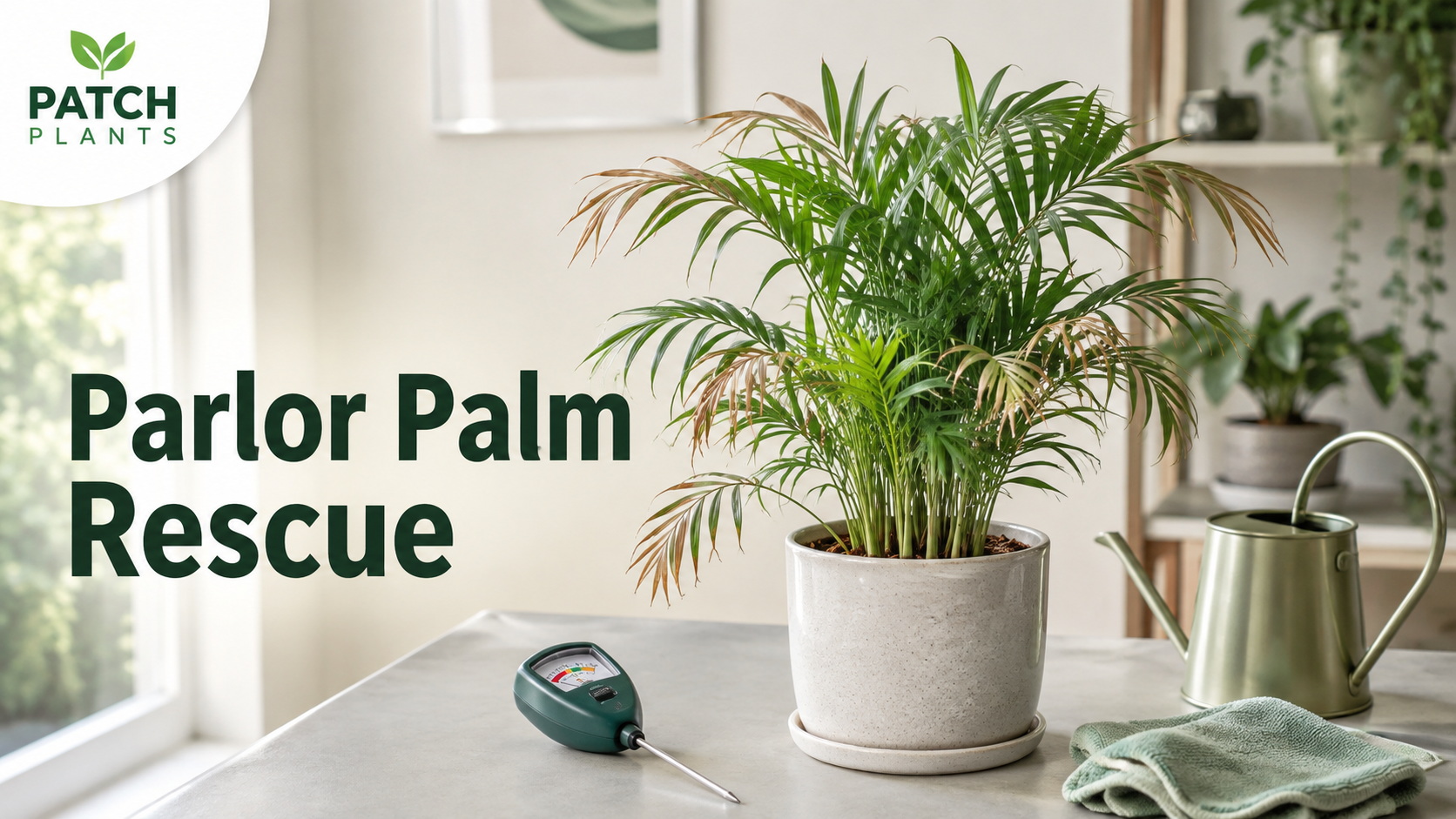
A parlor palm dying can look worrying, especially when the soft green fronds start turning yellow, brown, crispy, or droopy. The good news is that parlor palms are slow, forgiving indoor plants, and many problems can be fixed once you find the real cause.
Most parlor palm problems come from watering mistakes, poor drainage, low light, dry air, direct sun, hard water, pests, or root stress. Do not rush to water, fertilize, and repot all at once. Start with the symptoms, check the soil, inspect the roots if needed, and adjust one care area at a time.
Rescue Snapshot
If your parlor palm is dying, check the soil first. Dry soil with drooping fronds usually means underwatering. Wet soil with yellow leaves or soft stems can mean overwatering or root rot. Brown tips may come from dry air, hard water, underwatering, or old stress. Move the plant to bright indirect light, improve drainage, trim only fully dead fronds, and inspect closely for spider mites, scale, and mealybugs.
Key Takeaways
- A parlor palm dying is usually reacting to water, light, roots, pests, or temperature stress.
- Overwatering and poor drainage are common causes of yellow leaves and root rot.
- Underwatering often causes drooping, crispy tips, and dry brown fronds.
- Direct sun can scorch parlor palm leaves, while very low light can weaken growth.
- Dry air, hard tap water, and fertilizer buildup can cause brown tips.
- Spider mites, scale, and mealybugs can weaken parlor palms quietly.
- Use this guide with how to revive a dying plant, yellow leaves on plants, and complete watering tips.
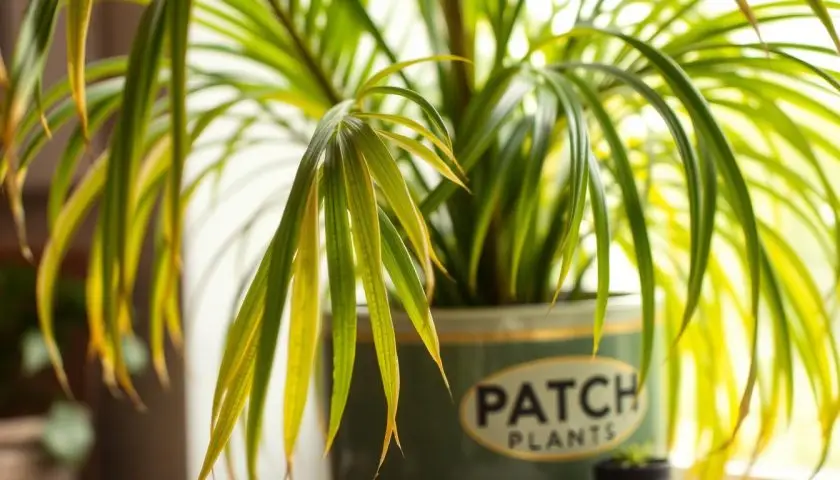
Parlor Palm Dying Symptoms at a Glance
| Symptom | Likely Cause | First Fix |
|---|---|---|
| Yellow fronds with wet soil | Overwatering or root stress | Pause watering and check drainage |
| Drooping fronds with dry soil | Underwatering | Water deeply and drain fully |
| Brown crispy tips | Dry air, hard water, underwatering, salts | Improve humidity and review water quality |
| Brown patches on one side | Direct sun scorch | Move to filtered light |
| Slow weak growth | Low light, old soil, lack of nutrients | Move brighter and feed lightly in growth season |
| Webbing or speckled fronds | Spider mites | Isolate and clean leaves |
| Sticky leaves or brown bumps | Scale insects or mealybugs | Wipe pests and repeat treatment |
What Is a Parlor Palm?
The parlor palm, or Chamaedorea elegans, is a compact indoor palm with soft arching fronds and a slow-growing habit. It is also called parlour palm, neanthe bella palm, or good luck palm. It became popular because it tolerates indoor conditions better than many palms and can handle light shade.
Even though it is easy compared with many tropical plants, it still needs the right balance. A parlor palm likes bright indirect light, gentle warmth, moderate humidity, good drainage, and careful watering. It does not like sitting in water, harsh sun, cold drafts, or dry heat.
For broader indoor plant help, read Indoor Plants hub, best indoor plants for beginners, and low-maintenance plants that thrive.
Is Your Parlor Palm Actually Dying?
Not every yellow or brown frond means the whole plant is dying. Parlor palms grow slowly and naturally shed old lower fronds over time. The difference is pattern. One old lower frond fading slowly is usually normal. Several fronds yellowing at once, drooping, or browning quickly means something is wrong.
Normal aging signs
- Only one or two oldest lower fronds turn yellow.
- Newer central fronds stay green and firm.
- The soil smells normal.
- No pests, webbing, or sticky residue are visible.
- The plant is still producing slow new growth.
Real decline signs
- Several fronds turn yellow together.
- Fronds droop even though soil is wet.
- Stems or roots smell sour or feel mushy.
- Brown tips spread quickly across many leaves.
- Webbing, sticky leaves, or insects appear.
- New growth is pale, weak, or collapsing.
Cause 1: Overwatering and Root Rot
Overwatering is one of the most common reasons for a dying parlor palm. It is not only about how much water you pour. It is about how long the roots stay wet. Low light, heavy soil, a large pot, no drainage holes, or water left in the saucer can all keep roots too wet.
Overwatering signs
- Yellow leaves that feel soft.
- Drooping while soil is still wet.
- Musty or sour smell from the pot.
- Fungus gnats around the soil.
- Black, brown, or mushy roots.
- Lower stems feel weak near the soil line.
How to fix overwatering
- Stop watering until the top layer has dried properly.
- Check that the pot has drainage holes.
- Empty the saucer or outer pot after watering.
- Move the palm to bright indirect light.
- Inspect roots if the plant keeps drooping in wet soil.
- Repot into fresh draining mix if root rot is present.
For deeper help, read signs you are overwatering and root rot guide.
Cause 2: Underwatering and Dry Soil
Parlor palms do not like staying bone-dry for long periods. If the pot dries too hard, the fronds can droop, curl, brown at the tips, or turn crispy. A very dry root ball may also repel water, causing water to run down the pot sides without soaking the roots.
Underwatering signs
- Drooping with dry soil.
- Pot feels very light.
- Soil pulls away from the pot edge.
- Leaf tips become brown and crispy.
- Fronds feel dry rather than soft.
- The plant improves after deep watering.
How to fix underwatering
- Water slowly until the root ball absorbs moisture.
- If water runs straight through, water in stages.
- Let excess water drain fully.
- Do not leave the pot sitting in water afterward.
- Check soil every few days until the plant stabilizes.
For watering support, use complete watering guide and worst times to water plants.
Cause 3: Poor Drainage and Heavy Soil
A parlor palm can decline even if your watering routine seems careful, because the soil or pot may be the problem. Dense mix holds too much water around the roots. A decorative pot with no drainage can trap water below the root ball.
Drainage warning signs
- Soil stays wet for many days.
- Water does not drain from the pot.
- The pot has no drainage holes.
- Roots look dark and weak.
- The top of the soil grows mold or smells stale.
- Fungus gnats appear repeatedly.
Better soil mix
- 2 parts indoor potting mix.
- 1 part perlite, pumice, or grit.
- 1 part fine bark or chunky houseplant mix.
- A pot with drainage holes.
For more soil and pot help, read best soil mix guide, how to repot a plant, and repotting mistakes to avoid.
Cause 4: Low Light or Wrong Light
Parlor palms can tolerate lower light better than many houseplants, but deep shade still weakens them. In low light, growth slows, soil dries more slowly, and overwatering becomes easier. On the other side, harsh direct sun can scorch fronds.
Low light signs
- Growth is very slow even in spring or summer.
- Fronds look pale or weak.
- The plant leans toward the window.
- Soil stays damp for too long.
- New fronds are smaller than usual.
Too much sun signs
- Brown or bleached patches on sun-facing fronds.
- Leaf tips crisp quickly near hot glass.
- Fronds look faded or scorched.
- Damage is worse on the window-facing side.
Best light setup
Place the palm in bright indirect light or light shade. An east-facing window, bright north-facing room, or a spot a few feet back from a bright south or west window can work well. Use sheer curtains if direct sun is strong.
For placement help, read complete guide to indoor light, low light house plants, and office-friendly plants for artificial light.
Cause 5: Dry Air and Low Humidity
Parlor palms do not always need extreme humidity, but very dry air can make the tips brown and crispy. Dry air also encourages spider mites, especially in winter when heating is on.
Dry air signs
- Brown crispy tips on many fronds.
- Fronds feel dry and papery at the edges.
- Spider mites appear more often.
- The plant sits near a radiator, fireplace, or heat vent.
- The room feels dry in winter.
Humidity fixes
- Move the palm away from dry heat.
- Group it with other tropical indoor plants.
- Use a pebble tray without letting the pot sit in water.
- Use a small humidifier in very dry rooms.
- Wipe leaves to remove dust and discourage pests.
For more options, read humidity hacks without a humidifier, DIY humidity tray, and misting for plants.
Cause 6: Hard Water and Mineral Buildup
Brown tips on a parlor palm can come from hard tap water or mineral salts building up in the potting mix. This is more likely if you see white crust on the soil, brown tips after watering, or repeated tip burn despite normal moisture.
Water quality clues
- White crust appears on soil or pot edges.
- Leaf tips brown even when watering seems correct.
- You use hard tap water regularly.
- The plant has not been flushed or repotted in a long time.
What to do
- Use rainwater, filtered water, or room-temperature water where possible.
- Flush the soil occasionally if drainage is good.
- Avoid overfertilizing.
- Repot if the mix is old, compacted, or salty.
Cause 7: Temperature Shock and Drafts
Parlor palms prefer stable indoor warmth. Sudden cold, hot dry air, or air-conditioning blasts can cause drooping, leaf drop, and brown tips.
Temperature stress signs
- Fronds droop after a cold night.
- Leaves brown near a radiator or heater.
- Leaf drop starts after moving the plant.
- One side of the palm is damaged near a window or vent.
- The plant sits near an exterior door.
Better placement
- Keep away from cold windowsills in winter.
- Avoid radiators and fireplaces.
- Keep away from AC vents.
- Do not place beside exterior doors.
- Move gradually if changing light or room conditions.
Cause 8: Pests on Parlor Palm
Parlor palms can attract spider mites, scale, and mealybugs. Pests often hide under fronds and along stems, so you may notice damage before you see insects.
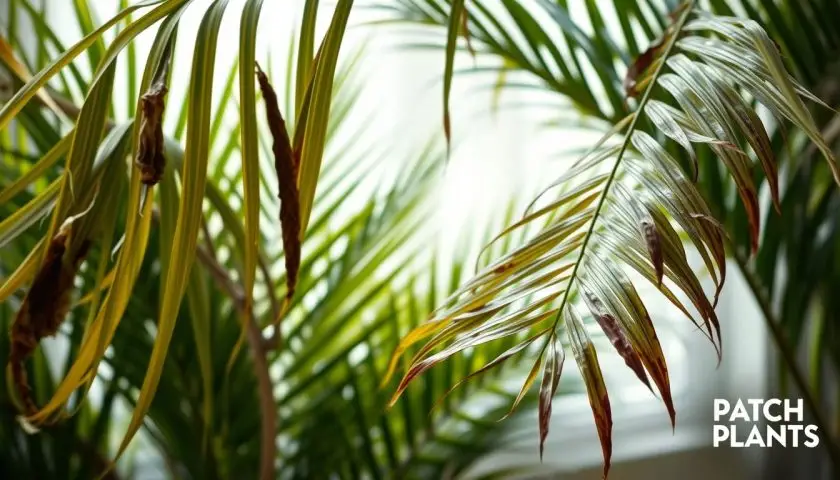
Spider mites
Spider mites cause fine webbing, speckled leaves, dull fronds, and dry-looking foliage. They are more common in dry rooms.
Scale insects
Scale looks like small brown bumps attached to stems or leaf veins. It can cause sticky residue, yellowing, and slow decline.
Mealybugs
Mealybugs look like white cottony patches around stems and leaf joints. They weaken the plant and can spread to nearby houseplants.
How to treat pests
- Isolate the palm from other plants.
- Wipe fronds and stems with a damp cloth.
- Remove visible scale or mealybugs by hand where possible.
- Rinse foliage gently if the plant can drain fully afterward.
- Use a suitable houseplant pest treatment if cleaning is not enough.
- Repeat checks weekly because pests often return from hidden eggs.
For pest and symptom support, read how to keep pests away from plants and how to clean plant leaves.
Cause 9: Fertilizer Burn
Parlor palms are slow growers, so they do not need heavy feeding. Too much fertilizer can burn roots, create brown tips, and leave white crust on the potting mix.
Fertilizer stress signs
- Brown tips after feeding.
- White crust on soil.
- Yellowing despite moist soil.
- Weak new growth.
- The plant was fed in winter or while stressed.
How to fix it
- Stop feeding for a while.
- Flush the soil if drainage is good.
- Repot if the mix is old or salty.
- Feed only lightly during active growth.
- Never feed a plant with root rot or severe stress.
For feeding basics, read fertilizing indoor vs outdoor plants.
Cause 10: Repotting Shock or Root Crowding
Parlor palms grow slowly and do not need constant repotting. Repotting too often can stress roots, while leaving the plant in old compacted soil for too long can also cause problems.
Signs it may need repotting
- Roots fill the pot tightly.
- Water runs straight through without soaking.
- Soil stays compacted or smells stale.
- The plant dries out too quickly.
- Growth is poor despite good light and watering.
Repotting tips
- Repot in spring if possible.
- Choose a pot only slightly larger.
- Use a light, draining mix.
- Handle roots gently.
- Do not fertilize right after repotting.
Cause 11: Natural Aging
Sometimes a parlor palm looks worse than it is because old lower fronds naturally fade. This is normal as long as the plant is not losing many fronds at once and the newest growth looks healthy.
What to remove
- Fully brown fronds.
- Fully yellow old fronds.
- Fronds with pest-heavy damage.
- Rotten or diseased growth.
What to leave alone
- Green fronds with only minor brown tips.
- New central growth.
- Partly green fronds that still help the plant produce energy.
How to Revive a Dying Parlor Palm Step by Step
To revive parlor palm health, work calmly and in order. The goal is to fix the main stress, not shock the plant with too many changes at once.
Step 1: Check the soil
Feel below the surface. If it is wet, do not water. If it is dry, water deeply and drain fully. This first check stops you from making the wrong problem worse.
Step 2: Check drainage
Make sure water can leave the pot. If the plant sits in a decorative outer pot, remove it after watering and empty trapped water.
Step 3: Inspect roots if needed
If the plant droops in wet soil or smells sour, slide it from the pot and inspect the roots. Trim mushy roots and repot into fresh draining mix if root rot is present.
Step 4: Move to better light
Use bright indirect light. Avoid direct sun, especially near hot glass. Low light slows recovery and keeps soil wet longer.
Step 5: Remove dead fronds
Cut fully brown or dead fronds at the base with clean shears. Do not remove too many green fronds because parlor palms grow slowly.
Step 6: Inspect pests
Check leaf undersides, stems, and crowded frond bases. Treat spider mites, scale, and mealybugs early before they spread.
Step 7: Stabilize care
Keep the plant in one good spot, water only after checking soil, and wait. Recovery can be slow because parlor palms are slow growers.
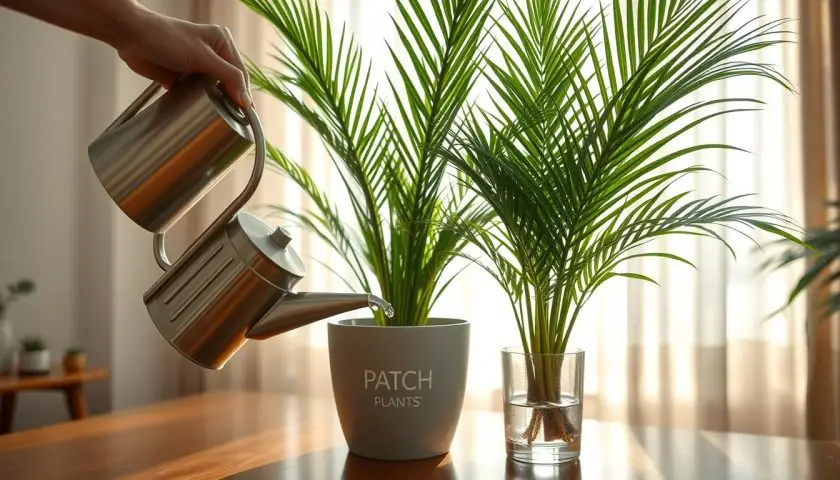
Parlor Palm Watering Guide
Parlor palm watering should be based on soil dryness, not a strict calendar. Let the surface or top layer begin to dry, then water thoroughly and drain the pot.
| Condition | Watering Need | Care Tip |
|---|---|---|
| Bright indirect light | Moderate watering | Check soil more often during warm months |
| Low light | Less frequent watering | Soil dries slowly, so avoid routine watering |
| Winter | Reduced watering | Growth slows and mix stays moist longer |
| Small pot | May dry faster | Check soil before it becomes bone-dry |
| Large pot | May stay wet longer | Check deeper moisture before watering |
Parlor Palm Brown Tips
Brown tips are common on parlor palms. They do not always mean the plant is dying, but they do mean the plant has been stressed. The cause may be dry air, hard water, underwatering, overwatering, direct sun, or fertilizer salts.
What to do
- Check soil moisture first.
- Move the plant away from dry heat.
- Use filtered water or rainwater where possible.
- Flush old mineral buildup if drainage is good.
- Trim only the dead brown tips if you want a cleaner look.
For brown leaf troubleshooting, read leaf curl, browning and droop.
Parlor Palm Yellow Leaves
Parlor palm yellow leaves are often linked to water and roots. Yellowing can also happen from low light, natural aging, pests, or stress after moving.
| Yellowing Pattern | Likely Cause | Fix |
|---|---|---|
| One old lower frond | Natural aging | Remove when fully yellow |
| Many yellow fronds with wet soil | Overwatering or root rot | Check roots and drainage |
| Yellow fronds with dry soil | Underwatering | Water deeply and drain |
| Yellowing with webbing | Spider mites | Isolate and clean foliage |
| Pale yellow weak growth | Low light | Move to brighter filtered light |
For more detail, read why your plant leaves are turning yellow.
Parlor Palm Drooping
Parlor palm drooping can mean opposite things depending on soil moisture. This is why checking the soil matters before watering.
Drooping with dry soil
Water deeply, let the pot drain, and keep the plant away from direct sun or heat while it recovers.
Drooping with wet soil
Do not water again. Check drainage, light, and root health. Wet-soil droop is more serious because roots may be struggling.
Drooping after moving
Keep the plant stable. Avoid moving it repeatedly. Give bright filtered light and careful watering while it adjusts.
Best Light for a Recovering Parlor Palm
A recovering parlor palm needs enough light to rebuild energy, but not harsh sun. Bright indirect light is ideal. Light shade is usually acceptable, but deep shade slows recovery.
Good places
- Near an east-facing window.
- In a bright north-facing room.
- A few feet back from a sunny south or west window.
- Behind a sheer curtain.
- Near a grow light in a dim room.
Bad places
- Hot direct sun through glass.
- Dark corners with no natural light.
- Beside radiators or fireplaces.
- Cold windowsills in winter.
- Direct AC airflow.
Pruning a Dying Parlor Palm
Pruning helps tidy the plant, but it will not fix root or watering problems. Remove only growth that is fully dead, brown, diseased, or pest-heavy.
How to prune
- Use clean sharp scissors or pruning shears.
- Cut dead fronds at the base.
- Trim brown tips only if the frond is mostly green.
- Do not cut the central growing point.
- Do not remove too many green fronds at once.
For safe trimming, read pruning basics.
How Long Does Recovery Take?
A parlor palm will not bounce back overnight. It grows slowly, so recovery may take weeks or months. Damaged brown tips will not turn green again. Fully yellow fronds will not recover. The real sign of improvement is healthy new growth and fewer new problems.
Good recovery signs
- New fronds emerge firm and green.
- Soil dries at a normal pace.
- No new yellowing spreads.
- Brown tips stop getting worse.
- Pests are gone after repeated checks.
Bad recovery signs
- Plant still droops in wet soil.
- Roots smell rotten.
- More fronds collapse each week.
- Pests keep returning.
- The plant has no firm green growth left.
Parlor Palm Care Checklist
| Task | How Often | What to Check |
|---|---|---|
| Check soil moisture | Before watering | Surface drying, deeper moisture, no soggy base |
| Empty saucer | After every watering | No standing water |
| Inspect pests | Weekly | Webbing, bumps, sticky leaves, cottony patches |
| Clean fronds | Every few weeks | Dust and early pest signs |
| Review light | Seasonally | Scorch, low-light weakness, soil drying speed |
| Feed lightly | Spring to autumn | Only when plant is healthy and growing |
| Repot | Only when needed | Crowded roots or broken-down soil |
Common Mistakes When Fixing a Dying Parlor Palm
| Mistake | Why It Hurts | Better Choice |
|---|---|---|
| Watering because fronds droop | Wet-soil droop can mean root rot | Check soil first |
| Putting it in direct sun to “help” | Fronds can scorch | Use bright indirect light |
| Fertilizing a stressed plant | Damaged roots may burn | Wait for recovery and new growth |
| Repotting into a huge pot | Extra soil stays wet too long | Use a pot only slightly larger |
| Cutting too many green fronds | Plant loses energy-producing growth | Remove only dead or badly damaged fronds |
| Ignoring pests | Pests spread and weaken the palm | Inspect weekly and repeat treatment |
Helpful PATCH Guides for Parlor Palm Problems
Use these related PATCH guides to improve watering, light, humidity, pests, root health, pruning, repotting, and indoor plant recovery.
Problem-Solving Guides
- How to revive a dying plant
- Yellow leaves on plants
- Why plant leaves turn yellow
- Leaf curl, browning and droop
- Root rot guide
- How to clean plant leaves
- Pruning basics
Watering, Soil and Repotting Guides
- Complete watering guide
- Worst times to water plants
- Signs you are overwatering
- Best soil mix guide
- How to repot a plant
- Repotting mistakes to avoid
- Self-watering pots guide
Light, Humidity and Indoor Care Guides
- Complete guide to indoor light
- Low light house plants
- Office-friendly plants for artificial light
- Humidity hacks without a humidifier
- DIY humidity tray
- Misting for plants
- Best bathroom plants
Indoor Plant Guides
- Indoor Plants hub
- Best indoor plants for beginners
- Best indoor plants for first-time plant parents
- Low-maintenance plants that thrive
- Best indoor plants for tiny apartments
- Oversized indoor plants
- Air-purifying indoor plants
- Colorful foliage indoor plants
Specific Indoor Plant Guides
- Boston Fern care guide
- Peace Lily care guide
- How often to water Peace Lily
- Spider Plant care guide
- Schefflera plant problems
- Dracaena care guide
- Rubber Plant care guide
- Fiddle Leaf Fig care guide
- Monstera care guide
- Snake Plant care guide
Styling and Room Guides
- Style indoor plants by room
- Decorate your bedroom with plants
- Create an indoor jungle without overcrowding
- Best office plants
- Improve home office with plants
Frequently Asked Questions
Why is my parlor palm dying?
Your parlor palm may be dying from overwatering, underwatering, poor drainage, low light, direct sun, dry air, hard water, pests, root rot, or sudden temperature stress. Check soil moisture first because dry soil and wet soil need different fixes.
Can a dying parlor palm be saved?
Yes, many dying parlor palms can be saved if some roots and fronds are still healthy. Fix watering, drainage, light, pests, and temperature stress, then wait for slow new growth.
Why are my parlor palm leaves turning brown?
Brown leaves can come from underwatering, overwatering, dry air, direct sun, hard tap water, fertilizer buildup, old fronds, or pest damage. Brown tips are common, but spreading brown patches need a closer check.
Why are my parlor palm leaves turning yellow?
Yellow leaves usually come from overwatering, poor drainage, low light, underwatering, root rot, pests, or natural old frond aging. Many yellow leaves at once are more serious than one old lower frond.
Why is my parlor palm drooping?
Drooping can mean underwatering if the soil is dry. If the soil is wet, drooping may mean overwatering, root rot, or poor drainage. Always check soil before adding water.
Should I cut off dead parlor palm fronds?
Yes. Cut fully dead or brown fronds at the base with clean shears. Leave healthy green fronds in place because parlor palms grow slowly and need those fronds for energy.
How often should I water a parlor palm?
Water when the surface or top layer of potting mix begins to dry. Water thoroughly, let excess drain away, and empty the saucer. Water less often in winter or low light.
Does a parlor palm need direct sunlight?
No. Parlor palms prefer bright indirect light or light shade. Direct summer sun can scorch the fronds and cause brown patches.
What pests attack parlor palms?
Spider mites, scale insects, and mealybugs are common parlor palm pests. Look for webbing, sticky leaves, brown bumps, white cottony patches, and speckled fronds.
How do I know if my parlor palm has root rot?
Root rot signs include drooping in wet soil, yellow soft fronds, sour-smelling potting mix, fungus gnats, and dark mushy roots. Healthy roots should feel firm, not slimy or rotten.
Final Thoughts
A parlor palm dying is usually not a mystery once you read the signs. Drooping tells you to check soil moisture. Yellow leaves tell you to check drainage, roots, and light. Brown tips tell you to review water quality, humidity, and stress. Sticky leaves or webbing tell you to look for pests.
RHS explains that parlour palms grow best in bright indirect light, should be watered when the compost surface is dry, should not sit in water, and can develop brown leaves from issues such as overwatering, underwatering, hard tap water, or direct sunlight: RHS Chamaedorea growing guide.
Once you fix the main cause, be patient. Parlor palms grow slowly, so recovery is gradual. Old damaged fronds may not look better, but healthy new growth means the plant is coming back.
Final Recap
A dying parlor palm is usually caused by overwatering, underwatering, poor drainage, low light, direct sun, dry air, hard water, pests, root rot, fertilizer stress, or sudden temperature changes. Check soil moisture first, then inspect drainage, roots, light, and pests. Water only when the top layer begins to dry, keep the plant in bright indirect light, improve humidity if tips are browning, and remove only fully dead fronds. If root rot is present, trim rotten roots and repot into fresh draining mix. With stable care and patience, many parlor palms can recover and produce healthy new fronds.