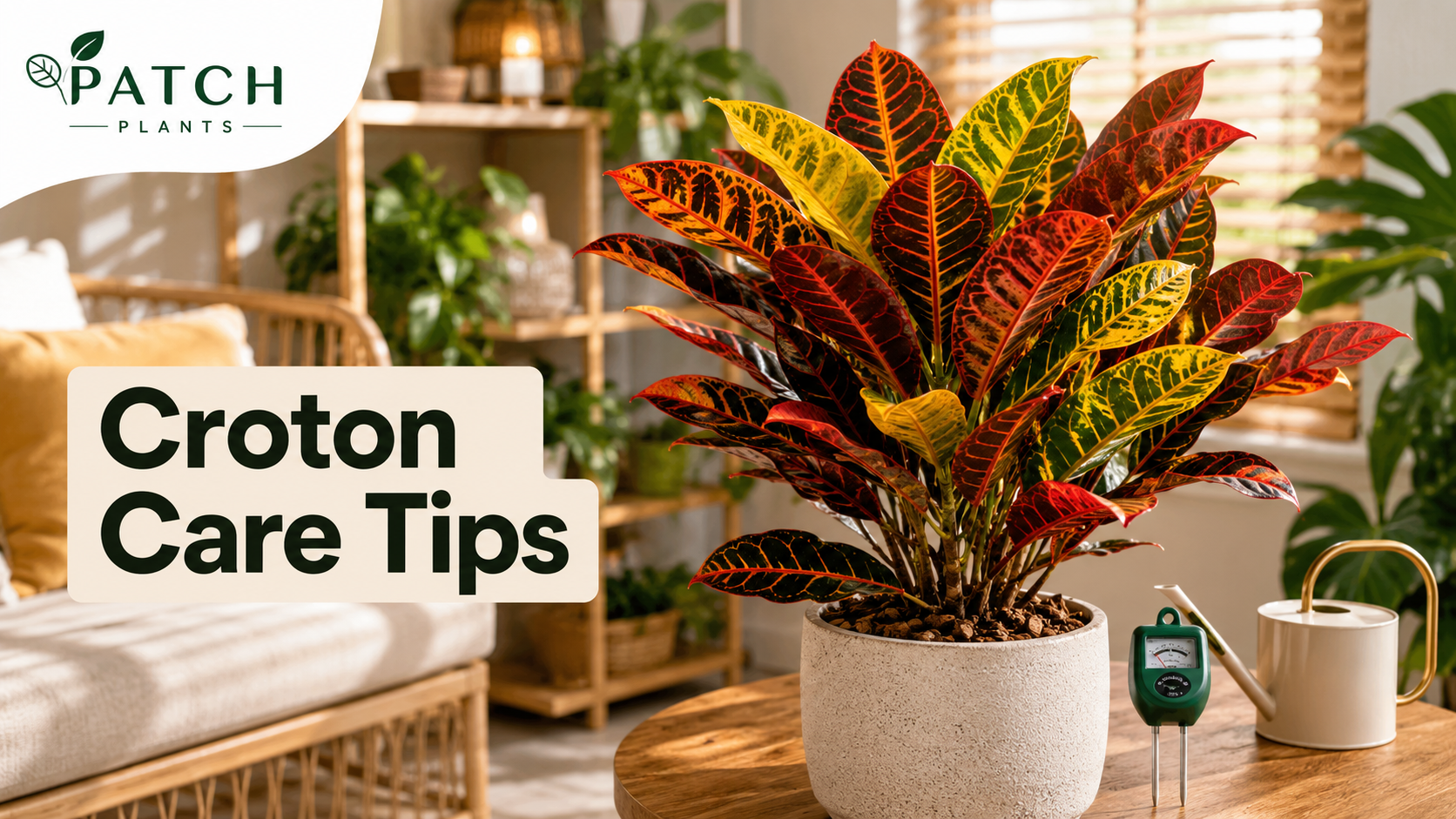
Croton tree care is all about strong light, steady warmth, careful watering, and enough humidity to keep those red, yellow, orange, green, and burgundy leaves bright. Crotons look bold, but they can be sensitive when their conditions change quickly.
If your croton suddenly drops leaves, fades in colour, curls, wilts, or develops brown edges, do not panic. These symptoms usually point to light, watering, humidity, temperature, pests, or root stress. Once you match the symptom to the cause, crotons become much easier to manage indoors.
Care Snapshot
For reliable croton tree care, place the plant in bright filtered light, keep it warm, protect it from cold drafts, water when the top layer of soil begins to dry, and use a free-draining potting mix. Crotons like humid air, steady routines, and gentle seasonal adjustments. They dislike dark corners, soggy roots, sudden moves, cold air, and dry heat.
Key Takeaways
- Croton tree care depends on bright filtered light, warmth, humidity, and careful watering.
- Crotons need strong indoor light to keep their bold leaf colour.
- Water when the top layer of potting mix begins to dry, then drain the pot fully.
- Cold drafts, dry air, and sudden moves can cause sudden leaf drop.
- Yellow leaves often point to overwatering, low light, root stress, or natural aging.
- Spider mites, scale, mealybugs, and aphids can weaken crotons indoors.
- For more help, use Croton Petra care, complete watering tips, and complete indoor light guide.
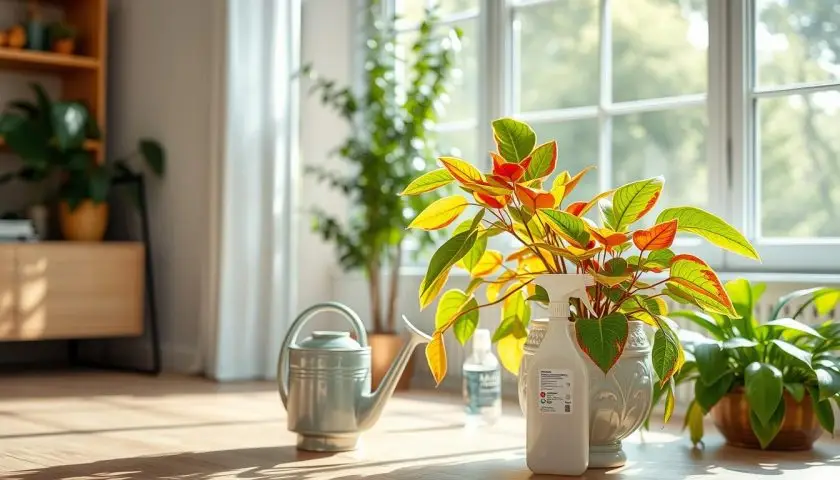
Croton Tree Care at a Glance
| Care Area | Best Choice | Common Mistake |
|---|---|---|
| Light | Bright filtered light | Dark corners or harsh hot sun |
| Water | Water when top layer begins to dry | Letting soil stay soggy or bone-dry |
| Humidity | Moderate to high humidity | Dry heat from radiators and vents |
| Temperature | Warm and stable | Cold drafts and sudden moves |
| Soil | Moisture-retentive but draining mix | Dense garden soil indoors |
| Fertilizer | Light feeding in active growth | Fertilizing a stressed plant |
| Pruning | Trim damaged or leggy growth | Removing too much foliage at once |
What Is a Croton Tree?
Croton, or Codiaeum variegatum, is a tropical evergreen shrub grown indoors for its colourful leaves. It is often called a croton tree when trained upright or sold as a taller indoor specimen. The plant is loved for its painted-looking foliage in shades of red, orange, yellow, pink, burgundy, and green.
Crotons are not difficult because they need complicated care. They are difficult because they dislike sudden changes. A croton that has just been moved from a shop, porch, greenhouse, or bright garden centre into a darker home may drop leaves while adjusting.
Popular croton varieties
- Croton Petra: broad leaves with red, yellow, orange, and green veining.
- Gold Dust Croton: green leaves speckled with yellow.
- Mrs Iceton: leaves that mature through cream, pink, orange, and green tones.
- Mammy Croton: curled leaves with fiery colour.
- Zanzibar Croton: narrow leaves with a grassy, colourful look.
- Magnificent Croton: bold spotted and veined foliage.
For a specific variety guide, read Croton Petra Plant care. For more colourful foliage ideas, read colorful foliage indoor plants and tropical house plants.
Best Light for Croton Tree Care
Croton tree light requirements are higher than many easy houseplants. Crotons need bright filtered light to maintain their strongest colours. If the plant sits too far from a window, new leaves may look greener, duller, or smaller.
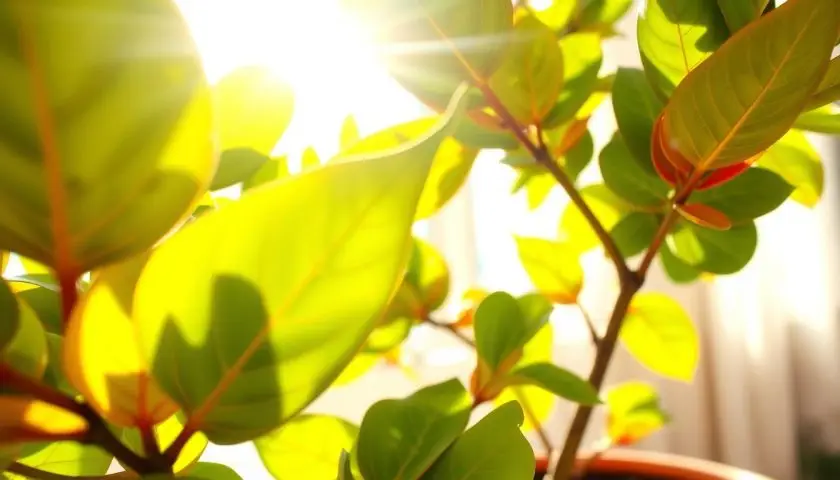
Best indoor light position
- Near an east-facing window with gentle morning light.
- Near a bright south-facing window with a sheer curtain.
- A few feet back from a hot west-facing window.
- In a sunroom or bright room where light is filtered.
- Under a grow light if natural light is weak.
Signs your croton needs more light
- Leaves lose red, orange, or yellow colour.
- New growth looks mostly green.
- Stems become long and leggy.
- Growth slows during spring or summer.
- Lower leaves drop in a dim room.
Signs your croton is getting too much direct sun
- Brown crispy patches on the sun-facing side.
- Bleached or faded leaf areas.
- Leaves curl or crisp near hot glass.
- Soil dries extremely fast.
- The plant wilts during the hottest part of the day.
How to adjust light safely
Move a croton gradually. Do not take a plant from deep shade and place it in direct sun in one day. Move it closer to bright filtered light over a week or two. Rotate the pot every week so all sides colour evenly.
For more light help, read complete guide to indoor light, low light house plants, and office-friendly plants for artificial light.
Temperature and Humidity for Croton Trees
Crotons are tropical plants, so they prefer warmth and humidity. A cold windowsill, drafty doorway, dry radiator, or air-conditioning vent can cause sudden stress. Leaf drop often happens after a temperature shock rather than a disease.
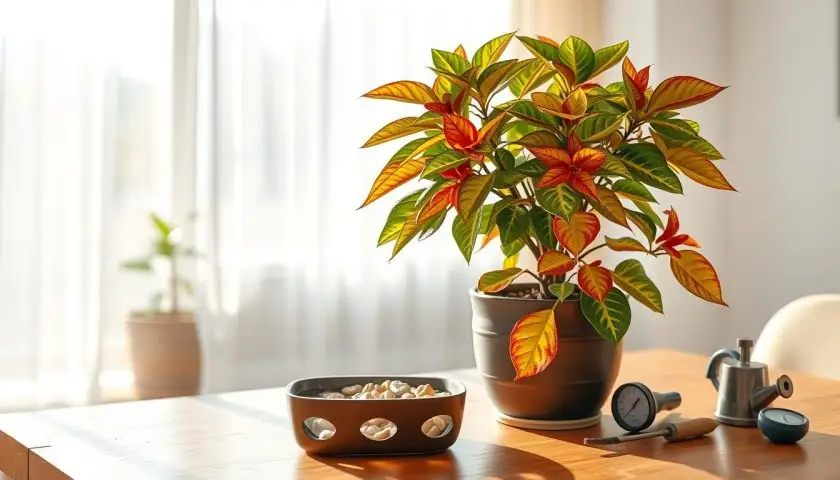
Good temperature habits
- Keep the plant in a warm, stable room.
- Avoid cold drafts from doors and windows.
- Keep it away from radiators, fireplaces, and heat vents.
- Protect it during transport in cold weather.
- Avoid sudden moves between very different rooms.
Humidity tips
- Group crotons with other tropical houseplants.
- Use a humidifier in dry rooms.
- Place the pot above a pebble tray, not sitting in water.
- Keep the plant away from dry heat.
- Wipe leaves so dust does not block light.
For humidity support, read humidity hacks without a humidifier, build a DIY humidity tray, and misting for plants.
Croton Tree Watering Guide
Croton tree watering should keep the soil lightly moist during active growth without leaving roots waterlogged. Crotons dislike both extremes. Letting the root ball dry hard can cause wilting and leaf drop. Keeping the mix constantly wet can cause yellow leaves and root rot.
| Condition | Watering Need | Care Tip |
|---|---|---|
| Bright warm room | Check more often | Soil dries faster in stronger light |
| Medium light | Moderate watering | Water when the top layer begins to dry |
| Low light | Water less often | Soil stays wet longer |
| Winter | Reduce watering | Growth slows and roots use less water |
| After repotting | Check carefully | Fresh soil may hold moisture differently |
How to water a croton tree
- Check the top layer of soil with your finger.
- Water when the top layer begins to dry.
- Use room-temperature water.
- Water evenly until excess drains from the bottom.
- Empty the saucer or decorative outer pot.
- Wait until the top layer begins drying again before watering.
Signs of underwatering
- Leaves wilt or hang down.
- Leaf edges become dry and crispy.
- Soil pulls away from the pot edge.
- The pot feels very light.
- Leaves drop after a dry spell.
Signs of overwatering
- Yellow leaves with damp soil.
- Soft stems or mushy lower growth.
- Soil smells sour or stale.
- Fungus gnats appear around the pot.
- The plant droops even though the soil is wet.
For deeper watering support, use complete guide to watering tips, worst times to water plants, and signs you are overwatering.
Best Soil and Pot for Croton Trees
A good croton potting mix should hold some moisture but drain freely. Heavy indoor soil can stay wet too long and suffocate roots. Very sandy soil can dry too quickly and cause wilting.
Simple croton soil mix
- 2 parts quality indoor potting mix.
- 1 part perlite or pumice.
- 1 part fine orchid bark or chunky houseplant mix.
- Optional small amount of coco coir for moisture balance.
Best pot setup
- Use a pot with drainage holes.
- Avoid pots much larger than the root ball.
- Use a stable pot if the plant is tall.
- Keep the plant in an inner nursery pot inside a decorative cover pot if needed.
- Always empty standing water after watering.
For soil and repotting help, read best soil mix guide, how to repot a plant, and self-watering pots guide.
Croton Tree Fertilizer Requirements
Croton tree fertilizer requirements are moderate. The plant benefits from light feeding while it is actively growing, but fertilizer will not fix low light, root rot, pests, or cold stress.
When to feed
- Feed lightly in spring and summer.
- Use a balanced liquid houseplant fertilizer.
- Dilute according to the product label.
- Feed only when the plant is healthy and growing.
- Reduce or stop feeding in winter.
Signs of too much fertilizer
- Brown leaf edges after feeding.
- White crust on soil.
- Yellowing despite good light.
- Weak growth with salty soil.
- Root stress in damp potting mix.
For feeding basics, read fertilizing indoor vs outdoor plants.
Croton Tree Pruning Guide
A practical croton tree pruning guide is simple: remove damaged growth, shape leggy stems, and encourage fuller branching. Wear gloves when pruning because croton sap can irritate skin.
When to prune
- In spring or early summer.
- When stems become leggy.
- When leaves are dead, yellow, or damaged.
- After a pest issue if some growth is badly affected.
- Before taking healthy cuttings for propagation.
How to prune safely
- Wear gloves if your skin is sensitive.
- Use clean sharp pruning shears.
- Cut leggy stems just above a node or leaf joint.
- Remove dead or diseased leaves first.
- Do not remove too much healthy foliage at once.
- Wipe away sap and wash hands after pruning.
For general trimming help, read pruning basics and how to clean plant leaves.
Repotting and Croton Tree Transplanting Tips
Crotons do not need constant repotting. Repot only when the roots need more room or the potting mix has broken down. A sudden repot can trigger leaf drop if the plant is already stressed.
Signs your croton needs repotting
- Roots circle tightly around the pot.
- Roots grow through drainage holes.
- Water runs through very quickly.
- Soil is compacted or stale.
- The plant dries out too quickly after watering.
- Growth has slowed during active season despite good care.
How to repot with less shock
- Repot in spring or early summer if possible.
- Choose a pot only one size larger.
- Use fresh, airy, well-draining mix.
- Keep the plant at the same soil depth.
- Water after repotting and drain fully.
- Keep in bright filtered light while it settles.
- Wait before fertilizing until new growth resumes.
For more help, read repotting mistakes to avoid.
Croton Tree Propagation
Croton tree propagation is usually done from stem cuttings. It is not the fastest plant to root, but healthy cuttings can grow into new plants with warmth, humidity, and patience.
Simple cutting method
- Choose a healthy non-flowering stem tip.
- Wear gloves and cut below a node.
- Remove lower leaves from the cutting.
- Let the cut end dry briefly if sap is heavy.
- Place the cutting in a moist, airy propagation mix.
- Keep warm with bright indirect light.
- Keep humidity steady without making the mix soggy.
For general propagation support, read how to propagate houseplants.
Common Croton Tree Problems and Fixes
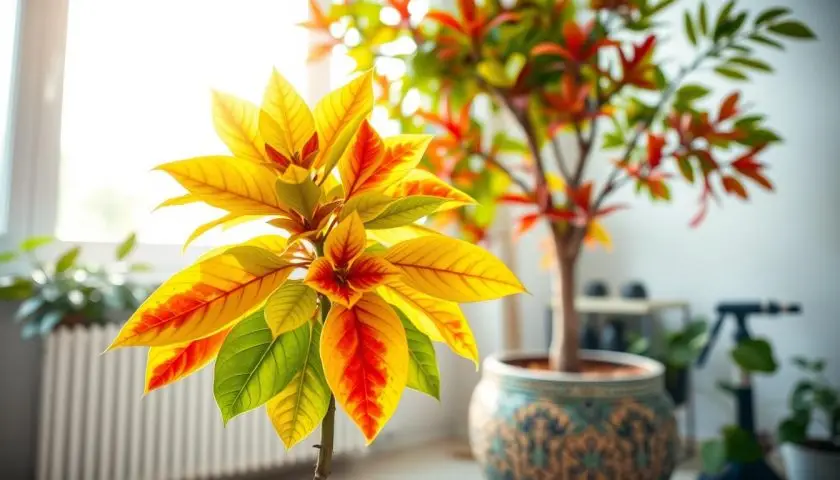
Crotons show stress clearly. Leaf drop, yellow leaves, fading colour, curled leaves, brown edges, sticky residue, and pests all tell you something about the plant’s care.
| Problem | Likely Cause | First Fix |
|---|---|---|
| Leaf drop | Sudden move, cold draft, dry soil, low humidity | Stabilize warmth, light, and watering |
| Yellow leaves | Overwatering, low light, root stress, old leaves | Check soil moisture and drainage |
| Fading colours | Too little light | Move to brighter filtered light |
| Brown crispy edges | Dry air, underwatering, sun scorch, salts | Review humidity, watering, and light |
| Curling leaves | Dry soil, pests, heat, low humidity | Check soil and leaf undersides |
| Sticky leaves | Scale, aphids, or mealybugs | Isolate and clean foliage |
| Soft stems | Root rot or overwatering | Inspect roots and repot if needed |
Why Is My Croton Dropping Leaves?
Leaf drop is one of the most common croton problems. It often happens after the plant is moved, shipped, repotted, exposed to cold air, or placed in lower light. Crotons can drop leaves quickly when shocked.
Leaf drop causes
- Moving from bright light to a darker room.
- Cold draft from a door or window.
- Dry soil after missed watering.
- Overwatering and root stress.
- Low humidity or dry heat.
- Repotting shock.
- Pests weakening the plant.
How to fix leaf drop
- Place the plant in bright filtered light.
- Keep the room warm and stable.
- Check soil moisture before watering.
- Improve humidity if the room is dry.
- Inspect for pests.
- Avoid moving the plant repeatedly.
- Wait for new growth before feeding.
Why Are Croton Leaves Turning Yellow?
Croton yellow leaves can be normal if only one older lower leaf fades. But several yellow leaves at once usually mean the plant is stressed. The most common causes are overwatering, poor drainage, low light, dry soil, pests, or root rot.
| Yellow Leaf Pattern | Likely Cause | What to Check |
|---|---|---|
| One old lower leaf | Natural aging | New growth and overall plant health |
| Many yellow leaves with wet soil | Overwatering or root rot | Drainage, roots, pot size |
| Yellow leaves with dry crispy edges | Underwatering or dry air | Soil dryness and humidity |
| Yellowing after moving | Relocation shock | Temperature, light, and drafts |
| Yellow leaves with sticky residue | Pests | Scale, aphids, mealybugs |
For deeper diagnosis, read yellow leaves on plants and why plant leaves turn yellow.
Why Is My Croton Losing Colour?
If your croton is losing its red, orange, or yellow colours, light is the first thing to check. Crotons need bright filtered light to keep their strongest colouring. In darker rooms, new growth often becomes greener.
How to improve leaf colour
- Move the plant closer to a bright window.
- Use sheer curtains if sunlight is too strong.
- Rotate the pot every week.
- Clean dust from leaves.
- Use a grow light if the room is dim.
- Avoid overwatering in low light.
Why Are Croton Leaves Curling?
Curling leaves can come from dry soil, low humidity, heat stress, pests, or root problems. Look at the soil first, then inspect leaf undersides for spider mites or other insects.
Quick checks
- Is the potting mix very dry?
- Is the plant near a heater or hot window?
- Are there tiny webs or speckled leaves?
- Is the air very dry?
- Are roots sitting in wet soil?
Common Pests Affecting Croton Trees
Common pests affecting croton trees include spider mites, scale insects, mealybugs, and aphids. Pests often appear when the plant is stressed by dry air, low light, poor watering, or sudden changes.
Spider mites
Spider mites cause fine webbing, pale speckles, dull leaves, curling, and leaf drop. They are more common in dry indoor air.
Scale insects
Scale looks like small brown or tan bumps on stems and leaf veins. It can cause sticky leaves, yellowing, and slow decline.
Mealybugs
Mealybugs look like white cottony clusters around leaf joints and stems. They weaken the plant and can spread to nearby houseplants.
Aphids
Aphids gather on tender growth and can leave sticky honeydew behind. New leaves may curl or distort.
How to treat pests
- Isolate the croton from other plants.
- Wipe leaves and stems with a damp cloth.
- Remove visible scale or mealybugs by hand.
- Rinse foliage if the plant can drain fully afterward.
- Use a suitable houseplant pest treatment if cleaning is not enough.
- Repeat checks weekly because pests can return from hidden eggs.
Croton Tree Diseases and Root Rot
Croton tree diseases indoors are often linked to wet soil, poor airflow, crowded foliage, dirty tools, or water sitting on leaves. Root rot is the most serious problem because it damages the roots before the top of the plant looks fully dead.
Root rot signs
- Drooping while soil is wet.
- Soft yellow leaves.
- Sour or musty potting mix.
- Black, brown, or mushy roots.
- Soft lower stem near the soil.
- Fungus gnats around the pot.
How to fix root rot
- Remove the plant from the pot.
- Gently remove wet, sour soil.
- Trim mushy or rotten roots with clean shears.
- Repot into fresh airy mix.
- Use a pot with drainage holes.
- Water lightly after repotting only if needed.
- Keep in bright filtered light while it recovers.
For rescue steps, read what is root rot and how to revive a dying plant.
Year-Round Croton Tree Maintenance
Croton tree maintenance changes with the season. In spring and summer, the plant usually grows more and may need more water and light feeding. In winter, growth slows and the soil dries more slowly.
| Season | Main Focus | Care Move |
|---|---|---|
| Spring | New growth | Increase watering checks and begin light feeding |
| Summer | Strong light and humidity | Protect from harsh sun and dry heat |
| Autumn | Transition | Reduce feeding and watch for lower light |
| Winter | Stability | Water less often and protect from cold drafts |
Weekly checks
- Check soil moisture.
- Look under leaves for pests.
- Remove fallen leaves from the soil surface.
- Check that the saucer is empty.
- Watch for leaf colour changes.
Monthly checks
- Wipe dust from leaves.
- Rotate the pot for even light.
- Check roots if watering has become difficult.
- Review whether the plant is too close to a window or heater.
- Trim only dead or badly damaged growth.
Croton Tree Safety Around Pets and Children
Croton sap can irritate skin, and the plant should be kept away from pets and children who may chew leaves. Wear gloves when pruning or propagating, and wash your hands afterward.
Safety tips
- Keep crotons out of reach of cats, dogs, and toddlers.
- Wear gloves when pruning or taking cuttings.
- Clean sap from tools after cutting.
- Pick up fallen leaves quickly.
- Avoid placing the plant where pets can dig in the soil.
For plant safety planning, read cat-friendly plant safety and dog-friendly plant safety.
Croton Tree Care Checklist
| Task | How Often | What to Watch |
|---|---|---|
| Check light | Seasonally | Fading colour, scorch, leggy growth |
| Check soil moisture | Before watering | Top layer drying, deeper soil not soggy |
| Empty saucer | After watering | No standing water |
| Improve humidity | When air is dry | Brown edges, curling, spider mites |
| Clean leaves | Every few weeks | Dust, pests, sticky residue |
| Feed lightly | Spring and summer | Only healthy active growth |
| Prune | As needed | Dead, yellow, diseased, or leggy growth |
| Repot | Only when needed | Crowded roots or broken-down soil |
Common Mistakes With Croton Tree Care
| Mistake | What Happens | Better Choice |
|---|---|---|
| Putting croton in low light | Colours fade and leaves may drop | Use bright filtered light |
| Watering on a strict calendar | Overwatering or underwatering | Check soil first |
| Letting the pot sit in water | Root rot risk increases | Empty saucer after watering |
| Moving the plant repeatedly | Leaf drop and stress | Choose one stable bright spot |
| Placing near cold drafts | Sudden leaf drop | Keep warm and protected |
| Fertilizing a stressed plant | Roots may burn | Fix care issues first |
| Ignoring pests | Pests spread and weaken leaves | Inspect weekly and treat early |
Helpful PATCH Guides for Croton Tree Care
Use these related PATCH guides to improve croton light, watering, humidity, soil, repotting, pruning, and plant problem-solving.
Croton and Colourful Foliage Guides
- Croton Petra Plant care
- Tropical house plants
- Colorful foliage indoor plants
- Plants with pink and green leaves
- Purple Passion Plant care
- Elephant Ear plant indoors
Light, Water and Humidity Guides
- Complete guide to indoor light
- Complete watering guide
- Worst times to water plants
- Signs you are overwatering
- Humidity hacks without a humidifier
- DIY indoor humidity tray
- Misting for plants
Soil, Repotting and Feeding Guides
- Plant Care hub
- Best soil mix guide
- How to repot a plant
- Repotting mistakes to avoid
- Fertilizing indoor vs outdoor plants
- Self-watering pots guide
Problem-Solving Guides
- Yellow leaves on plants
- Why plant leaves turn yellow
- Leaf curl, browning and droop
- Root rot guide
- How to revive a dying plant
- How to clean plant leaves
- Pruning basics
Indoor Plant Guides
- Indoor Plants hub
- Best indoor plants for beginners
- Best indoor plants for first-time plant parents
- Low-maintenance plants that thrive
- Oversized indoor plants
- Best indoor plants for tiny apartments
- Blooming indoor plants
Specific Indoor Plant Guides
- Rubber Plant care guide
- Fiddle Leaf Fig care guide
- Dracaena care guide
- Monstera care guide
- Philodendron care guide
- Bird of Paradise care guide
- Hoya care guide
- Calathea care guide
Frequently Asked Questions
How do you care for a croton tree indoors?
Give a croton tree bright filtered light, warm stable temperatures, moderate to high humidity, and a well-draining pot. Water when the top layer of soil begins to dry, and keep it away from cold drafts and dry heat.
How much light does a croton tree need?
A croton tree needs bright filtered light to keep its bold leaf colours. Too little light can make the leaves greener and duller, while harsh direct sun can scorch the foliage.
How often should I water a croton tree?
Water when the top layer of potting mix begins to dry. In bright warm rooms, check more often. In winter or lower light, water less often because the soil dries slowly.
Why is my croton tree dropping leaves?
Crotons often drop leaves after sudden changes, cold drafts, low humidity, dry soil, overwatering, low light, repotting, or moving to a new location. Stabilize the plant before making more changes.
Why are my croton leaves turning yellow?
Yellow croton leaves can come from overwatering, poor drainage, low light, dry soil, root rot, pests, or natural aging. Check soil moisture and roots first if several leaves yellow at once.
Why is my croton losing its colour?
Crotons usually lose colour when they do not get enough bright filtered light. Move the plant closer to a bright window or add a grow light, but avoid harsh direct sun.
Should I mist my croton tree?
Misting can freshen leaves briefly, but it does not replace real humidity. A humidifier, pebble tray, or plant grouping is usually better for dry homes.
Can I prune a croton tree?
Yes. Prune leggy, dead, or damaged growth with clean shears, preferably in spring or early summer. Wear gloves because croton sap can irritate skin.
What pests attack croton trees?
Common croton pests include spider mites, scale insects, mealybugs, and aphids. Check leaf undersides and stems for webbing, sticky residue, white cottony patches, and brown bumps.
Is croton tree safe around pets?
Croton is best kept away from pets and children because the sap can irritate skin and the leaves should not be chewed. Place it out of reach and clean up fallen leaves.
Final Thoughts
Croton tree care becomes much easier when you focus on stability. Give the plant bright filtered light, keep it warm, water by soil moisture, increase humidity safely, and avoid sudden moves. Most croton problems are not random. Leaf drop, fading colour, yellow leaves, and crispy edges are usually the plant’s way of telling you what changed.
RHS explains that crotons need bright but indirect light, warmth, humid air, and regular watering once the top of the compost is no longer moist: RHS Codiaeum growing guide.
For the best results, do not treat croton like a low-light plant. Give it a bright place, steady care, and time to adjust. Old damaged leaves may not recover, but healthy new colourful growth is the real sign your croton is happy again.
Final Recap
Croton tree care needs bright filtered light, warm stable conditions, humidity, well-draining soil, and careful watering. Water when the top layer begins to dry, then drain the pot fully. Keep crotons away from cold drafts, heaters, and sudden room changes. If leaves drop, check light, temperature, humidity, and soil moisture. If leaves turn yellow, check drainage and roots. If colours fade, increase bright filtered light. Inspect regularly for spider mites, scale, mealybugs, and aphids. Feed lightly in spring and summer, prune damaged or leggy growth with gloves, and repot only when roots need more space. With steady care, crotons can keep their bold tropical colour indoors.