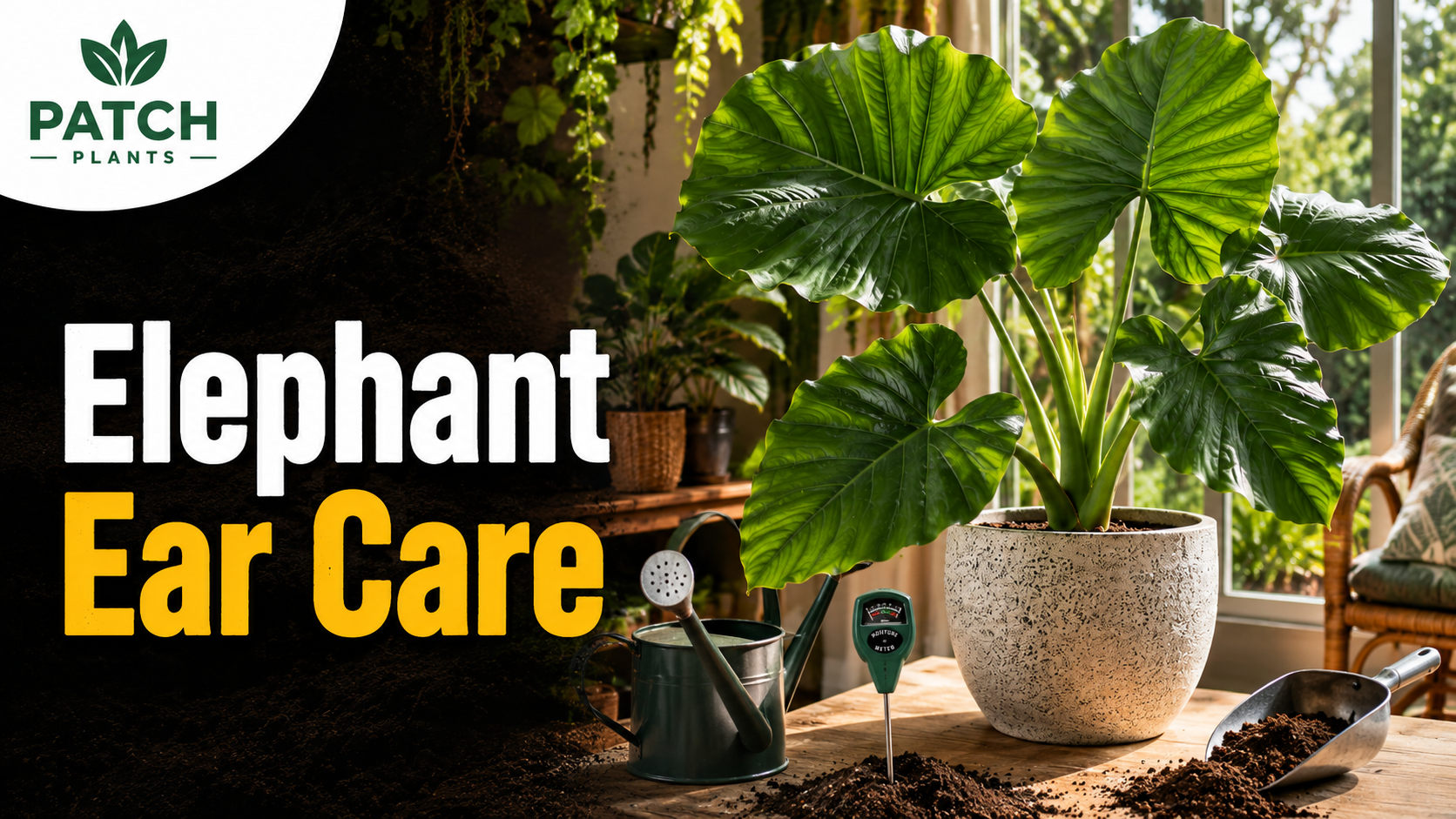
Elephant ear care is easier when you know which type you have and where you want to grow it. These bold tropical plants are usually grown for their huge heart-shaped or arrow-shaped leaves, and they can turn a plain corner, patio, border, or container into something lush very quickly.
The name “elephant ear” can refer to several related plants, mainly Colocasia, Alocasia, and Xanthosoma. They look similar, but their care is not always identical. Some love wet soil and outdoor heat. Others prefer bright filtered light, sharp drainage, and a humid indoor spot. This guide explains the basics without making the plant feel harder than it is.
Care Snapshot
For strong elephant ear care, give the plant warmth, rich soil, consistent moisture during active growth, and enough light for large healthy leaves. Indoors, use bright indirect light, high humidity, and a draining pot. Outdoors, choose a sheltered warm spot with fertile moist soil. In cold climates, protect plants from frost, bring pots indoors, or store tubers for winter.
Key Takeaways
- Elephant ear care depends on whether you are growing Colocasia, Alocasia, or Xanthosoma.
- Indoor elephant ears usually need bright indirect light, warmth, humidity, and careful watering.
- Outdoor elephant ears need fertile soil, regular water, warmth, and protection from cold winds.
- Colocasia often handles wetter soil better than many Alocasia types.
- Yellow leaves can mean overwatering, underwatering, low light, cold stress, pests, or natural aging.
- Elephant ear sap can irritate skin, so wear gloves when pruning, dividing, or handling cut stems.
- Use this guide with Elephant Ear plant indoors, tropical house plants, and complete watering tips.
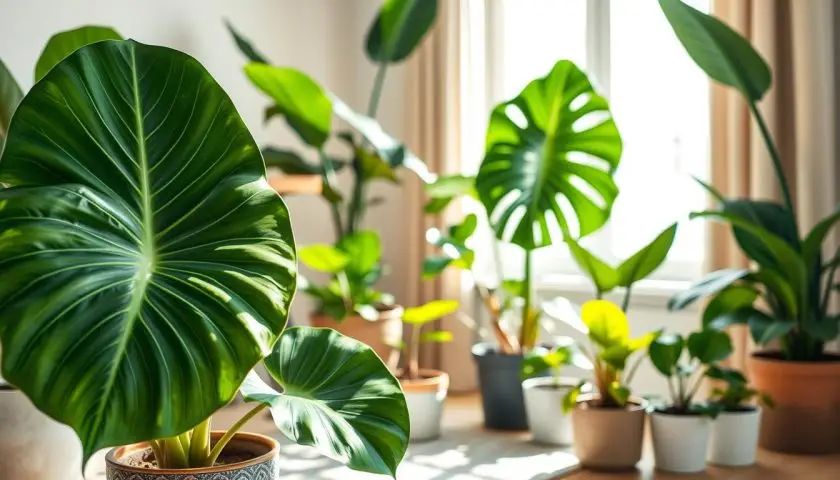
Elephant Ear Care at a Glance
| Care Area | Indoor Elephant Ear | Outdoor Elephant Ear |
|---|---|---|
| Light | Bright indirect or filtered light | Morning sun, partial shade, or filtered sun |
| Water | Keep lightly and evenly moist | Water deeply and often during heat |
| Soil | Rich, airy, moisture-retentive potting mix | Fertile, moist, well-prepared garden soil |
| Humidity | Moderate to high humidity | Naturally better outdoors in warm humid weather |
| Temperature | Warm and stable | Plant after cold weather has passed |
| Feeding | Light but regular feeding in growth season | Regular feeding for large leaves |
| Winter | Reduce watering if growth slows | Protect, lift tubers, or bring pots indoors |
Start with the Right Elephant Ear Plant
The first step in elephant ear plant care is choosing the right plant for your space. A large Colocasia can be spectacular beside a pond or in a patio pot, but it may be too big and thirsty for a small indoor shelf. A compact Alocasia can look beautiful indoors, but it may struggle outdoors in harsh sun or cold wind.
Colocasia
Colocasia is often called taro or elephant ear. Many types have large leaves that face outward or downward. These plants are often strong outdoor growers in warm weather and usually enjoy consistently moist soil.
- Best for: Outdoor containers, tropical borders, water-side planting, large patios.
- Care style: Moisture-loving, hungry, fast-growing in warm weather.
- Watch out for: Frost, drying out, and spreading habits in mild regions.
Alocasia
Alocasia usually has more upright, sculptural leaves. Many popular indoor elephant ears are Alocasia types. They often prefer bright filtered light, warm rooms, high humidity, and a mix that is moist but not swampy.
- Best for: Indoor statement plants, bright rooms, sheltered patios in summer.
- Care style: Warm, humid, filtered light, careful drainage.
- Watch out for: Overwatering, cold drafts, spider mites, and low humidity.
Xanthosoma
Xanthosoma is another tropical elephant ear group with large bold leaves. It is often used outdoors in warm climates or as a big seasonal foliage plant in containers.
- Best for: Warm outdoor displays, large containers, tropical garden styling.
- Care style: Warmth, fertile soil, regular water, plenty of space.
- Watch out for: Cold weather and cramped containers.
Indoor vs Outdoor Elephant Ear Care
Indoor and outdoor plants need the same broad care themes, but the balance changes. Indoors, light and humidity are usually the hardest parts. Outdoors, heat, wind, watering, and winter protection matter more.
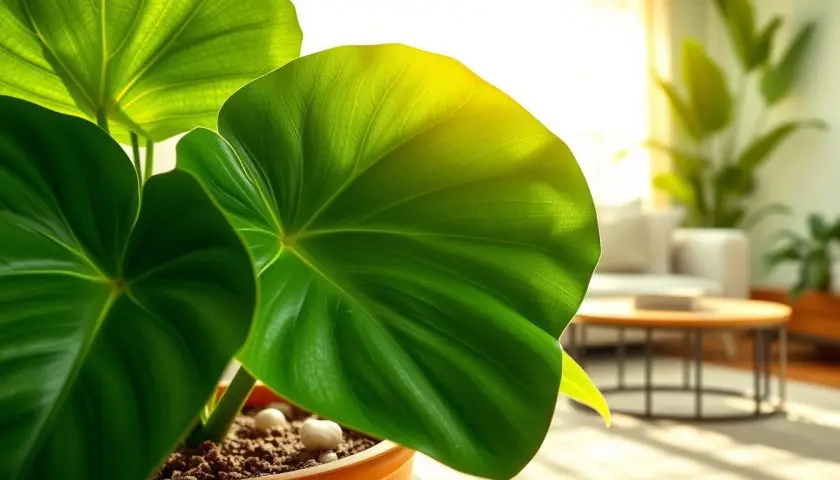
Indoor elephant ear care
- Place near a bright window with indirect light.
- Keep away from radiators, cold windows, and air-conditioning vents.
- Use a pot with drainage holes.
- Keep the potting mix lightly moist during active growth.
- Raise humidity with a humidifier, pebble tray, or plant grouping.
- Rotate the pot so the plant grows evenly.
- Check pests under leaves every week.
Outdoor elephant ear care
- Plant after frost risk has passed and soil has warmed.
- Choose a sheltered site with space for mature leaves.
- Use fertile soil enriched with compost.
- Water deeply in hot weather.
- Protect large leaves from strong wind.
- Feed during active growth for bigger foliage.
- Plan winter protection before cold weather arrives.
For more indoor support, read Elephant Ear plant indoors, tropical house plants, and oversized indoor plants. For outdoor care, use how to keep outdoor plants alive and container gardening on patios.
Elephant Ear Light Requirements
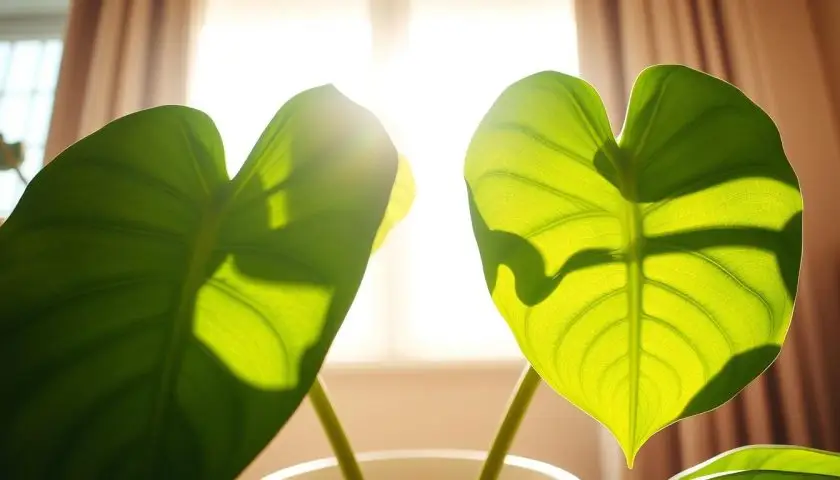
Elephant ear plant sunlight requirements depend on the type and growing situation. Indoors, most elephant ears need bright indirect light. Outdoors, many grow best with morning sun and afternoon shade, while some Colocasia types can take more sun if the soil stays moist.
| Light Situation | Best For | Care Note |
|---|---|---|
| Bright indirect indoor light | Alocasia and indoor elephant ears | Best balance for strong leaves without scorch |
| Gentle morning sun | Indoor pots and outdoor plants | Usually helpful if heat is not intense |
| Partial shade outdoors | Most elephant ears | Protects leaves from midday heat |
| Full sun with moist soil | Some Colocasia and dark-leaved outdoor types | Only works if watering is steady |
| Deep indoor shade | Not ideal | Growth slows and leaves may yellow |
| Harsh hot sun through glass | Avoid | Can scorch or bleach leaves |
Signs of too little light
- Small new leaves.
- Long weak stems.
- Leaning toward the window.
- Slow growth during warm months.
- Soil staying wet for too long.
- Yellowing lower leaves.
Signs of too much sun
- Brown crispy patches.
- Bleached leaf areas.
- Wilting during afternoon heat.
- Dry curling edges.
- Damage mostly on the sun-facing side.
For placement help, read complete guide to indoor light, low light house plants, and office-friendly plants for artificial light.
Elephant Ear Watering Tips
Elephant ear watering should be generous during active growth, but not careless. These plants make huge leaves, so they use a lot of water in warm weather. Still, waterlogged soil can cause root and tuber problems, especially in pots.
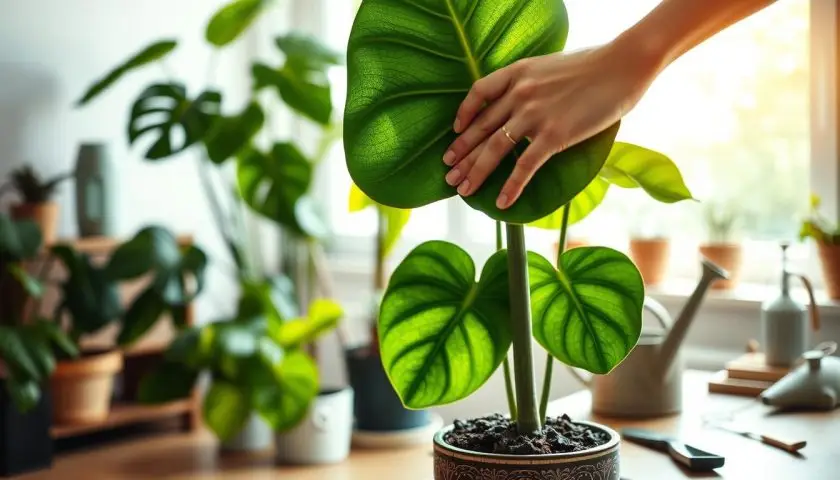
How to water indoor elephant ears
- Check the top layer of potting mix.
- Water when the top layer begins to dry.
- Use room-temperature water.
- Water evenly until moisture reaches the full root ball.
- Let excess water drain away.
- Empty the saucer or decorative cover pot.
How to water outdoor elephant ears
- Water deeply rather than giving light surface sprays.
- Increase watering during hot, dry weather.
- Mulch outdoor plants to hold moisture.
- Check container plants daily during heatwaves.
- Do not let newly planted tubers dry hard while establishing.
| Growing Situation | Watering Need | Watch Out For |
|---|---|---|
| Indoor Alocasia | Even moisture, not soggy | Root rot from wet soil |
| Outdoor Colocasia | Consistent moisture | Drying out during heat |
| Large container | Frequent checks | Water trapped in saucers |
| Garden bed | Deep watering | Dry soil around large roots |
| Dormant plant | Much less water | Rotting stored tubers or corms |
Underwatering signs
- Large leaves droop dramatically.
- Leaf edges become dry and crispy.
- Soil pulls away from the pot edge.
- The pot feels very light.
- Growth slows in hot weather.
Overwatering signs
- Yellow leaves with wet soil.
- Soft stems near the base.
- Fungus gnats around the pot.
- Sour or stale smell from the soil.
- Mushy roots, tubers, or corms.
For watering help, use complete watering guide, worst times to water plants, and signs you are overwatering.
Best Soil for Elephant Ear Plants
The best soil for elephant ear plants is rich, fertile, moisture-retentive, and draining. That balance matters. Elephant ears need enough moisture to build large leaves, but they also need oxygen around the roots.
Indoor potting mix
- 2 parts quality indoor potting mix.
- 1 part fine bark or chunky houseplant mix.
- 1 part perlite, pumice, or grit.
- A small amount of compost or coco coir for moisture balance.
Outdoor soil preparation
- Add compost or well-rotted organic matter before planting.
- Improve heavy clay with compost and grit where needed.
- Improve sandy soil with compost to hold moisture.
- Mulch after planting to reduce drying.
- Avoid planting drainage-sensitive types in stagnant wet soil.
Best container setup
- Use a large pot with drainage holes.
- Choose a heavy pot for tall, top-heavy plants.
- Avoid tiny pots that dry too quickly.
- Avoid oversized pots that keep young roots too wet.
- Empty water from saucers after watering.
For soil support, read best soil mix guide, how to repot a plant, and repotting mistakes to avoid.
Temperature, Humidity and Airflow
Elephant ears are tropical plants. Warmth and humidity help them grow larger, healthier leaves. Cold air, dry heat, and sudden temperature drops can cause yellowing, drooping, or dormancy.
Indoor temperature tips
- Keep plants away from cold windowsills in winter.
- Avoid exterior doors and cold drafts.
- Keep away from radiators, fireplaces, and dry heat vents.
- Do not place beside air-conditioning vents.
- Move plants gradually if changing rooms.
Outdoor temperature tips
- Plant outdoors only after weather warms.
- Harden plants off before placing them outside full-time.
- Protect from cold nights in spring.
- Bring potted plants indoors before frost.
- Plan tuber storage in cold climates.
Humidity tips
- Use a humidifier near indoor plants.
- Group elephant ears with other tropical plants.
- Use a pebble tray without letting the pot sit in water.
- Keep leaves clean so they can use light well.
- Balance humidity with airflow to reduce fungal problems.
For humidity help, read humidity hacks without a humidifier, DIY indoor humidity tray, and misting for plants.
Fertilizing Elephant Ear Plants
Fertilizing elephant ear plants helps support the huge leaves these plants are known for. They are heavy feeders during active growth, especially in containers where nutrients wash out more quickly.
Simple feeding routine
- Start feeding when new growth is active.
- Use a balanced liquid fertilizer or slow-release fertilizer.
- Follow label rates instead of guessing.
- Feed container plants more consistently than garden plants.
- Stop feeding when growth slows toward dormancy.
Signs your plant may need feeding
- Small new leaves during warm active growth.
- Pale foliage despite good light.
- Slow growth in a container.
- Plant has not been repotted or fed for a long time.
Signs of too much fertilizer
- Brown leaf edges.
- White crust on the soil.
- Yellowing after feeding.
- Weak, soft growth.
- Root stress in wet soil.
For feeding basics, read fertilizing indoor vs outdoor plants.
Pruning Elephant Ear Plants
Pruning elephant ear plants is mostly maintenance. You are not trying to shape tiny branches. You are removing old leaves, damaged foliage, pest-heavy growth, or leaves that are taking energy from the plant.
When to prune
- When a leaf is fully yellow or brown.
- When a leaf is torn by wind.
- When disease spots are spreading.
- When pests are concentrated on one leaf.
- Before storing tubers for winter.
How to prune safely
- Wear gloves because sap can irritate skin.
- Use clean sharp shears.
- Cut the leaf stalk near the base.
- Do not remove all healthy leaves at once.
- Clean tools after pruning diseased growth.
- Keep cut leaves away from pets and children.
For more pruning help, read pruning basics and how to clean plant leaves.
Common Elephant Ear Problems
Most elephant ear problems are easy to read once you look at the pattern. Check soil moisture, light, temperature, and pests before changing everything at once.
| Problem | Likely Cause | First Fix |
|---|---|---|
| Yellow leaves | Overwatering, underwatering, low light, cold, aging | Check soil and recent conditions |
| Drooping leaves | Dry soil, heat, transplant stress, wet roots | Check moisture before watering |
| Brown crispy edges | Dry air, underwatering, sun scorch, wind | Improve watering, humidity, or shelter |
| Small new leaves | Low light, low nutrients, cramped roots | Improve light, feeding, or pot size |
| Leaf spots | Wet foliage, poor airflow, disease | Remove affected leaves and improve airflow |
| Mushy base | Root rot, tuber rot, overwatering | Inspect roots and improve drainage |
| Pale or faded leaves | Too much harsh sun or not enough light | Adjust light gradually |
Yellow leaves
One old yellow leaf can be normal. Many yellow leaves at once usually mean the plant is stressed. Check whether the soil is too wet, too dry, too cold, or too dark.
Drooping leaves
Drooping can come from dry soil, heat, transplant shock, or root rot. Dry soil needs water. Wet soil needs drainage and root checks. Do not guess.
Brown edges
Brown edges often come from dry air indoors, strong sun outdoors, wind damage, or inconsistent watering. A damaged edge will not turn green again, but new leaves should improve when care is corrected.
Root rot and tuber rot
Root rot or tuber rot usually happens when the soil stays too wet, especially in cool conditions. Remove the plant, trim rotten parts, and repot healthy sections into fresh draining mix if possible.
For symptom guides, read yellow leaves on plants, leaf curl, browning and droop, root rot guide, and how to revive a dying plant.
Elephant Ear Plant Pests and Diseases
Common pests of elephant ear plants include spider mites, aphids, thrips, mealybugs, scale, whiteflies, and fungus gnats. Indoor plants often struggle with spider mites in dry air, while outdoor plants may attract aphids, thrips, slugs, or snails depending on the site.
Spider mites
Spider mites cause fine webbing, speckled leaves, dull foliage, and leaf decline. They often appear in dry indoor air.
Aphids and whiteflies
Aphids and whiteflies feed on soft growth. They may cause sticky leaves, distorted new leaves, and weak growth.
Thrips
Thrips can cause silvery streaks, speckling, or distorted young leaves. They can be difficult to spot early, so check new growth often.
Mealybugs and scale
Mealybugs look like white cottony clusters. Scale looks like small brown bumps on stems or leaf veins. Both can weaken the plant and leave sticky residue.
Fungus gnats
Fungus gnats usually mean soil is staying too wet. Let the top layer dry more between watering and improve drainage.
Leaf spot and blight
Leaf spot problems are more likely when leaves stay wet, airflow is poor, or damaged leaves are left in place. Remove affected leaves, avoid wetting foliage late in the day, and improve spacing.
Simple pest control routine
- Inspect leaf undersides weekly.
- Isolate indoor plants if pests appear.
- Wipe leaves with a damp cloth.
- Rinse pests away if the plant can drain fully afterward.
- Use a suitable insecticidal soap or houseplant pest treatment if needed.
- Repeat checks because pests can return from hidden eggs.
Repotting Elephant Ear Plants
Repotting elephant ear plants is important when roots or tubers fill the pot, the soil breaks down, or the plant dries too quickly. Large elephant ears can become top-heavy, so a stable container matters.
Signs it needs repotting
- Roots grow through drainage holes.
- The pot dries out very quickly.
- The plant becomes top-heavy.
- Soil is compacted or stale.
- Growth slows during warm months.
- Tubers or offsets are crowding the pot.
How to repot
- Repot during active growth, usually spring or early summer.
- Choose a pot only one size larger for indoor plants.
- Use fresh rich draining mix.
- Keep the plant at the same depth.
- Water after repotting and drain fully.
- Keep in bright filtered light while it settles.
- Do not fertilize immediately if roots were disturbed heavily.
Elephant Ear Propagation and Division
Elephant ear propagation is usually done by dividing tubers, corms, offsets, or cormels rather than by seed. Division is easiest when the plant is actively growing or when you are lifting tubers for storage.
How to divide elephant ears
- Lift the plant carefully from the pot or soil.
- Brush away loose soil so you can see the tubers or offsets.
- Look for healthy sections with roots or growing points.
- Separate sections with clean hands or a clean knife.
- Let cut surfaces dry briefly if needed.
- Replant into fresh soil at the correct depth.
- Keep warm and lightly moist while new growth starts.
When not to divide
- Do not divide a weak plant unless crowding or rot is the issue.
- Do not divide during cold dormancy unless storing tubers.
- Do not keep rotten or soft tuber sections.
- Do not overwater divisions before roots are active.
For general propagation support, read how to propagate houseplants.
Elephant Ear Winter Care
Elephant ear winter care depends on your climate and how you grow the plant. In warm frost-free areas, some elephant ears can remain outdoors. In colder climates, most need to be brought indoors, protected, or stored as dormant tubers.
Option 1: Bring potted plants indoors
- Bring plants in before frost.
- Inspect for pests first.
- Place in bright light indoors.
- Reduce watering if growth slows.
- Keep away from heaters and cold drafts.
Option 2: Store tubers or corms
- Wait until frost damages the foliage.
- Cut back the leaves, leaving a short stem.
- Lift tubers carefully.
- Brush off loose soil.
- Let tubers dry in a sheltered airy place.
- Store in a cool, dry, frost-free place.
- Check occasionally for rot or shriveling.
Option 3: Mulch outdoor plants in mild regions
In mild climates, some hardy or well-established types can be protected with mulch after foliage dies back. This depends on your exact plant, drainage, and winter conditions.
For outdoor seasonal support, read outdoor plants that survive British winters, garden calendar, and seasonal plant care in autumn.
Elephant Ear Safety Around Pets and Children
Elephant ears are best kept away from pets and children who may chew the leaves or stems. The sap can irritate skin, and all parts should be handled with care. Wear gloves when pruning, dividing, or cleaning damaged leaves.
Safety tips
- Keep indoor pots out of reach of pets.
- Teach children not to touch or taste leaves.
- Wear gloves when cutting stems.
- Wash hands after handling.
- Clean pruning tools after use.
- Pick up fallen leaves from floors, patios, and garden paths.
For pet-safe planning, read cat-friendly plant safety and dog-friendly plant safety.
Elephant Ear Care Checklist
| Task | How Often | What to Watch |
|---|---|---|
| Check soil moisture | Before watering | Moist soil, not bone-dry or sour |
| Review light | Seasonally | Scorch, small leaves, leaning, slow growth |
| Raise humidity indoors | When air is dry | Crispy edges, curling, spider mites |
| Feed | During active growth | Small leaves, pale growth, container plants |
| Prune damaged leaves | As needed | Yellow, torn, diseased, or pest-heavy foliage |
| Inspect pests | Weekly | Webbing, sticky leaves, speckling, insects |
| Repot or divide | When crowded | Root crowding, offsets, dry soil too quickly |
| Prepare for winter | Before frost | Indoor move, tuber storage, mulch protection |
Common Mistakes With Elephant Ear Care
| Mistake | What Happens | Better Choice |
|---|---|---|
| Treating all elephant ears the same | Wrong light or water balance | Identify Colocasia, Alocasia, or Xanthosoma |
| Keeping indoor plants too dark | Small leaves and slow growth | Use bright indirect light |
| Letting containers dry completely | Drooping and crispy edges | Water consistently during growth |
| Keeping cold wet soil in winter | Tuber or root rot | Reduce water when growth slows |
| Skipping feeding in containers | Smaller leaves and weak growth | Feed during active growth |
| Ignoring pests under leaves | Spider mites or aphids spread | Inspect weekly and clean early |
| Forgetting winter protection | Frost kills foliage and damages tubers | Bring in, mulch, or store tubers |
Helpful PATCH Guides for Elephant Ear Care
Use these related PATCH guides to improve light, watering, humidity, soil, tropical plant care, outdoor planting, and problem-solving.
Elephant Ear and Tropical Plant Guides
- Elephant Ear plant indoors
- Tropical house plants
- Oversized indoor plants
- Colorful foliage indoor plants
- Unusual indoor plants
- Carnivorous plant terrarium setup
Indoor Plant Guides
- Indoor Plants hub
- Best indoor plants for beginners
- Best indoor plants for first-time plant parents
- Best indoor plants for tiny apartments
- Low-maintenance plants that thrive
- Blooming indoor plants
Outdoor and Container Guides
- Outdoor Plants hub
- How to keep outdoor plants alive
- Container gardening on patios
- Plants in pots in shade
- Small plants that like shade
- Hardy outdoor plants
- Outdoor plants for British winters
Light, Water and Humidity Guides
- Complete guide to indoor light
- Low light house plants
- Complete watering guide
- Worst times to water plants
- Signs you are overwatering
- Humidity hacks without a humidifier
- DIY humidity tray
- Misting for plants
Soil, Feeding and Repotting Guides
- Plant Care hub
- Best soil mix guide
- How to repot a plant
- Repotting mistakes to avoid
- Fertilizing indoor vs outdoor plants
- Self-watering pots guide
Problem-Solving Guides
- Yellow leaves on plants
- Why plant leaves turn yellow
- Leaf curl, browning and droop
- Root rot guide
- How to revive a dying plant
- How to clean plant leaves
- Pruning basics
Specific Tropical Indoor Plant Guides
- Calathea care guide
- Philodendron care guide
- Monstera care guide
- Bird of Paradise care guide
- Croton Tree care
- Rubber Plant care guide
- Fiddle Leaf Fig care guide
- Dracaena care guide
Frequently Asked Questions
How do you care for elephant ear plants?
Give elephant ear plants warmth, bright filtered light, fertile moist soil, regular watering during active growth, humidity, and protection from cold. Adjust care depending on whether you are growing Colocasia, Alocasia, or Xanthosoma.
Can elephant ear plants grow indoors?
Yes. Elephant ear plants can grow indoors if they have bright indirect light, warmth, humidity, a large draining pot, and careful watering. Many Alocasia types are especially popular indoors.
Do elephant ears need full sun?
Not always. Many elephant ears prefer partial shade or filtered sun. Some Colocasia types and dark-leaved outdoor varieties can take more sun if the soil stays consistently moist.
How often should I water elephant ears?
Water when the top layer of soil begins to dry, keeping the soil evenly moist during active growth. Outdoor and container plants may need frequent watering in hot weather.
What is the best soil for elephant ear plants?
The best soil is fertile, moisture-retentive, and well-draining. Use compost-rich garden soil outdoors and an airy indoor mix with perlite, bark, or pumice in pots.
Why are my elephant ear leaves turning yellow?
Yellow leaves can come from overwatering, underwatering, low light, cold stress, pests, root rot, or natural leaf aging. Check soil moisture and recent temperature changes first.
Why is my elephant ear drooping?
Drooping usually comes from dry soil, heat stress, transplant shock, or root problems. Check whether the soil is dry or wet before watering again.
Should I cut off damaged elephant ear leaves?
Yes. Remove yellow, torn, diseased, or pest-heavy leaves near the base with clean shears. Wear gloves because the sap can irritate skin.
How do I overwinter elephant ear plants?
In cold climates, bring potted plants indoors before frost or dig tubers after frost damages the foliage. Dry and store tubers in a cool, dry, frost-free place until spring.
Can elephant ear plants be divided?
Yes. Elephant ears can be divided by separating healthy tubers, corms, cormels, or offsets with roots or growing points. Replant divisions in warm conditions and keep them lightly moist while they settle.
Final Thoughts
Elephant ear care becomes simple when you match the plant to the place. Colocasia often works beautifully outdoors with rich wet soil and warmth. Alocasia is usually better for bright indoor rooms or sheltered filtered light. Xanthosoma gives bold tropical growth where there is space, moisture, and heat.
Wisconsin Horticulture explains that elephant ears include Colocasia, Alocasia, and Xanthosoma, and that these tropical foliage plants need generous water and fertilizer during growth, warm temperatures, high humidity, and winter protection in cold climates: Wisconsin Horticulture elephant ears guide.
For the best results, give your elephant ear a warm bright spot, keep soil evenly moist during active growth, feed while it is making leaves, and plan ahead for winter. Big leaves need steady care, but they reward you quickly when conditions are right.
Final Recap
Elephant ear plants are bold tropical foliage plants grown indoors, outdoors, in containers, and in garden beds. The main groups are Colocasia, Alocasia, and Xanthosoma, and each has slightly different needs. Indoor elephant ears need bright indirect light, humidity, warmth, draining soil, and careful watering. Outdoor elephant ears need fertile moist soil, shelter from harsh wind, warm temperatures, and regular feeding. Water consistently during active growth, but avoid stagnant wet soil around sensitive roots and tubers. Prune yellow or damaged leaves, inspect pests often, divide crowded plants when needed, and protect or store tubers before frost. With the right light, moisture, warmth, and winter plan, elephant ears can grow large, lush, and dramatic year after year.