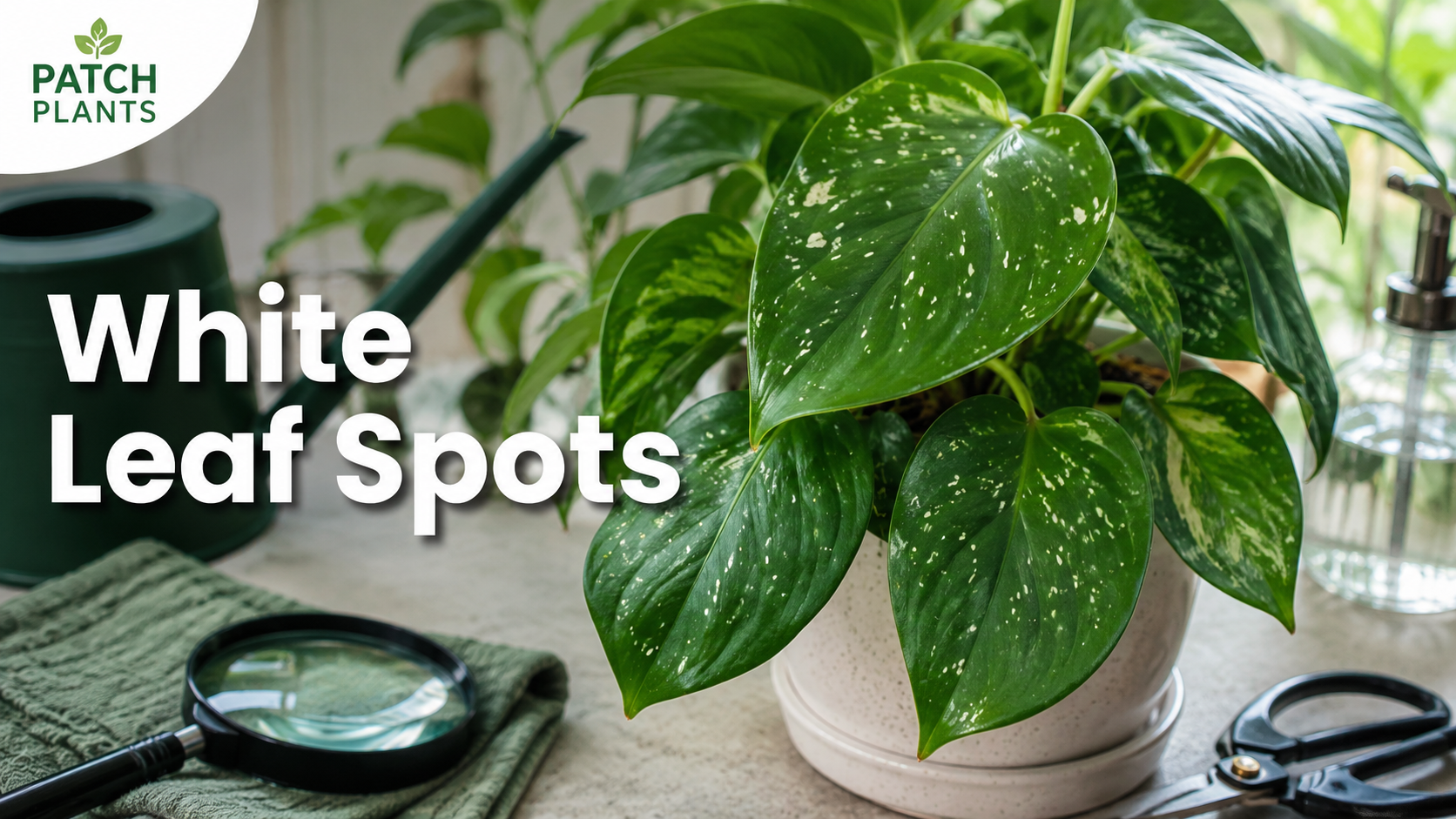
White spots on plant leaves can look worrying, but they do not always mean your plant is dying. Sometimes the marks are harmless mineral residue from hard water. Other times they point to pests, powdery mildew, sun damage, cold stress, or a real leaf disease that needs quick action.
The fastest way to solve the problem is to look closely before treating. A powdery patch, a cottony clump, a chalky splash mark, and a silvery scar all mean different things. This guide shows you how to read the texture, location, and spread of white spots so you can fix the actual cause instead of guessing.
Diagnosis Snapshot
To diagnose white spots on plant leaves, start with a simple wipe test. If the white mark wipes off, it may be hard water residue, fertilizer salts, dust, or surface mildew. If the mark stays embedded in the leaf, check for spider mites, thrips, sunscald, cold injury, or leaf disease. Isolate the plant until you know the cause, then treat only the confirmed problem.
Key Takeaways
- White spots on plant leaves can come from residue, pests, fungal disease, sun damage, cold stress, or leaf tissue injury.
- Powdery white patches often suggest powdery mildew, especially when they spread across leaf surfaces.
- Tiny white or pale speckles often suggest spider mites, thrips, or other sap-feeding pests.
- Chalky spots that wipe away are often hard water minerals or fertilizer residue.
- Bleached, papery patches usually point to sunscald, cold damage, or physical injury.
- Isolate affected plants before treating, especially if pests or disease are possible.
- Use this guide with yellow leaves on plants, leaf curl, browning and droop, and root rot guide.
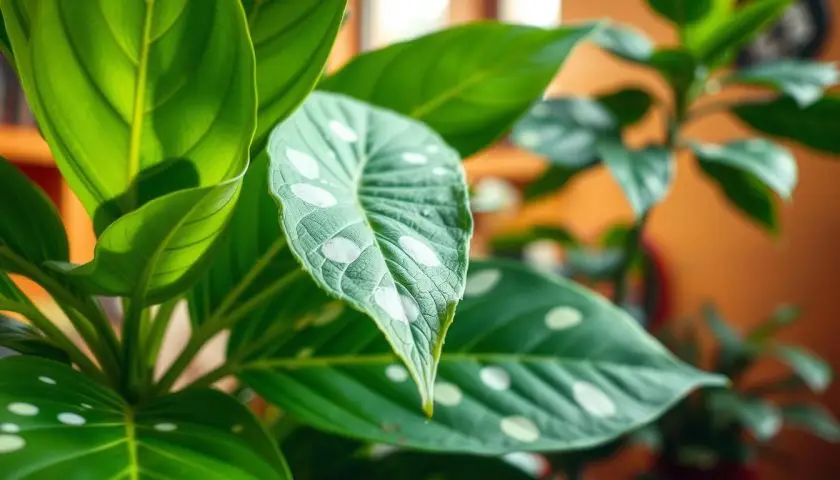
White Spots on Leaves at a Glance
| What You See | Likely Cause | First Fix |
|---|---|---|
| Dusty white coating | Powdery mildew | Isolate, remove worst leaves, improve airflow |
| Tiny pale speckles | Spider mites or thrips | Check undersides and treat pests |
| Cottony white clusters | Mealybugs | Remove pests and isolate the plant |
| Chalky marks that wipe off | Hard water residue | Wipe leaves gently and adjust water source |
| White crust on soil or pot edge | Fertilizer salts or minerals | Flush draining soil and reduce overfeeding |
| Bleached papery patches | Sunscald, cold injury, or physical damage | Move plant to safer light and stable temperature |
| Spots with yellow halos or spreading lesions | Fungal or bacterial leaf spot | Remove affected leaves and keep foliage dry |
What White Spots on Plant Leaves Reveal About Plant Health
White spots are a clue, not a diagnosis by themselves. You need to check whether the marks are sitting on top of the leaf or are part of the leaf tissue. This one detail changes the whole treatment plan.
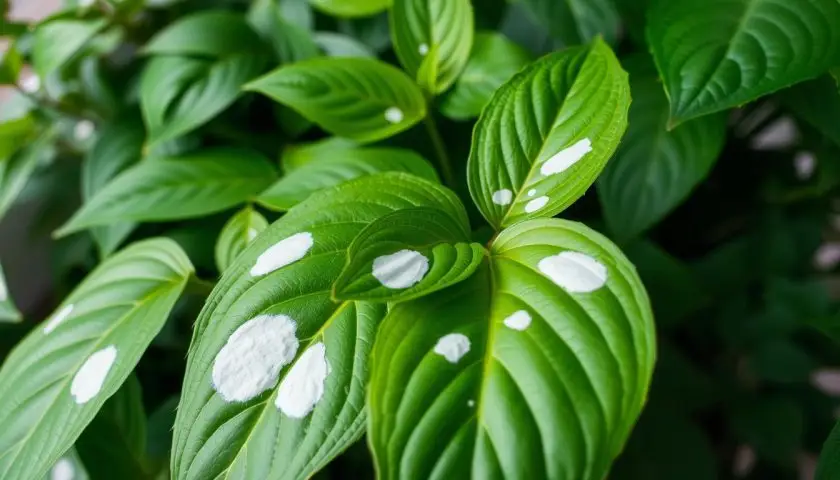
Powdery spots
Powdery spots look dusty or flour-like. They may start as small round patches and spread into a larger white film. This is often powdery mildew, especially when plants are crowded, air is still, and leaves stay damp or humid.
Raised or cottony spots
Raised white clumps often point to pests. Mealybugs look like tiny cottony patches in leaf joints, stem nodes, and undersides. Scale insects can also look raised, waxy, or crusted.
Translucent or silvery spots
Silvery or translucent scars often come from feeding damage. Thrips scrape leaf tissue and leave pale, silvery patches. Spider mites create fine stippling that can turn leaves pale, dusty, or grayish.
Crusty white spots
Crusty white marks are often mineral deposits from hard water, fertilizer residue, or dried foliar sprays. These usually sit on the leaf surface and may wipe away.
Papery white patches
Bleached, dry, papery patches usually mean tissue damage. Common triggers include too much direct sun, a cold window, frost exposure, heat vents, rough handling, or chemical burn.
9 Common Causes of White Spots on Plant Leaves
Several problems can create white marks, so do not spray the plant immediately. The safest fix depends on the cause.
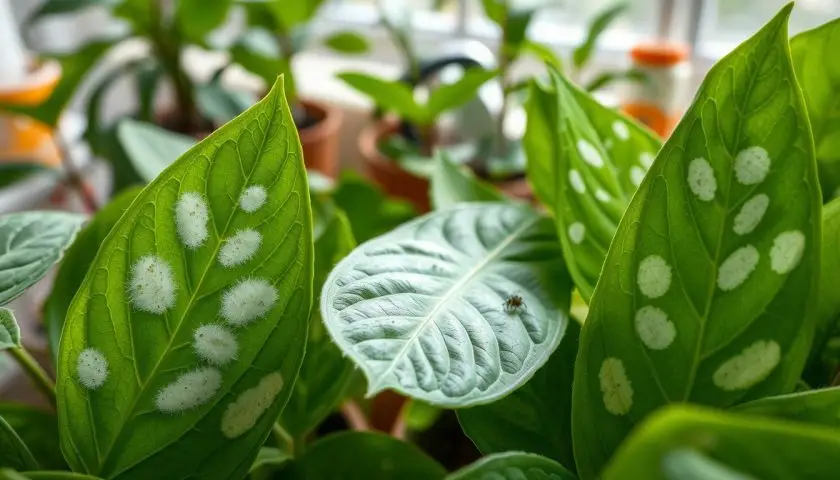
1. Powdery mildew
Powdery mildew is one of the easiest white leaf problems to recognize. It looks like a dusty white or gray coating on leaves, stems, or flower buds. It may wipe off at first, but it usually returns if the environment stays favourable.
2. Spider mites
Spider mites are tiny and often missed until leaves look pale, speckled, or dusty. They feed from the underside of leaves and leave fine stippling on the upper surface. Severe infestations can create webbing.
3. Mealybugs
Mealybugs look like small white cottony insects. They often hide in leaf axils, stem joints, and new growth. They can cause yellowing, sticky honeydew, distorted growth, and slow decline.
4. Whiteflies
Whiteflies are tiny flying pests that gather on undersides of leaves. When disturbed, they may flutter up in a white cloud. Their feeding can cause pale spotting, yellowing, sticky residue, and weak growth.
5. Thrips
Thrips damage often looks silvery, pale, or scraped. You may also see tiny black dots of waste. Flowers, tender leaves, and new growth can become distorted.
6. Hard water mineral deposits
Hard tap water can leave white chalky spots on leaves after droplets dry. This is common when plants are misted, showered, rinsed, or watered from above with mineral-heavy water.
7. Fertilizer salt buildup
Fertilizer salts can leave white crust on potting mix, pot rims, and sometimes leaf surfaces. This is more likely when plants are overfed, watered lightly, or kept in the same potting mix for a long time.
8. Sunscald, cold injury, or physical damage
Environmental damage can bleach leaf tissue. A plant moved suddenly into direct sun may develop white or tan papery patches. A leaf pressed against cold glass can also develop pale damaged areas.
9. Fungal, bacterial, viral, or systemic disease
Some white spots begin as leaf lesions caused by fungi or bacteria. Viral or systemic issues are less common but more serious, especially when new leaves repeatedly emerge mottled, distorted, or patchy.
How to Diagnose White Spots on Plant Leaves Step by Step
A careful diagnosis prevents the biggest mistake: treating every white mark as mildew. Follow these steps before spraying, pruning, or repotting.
Step 1: Isolate the plant
Move the affected plant away from other houseplants. If the problem is pests or disease, isolation slows spread. If the cause is harmless mineral residue, you can return it later.
Step 2: Inspect the top and underside of every affected leaf
Look at the upper leaf surface, underside, stem joints, petioles, new leaves, flower buds, and nearby plants. Many pests hide where the leaf meets the stem.
Step 3: Try the wipe test
Dampen a soft cloth with room-temperature water and gently wipe one spot. Do not scrub. If it comes off easily, the cause may be residue, surface mildew, or dust. If it stays, the leaf tissue is damaged.
Step 4: Use white paper for tiny pests
Hold a sheet of white paper under the leaves and tap the plant gently. Tiny moving dots can indicate mites or other pests. Use a magnifying glass if needed.
Step 5: Check recent care changes
Think about what changed before the spots appeared. Did you move the plant into stronger sun? Mist it with hard water? Use a new spray? Fertilize heavily? Bring home a new plant? Leave it near a cold window?
Step 6: Compare the spread
Residue often appears where water dries. Powdery mildew spreads across leaf surfaces. Pest damage often starts on tender leaves or undersides. Sunscald usually appears on the side facing the light.
White Spots Caused by Common Houseplant Pests
Pests are one of the most common reasons green leaves develop white speckles, pale scars, or dusty-looking patches. Pest marks usually do not wipe away because the leaf cells have been damaged.
Spider mite stippling and fine webbing
Spider mites feed by piercing leaf tissue. Early damage looks like tiny pale dots. Later, leaves may look dull, gray, bronze, or dusty. In heavy infestations, fine webbing may appear between leaves and stems.
Mealybug cotton and sticky honeydew
Mealybugs leave visible white cottony wax. They are not just spots. If you touch them with a cotton swab, you may see the insect body underneath. Sticky surfaces nearby are another clue.
Whiteflies and pale speckling
Whiteflies often hide under leaves. Their feeding weakens plants and can cause pale leaves, sticky honeydew, and sooty mold. They spread quickly when plants are crowded.
Thrips and silvery scars
Thrips leave silvery, scraped-looking patches. Damage may be worse on new leaves and flowers. Tiny black waste dots are a useful clue.
How to treat pest-related white spots
- Isolate the plant.
- Rinse sturdy leaves with room-temperature water.
- Remove heavily infested or damaged leaves.
- Use insecticidal soap or horticultural oil only if the product label allows it for your plant.
- Repeat treatment as directed because eggs and hidden pests may survive one round.
- Keep treated leaves out of harsh direct sun until they are dry.
For more pest support, read how to keep pests away from outdoor plants, Schefflera plant problems, and how to clean plant leaves.
Identifying Powdery Mildew and Other Fungal Leaf Diseases
Powdery mildew often starts as small white powdery spots, then spreads across the leaf. It can affect both indoor and outdoor plants, especially when airflow is poor and foliage is crowded.
Powdery mildew signs
- White or gray powdery patches.
- Spots that spread and merge.
- Leaves may yellow, twist, or drop in severe cases.
- New growth may look weak or distorted.
- The coating may return after wiping if conditions are not corrected.
How downy mildew differs
Downy mildew is not the same as powdery mildew. It often appears with yellowing or blotching on the upper leaf surface and fuzzy growth underneath. It can spread fast in damp conditions.
Leaf spot fungi
Some fungal leaf spots begin as pale marks, then darken, spread, or develop borders. These spots do not wipe away because the leaf tissue is infected or damaged.
Conditions that encourage fungal spots
- Crowded plants.
- Poor airflow.
- Wet foliage that stays wet for hours.
- Low light and high humidity together.
- Old leaves left on the soil surface.
- Reusing dirty pots, tools, or infected plant debris.
How to manage fungal white spots
- Remove the worst affected leaves.
- Increase airflow around the plant.
- Avoid wetting leaves during watering.
- Do not crowd affected plants with healthy ones.
- Use a labelled fungicide only when the disease is confirmed and the plant is suitable for that product.
- Do not compost infected leaves if disease is active.
For more disease and symptom help, read yellow leaves on plants, why plant leaves turn yellow, and how to revive a dying plant.
Mineral Deposits, Fertilizer Burn, and Environmental Damage
Not every white mark is a living pest or disease. Many white spots are caused by water, fertilizer, light, temperature, or handling.
Hard water residue
Hard water can leave calcium and other minerals behind after droplets dry. This often appears as chalky spots, splash marks, or a dull film. It is usually cosmetic, but repeated buildup can make leaves look dusty and reduce light reaching the surface.
Fertilizer salts
White crust on soil, pot rims, or drainage holes usually means mineral or fertilizer salts are building up. The plant may also show brown tips, yellowing, or root stress if salts become severe.
Foliar spray buildup
Leaf shine products, homemade sprays, pesticides, and fertilizer sprays can leave pale residue or burn marks if used too strongly or applied in hot light.
Sunscald
Sunscald causes bleached, tan, or white papery patches. It often happens when a plant that was grown in low light is moved suddenly into direct sun.
Cold injury
Cold windows, frost, chilly drafts, and sudden temperature drops can cause pale, translucent, or dead patches. Tropical houseplants are especially sensitive.
Physical damage
A leaf that rubs against a wall, gets bent, bruised, or squeezed during cleaning may develop pale scars. These marks do not spread unless another problem is also present.
How to Treat White Spots on Leaves Safely
Treatment should match the cause. A fungicide will not fix hard water marks. A mineral wipe will not stop spider mites. A pest spray will not repair sunscald.
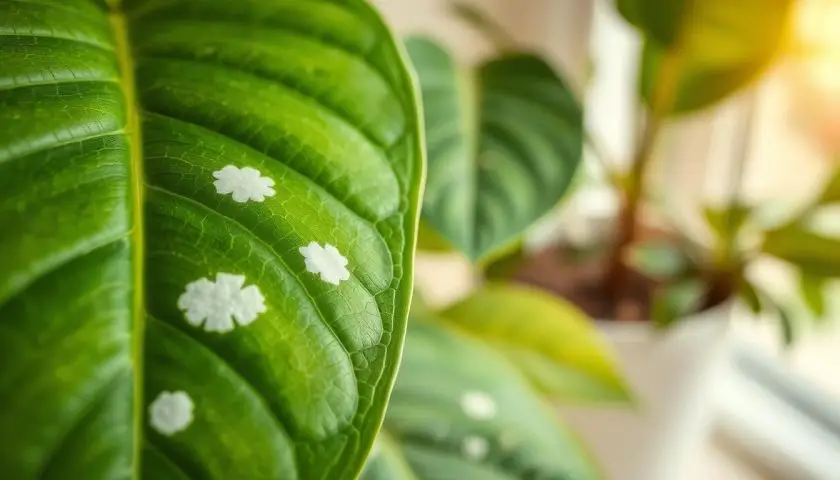
Step 1: Move the affected plant away from healthy plants
Quarantine the plant until you know the cause. Two to four weeks is a good monitoring window for many houseplant pests because eggs and hidden insects can appear later.
Step 2: Remove severely damaged leaves
Cut away leaves that are mostly dead, heavily diseased, or covered in pests. Keep leaves that still have useful green tissue unless they are spreading disease.
Step 3: Clean removable residue
Use a soft damp cloth and room-temperature water for tough, smooth leaves. Support the leaf from behind as you wipe. Avoid scrubbing fuzzy leaves such as African violets, begonias, and some peperomias.
Step 4: Treat pests only when confirmed
If you find pests, choose a treatment that is safe for the plant and suitable for the pest. Insecticidal soap, horticultural oil, or manual removal may help, but always read the label and test a small area first.
Step 5: Treat mildew by changing conditions first
For powdery mildew, remove infected leaves, improve airflow, give the plant better spacing, and avoid overhead watering. Use a suitable fungicide only if the problem continues or the plant is valuable.
Step 6: Flush fertilizer salts if drainage is good
If white crust is on the soil and the pot drains well, flush the mix with clear water and let it drain fully. Do not flush a plant that is already waterlogged or sitting in a pot with no drainage holes.
Step 7: Adjust light and temperature
Move sunburned plants back from harsh direct sun. Move cold-damaged plants away from chilly windows, doors, and vents. New growth will show whether the fix is working.
Cleaning, Pruning, and Isolating an Affected Plant
Clean handling matters because pests and disease can spread through tools, hands, cloths, and fallen leaves.
How to clean leaves without spreading damage
- Use a separate cloth for the affected plant.
- Start with the least damaged leaves and finish with the worst leaves.
- Do not reuse dirty water on other plants.
- Keep water out of crowns and leaf rosettes.
- Let leaves dry before returning the plant to bright light.
How to prune safely
- Use clean scissors or pruning snips.
- Cut at the base of the damaged leaf or above a healthy node.
- Sanitize tools after cutting diseased tissue.
- Dispose of infected leaves in the bin.
- Wash your hands before touching healthy plants.
How long to quarantine
For confirmed pests, keep the plant separate until you see no pests, no new marks, and steady new growth. For powdery mildew, keep it separate until the white coating stops returning.
For cleaning and pruning basics, read how to clean plant leaves and pruning basics.
Care Steps That Help Plants Recover
After treating white spots, focus on recovery. Damaged leaves may not turn green again, but new growth should look healthier if the cause is fixed.
Adjust light gently
Do not move a stressed plant from deep shade to full sun in one day. Increase light gradually. Damaged leaves are often more sensitive to burn.
Water by soil condition
Check the root zone, not just the surface. Plants recovering from pest damage or disease decline faster when they are also overwatered or underwatered.
Improve airflow without drying the plant out
Move plants slightly apart, trim crowded growth, and avoid placing leaves directly against walls or windows. Good airflow reduces mildew and fungal pressure.
Feed lightly only when the plant is growing
Do not fertilize a stressed, waterlogged, or root-damaged plant. Wait until the plant is actively growing again, then feed lightly.
Watch new growth
Old spots may stay visible forever. Judge recovery by new leaves. If new leaves keep developing white marks, the cause is still active.
Leaf Spot Prevention Strategies for Indoor and Outdoor Plants
Prevention is easier than repeated treatment. Most white spot problems become easier to avoid once you control airflow, water, pests, and plant spacing.
Inspect new plants before bringing them home
Check leaf undersides, stem joints, soil surface, and new growth. Do not buy plants with webbing, sticky leaves, cottony clusters, or spreading powdery patches.
Quarantine new plants
Keep new plants separate from your main collection for at least one to two weeks. This helps reveal pests before they spread.
Water the soil, not the leaves
Repeated wet foliage can encourage some leaf problems. Water at soil level when possible, especially for plants with fuzzy, thin, or disease-prone leaves.
Create space between plants
Crowded plants trap humidity and reduce airflow. This helps mildew and pests hide. Give each plant enough room for leaves to dry and air to move.
Use cleaner water for sensitive plants
If mineral spots keep returning, try filtered water, rainwater where safe, or distilled water for sensitive indoor plants. Avoid misting with hard water.
Flush pots occasionally
If the pot has drainage holes and the plant is healthy, occasional flushing can reduce salt buildup. Let the pot drain fully afterward.
Clean tools and pots
Dirty tools can spread plant problems. Wash pots before reuse and sanitize cutting tools when pruning diseased tissue.
For better routine care, read complete watering guide, worst times to water plants, and signs you are overwatering.
When White Spots Require Expert Help or Plant Removal
Most white spots can be managed at home. Still, some situations need expert diagnosis or removal to protect the rest of your plants.
Get help if spots spread fast
If the white spots spread rapidly despite isolation, pruning, and improved care, contact a local extension service, garden center plant clinic, or experienced horticulturist.
Watch for systemic signs
Repeatedly distorted new growth, mosaic-like patterns, strange mottling, or ongoing decline can suggest a more serious issue than surface residue.
Discard severely infested plants when needed
If a plant is heavily infested and treatment is not working, discarding it may protect the rest of your collection. This is especially true with recurring mealybugs, severe mites, or disease-prone plants.
Protect nearby plants
Inspect plants that sat near the affected one. Pests and spores often spread before the problem becomes obvious.
Common Mistakes When Treating White Spots on Leaves
| Mistake | Why It Backfires | Better Choice |
|---|---|---|
| Spraying before diagnosis | The wrong spray can stress the plant and miss the real cause | Use the wipe test and inspect first |
| Assuming all white spots are mildew | Pests, minerals, and sunscald need different fixes | Match texture, location, and spread |
| Scrubbing delicate leaves | Thin or fuzzy leaves can tear or scar | Wipe gently or avoid wiping fragile foliage |
| Leaving infected leaves in the pot | Old debris can hold pests or disease | Remove fallen leaves quickly |
| Using oil sprays in hot sun | Leaves can burn | Treat in safe conditions and follow labels |
| Returning the plant too soon | Pests can spread before they are fully gone | Quarantine until no new signs appear |
White Spots on Plant Leaves Checklist
| Task | Why It Matters | Done? |
|---|---|---|
| Isolate the plant | Stops possible pests or disease spreading | Yes / No |
| Check undersides | Many pests hide there | Yes / No |
| Try the wipe test | Separates residue from tissue damage | Yes / No |
| Look for webbing or cotton | Confirms mites or mealybugs | Yes / No |
| Check light changes | Helps identify sunscald or cold damage | Yes / No |
| Check soil and pot | White crust may mean salt buildup | Yes / No |
| Monitor new growth | Shows whether the fix worked | Yes / No |
Helpful PATCH Guides for Plant Leaf Problems
Use these related PATCH guides to improve diagnosis, watering, pest prevention, plant recovery, and long-term leaf health.
Plant Problem Guides
- Plant Care hub
- Yellow leaves on plants
- Why plant leaves turn yellow
- Leaf curl, browning and droop
- Root rot guide
- How to revive a dying plant
- Schefflera Plant problems
- Parlor Palm dying causes and fixes
Watering, Cleaning, Soil and Humidity Guides
- Complete watering guide
- Worst times to water plants
- Signs you are overwatering
- How to clean plant leaves
- Best soil mix guide
- How to repot a plant
- Repotting mistakes to avoid
- Humidity hacks without a humidifier
- Misting for plants
Light and Placement Guides
- Complete guide to indoor light
- House plants that like direct sunlight
- Low light house plants
- Small low light indoor plants
- Low light plants for bathroom
- Office-friendly plants
Specific Plant Care Guides
- Spider Plant care guide
- Spider Plant light requirements
- How to transplant a Spider Plant
- Peace Lily care guide
- How often to water Peace Lily
- Snake Plant care guide
- Tall Snake Plant guide
- Pothos plant care guide
- Philodendron care guide
- Dracaena care guide
- Rubber Plant care guide
- Fiddle Leaf Fig care guide
- Calathea care guide
- Boston Fern care guide
Indoor Plant Choice Guides
- Indoor Plants hub
- Best indoor plants for beginners
- Best indoor plants for first-time plant parents
- Best indoor plants for tiny apartments
- Tropical house plants
- Blooming indoor plants
- House plants with white flowers
- Colorful foliage indoor plants
- Plant with pink and green leaves
Outdoor and Edible Plant Guides
- Outdoor Plants hub
- How to keep outdoor plants alive
- How to keep pests away from outdoor plants
- Garden calendar
- Purple Basil plant
- How to plant tomatoes in a pot
- Growing potato plants in pots
Frequently Asked Questions
What are the most common causes of white spots on plant leaves?
The most common causes are powdery mildew, spider mites, mealybugs, whiteflies, thrips, hard water deposits, fertilizer salts, sunscald, cold injury, physical damage, and fungal or bacterial leaf spots.
How can I tell if white spots are pests?
Check the undersides of leaves, stem joints, and new growth. Look for fine webbing, cottony clumps, sticky honeydew, flying white insects, black specks, or tiny moving dots. Pest damage usually does not wipe away because the leaf tissue is already scarred.
How do I know if white spots are powdery mildew?
Powdery mildew usually looks like white or gray powder on the leaf surface. It may start as small spots, then spread into larger patches. It often returns after wiping if airflow and growing conditions are not improved.
Do white spots on leaves always mean disease?
No. White spots can be simple mineral residue from hard water, dried fertilizer, spray residue, or sun damage. Disease is only one possible cause.
Can I wipe white spots off plant leaves?
You can gently wipe smooth, sturdy leaves with a soft damp cloth. Do not scrub fuzzy, thin, or delicate leaves. If spots do not wipe off, the leaf tissue is damaged or infected.
Should I remove leaves with white spots?
Remove leaves that are badly damaged, diseased, or heavily infested. Keep leaves that are mostly healthy because they still help the plant make energy.
How do I remove hard water spots from plant leaves?
Use a soft cloth dampened with room-temperature water and wipe gently. To prevent new marks, avoid misting with hard water and consider filtered, distilled, or rainwater where appropriate.
Can white spots spread to other plants?
Yes, if the cause is pests or disease. Isolate the affected plant, clean tools, inspect nearby plants, and avoid using the same cloth on several plants.
Why do green leaves with white spots look silvery?
Silvery white patches often point to thrips or mite damage. These pests injure leaf cells, leaving pale scars that do not wipe away.
When should I get expert help?
Get expert help if spots spread quickly, new growth keeps emerging distorted, the plant declines despite correct care, or you suspect a serious disease. A local extension service or plant clinic can help confirm the cause.
Final Thoughts
White spots on plant leaves are easiest to fix when you diagnose before treating. Start with the wipe test, inspect both sides of the leaves, check for pests, then review water, fertilizer, light, humidity, airflow, and recent care changes.
University of Maryland Extension lists white powdery coating as powdery mildew, tiny dots as possible spider mite feeding, and leaf spots as possible water spots, sunburn, fungi, or bacteria: University of Maryland Extension guide to diagnosing indoor plant problems.
For the best result, avoid treating every white mark the same way. Mineral residue needs cleaning and water adjustments. Pests need isolation and pest control. Powdery mildew needs airflow and disease management. Sun or cold damage needs a better location.
Final Recap
White spots on plant leaves can come from powdery mildew, spider mites, mealybugs, whiteflies, thrips, hard water deposits, fertilizer salts, sunscald, cold injury, physical damage, or leaf disease. Start by isolating the plant and checking both sides of the leaves. Use the wipe test to separate removable residue from embedded damage. Powdery spots often point to mildew, cottony clumps to mealybugs, tiny speckles to mites or thrips, chalky marks to minerals, and papery patches to sun or temperature damage. Treat the confirmed cause, remove badly damaged leaves, clean tools, improve airflow, water at soil level, reduce mineral buildup, and monitor new growth. If white spots keep spreading or new leaves appear distorted, seek expert diagnosis before the problem reaches the rest of your plant collection.