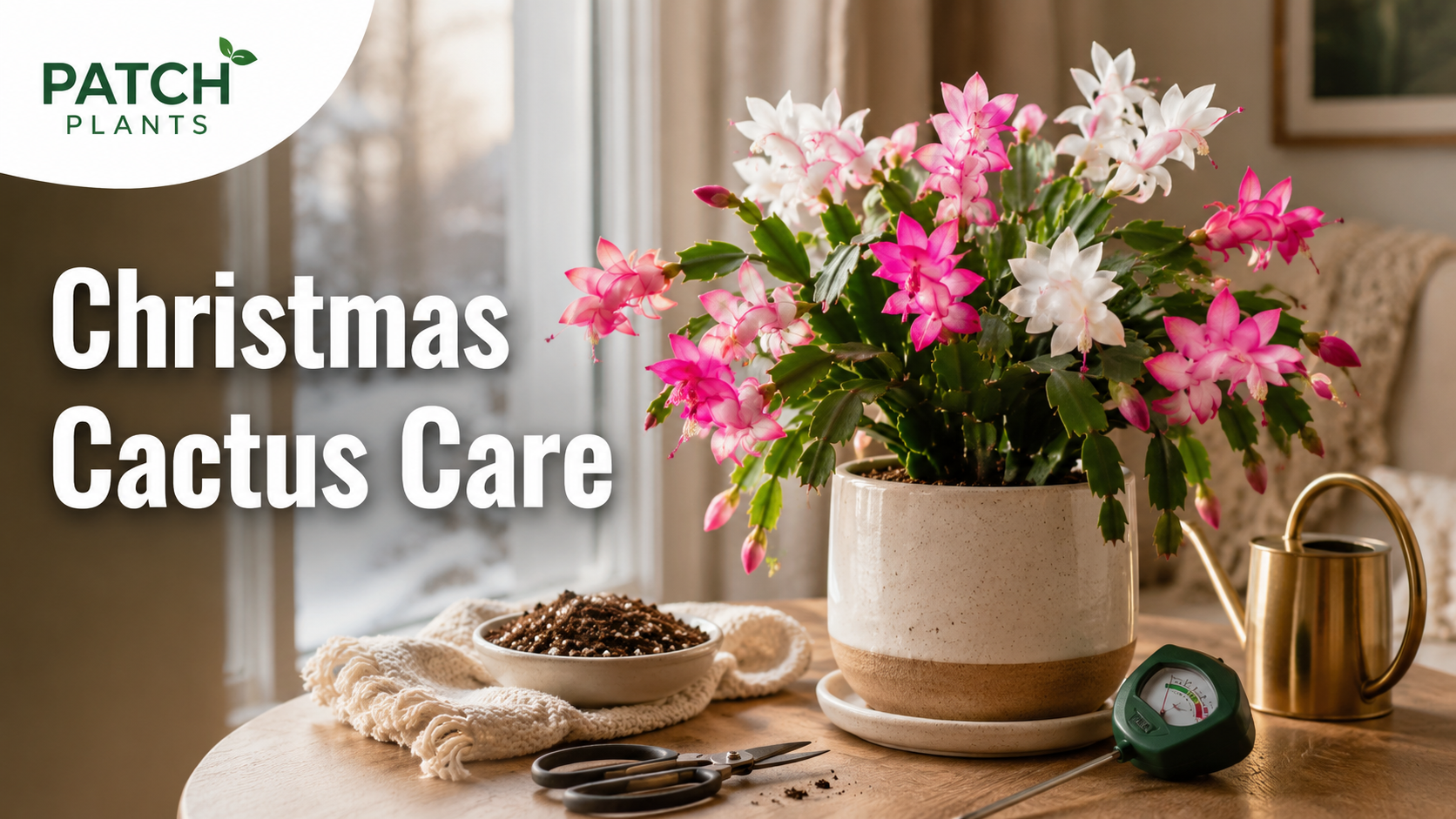
Christmas cactus care indoors is a little different from caring for desert cacti. A Christmas cactus is a tropical holiday cactus, so it prefers bright filtered light, steady moisture, humid air, and gentle indoor temperatures instead of harsh sun and long dry spells.
Get the light and water right first, and the rest becomes much easier. Too much sun can bleach or redden the segments. Too much water can rot the roots. Too little water during active growth can leave the plant limp and wrinkled. This guide explains the simple indoor routine that keeps a Christmas cactus healthy and helps it bloom again.
Care Snapshot
For the best Christmas cactus care indoors, place the plant in bright indirect light, water when the top layer of mix starts to dry, use a pot with drainage holes, keep humidity comfortable, and protect it from drafts, radiators, and hot afternoon sun. To encourage blooms, give it cooler nights and longer darkness for several weeks before the flowering season, then keep conditions steady once buds form.
Key Takeaways
- Christmas cactus care indoors starts with bright indirect light and careful watering.
- This plant is a tropical cactus, not a desert cactus, so it prefers more humidity and steadier moisture.
- Water when the top layer of mix begins to dry, then let excess water drain away.
- Use a well-draining potting mix and never let the pot sit in water.
- Cooler nights and longer darkness help trigger indoor blooms.
- Bud drop often comes from sudden changes, overwatering, dry soil, drafts, or moving the plant during bud formation.
- Use this guide with Christmas Cactus care tips, Christmas Cactus maintenance, and cactus care guide.
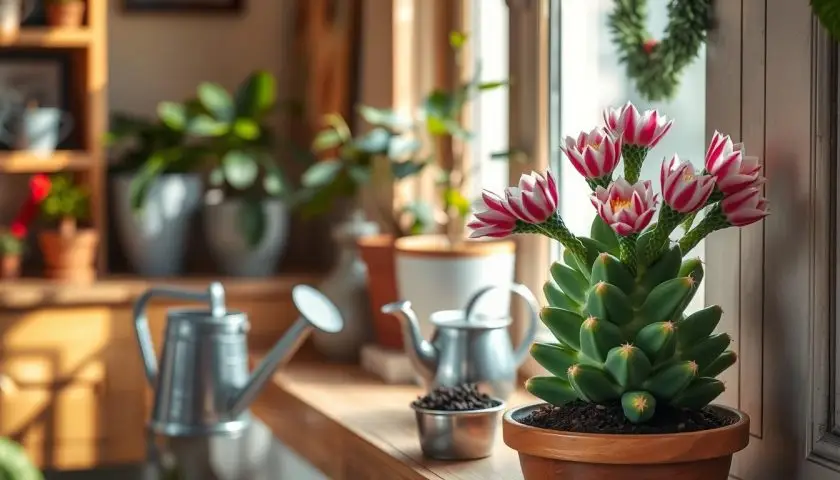
Christmas Cactus Indoor Care at a Glance
| Care Area | Best Choice | Common Mistake |
|---|---|---|
| Light | Bright indirect light | Hot afternoon sun through glass |
| Water | Water when the top layer begins to dry | Watering on a fixed calendar |
| Soil | Airy, well-draining mix | Dense soggy potting soil |
| Pot | Drainage holes and snug root space | Oversized pot with no drainage |
| Humidity | Moderate to higher indoor humidity | Dry air from winter heating |
| Feeding | Light feeding in active growth | Feeding during stress or rest |
| Blooming | Cooler nights and longer darkness before buds | Moving the plant after buds form |
Start With the Right Plant and Pot
A healthy Christmas cactus is easier to care for indoors. Look for firm green segments, clean joints, and a pot that drains well. A plant that starts with root rot, pests, or a waterlogged pot will struggle even in a good window.
Choose a healthy Christmas cactus
Pick a plant with plump, connected segments. The growth should look firm, not shrivelled, soft, or translucent. Check the joints carefully because pests often hide where the segments meet.
Check the pot before buying
A decorative cover pot is fine, but the inner nursery pot should have drainage holes. If water cannot leave the pot, roots can rot quickly.
Know what you bought
Many holiday cacti sold as Christmas cactus are actually Thanksgiving cactus or hybrid Schlumbergera plants. The care is very similar, so this indoor guide still works for most holiday cactus plants sold in winter.
Best Light for Christmas Cactus Indoors
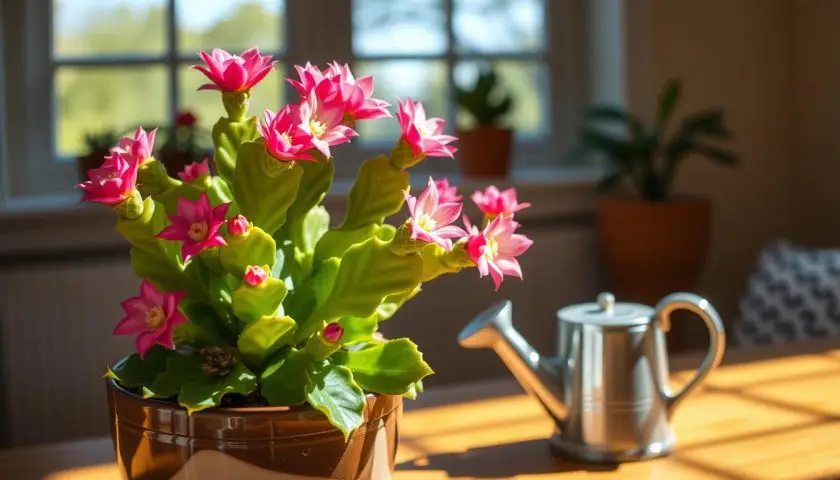
Christmas cactus light should be bright but filtered. In nature, holiday cacti grow with dappled light rather than all-day scorching sun. Indoors, that means they do best near a bright window without harsh direct afternoon heat.
Best indoor locations
- East-facing window with gentle morning light.
- Bright north-facing window if the room is not too dim.
- South-facing window behind a sheer curtain.
- West-facing window set back from hot afternoon sun.
- Bright shelf near a filtered window.
Signs of too much light
- Segments turn red, purple, or bronze.
- Growth looks pale or stressed.
- Edges look dry or scorched.
- Buds dry before opening.
- The plant wilts even though the soil is not fully dry.
Signs of too little light
- Long weak growth.
- Few or no blooms.
- Pale green segments.
- Leaning toward the window.
- Slow recovery after pruning or repotting.
Seasonal light tip
Winter light is weaker than summer light. A spot that is perfect in December may be too hot in July. Watch the plant through the year and move it slightly if the window light changes.
For more lighting help, read complete guide to indoor light, house plants that like direct sunlight, and office-friendly plants for artificial light.
How to Water Christmas Cactus Indoors
Watering Christmas cactus indoors is about timing, not a strict weekly schedule. The plant likes even moisture during active growth and bloom, but the roots still need oxygen.
The simple watering rule
Water when the top layer of potting mix begins to dry. Water thoroughly until excess drains from the bottom, then empty the saucer or cover pot. Do not leave roots sitting in water.
How to check moisture
- Push your finger into the top layer of mix.
- Use a wooden skewer to check deeper moisture.
- Lift the pot and notice whether it feels light or heavy.
- Use a moisture meter if you struggle with watering.
- Check more often during bloom and warm bright weather.
Watering by season
| Season or Stage | Watering Need | Care Tip |
|---|---|---|
| Spring growth | Water when top layer begins to dry | New growth needs steady moisture |
| Summer growth | Check more often in warm rooms | Bright light dries pots faster |
| Pre-bloom rest | Slightly drier, not bone dry | Avoid heavy watering during rest |
| Bud formation | Keep lightly consistent | Dry swings can cause bud drop |
| Flowering | Water regularly when needed | Do not let the plant wilt hard |
| After flowering | Reduce slightly while resting | Resume normal care with new growth |
Water quality
Room-temperature water is safest. Very cold water can shock roots, especially in winter. If your tap water is heavily mineralised, occasional flushing through the pot can help reduce salt buildup.
For watering support, read complete watering guide, worst times to water plants, and signs you are overwatering.
Overwatering vs Underwatering
Christmas cactus can look limp from both underwatering and overwatering. That is why checking the soil and roots matters before you react.
Overwatering signs
- Yellowing segments.
- Soft or mushy growth.
- Persistent wet potting mix.
- Sour smell from the pot.
- Black, brown, or mushy roots.
- Segments dropping while the soil is wet.
Underwatering signs
- Wrinkled segments.
- Limp, thin growth.
- Pot feels very light.
- Mix pulls away from the pot edge.
- Buds dry before opening.
- Plant perks up after a proper soak.
How to respond safely
If the mix is dry, water deeply and let the plant recover. If the mix is wet and the plant is limp, remove the pot from any standing water and check the roots. Wet soil plus limp growth often points to root trouble.
For symptom help, read yellow leaves on plants, leaf curl, browning and droop, and root rot guide.
Best Soil and Pot for Christmas Cactus
A Christmas cactus needs an airy mix that drains well but does not dry like desert cactus soil. Think “tropical cactus” rather than dryland cactus.
Good potting mix ingredients
- Quality indoor potting mix.
- Fine orchid bark for airflow.
- Perlite or pumice for drainage.
- A little compost or coco coir for moisture balance.
- Optional cactus mix blended with bark and regular potting mix.
Simple mix recipe
- 2 parts indoor potting mix.
- 1 part fine orchid bark.
- 1 part perlite or pumice.
Choose a snug pot
Christmas cactus often blooms better when slightly snug in its pot. Do not jump to a much larger container. Too much extra mix stays wet for too long and increases root rot risk.
Drainage matters
Use drainage holes every time. A pretty ceramic pot can be used as a cover pot, but always remove standing water after watering.
For more potting help, read best soil mix guide, how to repot a plant, and repotting mistakes to avoid.
Temperature and Humidity Indoors
Christmas cactus likes normal indoor warmth during active growth, but it dislikes sudden changes. Drafts, heat vents, cold windows, and radiator heat can all cause stress.
Best temperature range
A comfortable indoor range works well for normal growth. Keep the plant away from freezing windows, open doors, fireplaces, space heaters, and heating vents.
Humidity tips
- Group with other houseplants.
- Use a pebble tray without letting the pot sit in water.
- Run a humidifier in very dry rooms.
- Keep away from blasts of dry heat.
- Avoid misting flowers heavily because water can mark blooms.
Bathroom placement
A bright bathroom can suit Christmas cactus because humidity is higher, but only if the room has usable light and the pot does not stay soggy.
For humidity help, read humidity hacks without a humidifier, DIY humidity tray, misting for plants, and low light plants for bathroom.
Fertilizing Christmas Cactus Indoors
Christmas cactus does not need heavy feeding. Light feeding during active growth supports new segments and future flowering, but too much fertilizer can stress roots.
When to feed
- Feed lightly in spring and summer when new growth appears.
- Use a balanced houseplant fertilizer diluted according to the label.
- Water first if the mix is dry.
- Pause feeding during pre-bloom rest.
- Do not feed a plant with root rot or severe stress.
Signs of overfeeding
- Brown edges or tips.
- White crust on the soil surface.
- Weak soft growth.
- Root burn after fertilizing dry soil.
- No improvement despite frequent feeding.
For feeding basics, read fertilizing indoor vs outdoor plants.
How to Encourage Christmas Cactus Blooming Indoors
Christmas cactus blooming indoors depends on light, temperature, rest, and consistency. The plant needs a seasonal cue before it sets buds, then steady conditions while the buds develop.
Give a pre-bloom rest
Before flowering, move the plant into a cooler room with longer uninterrupted darkness at night. Keep the mix slightly drier than usual, but do not let the plant shrivel hard.
Do not interrupt dark nights
Bright room lights at night can interfere with bud formation. A spare room, cool windowsill, or darker evening location can help if the plant is not blooming.
Move carefully after buds appear
Once buds are visible, avoid moving the plant repeatedly. Sudden changes in light, temperature, or watering can cause bud drop.
Why your Christmas cactus is not blooming
| Reason | What It Looks Like | Fix |
|---|---|---|
| Too much evening light | Healthy plant with no buds | Give longer dark nights before bloom season |
| Room too warm | New growth but few buds | Use a cooler pre-bloom location |
| Low daytime light | Weak growth and no flowers | Move to brighter indirect light |
| Water stress | Buds dry or drop | Keep moisture steady once buds form |
| Plant moved too much | Buds fall after relocation | Keep conditions stable during bud stage |
For a month-by-month routine, read Christmas Cactus maintenance.
Prevent Christmas Cactus Bud Drop
Bud drop is frustrating because the plant may look healthy right before the buds fall. The usual cause is a sudden change during bud formation.
Common bud drop causes
- Moving the plant after buds form.
- Dry soil during bud development.
- Overwatering or soggy roots.
- Cold drafts near windows or doors.
- Heat vents or radiator blasts.
- Low humidity.
- Big light changes.
How to reduce bud drop
- Choose the display spot before buds get large.
- Keep watering steady, not extreme.
- Protect from drafts and dry heat.
- Do not rotate or relocate the pot constantly.
- Keep humidity comfortable.
- Do not repot while buds are forming.
Pruning Christmas Cactus Indoors
Prune after flowering, not during bud formation. Pruning helps shape the plant, encourages branching, and gives you cuttings for propagation.
How to prune
- Wait until flowers fade.
- Choose long, uneven, or weak sections.
- Twist segments gently at the joint or cut with clean scissors.
- Remove only what the plant can spare.
- Use healthy pieces for propagation.
How much to prune
Light pruning is enough for most indoor plants. Avoid cutting a stressed or recently repotted plant heavily.
For more pruning help, read pruning basics and how to clean plant leaves.
Propagating Christmas Cactus Cuttings
Christmas cactus is easy to propagate from healthy stem segments. The best time is after flowering or during active growth.
Simple propagation steps
- Take a cutting with 2 to 4 healthy segments.
- Let the cut end dry briefly so it calluses.
- Place the lower segment into lightly moist, airy mix.
- Keep in bright indirect light.
- Keep the mix lightly moist, not wet.
- Wait for new growth before treating it like an established plant.
Propagation mistakes
- Planting cuttings in soggy soil.
- Keeping cuttings in hot direct sun.
- Using rotting or weak segments.
- Pulling cuttings up repeatedly to check roots.
For more propagation and plant care support, read how to propagate houseplants and how to revive a dying plant.
Repotting Christmas Cactus Indoors
Christmas cactus does not need frequent repotting. In fact, a slightly snug root system can be fine. Repot only when the mix is exhausted, drainage is poor, or roots are badly crowded.
Signs it needs repotting
- Water runs straight through without soaking the mix.
- Roots circle tightly around the pot.
- Mix has become compacted or sour.
- The plant dries extremely fast.
- Growth slows despite good light and care.
How to repot safely
- Wait until after flowering.
- Choose a pot only slightly larger.
- Use fresh airy mix.
- Handle the root ball gently.
- Keep the plant at the same depth.
- Water lightly after repotting if the mix is dry.
- Keep in bright indirect light while it settles.
Common Christmas Cactus Problems Indoors
| Problem | Likely Cause | First Fix |
|---|---|---|
| Limp segments | Dry soil, root rot, heat stress, or old compacted mix | Check soil and roots before watering more |
| Wrinkled segments | Underwatering or poor root function | Water if dry, inspect roots if wet |
| Yellow segments | Overwatering, poor drainage, low light, or old growth | Review watering and drainage |
| Red or purple segments | Strong sun, cold stress, or water stress | Move to gentler light and stabilise care |
| No blooms | No cool/dark rest, low light, or too much warmth | Use a pre-bloom rest period |
| Bud drop | Sudden changes, drafts, dry soil, or overwatering | Keep conditions steady |
| Root rot | Soggy mix and poor drainage | Remove rot and repot into airy mix |
Limp Christmas cactus
A limp Christmas cactus may be dry, but it can also have damaged roots. If the soil is dry, water well. If the soil is wet, check for rot before adding more water.
Yellow segments
Yellowing often points to overwatering, poor drainage, low light, or root stress. Remove any dead pieces and improve the growing conditions.
Red or purple segments
Red or purple tones often appear when the plant is stressed by strong light, cold, or inconsistent watering. Move it to softer bright light and keep the care steady.
For related problem-solving, read yellow leaves on plants, why plant leaves turn yellow, leaf curl, browning and droop, and how to revive a dying plant.
Pests on Christmas Cactus
Christmas cactus can attract common houseplant pests, especially if it is crowded, dusty, stressed, or sitting near infested plants.
Common pests
- Mealybugs: White cottony clusters around joints and roots.
- Spider mites: Fine webbing and speckled segments in dry air.
- Scale: Small brown bumps on segments.
- Fungus gnats: Small flies around wet potting mix.
- Aphids: Soft insects on tender new growth or buds.
Simple pest routine
- Inspect joints and undersides of segments weekly.
- Isolate new or infested plants.
- Remove small pest clusters with a cotton swab or gentle wipe.
- Improve airflow around the plant.
- Let the top layer dry if fungus gnats appear.
- Use houseplant-safe treatment only when needed.
For plant hygiene and pest prevention, read how to clean plant leaves.
Christmas Cactus Care Calendar Indoors
| Season | Main Task | Care Tip |
|---|---|---|
| Late winter | Post-bloom rest | Water less often and remove spent flowers |
| Spring | New growth and pruning | Prune after flowering and start light feeding |
| Summer | Active growth | Keep in bright filtered light and water when needed |
| Early autumn | Bloom preparation | Use cooler nights and longer darkness |
| Late autumn | Bud setting | Avoid moving the plant or changing care suddenly |
| Winter | Flowering | Water regularly when the top layer dries |
For a full monthly schedule, read Christmas Cactus maintenance.
Christmas Cactus Indoor Care Checklist
| Task | How Often | What to Watch |
|---|---|---|
| Check light | Seasonally | Red, pale, or leggy segments |
| Check soil moisture | Before watering | Dry top layer or soggy mix |
| Empty saucer | After watering | Standing water |
| Inspect pests | Weekly | Mealybugs, scale, mites, fungus gnats |
| Feed | During active growth | Only when plant is healthy and growing |
| Prune | After flowering | Long, uneven, or weak growth |
| Repot | Only when needed | Root crowding or compacted mix |
Common Mistakes With Christmas Cactus Care Indoors
| Mistake | What Happens | Better Choice |
|---|---|---|
| Treating it like a desert cactus | Wrinkled segments and poor growth | Use steadier moisture and humidity |
| Putting it in hot direct sun | Red, pale, or scorched segments | Use bright indirect light |
| Watering on a fixed schedule | Root rot or dehydration | Check the mix first |
| Using a pot with no drainage | Soggy roots and yellowing | Use drainage holes |
| Moving the plant after buds form | Bud drop | Keep conditions steady |
| Skipping the cool/dark bloom cue | Few or no flowers | Give a pre-bloom rest period |
| Repotting during bloom | Stress and flower drop | Wait until after flowering |
Helpful PATCH Guides for Christmas Cactus Care Indoors
Use these related PATCH guides to improve light, watering, soil, humidity, blooming, cactus care, and common houseplant problem-solving.
Christmas Cactus and Cactus Guides
- Christmas Cactus care tips
- Christmas Cactus maintenance
- Cactus care guide
- Fishbone Cactus care
- Succulent care guide
- Cyclamen care
Indoor Light and Placement Guides
- Complete guide to indoor light
- House plants that like direct sunlight
- Low light house plants
- Small low light indoor plants
- Low light hanging plants
- Office-friendly plants
Blooming Houseplant Guides
- Blooming indoor plants
- House plants with white flowers
- Indoor plants with red flowers
- Indoor plants with orange flowers
- Goldfish Plant care
- Orchid care guide
- African Violet care guide
- Anthurium care guide
Watering, Soil and Humidity Guides
- Complete watering guide
- Worst times to water plants
- Signs you are overwatering
- Best soil mix guide
- How to repot a plant
- Repotting mistakes to avoid
- Fertilizing indoor vs outdoor plants
- Humidity hacks without a humidifier
- DIY humidity tray
- Misting for plants
Plant Problem Guides
- Plant Care hub
- Yellow leaves on plants
- Why plant leaves turn yellow
- Leaf curl, browning and droop
- Root rot guide
- How to revive a dying plant
- How to clean plant leaves
- Pruning basics
Indoor Plant Choice and Styling Guides
- Indoor Plants hub
- Best indoor plants for beginners
- Best indoor plants for first-time plant parents
- Best indoor plants for tiny apartments
- Tropical house plants
- Oversized indoor plants
- Trailing plants for shelves
- Style indoor plants by room
- Decorate your bedroom with plants
- Create an indoor jungle without overcrowding
Specific Indoor Plant Guides
- Hoya plant care guide
- Pothos plant care guide
- Philodendron care guide
- Peace Lily care guide
- How often to water Peace Lily
- Spider Plant care guide
- Spider Plant light requirements
- How to transplant a Spider Plant
- Snake Plant care guide
- Tall Snake Plant guide
- ZZ Plant care guide
- Dracaena care guide
- Rubber Plant care guide
- Fiddle Leaf Fig care guide
- Monstera care guide
- Calathea care guide
- Boston Fern care guide
- Bird of Paradise care guide
Frequently Asked Questions
How do you care for a Christmas cactus indoors?
Give it bright indirect light, water when the top layer of mix begins to dry, use a draining potting mix, keep humidity comfortable, protect it from drafts and heat vents, and give cooler longer nights before blooming.
Where should I place a Christmas cactus indoors?
Place it near an east-facing window, bright filtered window, or bright north-facing window. Avoid hot direct afternoon sun and cold drafty glass.
How often should I water Christmas cactus indoors?
Water when the top layer of potting mix begins to dry. The timing changes with light, season, temperature, humidity, and pot size.
Should Christmas cactus dry out completely?
No. It can dry slightly between watering, but it should not stay bone dry for long during active growth or bud formation.
Why is my Christmas cactus limp?
Limp growth can come from underwatering, overwatering, root rot, heat stress, or old compacted soil. Check whether the mix is dry or wet before watering again.
Why are my Christmas cactus segments turning red or purple?
Red or purple segments often point to stress from strong light, cold, or inconsistent watering. Move the plant to gentler bright light and stabilise care.
How do I make Christmas cactus bloom indoors?
Give it several weeks of cooler nights and longer uninterrupted darkness before bloom season. Once buds form, keep the plant in stable light, temperature, and moisture.
Why are buds falling off my Christmas cactus?
Bud drop can happen from sudden moves, drafts, dry soil, soggy soil, heat vents, low humidity, or rapid temperature changes.
When should I prune Christmas cactus?
Prune after flowering. Pinch or cut segments at the joints to shape the plant and encourage fuller growth.
When should I repot Christmas cactus indoors?
Repot after flowering or during active growth only when the plant is root-bound, the mix is compacted, or drainage is poor. Choose a pot only slightly larger.
Final Thoughts
Christmas cactus care indoors works best when you treat the plant like a tropical cactus, not a desert cactus. Give it bright indirect light, steady but careful watering, humid air, and a draining mix. Then use a cooler, darker rest period before bloom season to help it set buds.
RHS explains that Christmas cacti come from tropical rainforest conditions, prefer dappled light, warm humid air, regular watering, and need cooler, drier rest periods to encourage flowering: RHS guide to growing Christmas cactus.
For the best results, keep the plant away from hot sun, cold drafts, soggy soil, and sudden changes once buds appear. A steady indoor routine is usually enough to keep it healthy for many years.
Final Recap
Christmas cactus care indoors starts with bright indirect light, careful watering, and a draining potting mix. Place the plant near a bright filtered window, not in harsh afternoon sun. Water when the top layer of mix begins to dry, then let excess water drain away. Keep humidity comfortable, protect the plant from heat vents and cold drafts, and feed lightly during active growth. To encourage blooming, give the plant cooler nights and longer uninterrupted darkness before the flowering season, then keep conditions steady once buds form. Prune after flowering, propagate healthy segments if desired, and repot only when the mix is depleted or the roots are crowded. Watch for limp segments, yellowing, red or purple stress colour, bud drop, root rot, mealybugs, spider mites, and fungus gnats. With steady light, water, humidity, and seasonal bloom cues, a Christmas cactus can become a long-lived indoor plant.