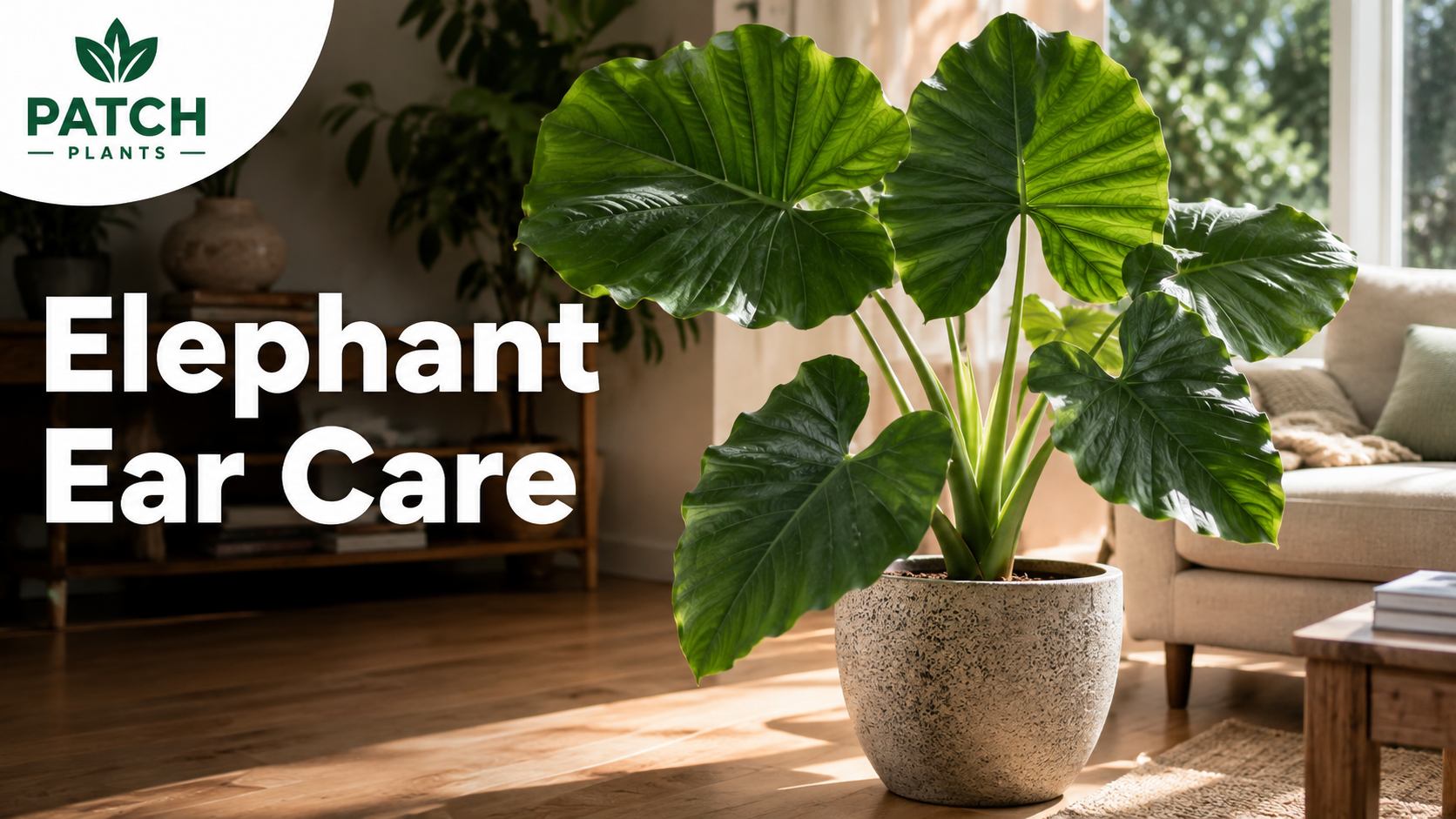
Elephant ear plant indoors care is all about balance: bright indirect light, steady moisture, warm air, high humidity, and safe placement away from pets and children. These dramatic tropical plants can look stunning in a living room, hallway, sunroom, or bright bedroom, but they are not the type of houseplant you can hide in a dark corner and forget.
Care Snapshot
An elephant ear plant indoors needs bright indirect light, lightly moist but well-drained soil, warm temperatures, and higher humidity. Water when the top inch of soil starts to dry, reduce watering in winter, and keep the plant away from cats, dogs, and small children because elephant ear plants contain irritating calcium oxalate crystals.
Key Takeaways
- Elephant ear plant indoors care works best in bright indirect light, not deep shade.
- Water when the top inch of soil begins to dry, then let excess water drain away.
- High humidity helps prevent crispy edges, curled leaves, and spider mite problems.
- Use a chunky, well-draining potting mix rather than heavy garden soil.
- Elephant ear plants are not pet-safe or child-safe if chewed or eaten.
- Yellow leaves can happen from overwatering, underwatering, low light, cold drafts, or natural leaf aging.
- This guide connects well with complete indoor light guidance, watering tips for healthy plants, and cat-friendly plant safety planning.
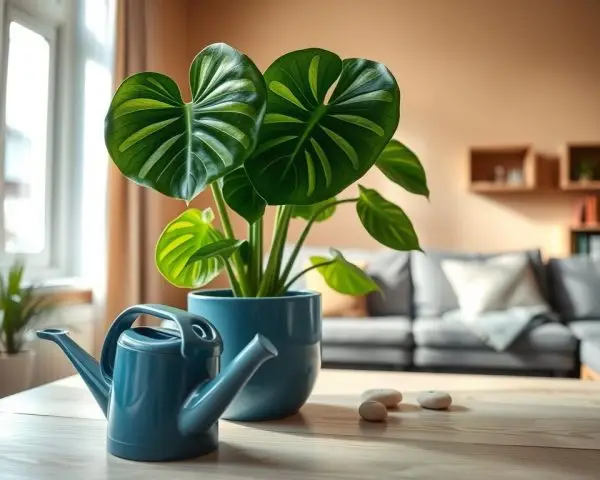
What Is an Elephant Ear Plant Indoors?
The name “elephant ear plant” is used for several large-leaved tropical plants, especially Alocasia, Colocasia, Xanthosoma, and sometimes Caladium. Indoors, people most often grow ornamental Alocasia types because many stay more manageable in pots and have bold arrow-shaped or shield-like leaves.
That name can be confusing because not all elephant ear plants behave exactly the same. Some prefer very moist conditions outdoors, while many indoor Alocasia types need moisture with good drainage. So this guide focuses on practical elephant ear plant care indoors for houseplant-style growing, especially Alocasia and similar tropical foliage plants.
If you enjoy bold indoor foliage, you may also like oversized indoor plants, statement plants for minimalist interiors, and indoor plants as natural room dividers.
Elephant Ear Plant Indoor Care at a Glance
| Care Area | Best Indoor Setup | Problem to Avoid |
|---|---|---|
| Light | Bright indirect light | Dark corners or harsh direct afternoon sun |
| Water | Water when top inch starts drying | Soggy soil or bone-dry roots |
| Humidity | Moderate to high humidity | Dry air near heaters or vents |
| Soil | Chunky, airy, well-draining mix | Heavy compact soil |
| Temperature | Warm, stable indoor conditions | Cold drafts and sudden drops |
| Safety | Out of reach of pets and children | Placing on the floor in busy homes |
Understanding the Tropical Nature of Elephant Ear Plants
An indoor elephant ear plant wants the feeling of a warm, sheltered tropical understory: bright filtered light, moisture, humidity, and protection from cold. That does not mean swampy soil indoors. It means the plant should never be left to collapse from dryness, but the roots should still have air.
Large leaves lose moisture quickly, especially in heated or air-conditioned rooms. That is why elephant ear plants often show stress through drooping leaves, crispy edges, or yellowing foliage. These symptoms can look dramatic, but they are usually the plant’s way of showing that light, water, humidity, or temperature needs adjusting.
Popular indoor elephant ear varieties
Several types can work indoors if you give them the right space and care. Common options include Alocasia amazonica, Alocasia Polly, Alocasia Regal Shields, Alocasia Zebrina, Alocasia Frydek, and Alocasia Wentii. Larger types need more room and stronger light, while compact types are easier for shelves, plant stands, and smaller homes.
Alocasia vs Colocasia indoors
Alocasia is usually the more common indoor elephant ear houseplant. Colocasia can also be grown in pots, but many types prefer more moisture and stronger outdoor growing conditions. If your plant came from a garden center labeled only “elephant ear,” check the leaf shape, growth habit, and care label before deciding how wet to keep it.
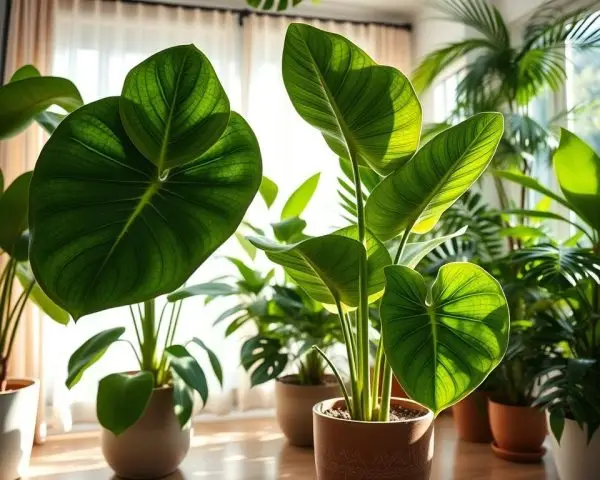
Best Light for Elephant Ear Plant Indoors
Elephant ear plant light is one of the biggest success factors. Indoors, aim for bright indirect light. A spot near an east-facing window, a filtered south-facing window, or a bright room with sheer curtains can work well.
Too little light causes weak growth, smaller leaves, leaning stems, slow soil drying, and a higher risk of overwatering. Too much harsh direct sun can scorch the foliage, especially through hot glass in summer.
Best indoor positions
- Near an east-facing window with gentle morning sun.
- A few feet back from a bright south or west window.
- Beside sheer curtains where the light is strong but filtered.
- In a bright bathroom if there is a real window and enough space.
- Under a grow light if your home lacks natural light.
Signs your elephant ear plant needs more light
- New leaves are smaller than older leaves.
- Stems stretch or lean heavily toward the window.
- Soil stays wet for too long after watering.
- The plant produces very little new growth.
- Leaves yellow even though watering seems careful.
Signs the light is too strong
- Brown or bleached patches appear on leaves.
- Leaf edges dry quickly after sun exposure.
- The plant wilts during the hottest part of the day.
- Leaves feel thin, papery, or scorched.
For more help choosing the right window, read complete guide to indoor light, low light house plants, and office-friendly plants for artificial lighting.
How to Water an Elephant Ear Plant Indoors
Elephant ear plant watering should keep the plant evenly comfortable, not soaked. During active growth, water when the top inch of potting mix begins to dry. Water deeply enough that moisture reaches the roots, then let all excess water drain away.
The most common mistake is watering by schedule only. A plant in a warm bright room may need water more often than one in a cooler room. A large plant in a terracotta pot may dry faster than a small plant in a plastic pot. Always check the soil first.
Simple watering routine
- Push your finger about one inch into the soil.
- If it feels slightly dry, water thoroughly.
- If it feels wet or cool, wait and check again later.
- Let water drain through the pot.
- Empty the saucer after watering.
Summer watering
In spring and summer, indoor elephant ear plants usually grow faster and use more water. Check them more often during warm weeks, especially if the plant is near a bright window.
Winter watering
In winter, growth often slows. Some elephant ear plants become semi-dormant or drop leaves. Reduce watering and avoid feeding heavily during this slower phase. The plant may need much less water than it did in summer.
Overwatering signs
- Yellow lower leaves.
- Soft stems.
- Musty soil smell.
- Soil staying wet for many days.
- Root rot or black mushy roots.
Underwatering signs
- Leaves droop and feel limp.
- Leaf edges turn crispy.
- Soil pulls away from the pot edges.
- New leaves struggle to unfurl.
- The whole plant collapses but perks up after watering.
For watering support, use complete watering guide, worst times to water your plants, and signs you are overwatering.
Best Soil and Potting Mix for Elephant Ear Plant Indoors
An indoor elephant ear plant needs a mix that holds some moisture but drains well. Heavy garden soil is a bad choice indoors because it compacts, holds too much water, and limits oxygen around the roots.
A good mix feels loose and springy. It should not turn into a dense wet block after watering. If your current mix stays wet for too long, repotting into a chunkier blend can make care much easier.
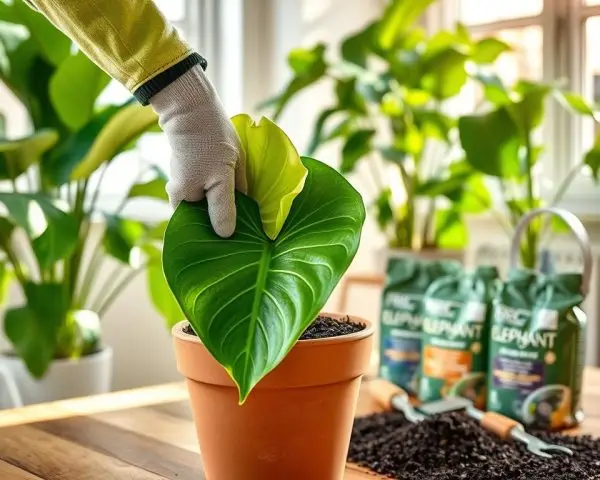
Good potting mix ingredients
- High-quality indoor potting mix.
- Perlite or pumice for drainage.
- Orchid bark for chunkiness and airflow.
- Coco coir or peat-free moisture-retentive material.
- A little compost if the mix still drains freely.
Simple soil recipe
Use this easy blend for elephant ear plant care indoors:
- 2 parts indoor potting mix.
- 1 part perlite or pumice.
- 1 part orchid bark or chunky aroid mix.
Choose the right pot
Always use a pot with drainage holes. Elephant ear plants like moisture, but indoor pots without drainage are a root rot risk. If you love decorative pots, keep the plant in a nursery pot and place that inside the decorative cover pot.
For more help, read best soil mix for every plant type, how to repot a plant, and repotting mistakes to avoid.
Humidity and Temperature for Indoor Elephant Ear Plants
Humidity matters because elephant ear plants have large tropical leaves. Dry indoor air can lead to brown edges, stuck new leaves, spider mite problems, and tired-looking foliage.
Best humidity methods
- Use a small humidifier near the plant.
- Group tropical plants together.
- Place the pot on a pebble tray without letting roots sit in water.
- Grow it in a bright bathroom if the room has enough light.
- Keep it away from radiators, heaters, and dry air vents.
Temperature tips
Keep your elephant ear plant in a warm, stable room. Avoid cold drafts, open winter windows, unheated conservatories, and direct blasts from heating or cooling vents. Sudden temperature swings can cause drooping, yellowing, or leaf drop.
Bathroom placement
A bathroom can work if it has real natural light. Humidity helps, but humidity alone is not enough. A windowless bathroom is usually too dark unless you use a grow light. For bathroom plant ideas, read best bathroom plants, plants for bathroom with no light, and bathroom plants for mold.
For humidity help, read humidity hacks without a humidifier and DIY indoor humidity tray.
Feeding an Elephant Ear Plant Indoors
Elephant ear plants can be hungry during active growth because large leaves take energy to produce. Feed lightly during spring and summer with a balanced houseplant fertilizer. Do not overfeed, and do not feed heavily when the plant is dormant or stressed.
Spring and summer feeding
Feed every few weeks at a diluted strength, or follow the product instructions carefully. If the plant is actively producing leaves, it can usually use gentle feeding.
Autumn and winter feeding
Reduce or stop feeding when growth slows. A plant in lower winter light does not use fertilizer the same way it does in summer. Extra fertilizer can build up in the soil and stress roots.
Signs of too much fertilizer
- Brown leaf tips.
- White crust on soil surface.
- Weak or distorted new growth.
- Sudden root stress after feeding.
For more detail, read fertilizing indoor vs outdoor plants.
Elephant Ear Plant Safety: Pets, Children and Skin Irritation
Elephant ear plant safety is important. These plants contain calcium oxalate crystals, which can irritate the mouth, throat, skin, and digestive system if the plant is chewed or handled carelessly. They are not a good choice for homes where pets or toddlers chew plants.
Keep it away from pets
Do not place an elephant ear plant on the floor if you have cats, dogs, rabbits, or other curious pets. A large plant may look beautiful in a floor planter, but that is also where pets can reach leaves and stems easily.
Keep it away from children
Place the plant in a room or raised position where young children cannot touch, pull, or chew it. The leaves are large and tempting, so do not rely on warnings alone.
Wear gloves when pruning or repotting
Wear gloves when cutting leaves, dividing rhizomes, or repotting. Wash your hands and tools afterward, especially before touching your face or food.
Safer placement ideas
- Bright adult-only office.
- Plant stand in a low-traffic room.
- Sunroom with pet access blocked.
- Bedroom corner away from children and animals.
- High light room where the plant is visible but unreachable.
If pet safety is your main concern, start with how to make your plants cat-friendly, how to make your plants dog-friendly, and best indoor plants for first-time plant parents.
How to Prune and Clean Elephant Ear Plant Leaves
Large elephant ear leaves collect dust quickly. Dust blocks light, makes the plant look dull, and can hide pests. Clean leaves gently with a damp soft cloth. Support the leaf from underneath so it does not tear.
When to prune
Prune leaves that are fully yellow, badly damaged, diseased, or collapsing. Do not remove every imperfect leaf too early. A leaf with one brown edge can still feed the plant.
How to prune safely
- Wear gloves.
- Use clean, sharp pruning shears.
- Cut the damaged stem close to the base.
- Do not rip or twist leaves off.
- Clean your tools afterward.
For more support, use pruning basics and how to clean plant leaves without damaging them.
Common Problems with Elephant Ear Plant Indoors
Most indoor elephant ear plant problems come from light, water, humidity, temperature, or pests. The plant is expressive, so it often shows stress quickly.
Yellow leaves
Yellow leaves can mean overwatering, underwatering, cold stress, low light, root problems, or normal older leaf aging. Check the newest leaves, soil moisture, pot drainage, and room conditions before reacting.
Drooping leaves
Drooping can happen when the plant is too dry, too wet, too cold, recently repotted, or placed in weak light. If the soil is dry, water it. If the soil is wet, check drainage and roots.
Brown edges
Brown edges often point to dry air, inconsistent watering, fertilizer buildup, direct sun scorch, or root stress. Increase humidity, flush the soil occasionally, and check that the plant is not too close to heat.
Leaves not unfurling
Stuck leaves usually mean low humidity, inconsistent watering, or stress. Do not force leaves open. Improve humidity and moisture consistency.
Leaf scorch
Bleached or crispy patches usually come from harsh direct sun. Move the plant back from the window or add a sheer curtain.
Root rot
Root rot happens when roots stay wet without enough oxygen. If the plant smells bad, wilts in wet soil, or has mushy roots, remove it from the pot, trim rotten roots, and repot into fresh draining mix.
For problem-solving, read why plant leaves turn yellow, leaf curl, browning and droop, root rot guide, and how to revive a dying plant.
Common Pests on Indoor Elephant Ear Plants
Elephant ear plants can attract pests, especially when the indoor air is dry or the plant is stressed. Check the undersides of leaves, stems, and new growth weekly.
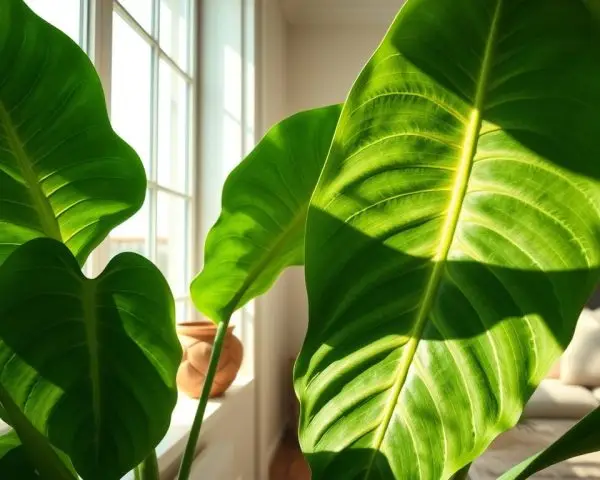
Spider mites
Spider mites are common in dry indoor air. Look for tiny specks, fine webbing, dull leaves, or stippled damage. Increase humidity, rinse foliage, and isolate the plant if needed.
Mealybugs
Mealybugs look like small white cottony clusters. They hide around stems, leaf joints, and new growth. Remove them early before they spread to nearby plants.
Scale
Scale insects look like small brown or tan bumps. They can be stubborn because they attach tightly to stems and leaves.
Fungus gnats
Fungus gnats are usually a sign that soil is staying too wet. Let the top layer dry more between watering and improve drainage.
For pest support, read how to keep pests away from outdoor plants and plants that keep bugs away.
Repotting Elephant Ear Plant Indoors
Repot your elephant ear plant when roots crowd the pot, soil breaks down, water runs straight through without soaking, or the plant becomes too top-heavy. Spring is usually the best time because the plant is moving into active growth.
Signs it needs repotting
- Roots circle the pot tightly.
- The plant dries out too fast.
- The pot tips over easily.
- Growth slows despite good care.
- Soil has become compacted or sour-smelling.
How to repot safely
- Wear gloves.
- Choose a pot one size larger.
- Use fresh chunky potting mix.
- Lift the root ball carefully.
- Remove rotten roots if present.
- Plant at the same depth.
- Water lightly and keep conditions stable.
Propagating Elephant Ear Plant Indoors
Elephant ear plants are usually propagated by division, not by leaf cuttings. If the plant forms offsets, corms, tubers, or rhizome sections, these can be separated and potted individually.
Best time to propagate
Spring or early summer is best because the plant has warmth and light to recover. Avoid dividing a weak, dormant, or pest-stressed plant.
Basic division method
- Remove the plant from its pot carefully.
- Look for natural offsets or separate growing points.
- Use clean tools if you need to cut.
- Make sure each division has roots or a healthy growth point.
- Pot divisions into a moist, draining mix.
- Keep them warm, humid, and bright but not scorched.
For more propagation guidance, read how to propagate houseplants.
Should Beginners Grow Elephant Ear Plant Indoors?
An elephant ear plant indoors is not the easiest beginner plant, but it is manageable if you understand its needs. It is better for someone who can check soil moisture, provide bright light, and manage humidity.
Good for you if:
- You have a bright room.
- You enjoy tropical foliage plants.
- You can keep pets and children away.
- You do not mind occasional yellow leaves.
- You are willing to monitor watering and humidity.
Not ideal if:
- Your home is dark.
- You travel often and forget watering.
- Your pets chew plants.
- You want a very low-maintenance houseplant.
- You dislike plants that may go semi-dormant in winter.
For easier options, read best indoor plants for beginners, low-maintenance plants that thrive, and best indoor plants for first-time plant parents.
Best Rooms for an Elephant Ear Plant Indoors
| Room | Works Well If | Watch Out For |
|---|---|---|
| Living room | Bright filtered window and enough floor space | Pets, children, heating vents |
| Bedroom | Warm room with bright indirect light | Cold windows in winter |
| Bathroom | Real window and high humidity | No-light bathrooms |
| Home office | Bright stable conditions | Dry air from electronics or AC |
| Sunroom | Filtered light and warmth | Overheating or cold night drops |
For styling ideas, read how to style indoor plants by room, decorate your bedroom with plants, and create an indoor jungle without overcrowding.
Elephant Ear Plant Indoor Care Checklist
| Task | How Often | What to Check |
|---|---|---|
| Check light | Seasonally | Move closer to light in winter if needed |
| Check soil moisture | Every few days | Water when top inch starts drying |
| Empty saucer | After every watering | No standing water under pot |
| Clean leaves | Every 2 to 4 weeks | Dust, pests, stuck new leaves |
| Inspect pests | Weekly | Undersides of leaves and stems |
| Feed lightly | Spring and summer | Only when plant is actively growing |
| Check safety placement | Any time you move it | Pets and children cannot reach it |
Helpful PATCH Guides for Indoor Elephant Ear Plant Care
Use these related PATCH guides to support better light, watering, humidity, safety, styling, and plant problem-solving.
Indoor Plant Guides
- Indoor Plants hub
- Best indoor plants for tiny apartments
- Best indoor plants for beginners
- Best indoor plants for first-time plant parents
- Low-maintenance plants that thrive
- Oversized indoor plants
- Statement plants for minimalist interiors
- Unusual indoor plants
- Rare houseplants
- Colorful foliage indoor plants
Light, Water and Soil Guides
- Complete guide to indoor light
- Complete watering guide
- Worst times to water plants
- Signs you are overwatering
- Best soil mix guide
- How to repot a plant
- Repotting mistakes to avoid
- Self-watering pots guide
Plant Problem Guides
- Root rot guide
- How to revive a dying plant
- Leaf curl, browning and droop
- Why plant leaves turn yellow
- How to clean plant leaves
- Pruning basics
- How to propagate houseplants
Humidity and Bathroom Guides
- Humidity hacks without a humidifier
- DIY humidity tray
- Best bathroom plants
- Plants for bathroom no light
- Bathroom plants for mold
- Low-light hanging plants
Pet and Family Safety Guides
- How to make your plants cat-friendly
- How to make your plants dog-friendly
- First-time plant parent guide
- Low-maintenance plant guide
Styling and Home Guides
- Style indoor plants by room
- Decorate your bedroom with plants
- Create an indoor jungle without overcrowding
- Trailing plants for shelves
- Indoor plants as natural room dividers
- Scandi home with plants
- Feng Shui indoor plants
Specific Indoor Plant Guides
- Bird of Paradise care guide
- Calathea care guide
- Philodendron care guide
- Monstera care guide
- Rubber Plant care guide
- Fiddle Leaf Fig care guide
- Hoya care guide
- Pothos care guide
- Peace Lily care guide
- Snake Plant care guide
- ZZ Plant care guide
- Spider Plant care guide
- Boston Fern care guide
- Dracaena care guide
- Anthurium care guide
- African Violet care guide
- Orchid care guide
- Carnivorous plant terrarium setup
- Moss pole for plants
Frequently Asked Questions
Can an elephant ear plant grow indoors?
Yes. An elephant ear plant can grow indoors if it gets bright indirect light, warm temperatures, higher humidity, a draining potting mix, and careful watering.
What is the best light for elephant ear plant indoors?
Bright indirect light is best. Gentle morning sun may be fine, but harsh direct afternoon sun can scorch the leaves.
How often should I water an elephant ear plant indoors?
Water when the top inch of soil starts to dry. Keep the soil lightly moist during active growth, but do not let the pot sit in standing water.
Why is my elephant ear plant drooping indoors?
Drooping can happen from underwatering, overwatering, cold drafts, low humidity, weak light, or transplant shock. Check the soil moisture first, then review the plant’s light and temperature.
Why are my elephant ear plant leaves turning yellow?
Yellow leaves can come from too much water, too little water, poor drainage, cold air, low light, or natural older leaf aging. If several leaves yellow quickly, check the roots and watering routine.
Is elephant ear plant toxic to pets?
Yes. Elephant ear plants contain calcium oxalate crystals and should be kept away from cats, dogs, rabbits, and other pets that may chew leaves or stems.
Is elephant ear plant safe for children?
No, it should be treated as unsafe around young children. Keep it out of reach because chewing or handling damaged plant tissue can cause irritation.
Should I mist my elephant ear plant indoors?
Misting gives only short-term moisture and does not replace real humidity. A humidifier, pebble tray, or plant grouping is usually more useful.
Can elephant ear plants grow in low light?
They may survive for a while in lower light, but they usually grow weakly, produce smaller leaves, and become easier to overwater. Bright indirect light is much better.
Final Thoughts
Elephant ear plant indoors care is not difficult once you understand the plant’s pattern. Give it bright filtered light, warm air, moisture with drainage, and enough humidity to support those huge tropical leaves. Most problems begin when the plant is placed too dark, watered too heavily, exposed to cold, or kept in dry air for too long.
RHS notes that Alocasias need bright but indirect light, warm temperatures, humid air in the growing season, and safer handling because they contain calcium oxalate crystals: RHS Alocasia plant guide.
For the best results, treat your elephant ear plant like a tropical statement plant, not a low-effort background plant. Check it often, rotate it toward the light, keep the leaves clean, and place it safely away from pets and children.
Final Recap
An elephant ear plant indoors needs bright indirect light, careful watering, warm temperatures, higher humidity, and a chunky potting mix with strong drainage. Water when the top inch of soil starts to dry, reduce watering in winter, and avoid cold drafts. Watch for yellow leaves, drooping, brown edges, spider mites, and root rot. Keep this plant away from pets and children because it contains irritating calcium oxalate crystals. With the right room and routine, elephant ear plants can become bold, tropical statement plants for bright indoor spaces.