
Key Takeaways
- Feng Shui indoor plants are used to bring greenery, balance, intention, and symbolic meaning into the home.
- Lucky bamboo feng shui styling is often linked with growth, flexibility, good luck, and prosperity.
- A feng shui money plant, such as money tree or jade plant, is commonly used as a symbol of wealth, stability, and abundance.
- Good luck plants indoor should still be chosen for real light, space, watering needs, and room function.
- The best lucky plants are healthy plants. A struggling plant does not support a calm, balanced home.
Introduction
Feng Shui indoor plants are popular because they combine two things people already want at home: a calmer space and more meaningful decor. A plant can soften a corner, brighten a room, and make a home feel more alive. When you add Feng Shui symbolism, that plant also starts to feel intentional.
Some people search for a plant for good luck. Others want a feng shui money plant, lucky bamboo, a prosperity flower, or lucky plants for front door entrance. The goal is usually the same: to create a home that feels balanced, welcoming, and positive.
It is important to be practical too. Feng Shui traditions can guide placement and symbolism, but plants are still living things. They need light, water, drainage, and steady care. The best good luck plants indoor are not just symbolic. They are plants that can stay healthy in your actual home.
This guide covers lucky bamboo feng shui, jade plant feng shui, money tree meaning, feng shui flowers, good luck flowers, spiritual plants, succulent plant symbolism, and where to put lucky bamboo in home. For more indoor styling support, read how to style indoor plants by room, statement plants for minimalist interiors, and indoor plants as natural room dividers.
What Feng Shui Means for Indoor Plants
Feng Shui is a traditional Chinese practice focused on arranging spaces in a way that supports harmony, balance, and flow. In home styling, plants are often used because they represent life, growth, renewal, and the wood element.
Feng Shui indoor plants are not about buying random greenery and hoping for luck. They are about choosing plants with purpose. A money tree may represent prosperity. Lucky bamboo may represent flexibility and upward growth. Peace lily may represent calm. Snake plant may be used for protective energy when placed thoughtfully.
Still, the rule is simple: choose healthy plants and place them where they can thrive. A plant that is yellowing, dusty, root-bound, or dying will not create the feeling of positive energy, no matter how symbolic it is.
How to Choose Feng Shui Indoor Plants
When choosing lucky plants, balance symbolism with care. A plant may be famous in Feng Shui, but if your room is too dark or dry for it, it will struggle.
Use this quick checklist:
- Light: Match the plant to the room’s natural light.
- Shape: Rounded leaves usually feel softer, while upright leaves feel stronger and more protective.
- Health: Choose plants with clean leaves, firm stems, and no pests.
- Placement: Put plants where they do not block movement or clutter the room.
- Meaning: Choose a plant that reflects what you want to encourage, such as calm, growth, luck, or prosperity.
- Maintenance: Pick plants you can realistically care for.
If you are new to indoor plants, start with best indoor plants for first-time plant parents or best indoor plants for beginners.
17 Best Feng Shui Indoor Plants for Luck, Calm, and Prosperity
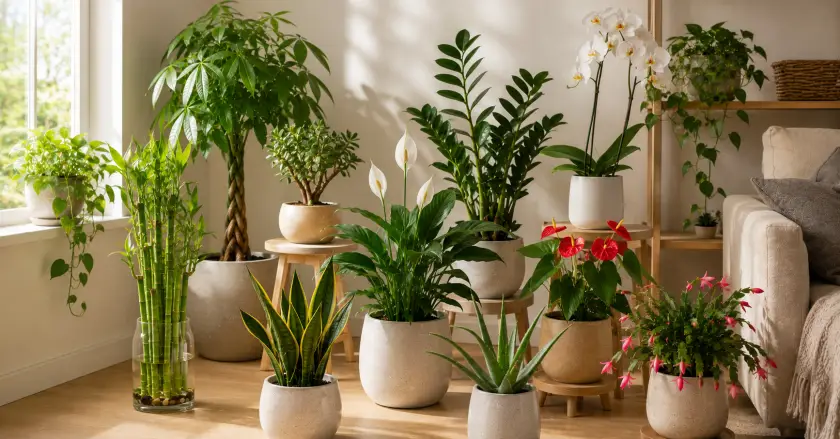
1. Lucky Bamboo
Lucky bamboo feng shui is one of the most searched plant topics for good reason. It is simple, symbolic, easy to display, and strongly linked with good fortune in many Feng Shui-inspired homes.
Lucky bamboo is often used as a lucky bamboo house plant for desks, entry tables, shelves, and living rooms. It is commonly associated with resilience, flexible growth, and prosperity. This is why people also search for fortune bamboo feng shui, lucky bamboo and feng shui, lucky bamboo in feng shui, and lucky bamboo plant feng shui.
Lucky bamboo plant meaning often depends on the number of stalks. In popular Feng Shui practice, different stalk numbers can be used to represent love, happiness, health, wealth, or blessings. Whether you follow those meanings closely or not, the plant itself is a clean and simple way to add upright green energy.
Lucky bamboo plants can grow in water or soil, but they still need clean water, indirect light, and care. If you use lucky bamboo potted plants, make sure the pot supports drainage and root health.
2. Money Tree
The money tree is one of the most popular feng shui money plant choices. It is also known by some people as a Chinese fortune tree because of its connection with prosperity, abundance, and financial intention.
A money tree works well in a living room, home office, entryway, or bright corner. Its braided trunk and soft leaves make it feel decorative without being too formal.
If you want a good luck tree that looks modern indoors, money tree is a strong choice. It also works well for people who want good luck plants indoor but do not want a plant that feels too delicate.
For care, read the money tree care guide.
3. Jade Plant
Jade plant feng shui is strongly linked with prosperity because the rounded leaves are often seen as coin-like. This makes jade one of the classic lucky plants for wealth corners, desks, and business spaces.
Jade plant is also part of the wider conversation around succulent plant symbolism. Many succulents represent endurance, stored energy, and resilience because they hold water in their leaves.
The spiritual meaning of succulent plants is often connected with patience, protection, and strength. In practical terms, jade plants also teach restraint because they prefer bright light and careful watering.
For care, read the jade plant care guide.
4. Peace Lily
Peace lily is a calm choice for Feng Shui indoor plants. It is often used where people want softness, peace, and a cleaner visual feeling.
Its white flowers make it a good option if you want a good luck flower that also looks elegant indoors. It can work in bedrooms, living rooms, home offices, and bathrooms with enough light.
Peace lily is also a useful happiness plant for people who want a peaceful corner without bright colour. Keep it away from pets, and avoid overwatering.
For care, read the peace lily care guide.
5. Snake Plant
Snake plant has strong upright leaves, which makes it useful when you want structure and protection in a room. In Feng Shui-inspired styling, it is often used carefully because the shape is sharp but powerful.
It can work near entrances, offices, hallways, or corners where you want a clear vertical plant. It is also one of the easiest plants for beginners because it handles lower light and missed watering better than many houseplants.
If you want a low-maintenance lucky plant for a modern home, snake plant is one of the safest choices.
For care, read the snake plant care guide.
6. Pothos
Pothos is often used as a feng shui money plant alternative because it grows quickly, trails beautifully, and symbolises steady growth. It is also a practical plant for apartments, shelves, and small rooms.
Its heart-shaped leaves make it feel softer than sharper plants. It works well in a home office, kitchen, living room, or plant shelf.
Pothos is also one of the easiest good luck plants indoor for beginners because it forgives small watering mistakes and can be pruned easily.
For care, read the pothos care guide.
7. ZZ Plant
ZZ plant is a strong choice when you want a calm, polished, low-maintenance plant. Its glossy leaves and steady growth make it feel stable and grounded.
In Feng Shui-inspired rooms, ZZ plant is often used where you want quiet strength without visual clutter. It works especially well in offices, bedrooms, entryways, and low-light corners.
If you want plants that are good for you because they are easy, clean-looking, and stress-free to care for, ZZ plant is a smart pick.
For care, read the ZZ plant care guide.
8. Rubber Plant
Rubber plant has large rounded leaves, which makes it a strong modern choice for wealth, growth, and stability symbolism. Its glossy leaves also look elegant in minimalist and Scandi interiors.
Use it as a statement plant in a living room, office, or entryway. It works well when you want one larger plant rather than many small pots.
For modern styling, pair it with statement plants for minimalist interiors and Scandi home with plants.
For care, read the rubber plant care guide.
9. Orchid
Orchids are popular feng shui flowers because they are often linked with beauty, refinement, love, and harmony. Their elegant flowers make them useful for bedrooms, dressing tables, living rooms, or calm workspaces.
An orchid can work as a flower for good luck when you want something graceful rather than leafy. It also suits simple interiors because one flowering stem can feel complete on its own.
For care, read the orchid care guide.
10. Anthurium
Anthurium is another bold flowering plant that can work as a prosperity flower. Its heart-shaped, glossy blooms bring colour, warmth, and confident energy to a space.
It can be used in a living room, office, or bright entry area if the light is suitable. Red anthuriums feel especially strong, while pink and white varieties feel softer.
For care, read the anthurium care guide.
11. Aloe Vera
Aloe vera is one of the most recognised spiritual plants because it is often associated with healing, protection, and resilience. Its upright succulent leaves also make it useful for bright kitchens, shelves, and sunny windows.
When people ask about the spiritual meaning of succulent plants, aloe is often part of the answer. It stores water, survives dry spells, and has a strong protective shape.
Use aloe in bright light, and do not overwater it. For wider succulent help, read the succulent care guide.
12. Christmas Cactus
Christmas cactus is not always listed in traditional Feng Shui plant lists, but it can work beautifully as a symbolic seasonal plant. Its winter blooms bring colour when many homes feel darker and quieter.
It can act as a wishing plant for people who enjoy seasonal rituals, gift plants, or meaningful flowering plants. Its blooms also make it one of the more cheerful good luck flowers for winter interiors.
For care, read the Christmas cactus care guide.
13. African Violet
African violet is a compact flowering plant that can work as a soft good luck flower for windowsills, shelves, desks, and small apartments.
Its rounded leaves and delicate blooms create gentle energy rather than bold drama. It is a good option when you want colour but do not have room for a large flowering plant.
For care, read the African violet care guide.
14. Hoya
Hoya is a slow-growing trailing or climbing plant with waxy leaves. It works well when you want a plant that feels quiet, long-lasting, and symbolic of patience.
Some hoyas produce clusters of star-shaped flowers, making them a subtle option for people who want Feng Shui flowers without a large flowering plant.
Use hoya on shelves, hanging planters, or bright ledges. For care, read the hoya care guide.
15. Dracaena
Dracaena is useful for upright energy, especially in corners, offices, and entryways. It has a structured shape without becoming too visually heavy.
Lucky bamboo is also commonly sold under the Dracaena family, which is one reason dracaena-style plants are often connected with lucky bamboo potted plants and fortune bamboo feng shui.
For care, read the dracaena care guide.
16. Peperomia
Peperomia is a small, rounded, friendly plant that works well in apartments and desks. It can be a simple lucky plant for people who want greenery without large leaves or heavy maintenance.
Its compact shape also makes it ideal for small rooms, shelves, and plant groupings. Use it in a ceramic pot for a soft, balanced look.
For small-space ideas, read best indoor plants for tiny apartments.
17. Citrus Plant
Small indoor citrus plants are often used in luck and prosperity styling because fruiting plants can represent abundance and freshness. They can also work as lucky plants for front door entrance when the entrance is bright and protected.
Citrus plants need strong light, so they are not right for dark rooms. If your home has enough sun, a small lemon or calamondin plant can bring a bright, cheerful feeling.
Use citrus only where you can meet its care needs. A healthy smaller plant is better than a struggling symbolic one.
Lucky Bamboo Feng Shui: Meaning and Placement
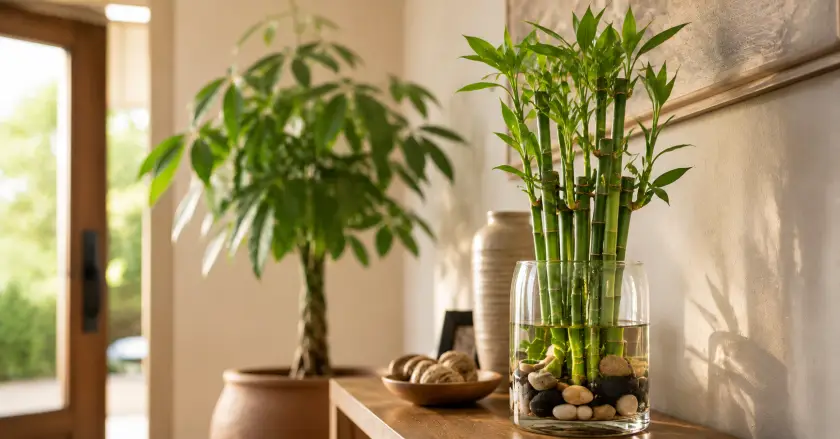
Lucky bamboo feng shui deserves its own section because so many people use it as a quick good luck plant. It is clean, upright, easy to display, and widely used in homes and offices.
People search many versions of this plant: lucky bamboo and feng shui, lucky bamboo in feng shui, lucky bamboo plant feng shui, fortune bamboo feng shui, lucky bamboo house plant, lucky bamboo plants, and lucky bamboo potted plants. They all point to the same idea: a simple plant that represents steady growth and good fortune.
Lucky Bamboo Plant Meaning
Lucky bamboo plant meaning is commonly linked with flexibility, resilience, upward growth, luck, and prosperity. Its straight stems suggest strength, while its green leaves suggest life and renewal.
Some people choose stalk numbers by meaning. Others simply choose the arrangement they like. Either approach is fine as long as the plant stays healthy.
Where to Put Lucky Bamboo in Home
Where to put lucky bamboo in home depends on your intention and the plant’s real care needs. In Feng Shui-inspired placement, people often use the east area for family and health or the southeast area for wealth and prosperity.
Good places include:
- Entry table for a welcoming first impression
- Home office desk for growth and focus
- Living room shelf for harmony
- Southeast corner for prosperity symbolism
- East area for family and growth symbolism
- Kitchen windowsill if light is gentle and stable
Avoid placing lucky bamboo in harsh direct sun, dirty water, or forgotten corners. The care matters as much as the placement.
Feng Shui Money Plant: Which One Should You Choose?
The phrase feng shui money plant can refer to several plants, depending on region and tradition. The most common choices are money tree, jade plant, pothos, and sometimes pilea or other round-leaf houseplants.
Choose based on your home:
- Money tree: Best for living rooms, offices, and entry corners with bright indirect light.
- Jade plant: Best for sunny windows and desks.
- Pothos: Best for shelves, apartments, and trailing growth.
- Pilea: Best for small spaces and bright indirect light.
If you want a good luck tree, choose money tree. If you want compact prosperity symbolism, choose jade plant. If you want a simple plant for good luck that grows easily, choose pothos.
Feng Shui Flowers and Good Luck Flowers
Feng Shui flowers are used to bring beauty, softness, and fresh energy into a room. Flowers can feel more active than foliage because they change, bloom, fade, and return with the right care.
Good options include:
- Peace lily: A calm white flower for peace and balance.
- Orchid: A refined flower for beauty and harmony.
- Anthurium: A bold prosperity flower with heart-shaped blooms.
- African violet: A compact flower for gentle happiness.
- Christmas cactus: A seasonal flower for warmth and renewal.
- Paperwhite bulbs: A clean white flower for fresh starts.
If you are searching for a flower for good luck, good luck flower, good luck flowers, or prosperity flower, choose one that also fits the light and care routine of the room.
Lucky Plants for Front Door Entrance
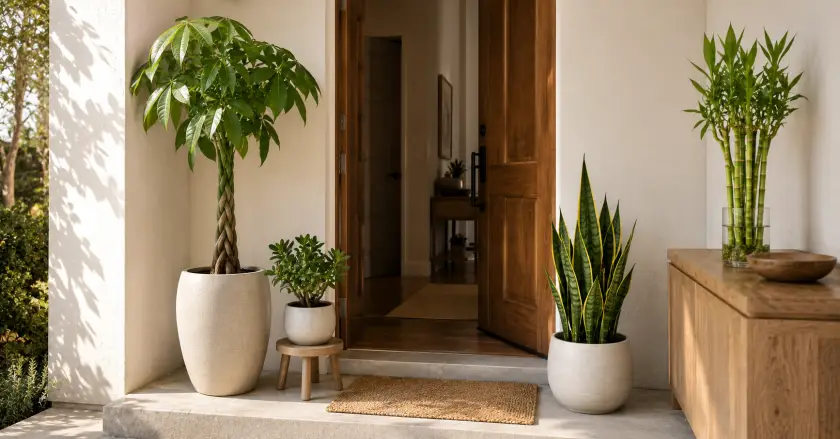
Lucky plants for front door entrance should feel welcoming and healthy. The entrance is important because it shapes the first impression of the home.
Good options include:
- Money tree in a bright entryway
- Jade plant near a sunny entrance
- Snake plant for strong upright structure
- Lucky bamboo in a sheltered indoor entry
- Peace lily if the entry has soft light
- Small citrus plant if the entrance is bright enough
- Evergreen outdoor pots for exterior entrances
Keep the entrance clear. A lucky plant should not block the door, crowd the walkway, or make the space feel messy.
Feng Shui Plant Placement by Room
Living Room
The living room is a strong place for Feng Shui indoor plants because it is where people gather, talk, rest, and receive guests. Good choices include money tree, rubber plant, pothos, peace lily, ZZ plant, and lucky bamboo.
For styling ideas, read indoor plants as natural room dividers and indoor jungle without overcrowding.
Bedroom
For bedrooms, choose calmer plants. Peace lily, pothos, ZZ plant, small orchid, and snake plant can work if the placement feels restful.
Avoid turning the bedroom into a room full of plants if it makes the space feel crowded. For softer styling, read bedroom plants for style and calm.
Home Office
A home office is a natural place for a feng shui money plant, jade plant, lucky bamboo, or ZZ plant. These plants can act as daily visual reminders of focus, steady growth, and progress.
For more options, read improve home office with plants and best office plants.
Bathroom
Bathrooms can work for pothos, peace lily, ferns, and lucky bamboo if there is enough light. Humidity can help some plants, but poor light can still cause problems.
For more ideas, read best bathroom plants.
Front Door and Entryway
For front door and entryway energy, choose plants that look fresh, upright, and welcoming. Lucky bamboo, money tree, jade plant, snake plant, and citrus can all work in the right conditions.
Keep this area tidy. Dead leaves, dusty pots, and clutter weaken the whole look.
Spiritual Plants and Succulent Symbolism
Spiritual plants are plants people use for meaning, ritual, memory, culture, or intention. They do not need to be rare. A simple jade plant from a family member can feel more meaningful than an expensive plant bought for trend value.
Succulent plant symbolism often centres on endurance, protection, patience, and stored strength. This is why jade plant, aloe vera, and other succulents are often used as good luck plants indoor.
The spiritual meaning of succulent plants can be practical too. They remind you not to overdo things. They need patience, light, and restraint. That makes them a useful symbol in homes where people want calm and balance.
Plants That Are Good for You
Plants that are good for you are not only symbolic. They can support a calmer home because they encourage routine, attention, and connection with nature.
Caring for plants can help you slow down. Watering, cleaning leaves, pruning, and checking growth are small habits that make a home feel cared for. That is one reason Feng Shui indoor plants appeal to so many people.
To keep plants healthy, use the basics: right light, careful watering, clean leaves, good soil, and proper drainage. Helpful care guides include complete watering guide, complete guide to indoor light, and how to clean plant leaves.
How to Create a Feng Shui Indoor Plant Corner
A small Feng Shui plant corner can feel better than scattering random pots across the whole home. Start with three plants maximum.
Try this simple combination:
- Lucky bamboo: For growth and flexibility
- Jade plant: For prosperity and grounded energy
- Peace lily: For calm and balance
Place them where they receive suitable light and where the grouping does not block movement. Use matching pots or a simple tray so the corner feels intentional.
If your space is small, read best indoor plants for tiny apartments. If you want more visual impact, read 20 oversized indoor plants.
Common Feng Shui Plant Mistakes to Avoid
- Keeping dying plants: Remove or revive unhealthy plants quickly.
- Using too many plants: Clutter can make a space feel blocked rather than balanced.
- Ignoring light: A symbolic plant still needs correct lighting.
- Blocking pathways: Plants should not stop easy movement through the home.
- Using dirty pots or dusty leaves: Clean plants feel fresher and more intentional.
- Choosing plants only for meaning: Care needs matter too.
- Forgetting pet safety: Check plant safety if cats or dogs live with you.
If a plant is struggling, use how to revive a dying plant, signs you are overwatering, root rot guide, and leaf curl, browning, and droop.
Expert Tips from Sawera Shahid
Choose intention first, then choose the plant. If you want calm, start with peace lily or pothos. If you want prosperity symbolism, choose money tree or jade plant. If you want strength, choose snake plant or ZZ plant. If you want growth, choose lucky bamboo.
Do not place plants where they become a burden. A plant in the wrong corner will be forgotten, overwatered, or left dusty. A plant in the right place becomes part of your daily rhythm.
Also, keep Feng Shui plant styling personal. A wishing plant, happiness plant, good luck tree, or prosperity flower should feel meaningful to you, not just match a rule you found online.
Future Trends
Feng Shui indoor plants are becoming more popular because people want homes that feel calmer, more intentional, and less cluttered. The trend is not just about luck. It is about emotional connection with the home.
Expect more interest in lucky bamboo feng shui, feng shui money plant styling, jade plant feng shui, lucky plants for front door entrance, spiritual plants, and small indoor plant corners that combine care, beauty, and symbolism.
The strongest future trend is simple: people want plants that mean something. A healthy lucky plant in the right place feels better than a random plant bought only because it was trendy.
Frequently Asked Questions
What are Feng Shui indoor plants?
Feng Shui indoor plants are houseplants chosen and placed for symbolic meaning, balance, natural energy, and visual harmony in the home.
What is the best plant for good luck?
If you want a plant for good luck, start with lucky bamboo, money tree, jade plant, pothos, peace lily, or snake plant. Choose the one that fits your room and care routine.
What is lucky bamboo feng shui meaning?
Lucky bamboo feng shui meaning is usually linked with good luck, flexible growth, resilience, and prosperity. Many people also choose stalk numbers based on symbolic meanings.
Where should I put lucky bamboo in home?
If you are wondering where to put lucky bamboo in home, common choices include the east area for family and health, southeast for wealth, an entry table, a home office desk, or a bright shelf.
What is a feng shui money plant?
A feng shui money plant may refer to money tree, jade plant, pothos, or another round-leaf plant used to symbolise prosperity and growth.
Is jade plant good for Feng Shui?
Yes. Jade plant feng shui styling is popular because its rounded leaves are often associated with coins, abundance, and steady growth.
What are good Feng Shui flowers?
Good feng shui flowers include orchid, peace lily, anthurium, African violet, Christmas cactus, and paperwhite bulbs. Choose healthy flowers that suit the room’s light.
What are lucky plants for front door entrance?
Lucky plants for front door entrance include money tree, lucky bamboo, jade plant, snake plant, citrus, peace lily, and neat evergreen pots if the conditions suit them.
Related Guides
- PATCH Plants homepage
- PATCH Plants blog
- Indoor Plants hub
- Plant Care hub
- Statement plants for minimalist interiors
- Scandi home with plants
- Best indoor plants for tiny apartments
- Indoor plants as natural room dividers
- Best indoor plants for first-time plant parents
- Best indoor plants for beginners
- 35 low-maintenance plants
- Air-purifying indoor plants
- Blooming indoor plants
- How to style indoor plants by room
- Bedroom plants for style and calm
- Indoor jungle without overcrowding
- Trailing plants for shelves
- Low-light hanging plants
- Indoor plants that smell amazing
- Colorful foliage indoor plants
- Rare houseplants worth the hunt
- Best office plants
- Improve home office with plants
- Office plants for fluorescent lighting
- 20 oversized indoor plants
- Indoor gardening systems
- Complete guide to indoor light
- Complete watering guide
- Worst times to water plants
- Signs you are overwatering
- Root rot guide
- How to revive a dying plant
- Leaf curl, browning, and droop
- Why plant leaves turn yellow
- How to clean plant leaves
- Best soil mix for every plant
- Repotting mistakes to avoid
- How to repot a plant
- Fertilizing indoor vs outdoor plants
- Self-watering pots guide
- DIY indoor humidity tray
- Humidity hacks for plants
- Cat-friendly plant guide
- Dog-friendly plant guide
- Snake plant care guide
- Peace lily care guide
- Christmas cactus care guide
- Money tree care guide
- Best bathroom plants
- Succulent care guide
- Cactus care guide
- Boston fern care guide
- Bird of paradise care guide
- Pothos care guide
- Philodendron care guide
- Monstera care guide
- Hoya care guide
- Orchid care guide
- Rubber plant care guide
- Fiddle leaf fig care guide
- Spider plant care guide
- ZZ plant care guide
- Jade plant care guide
- Dracaena care guide
- Anthurium care guide
- African violet care guide
- String of pearls care
- Calathea care guide
- Garden calendar
- Pruning basics
- Best low-maintenance outdoor plants
- Container gardening on patios
- How to keep outdoor plants alive
- Edible flowers
- Color themes for outdoor garden
- Seasonal plant care autumn
Final Thoughts
Feng Shui indoor plants are most useful when they help you make your home feel more intentional. Lucky bamboo, money tree, jade plant, peace lily, snake plant, pothos, and Feng Shui flowers can all carry meaning, but the real value comes from choosing healthy plants and placing them with care.
University of Minnesota Extension explains that light is one of the most important factors for growing houseplants because plants need light for photosynthesis, so any lucky bamboo, feng shui money plant, or good luck flower should still be placed where it can receive suitable light for healthy growth: University of Minnesota Extension indoor plant lighting guide.
Start with one plant and one intention. A lucky bamboo for growth. A jade plant for prosperity. A peace lily for calm. A snake plant for strength. Keep it clean, healthy, and well placed. That is what makes a plant feel lucky in real life.
Final Recap
This guide discusses various feng shui indoor plants, including lucky bamboo, money plants, Chinese fortune trees, and good luck flowers, highlighting their meanings, placements in the home, and association with prosperity and spiritual significance.
This guide covers feng shui indoor plants, lucky bamboo feng shui, feng shui money plant, good luck plants indoor, lucky plants, a plant for good luck, Chinese fortune tree, Feng Shui flowers, flower for good luck, fortune bamboo feng shui, good luck flower, good luck flowers, good luck tree, happiness plant, jade plant feng shui, lucky bamboo and feng shui, lucky bamboo house plant, lucky bamboo in feng shui, lucky bamboo plant feng shui, lucky bamboo plant meaning, lucky bamboo plants, lucky bamboo potted plants, lucky plant, lucky plants for front door entrance, plants that are good for you and prosperity flower.
The best approach is to choose healthy plants, match them to real light, keep placement uncluttered, and use symbolism as a calm reminder of what you want your home to support.
[…] Feng Shui Indoor Plants: 17 Best Lucky Picks […]
Thanks for sharing. I read many of your blog posts, cool, your blog is very good. https://accounts.binance.com/register/person?ref=QCGZMHR6
I don’t think the title of your article matches the content lol. Just kidding, mainly because I had some doubts after reading the article. https://accounts.binance.bh/register/person?ref=QCGZMHR6