Key Takeaways
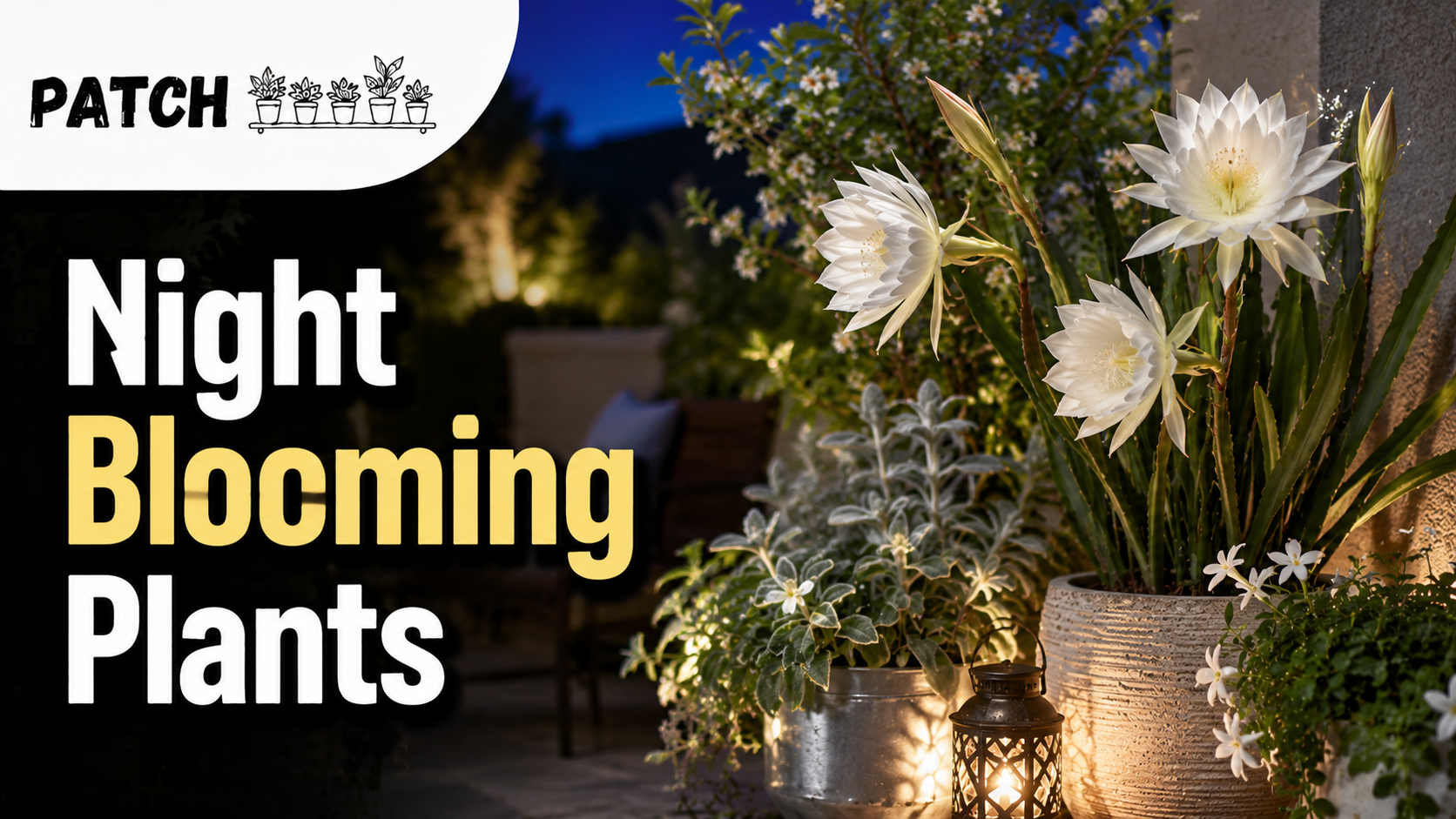
- Plants that bloom at night are ideal for moon gardens because their pale flowers, evening fragrance, and late-opening blooms make outdoor spaces feel alive after sunset.
- A moon garden works in a large garden, small patio, balcony, courtyard, or container display when you choose the right night blooming flowers and reflective details.
- Best moon garden plants include moonflower, night-blooming jasmine, evening primrose, tuberose, four o’clocks, night phlox, and nicotiana.
- White night flowering plants, yellow flowers that bloom at night, silver foliage, pale gravel, and soft warm lighting create the strongest moonlight flower garden effect.
- You can water flowers at night in hot weather, but morning watering is safer because damp leaves left overnight can encourage fungal problems.
Introduction
Plants that bloom at night can change the whole mood of a garden. During the day, your patio or border might look pleasant enough. But after sunset, the right flowers begin to open, pale petals catch the moonlight, and fragrance settles into the still air.
That is the heart of a moon garden. It is not about filling your space with rare plants or complicated landscaping. It is about choosing flowers at night that actually perform when you are most likely to enjoy them: after work, during a quiet evening, or while sitting outside with a cup of tea.
This guide explains what a moon garden is, which night blooming plants are worth growing, how to design a moonlight flower garden, and how to care for it without turning evening gardening into another chore. For extra low-effort outdoor inspiration, pair this guide with best low-maintenance outdoor plants and pollinator-friendly plants for urban outdoor spaces.
What Is a Moon Garden?
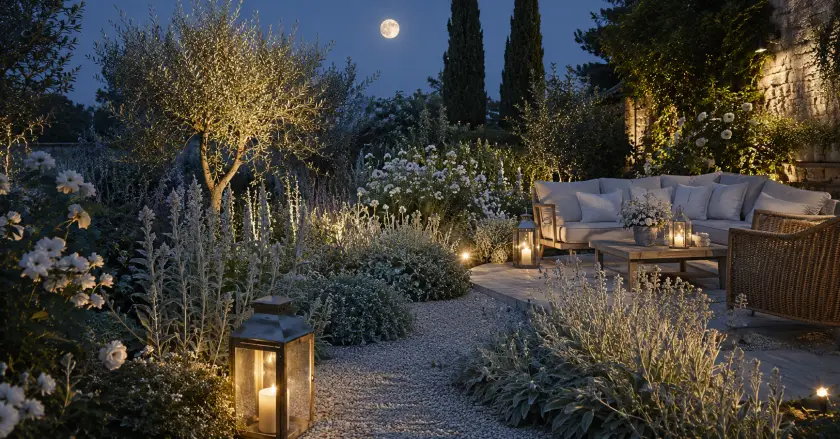
A moon garden is an outdoor space designed to look, smell, and feel beautiful after dark. The classic version uses pale flowers, white petals, silver foliage, glossy leaves, light-coloured pots, reflective gravel, and fragrant plants that release their scent in the evening.
The goal is simple: make the garden come alive when daylight fades. During the day, bold red or purple flowers often dominate a border. At night, those darker shades disappear into the background. White, cream, pale yellow, and soft pink flowers stay visible because they reflect moonlight and low garden lighting.
A moon garden can be a full border, a balcony corner, a few containers around a bench, or a narrow path lined with pale blooms. It also fits beautifully with wildlife planting, especially if you choose moth-friendly night flowers and pollinator plants. For a broader wildlife layout, read how to design a wildlife-friendly garden.
Why Plants That Bloom at Night Matter
Night blooming flowers are not just pretty after sunset. Many evolved to attract nocturnal pollinators such as moths, which use scent and pale colour to find flowers in low light. That is why so many bloom at night flowers are white, cream, pale yellow, or strongly fragrant.
For people, the benefit is practical too. Most of us do not spend hours admiring the garden at midday. We step outside in the evening, once the heat drops and the day slows down. A moon garden gives that time more atmosphere.
Plants for moon garden designs also help small spaces feel intentional. A few containers of nicotiana, evening primrose, and silver foliage can make a balcony feel planned instead of random. If mosquitoes are part of your evening problem, combine moon garden plants with mosquito repellent plants and plants that keep bugs away.
Best Plants That Bloom at Night
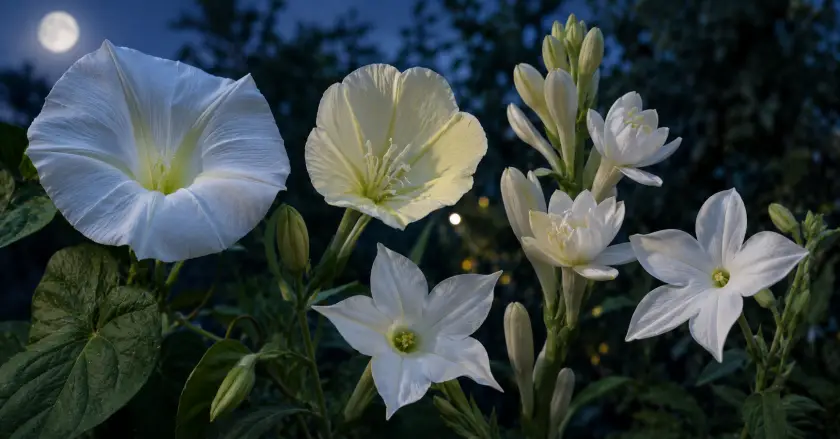
The best plants that bloom at night are easy to notice after sunset. Some open fully in the evening. Some release stronger fragrance at night. Some stay open through dusk and early morning. Together, they create a layered moonlight garden.
Moonflower
Moonflower is the classic flower that blooms at night. Its large white trumpet-shaped flowers open in the evening and can look almost luminous in low light. It is a climbing plant, so it works well on trellis, pergolas, railings, arches, and fences.
Use moonflower where you want height and drama. In a small space, grow it in a large container with a strong support. In a larger garden, train it behind lower pale flowers so the blooms appear to float above the border. If you enjoy vertical planting, the ideas in trailing plants for shelves and bookcases translate well to outdoor climbing displays.
Night-Blooming Jasmine
Night-blooming jasmine is grown mostly for scent. The flowers are small and not as showy as moonflower, but the fragrance after dusk can be powerful. For that reason, place it carefully. It is wonderful near a seating area in an open garden, but it may feel too strong in a tiny enclosed balcony.
This plant suits gardeners who want a moon garden that is as much about fragrance as looks. For more scented plant inspiration, see indoor plants that smell amazing.
Evening Primrose
Evening primrose is one of the best yellow flowers that bloom at night. Its soft yellow flowers usually open from late afternoon into evening, adding warmth to a moon garden without overwhelming the pale colour scheme.
It has a relaxed, wildflower feel, so it suits cottage-style borders, wildlife gardens, and low-maintenance spaces. It can handle less-than-perfect soil once established, making it useful alongside hardy plants that survive on minimal watering and hardy outdoor plants that thrive all year round.
Tuberose
Tuberose is a beautiful choice when fragrance matters most. Its creamy white flower spikes release a rich, sweet scent in the evening, making it ideal near patios, doorways, and sheltered seating areas.
It has a more polished look than evening primrose, so it works well in formal containers or a clean, modern moon garden. If you like dramatic flowering plants indoors too, browse blooming indoor plants and oversized indoor plants.
Four O’Clocks
Four o’clocks usually open in late afternoon and stay open into the night, which makes them useful bridge plants between day and evening. They come in pink, yellow, white, red, and mixed patterns, often with more than one colour on the same plant.
They are cheerful rather than subtle, so use white and pale yellow varieties if you want a calmer moonlight flower garden. They are also good container plants for patios and small gardens. For more compact outdoor choices, see best plants for small outdoor spaces.
Night Phlox
Night phlox is a lovely plant for moon garden edges. It is not huge, but it earns its place with evening fragrance and starry flowers. Some varieties are known for a sweet scent that becomes more noticeable as the air cools.
Use night phlox near paths, steps, raised beds, and pots where you can enjoy it close up. It pairs beautifully with silver foliage and soft pink flowers. For more colour planning ideas, read colorful foliage indoor plants and apply the same contrast principles outside.
Nicotiana
Nicotiana is one of the most useful night blooming plants for beginners. Many varieties open or intensify their scent in the evening, with white, lime, pink, and soft green flowers that work beautifully in moon garden plants schemes.
White nicotiana is especially effective in containers around a patio. It looks gentle in the day and becomes more noticeable after dusk. Keep it away from pets and children if they are likely to nibble plants, and use it as a decorative plant rather than an edible one.
Moon Garden Plants for Different Spaces
Small Balconies
On a balcony, choose containers rather than large borders. A simple moon garden combination could include white nicotiana, night phlox, a small jasmine, silver foliage, and pale gravel mulch. If space is tight, use wall planters, rail planters, and tall narrow pots.
Balconies dry out quickly, so check soil often during hot weather. If your balcony is also exposed, choose sturdy containers that will not tip over. For more container guidance, use container gardening on patios.
Patios and Seating Areas
Patios are ideal for moon garden plants because you can sit close to scent and flowers. Place fragrance near seating, but do not crowd the whole area with heavily scented plants. One night-blooming jasmine or a few tuberose pots can be enough.
Add pale containers, light cushions, cream flowers, and soft solar lights. The goal is not brightness. It is glow.
Large Borders
In a larger border, layer height. Put moonflower or jasmine at the back, tuberose and evening primrose in the middle, and night phlox or nicotiana near the front. Repeat white and pale yellow flowers along the border so the eye moves through the space after dark.
Large moon gardens also benefit from foliage. Silver leaves, variegated plants, ornamental grasses, and glossy evergreen structure keep the space interesting even when flowers are resting.
Windy and Coastal Gardens
Wind can damage tall stems and dry containers quickly. In breezy gardens, choose sheltered corners for fragrant plants so scent does not disappear immediately. Use heavier pots, low-growing flowers, and hardy structure plants around the edges.
For tougher planting ideas, combine this moon garden plan with outdoor plants for storms and heatwaves and outdoor plants that survive British winters.
How to Design a Moonlight Flower Garden
Choose Pale Flowers First
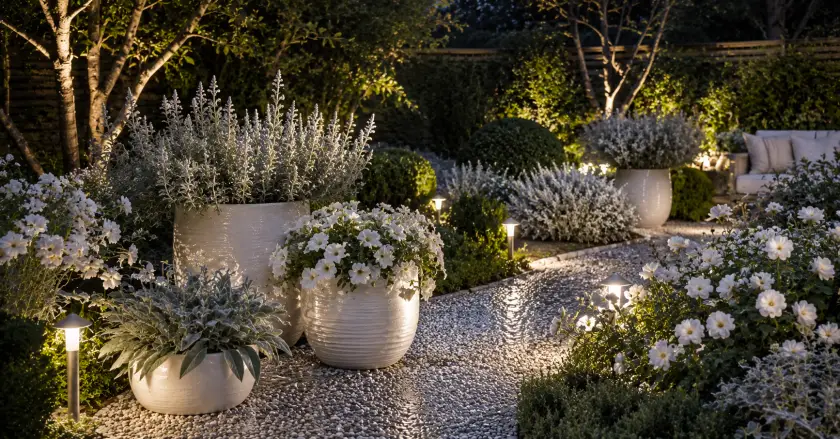
Start with the flowers you want to see after sunset. White night flowering plants are the easiest choice, followed by cream, pale yellow, blush pink, and soft lavender. Dark flowers can still be included, but use them as daytime accents, not the main evening feature.
Good moonlight garden plants include moonflower, white nicotiana, night phlox, tuberose, white petunias, pale roses, evening primrose, and light-coloured four o’clocks.
Add Silver and Glossy Foliage
Flowers come and go, but foliage holds the design together. Silver leaves reflect light beautifully. Glossy leaves catch even a small lantern glow. Variegated foliage can brighten dark corners without adding more flowers.
This is where moon gardens become more than a list of night flowers. The foliage gives the garden shape, rhythm, and calm.
Use Reflective Details
White gravel, pale stepping stones, cream ceramic pots, light walls, and water bowls all help bounce light around the space. You do not need anything shiny or flashy. In fact, subtle materials usually look better.
A small pale pot near a dark corner can make the whole area feel more intentional. A light gravel mulch around evening primrose can make yellow flowers glow more clearly.
Keep Lighting Soft
Moon gardens should not feel like stage sets. Avoid harsh white lights and bright floodlights. Use warm solar lights, lanterns, low path lights, or soft wall lights.
The best lighting lets the plants stay in charge. You want enough light to move safely and enjoy the flowers, not so much that the garden loses its evening mood.
Can You Water Flowers at Night?
You can water flowers at night if the garden is very dry, but it is not the best everyday habit. Morning watering is usually safer because the soil gets moisture before the heat of the day and any wet foliage has time to dry.
The main risk with watering flowers at night is damp leaves sitting in cool air for hours. That can encourage fungal disease, especially on crowded plants or in still, humid spaces. If you are asking, “Can I water my garden at night?” the honest answer is: occasionally, yes, but do it carefully.
How to Water Plants in the Evening
If you need to water plants in the evening, water the soil, not the leaves. Use a watering can with a narrow spout or a gentle hose at the base of each plant. Avoid overhead sprinklers at night.
Water early evening rather than late night, so the surface has some time to settle before temperatures drop. For deeper watering principles, read complete guide to watering plants.
Morning vs Evening Watering
Morning watering is best for most gardens. It gives roots moisture before the sun becomes strong and reduces the chance of damp leaves overnight. Evening watering is useful during heatwaves, for newly planted containers, or when plants are clearly wilting after a hot day.
If your moon garden uses containers, check them more often than borders. Pots dry out faster, especially in full afternoon sun plants positions. For signs of too much moisture, see signs you are overwatering and root rot prevention.
Do Night Blooming Plants Need More Water?
Not automatically. Night blooming plants do not need extra water simply because they open after dark. Their water needs depend on species, soil, pot size, sun exposure, wind, and temperature.
Moonflower in a container may need regular watering in summer. Evening primrose in the ground may cope with much less once established. Tuberose prefers steady moisture but dislikes soggy soil. Match watering to the plant, not the time of bloom.
Light, Soil, Feeding, and Pest Care
Light
Most moon garden plants still need good daylight to flower well. Night blooming does not mean shade-loving. Moonflower, evening primrose, four o’clocks, and tuberose usually perform best with sun or bright light during the day.
If your garden gets strong afternoon sun, choose full afternoon sun plants carefully and water containers well. Afternoon sun perennials and flowers for afternoon sun should be heat-tolerant, not delicate plants that collapse by evening.
Soil and Feeding
Use free-draining soil enriched with compost. Moon garden flowers need enough nutrition to bloom, but too much feeding can create leafy growth with fewer flowers. Feed container plants lightly during the growing season and stop when growth slows.
For a full feeding comparison, see fertilizing indoor vs outdoor plants. If you are repotting containers, avoid oversized pots and heavy wet compost. The guide on repotting mistakes explains why pot size matters.
Pests
Moon gardens are not pest-free. Aphids, slugs, snails, whitefly, and spider mites can still appear. Check young shoots, undersides of leaves, and flower buds. Keep plants spaced well so air can move between them.
A wildlife-friendly moon garden often balances itself better because birds, beetles, and beneficial insects help control pests. Avoid harsh sprays if you want moths and other night pollinators to visit.
What Are Flowers That Close at Night Called?
Flowers that open and close in response to light and darkness are showing a movement called nyctinasty. Some flowers close at night to protect pollen, reduce moisture loss, or respond to cooler temperatures. Others do the opposite and open after sunset to attract nocturnal pollinators.
So, when people ask “what are flowers that close at night called?” the answer is not a plant category like annual or perennial. It is a behaviour. Some plants close at night, while plants that bloom at night open when the garden gets darker.
Do Plants Generate Oxygen at Night?
Most plants release oxygen during the day when they photosynthesise. At night, photosynthesis stops because there is no sunlight, but respiration continues. That means most plants use oxygen and release carbon dioxide at night in small amounts.
Some CAM plants, including many succulents and cacti, open their stomata at night to take in carbon dioxide. This is why people search for plants that generate oxygen at night. But it is important not to confuse CAM plants with night blooming plants. A moonflower opening after sunset is not automatically an oxygen plant.
For indoor oxygen and air-quality topics, read air-purifying indoor plants, succulent care, and cactus care.
Common Mistakes to Avoid
- Using only dark flowers: They may look beautiful in daylight but disappear after sunset.
- Overloading fragrance: One powerful scented plant can be enough in a small space.
- Watering leaves late at night: Water soil instead and avoid wet foliage overnight.
- Ignoring daytime sun: Night blooming flowers still need enough light during the day to produce blooms.
- Using harsh lighting: Bright white lights can flatten the atmosphere and make pale flowers look washed out.
- Planting without airflow: Crowded night gardens can become humid and disease-prone.
Expert Tips from Sawera Shahid
Start small. A moon garden does not need to be a full redesign. One white-flowering climber, one scented plant, one silver foliage plant, and one pale container can completely change an evening corner.
Place fragrance where people pause. Doorways, benches, balconies, and paths are better than far corners. Also think about the direction of evening breeze. A scented plant downwind of your seating area will be noticed more than one tucked behind a wall.
Finally, repeat pale colours. One white flower can look accidental. Three or five pale points across the space look designed.
Future Trends
Moon gardens are becoming more relevant as people use outdoor spaces later in the day. Smaller homes, busier schedules, balcony gardening, and warmer evenings all make night-friendly planting more useful.
Expect to see more compact moon garden plants for containers, more white night flowering plants in patio schemes, and more interest in moth-friendly planting. Seasonal searches such as lunar new year plants also show that gardeners are thinking beyond ordinary spring and summer colour, using plants to create mood, meaning, and atmosphere throughout the year.
Frequently Asked Questions
What flowers bloom at night?
Flowers that bloom at night include moonflower, night-blooming jasmine, evening primrose, tuberose, four o’clocks, night phlox, and nicotiana. These night blooming flowers work especially well in moon gardens because they open, glow, or release fragrance after sunset.
What flower only blooms at night?
Moonflower is one of the best-known flowers only bloom at night choices because its large white flowers open in the evening and often close by morning. Some night-blooming cactus flowers also open for just one night.
Can you water flowers at night?
You can water flowers at night during hot or dry weather, but it is better to water at soil level and keep leaves dry. Morning watering is usually safer because leaves dry faster and fungal problems are less likely.
What is a moon garden?
A moon garden is a garden designed for evening beauty. It uses plants that bloom at night, pale flowers, silver foliage, fragrance, reflective materials, and soft lighting to create a calm outdoor space after sunset.
Are there yellow flowers that bloom at night?
Yes. Evening primrose is one of the best yellow flowers that bloom at night. Pale yellow four o’clocks can also work well in a moonlight flower garden.
Do moon garden plants need full sun?
Many moon garden plants need sun or bright light during the day to bloom well. Night blooming does not mean shade-loving. Check each plant’s light needs before planting, especially in full afternoon sun positions.
Related Guides
- Patch Plants homepage
- Browse the PATCH Plants blog
- Outdoor Plants hub
- Indoor Plants hub
- Plant Care hub
- Best low-maintenance outdoor plants
- Pollinator-friendly plants for urban outdoor spaces
- How to design a wildlife-friendly garden
- Best plants for small outdoor spaces
- Best plants for container gardening on patios
- Hardy plants that survive on minimal watering
- Hardy outdoor plants that thrive all year round
- Outdoor plants for storms and heatwaves
- Outdoor plants that survive British winters
- Mosquito repellent plants
- Plants that keep bugs away
- Shade-loving plants for outdoor spaces
- Indoor plants that smell amazing
- Blooming indoor plants
- Best plants for your bathroom
- Oversized indoor plants
- Best office plants
- Office-friendly plants for fluorescent lighting
- Best plants for bedroom style and calm
- How to style indoor plants by room
- Indoor plants as natural room dividers
- How to create an indoor jungle
- Trailing plants for shelves and bookcases
- Low-light hanging plants
- Complete guide to watering plants
- Worst times to water your plants
- Signs you are overwatering
- Root rot guide
- How to revive a dying plant
- Leaf curl, browning, and droop guide
- Why plant leaves turn yellow
- How to clean plant leaves
- Fertilizing indoor vs outdoor plants
- Repotting mistakes to avoid
- How to repot a plant
- Self-watering pots guide
- DIY indoor humidity tray
- Humidity hacks for plants
- How to make plants dog-friendly
- Best indoor plants for beginners
- Best indoor plants for first-time plant parents
- Best indoor plants for tiny apartments
- 35 low-maintenance plants
- Air-purifying indoor plants
- Colorful foliage indoor plants
- Rare houseplants worth hunting
- Calathea plant care guide
- Philodendron care guide
- Pothos plant care guide
- Monstera plant care guide
- Hoya plant care guide
- Anthurium care guide
- Orchid care guide
- African violet care guide
- Boston fern care guide
- Bird of paradise plant care guide
- Money tree care guide
- Jade plant care guide
- Rubber plant care guide
- Fiddle leaf fig care guide
- Dracaena plant care guide
- String of pearls care
- Cactus care guide
- Succulent care guide
- Snake plant care guide
- Peace lily care guide
- Christmas cactus care guide
- How to propagate houseplants
- Indoor gardening systems
- Should you talk to your plants?
- Seasonal plant care in autumn
Final Thoughts
Plants that bloom at night make a garden feel personal. They reward the quiet hours, the late walk outside, the moment when the day finally slows down. A moon garden can be as simple as three pots near a chair or as detailed as a full border of white flowers, silver foliage, and evening scent.
According to the Royal Horticultural Society, fragrant plants are best grown in sheltered areas where scent can be retained and enjoyed for longer, which is exactly why moon garden plants work so well near patios, courtyards, and seating areas. Royal Horticultural Society fragrant plants advice
Start with one flower that blooms at night, then build around it. Add pale petals, soft light, and a place to sit. That is enough to turn an ordinary evening corner into a moon garden you will actually use.
Article Summary
A moon garden is an evening-focused garden built with plants that bloom at night, pale flowers, fragrance, silver foliage, reflective surfaces, and soft lighting. The best night blooming flowers include moonflower, night-blooming jasmine, evening primrose, tuberose, four o’clocks, night phlox, and nicotiana. These plants work in balconies, patios, borders, containers, and small gardens when matched to the right light, soil, watering, and wind conditions. For best results, choose white or pale flowers first, place fragrant plants near seating, water at soil level, and keep lighting gentle.