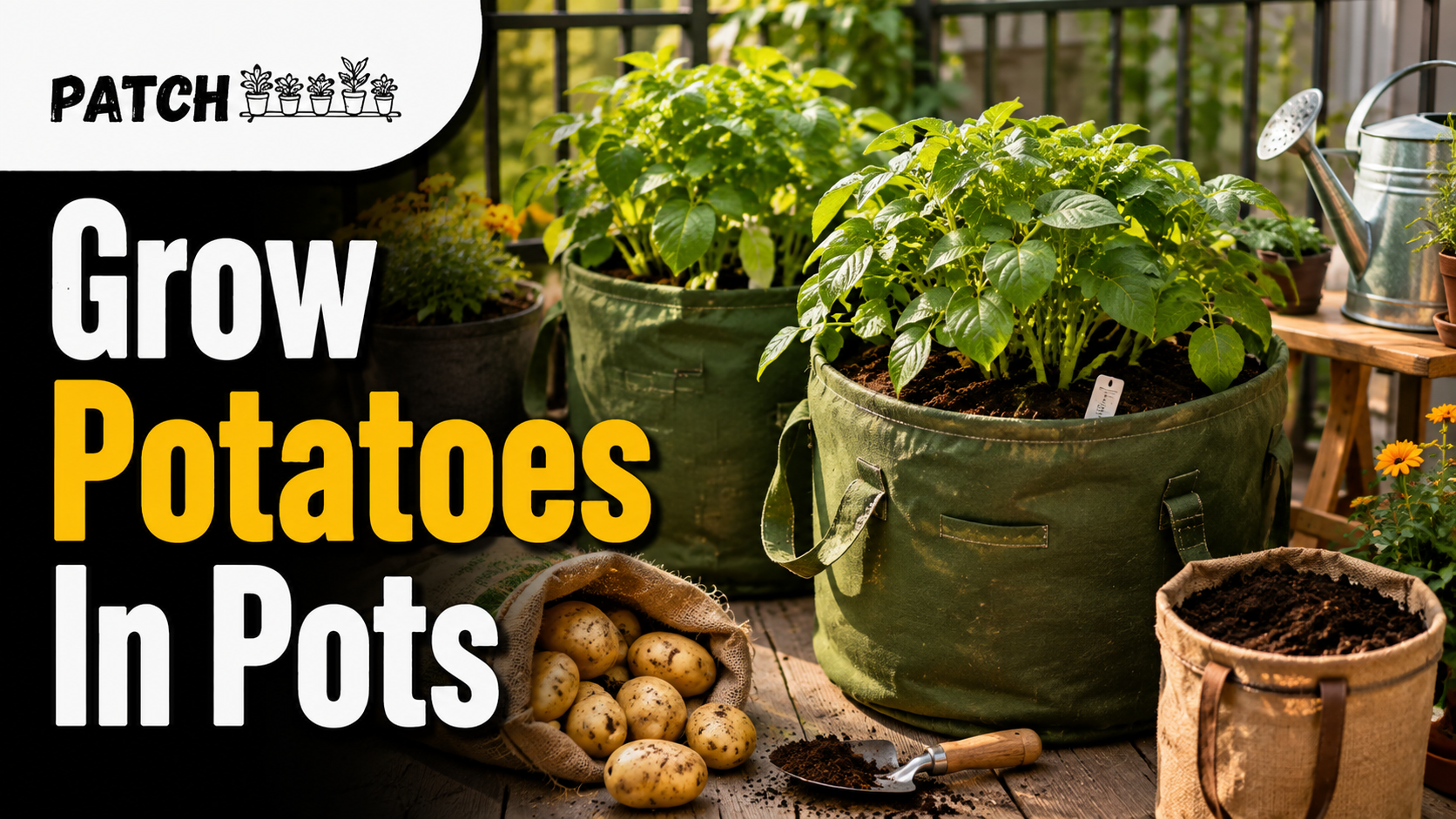
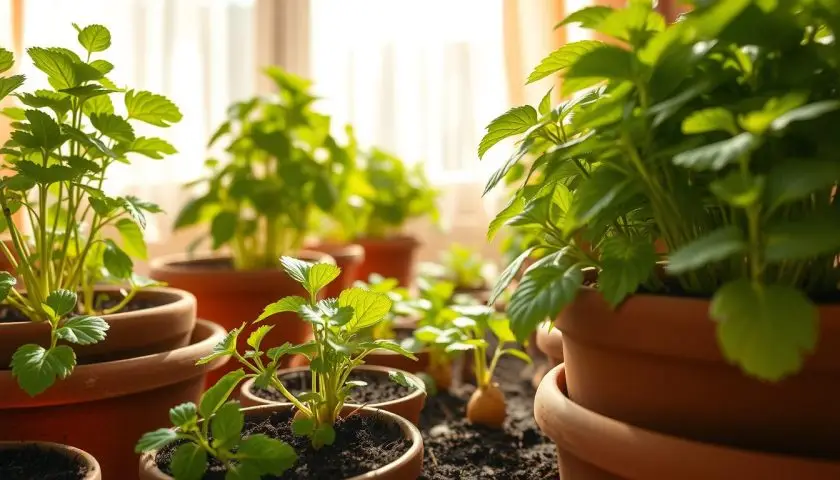
Growing potato plants in pots is one of the easiest ways to grow food when you do not have a big garden. A balcony, patio, doorstep, courtyard, or sunny corner can produce a useful potato harvest if the container is deep enough and the care is steady.
Potatoes are forgiving, but they do have a few non-negotiables. They need certified seed potatoes, loose soil, drainage, sunlight, even moisture, and regular hilling as the stems grow. This guide keeps the process beginner-friendly so you can plant, care for, and harvest potatoes from containers with fewer mistakes.
Beginner Snapshot
For successful growing potato plants in pots, start with certified seed potatoes, choose a large container or grow bag with drainage holes, add a loose potting mix, plant seed potatoes near the bottom, cover lightly, water gently, and keep adding soil around the stems as they grow. Keep the pot in a sunny outdoor spot, water when the mix begins to dry, feed during active growth, and harvest new potatoes after flowering or mature potatoes once the foliage dies back.
Key Takeaways
- Growing potato plants in pots works well for balconies, patios, small gardens, and beginner vegetable growers.
- Use certified seed potatoes instead of grocery store potatoes.
- Choose a deep container, grow bag, bucket, or large pot with drainage holes.
- Use loose potting mix and compost instead of dense garden soil.
- Start with a lower soil layer and add more mix as stems grow.
- Keep tubers covered so they do not turn green from light exposure.
- Use this guide with planting potatoes in containers, how to plant tomatoes in a pot, and container gardening on patios.
Potato Plants in Pots at a Glance
| Care Area | Best Choice | Common Mistake |
|---|---|---|
| Seed potatoes | Certified disease-free seed potatoes | Using treated or sprouting grocery potatoes |
| Container | Large pot, grow bag, bucket, or planter with drainage | Using a shallow pot with no holes |
| Soil | Loose potting mix with compost | Heavy compacted garden soil |
| Light | Sunny outdoor spot | Growing in deep shade |
| Water | Even moisture, never waterlogged | Letting the pot swing from dry to soaked |
| Hilling | Add mix around stems as they grow | Leaving tubers exposed to light |
| Harvest | New potatoes after flowering, mature potatoes after dieback | Damaging tubers with sharp tools |
Why Grow Potato Plants in Pots?
Potato container gardening is useful because it gives you control over soil, drainage, spacing, and harvest. Instead of digging a garden bed, you can grow potatoes in a pot, bag, tub, bucket, or planter and empty the container at harvest time.
Good reasons to grow potatoes in containers
- You have a balcony, patio, deck, or small courtyard.
- Your garden soil is heavy, stony, compacted, or full of weeds.
- You want an easier harvest without digging a bed.
- You want to control the potting mix and drainage.
- You want to teach children or beginners how tubers grow.
- You want a movable crop for rented spaces.
Where potatoes in pots work best
Potatoes in pots work best outdoors in a bright, open place. A sunny patio, balcony, driveway edge, raised deck, or small vegetable corner can work if the container is stable and you can water it easily.
What beginners should expect
A potted potato plant grows leafy stems first, then forms tubers underground. The container limits root space, so the harvest may be smaller than an in-ground crop. Still, the process is simple, satisfying, and perfect for small-space food growing.
For more beginner edible ideas, read easy outdoor edible plants, Japanese cucumber plant, and patio tomato plants.
Choose the Best Potatoes for Containers
The best container potatoes are usually early or midseason varieties because they grow quickly and fit the shorter, more controlled nature of pot growing. Large maincrop types can still grow in containers, but they need more space, more time, and more steady care.
Use certified seed potatoes
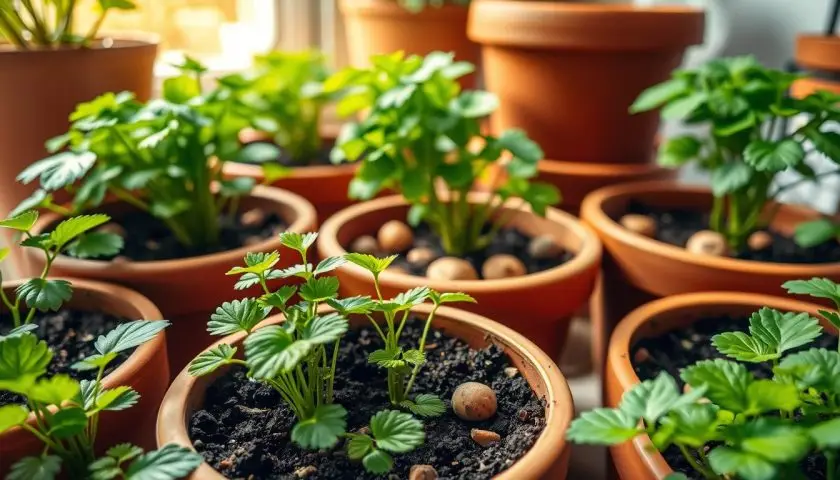
Certified seed potatoes are grown for planting. They are a better choice than grocery store potatoes because they are selected for healthier growth and lower disease risk.
Why grocery store potatoes are risky
Grocery potatoes may be treated to slow sprouting. They may also carry disease or produce uneven results. A sprouting potato from the kitchen can grow, but it is not the best beginner choice if you want a reliable crop.
Best potato types for pots
| Potato Type | Best For | Container Note |
|---|---|---|
| First early potatoes | Fast crops and new potatoes | Excellent for beginners and small pots |
| Second early potatoes | Longer harvest and steady growth | Good for grow bags and larger containers |
| Salad potatoes | Small waxy tubers | Useful for pots and summer harvests |
| Maincrop potatoes | Larger storage potatoes | Need larger containers and more time |
Chitting seed potatoes
Chitting means letting seed potatoes form short sturdy shoots before planting. Place them in a cool, bright, frost-free place with the eyes facing upward. Short, firm shoots are better than long weak white sprouts.
Cutting large seed potatoes
Small seed potatoes can be planted whole. Larger ones can be cut into pieces if each piece has healthy eyes. Let cut surfaces dry before planting so the pieces are less likely to rot in damp mix.
When to Plant Potato Plants in Pots
Potatoes grow best when conditions are cool to mild, but not freezing. In many regions, spring is the main planting season. Container potatoes can also be started earlier under cover or grown later for a seasonal crop if your climate allows.
Spring planting
Plant when hard frost risk has passed or when you can protect the container from cold. Pots warm faster than garden soil, but they also cool quickly, so young shoots can still be damaged by frost.
Starting under cover
If you have a bright frost-free greenhouse, porch, or sheltered spot, you can start container potatoes earlier. Move them outdoors gradually once weather is safer.
Late or fall planting
In warmer climates, a later crop may work if you can avoid extreme heat and harvest before serious cold. Use quick-maturing varieties and keep containers evenly watered.
Timing table
| Planting Situation | Best Timing | Beginner Tip |
|---|---|---|
| Outdoor spring pots | After hard frost risk has passed | Protect new shoots from cold nights |
| Under-cover pots | Earlier than outdoor planting | Use bright frost-free conditions |
| Summer containers | Where heat is not extreme | Water carefully and avoid overheating |
| Late crop | Warm climates or protected spaces | Use early varieties and plan harvest timing |
For seasonal planning, read garden calendar and seasonal plant care in autumn.
Choose the Right Container for Potatoes
The container affects moisture, root space, temperature, harvest size, and hilling. A shallow pot is not enough because potatoes need depth for seed pieces, roots, stems, and developing tubers.
Best containers for potatoes
- Potato grow bags: Easy to fill, move, and empty at harvest.
- Large plastic pots: Lightweight and moisture-retentive.
- Fabric grow bags: Good airflow but faster drying.
- Food-safe buckets: Useful if you drill drainage holes.
- Wooden boxes: Attractive and sturdy if drainage is good.
- Deep planters: Good for patios and balconies.
Potato container size guide
| Container Size | Seed Potatoes | Best Use |
|---|---|---|
| 5 gallons | 1 seed potato | Small trial crop or very limited space |
| 10 gallons | 1 to 2 seed potatoes | Good beginner size |
| 15 gallons | 2 to 3 seed potatoes | Better harvest and easier watering |
| 20 gallons or larger | 3 to 4 seed potatoes | Large patio or grow bag crop |
Drainage is essential
Potatoes need moisture, but they do not want stagnant wet soil. Drainage holes are essential. If water cannot escape, seed pieces may rot and roots may suffocate.
Avoid clear containers
Do not grow potatoes in clear containers where light can reach developing tubers. Light exposure can turn potatoes green, and green potatoes should not be eaten.
Keep pots stable
A container full of wet compost is heavy. Place the pot in its final position before filling it completely. For balconies, check weight limits and drainage rules before setting up large containers.
For more container help, read best plants for container gardening on patios, container garden plants for shade, and self-watering pots guide.
Place Potato Pots in the Right Spot
Potatoes need strong light for healthy leafy growth and tuber development. A bright outdoor spot is best. Low light usually produces weaker plants and smaller harvests.
Best location
- Sunny patio.
- Bright balcony.
- Open deck.
- Sunny courtyard.
- Driveway edge with safe watering access.
- Small vegetable corner with good airflow.
Watch heat on paving
Concrete, brick, stone, and dark balconies can heat containers quickly. If the plant wilts badly in afternoon heat, move the pot where it gets morning sun and lighter afternoon shade.
Protect from strong wind
Potato stems can be damaged by wind, especially in exposed balconies. Place pots where they get airflow but not constant harsh gusts.
For light and outdoor placement support, read how to keep outdoor plants alive, outdoor plants that handle storms and heatwaves, and complete guide to indoor light.
Prepare the Best Soil for Potato Plants in Pots
The best soil for potatoes in pots is loose, fertile, and draining. Heavy garden soil can compact in containers, hold too much water, and make harvesting harder.
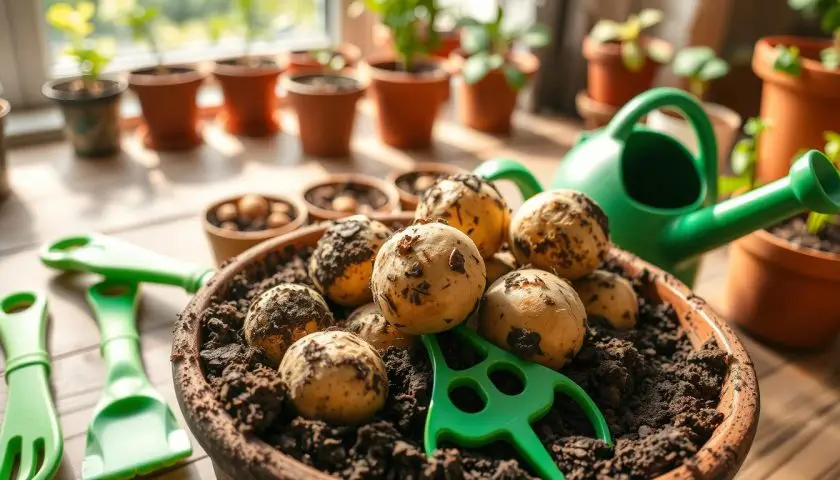
Simple potato potting mix
- 2 parts quality peat-free potting mix or container compost.
- 1 part compost or well-rotted organic matter.
- 1 part perlite, grit, fine bark, or coarse material for drainage.
- A suitable vegetable fertilizer mixed according to the label.
What the mix should feel like
The mix should feel loose and crumbly, not sticky or dense. It should hold moisture after watering but drain freely from the bottom holes.
Do not use heavy garden soil alone
Garden soil may work in the ground, but it often compacts in pots. Compacted soil makes it harder for roots to breathe and harder for tubers to develop cleanly.
Fertilizer basics
Potatoes need nutrients, but too much nitrogen can push lots of leaf growth at the expense of tubers. Use a balanced vegetable fertilizer or potato fertilizer and follow the label.
For potting mix support, read best soil mix guide, how to repot a plant, and repotting mistakes to avoid.
How to Plant Potato Plants in Pots Step by Step
This method works for grow bags, large pots, buckets, tubs, and deep planters. The main idea is simple: start low, plant the seed potatoes, cover lightly, then keep adding mix as the stems grow.
Step 1: Prepare the container
Clean old pots before reuse. Make sure the drainage holes are open. If using a bucket or storage tub, drill several drainage holes before adding soil.
Step 2: Add the first soil layer
Add about 4 to 6 inches of loose potting mix to the bottom. Do not fill the whole container yet because you need room for hilling.
Step 3: Place seed potatoes
Place seed potatoes on the mix with strong eyes or short shoots facing upward. Keep them spaced apart so each plant has room to grow.
Step 4: Cover with potting mix
Cover the seed potatoes with a few inches of mix. The container should still have plenty of empty space above the soil line.
Step 5: Water gently
Water slowly so the mix settles around the seed potatoes. The mix should be moist, not swampy.
Step 6: Label the pot
Add a plant label with the variety and planting date. This helps you track harvest timing later.
Step 7: Wait for shoots
Keep the pot in a bright outdoor spot and check moisture regularly. Shoots should appear when conditions are warm enough.
Step 8: Hill as plants grow
When shoots reach several inches tall, add more mix around the stems while leaving the top leaves exposed. Repeat until the container is nearly full.
Step 9: Continue care
Keep moisture steady, feed during active growth, protect from pests, and cover any exposed tubers immediately.
How to Hill Potatoes in Containers
Hilling, also called earthing up, means adding soil or compost around the growing stems. In containers, this is one of the most important steps because it keeps tubers covered and gives the plant more room to develop.
When to start hilling
Start hilling when shoots are several inches tall. Add enough mix to cover the lower stems, but always leave some green leaves above the surface so the plant can keep making energy.
How often to hill
Repeat hilling every time the stems grow taller. Continue until the container is almost full, leaving enough space at the top for watering.
Hilling mistakes to avoid
- Do not bury all the leaves.
- Do not compact the mix hard around stems.
- Do not wait until tubers are exposed to light.
- Do not use heavy wet soil that smothers roots.
- Do not overfill the pot so water runs off the surface.
Why hilling matters
Hilling helps cover developing tubers, reduces green potato risk, supports stems, and gives the plant more protected growing space inside the container.
Watering Potato Plants in Pots
Watering potatoes in pots needs balance. Potatoes dislike drying out hard, especially once tubers begin forming. But soggy containers can rot seed pieces and roots.
| Growth Stage | Watering Need | What to Watch |
|---|---|---|
| After planting | Light even moisture | Do not soak cold mix repeatedly |
| Shoots emerging | Moist but not waterlogged | Dry surface with damp lower mix |
| Leafy growth | Regular watering | Wilting on hot days |
| Tuber formation | Most consistent moisture | Dry swings can reduce quality |
| Before mature harvest | Reduce after foliage dies back | Do not keep dying plants soggy |
How to check moisture
Do not judge only by the dry surface. Push a finger into the mix or use a moisture meter. If the mix is dry below the surface, water deeply. If it is still damp, wait.
Water deeply
When watering, water slowly until excess moisture drains out. This is better than tiny daily splashes that only wet the top layer.
Hot weather watering
Grow bags and black containers can dry quickly in hot weather. Check daily during heat, especially once the plant is large and leafy.
Overwatering signs
- Yellow leaves with wet mix.
- Sour smell from the container.
- Soft stems near soil level.
- Seed pieces failing to sprout and rotting.
- Fungus gnats around the pot.
Underwatering signs
- Leaves wilt in the morning.
- Pot feels very light.
- Mix pulls away from the container edge.
- Leaf edges crisp in hot weather.
- Plants stop growing during active season.
For watering support, read complete watering tips, worst times to water plants, and signs you are overwatering.
Feeding Potato Plants in Containers
Potato plants in pots depend on the nutrients inside a limited volume of mix. Feeding helps, but more is not always better. The goal is steady growth, not oversized leafy tops with few tubers.
Best feeding routine
- Mix compost into the potting mix before planting.
- Use a balanced vegetable fertilizer or potato fertilizer.
- Follow the product label instead of guessing.
- Feed during active growth and early tuber formation.
- Stop heavy feeding as plants naturally begin to yellow and die back.
Feeding problem signs
| Symptom | Possible Cause | First Fix |
|---|---|---|
| Pale leaves | Low nutrients, wet roots, or low light | Check moisture, light, and feeding |
| Lots of leaves, few potatoes | Too much nitrogen or small container | Use balanced feeding and more root space |
| Brown leaf edges after feeding | Fertilizer burn or dry roots | Water evenly and reduce strength |
| Weak growth | Poor mix, low light, or bad drainage | Review the full setup |
For feeding basics, read fertilizing indoor vs outdoor plants.
Care for Potato Plants as They Grow
Once potato plants are growing, the routine is simple: water, hill, feed, check pests, and keep the container stable. Avoid disturbing the roots unless there is a serious problem.
Rotate containers
If light reaches the pot from one side, rotate the container every week or two so growth stays balanced.
Remove dead leaves
Remove yellow or dead leaves from the soil surface. This improves airflow and reduces pest hiding places.
Keep tubers covered
If you see tubers near the surface, cover them with compost immediately. Potatoes exposed to light can turn green and should not be eaten.
Protect from frost
If cold weather threatens after shoots appear, move small containers under cover or protect the top growth temporarily. Frost can damage tender leaves.
Common Problems With Potato Plants in Pots
Most problems with potted potatoes come from poor drainage, inconsistent watering, not enough light, heat stress, pests, or tubers exposed to light.
| Problem | Likely Cause | First Fix |
|---|---|---|
| Yellow leaves | Overwatering, old growth, low nutrients, pests | Check moisture and roots |
| Wilting | Dry mix, heat stress, root rot, wind | Check soil before watering |
| Small harvest | Small pot, poor light, dry spells, weak seed potato | Use bigger pot and steadier care next time |
| Green potatoes | Tubers exposed to light | Cover tubers and discard green parts |
| Rotting seed potatoes | Cold wet mix or poor drainage | Plant warmer, improve drainage |
| Leggy growth | Too little light | Move pot to a brighter outdoor spot |
| Leaf spots | Disease, wet foliage, poor airflow | Improve airflow and remove affected leaves |
Yellow leaves
Yellow leaves near the end of the season can be normal. Yellow leaves early in growth usually mean water, roots, nutrients, pests, or light need checking.
Wilting leaves
Wilting does not always mean the plant needs water. If the potting mix is dry, water deeply. If the mix is wet, check drainage and root health.
Small potatoes
Small potatoes often come from small containers, not enough light, inconsistent watering, poor fertility, or harvesting too early. Grow bags with more volume usually give better results.
Green potatoes
Green potatoes happen when tubers are exposed to light. Keep adding soil around stems and cover any tubers that appear near the surface. Do not eat green potatoes.
For more symptom help, read yellow leaves on plants, leaf curl, browning and droop, root rot guide, and how to revive a dying plant.
Pests and Diseases on Potato Plants in Pots
Container potatoes can still get pests and disease. Pots make inspection easier, but you still need to check leaves, stems, and soil regularly.
Common pests
- Colorado potato beetles: Chewed leaves and orange egg clusters under leaves.
- Aphids: Small insects on soft new growth.
- Slugs and snails: Holes in leaves and tubers, especially in damp spots.
- Flea beetles: Tiny holes in leaves.
- Spider mites: Speckled leaves and fine webbing in hot dry conditions.
Simple pest routine
- Check leaves a few times a week.
- Look under leaves for eggs and pests.
- Remove pests by hand when possible.
- Keep containers tidy and free from dead leaves.
- Avoid broad spraying around edible crops unless you know the product is suitable.
- Water consistently so stressed plants do not decline faster.
Common disease risks
- Blight: Dark leaf lesions and rapid collapse in humid conditions.
- Scab: Rough patches on tubers, often linked with soil conditions.
- Root rot: Caused by waterlogged containers.
- Leaf spots: More likely when foliage stays wet and airflow is poor.
Disease prevention tips
- Start with certified seed potatoes.
- Use clean containers.
- Do not reuse diseased potato compost for potatoes again.
- Keep foliage as dry as practical when watering.
- Give plants airflow.
- Remove badly diseased foliage promptly.
For outdoor pest help, read how to keep pests away from outdoor plants.
Harvesting Potatoes From Pots
Harvesting is one of the best parts of growing potatoes in containers. Instead of digging through a bed, you can tip out the pot or gently work through the mix with your hands.
When to harvest new potatoes
New potatoes are small, tender potatoes harvested before the plant fully dies back. Many gardeners begin checking after flowering. Take a few carefully and let the rest keep growing if the plant is healthy.
When to harvest mature potatoes
For mature potatoes, wait until the foliage yellows and dies back naturally. Stop watering once the plant is finishing, then harvest after the skins have had time to firm up.
How to harvest from a container
- Choose a dry day if possible.
- Move the container to an easy cleanup area.
- Tip the pot or bag gently onto a tarp or tray.
- Use your hands to search through the mix.
- Separate damaged potatoes from clean ones.
- Discard green potatoes.
- Let sound potatoes dry briefly out of direct sun.
Storage tips
- Keep potatoes in a cool, dark, well-ventilated place.
- Do not store potatoes in bright light.
- Use damaged potatoes quickly.
- Do not store wet potatoes in sealed plastic bags.
- Keep potatoes away from fruit that speeds sprouting.
Can You Reuse Potato Potting Mix?
You can reuse container mix carefully, but avoid planting potatoes, tomatoes, peppers, eggplants, or other related crops in the same mix if disease was present. Potatoes and tomatoes are in the same plant family, so crop rotation still matters in container gardening.
When reuse is fine
- The potato plants were healthy.
- No blight, rot, or pest problem was present.
- You refresh the mix with compost and nutrients.
- You reuse it for non-related plants.
When to discard or avoid reuse
- Plants had blight or serious disease.
- Seed potatoes rotted badly.
- The mix smells sour.
- There were heavy pest problems in the soil.
- The mix has become compacted and lifeless.
Beginner Potato Pot Checklist
| Task | Best Choice | Avoid |
|---|---|---|
| Seed | Certified seed potatoes | Unknown grocery potatoes |
| Container | Deep pot or grow bag with drainage | Shallow closed containers |
| Soil | Loose potting mix with compost | Heavy garden soil alone |
| Planting | Start low and cover lightly | Filling the whole pot before growth starts |
| Hilling | Add mix as stems grow | Letting tubers reach light |
| Water | Even moisture | Dry-to-soggy swings |
| Harvest | Tip out gently and sort tubers | Cutting tubers with sharp tools |
Common Mistakes When Growing Potato Plants in Pots
| Mistake | What Happens | Better Choice |
|---|---|---|
| Using a small shallow pot | Less root room and smaller harvest | Use a deep container or grow bag |
| No drainage holes | Seed pieces and roots can rot | Use open drainage holes |
| Planting too many seed potatoes | Crowding and smaller tubers | Give each seed potato enough room |
| Skipping hilling | Tubers may turn green | Add mix around stems as they grow |
| Letting pots dry hard | Stressed plants and lower yield | Check moisture often |
| Growing in shade | Weak growth and fewer potatoes | Choose a sunny outdoor spot |
| Eating green potatoes | Food safety risk | Discard green potatoes |
Helpful PATCH Guides for Potato Container Gardening
Use these related PATCH guides to plan your container garden, improve watering, choose edible plants, manage pests, and grow more food in small spaces.
Potatoes, Tomatoes and Edible Containers
- Planting potatoes in containers
- How to plant tomatoes in a pot
- Patio tomato plants
- Japanese cucumber plant
- Easy outdoor edible plants
- How long does pineapple take to grow?
- Edible flowers to grow outdoors
Outdoor Container Guides
- Container gardening on patios
- Container garden plants for shade
- Plants in pots in shade
- Small plants that like shade
- How to keep outdoor plants alive
- Outdoor Plants hub
Outdoor Plant Planning
- Garden calendar
- Seasonal plant care in autumn
- Low-maintenance outdoor plants
- Hardy outdoor plants
- Outdoor plants for British winters
- Outdoor plants for coastal and windy spaces
- Top drought-resistant plants
- Outdoor plants for storms and heatwaves
- Native plants that thrive in your region
- Create a colorful garden for all seasons
Watering, Soil and Fertilizer Guides
- Complete watering guide
- Worst times to water plants
- Signs you are overwatering
- Best soil mix guide
- Fertilizing indoor vs outdoor plants
- Self-watering pots guide
- How to repot a plant
- Repotting mistakes to avoid
Outdoor Pest and Problem Guides
- How to keep pests away from outdoor plants
- Yellow leaves on plants
- Why plant leaves turn yellow
- Leaf curl, browning and droop
- Root rot guide
- How to revive a dying plant
- How to clean plant leaves
- Pruning basics
Shade, Patio and Balcony Guides
- Shade-loving plants for outdoor spaces
- Color themes for your outdoor garden
- Edible flowers to grow in your outdoor garden
- Plants that bloom at night
- Pollinator-friendly plants for urban spaces
- Wildlife-friendly garden design
Indoor and Houseplant Guides That Support Container Skills
- Indoor Plants hub
- Plant Care hub
- Tropical house plants
- Small low light indoor plants
- House plants that like direct sunlight
- Low light house plants
- Best indoor plants for beginners
- Best indoor plants for first-time plant parents
- Best indoor plants for tiny apartments
- Oversized indoor plants
- Blooming indoor plants
- Colorful foliage indoor plants
- Trailing plants for shelves
- Create an indoor jungle without overcrowding
- Style indoor plants by room
Specific Plant Care Guides
- Elephant Ear care
- Planting elephant ear bulbs
- Elephant Ear plant indoors
- Croton Tree care
- Croton Petra Plant
- Tall Snake Plant
- Snake Plant care guide
- Spider Plant care guide
- Spider Plant light requirements
- How to transplant a Spider Plant
- How often to water Peace Lily
- Peace Lily care guide
- Christmas Cactus maintenance
- Christmas Cactus care tips
- Cactus care guide
- Succulent care guide
- Fishbone Cactus care
- Hoya care guide
- Rubber Plant care guide
- Fiddle Leaf Fig care guide
- Dracaena care guide
- Monstera care guide
- Pothos plant care guide
- Philodendron care guide
- Calathea care guide
- Bird of Paradise care guide
- ZZ Plant care guide
- Parlor Palm dying
- Goldfish Plant care
- Purple Passion Plant care
- Plant with pink and green leaves
Frequently Asked Questions
Can you grow potato plants in pots?
Yes. Potato plants grow well in pots, grow bags, buckets, tubs, and deep planters if the container has drainage holes, loose mix, sunlight, regular water, and enough depth for hilling.
What size pot do I need for growing potatoes?
A 10-gallon container is a good beginner size for one or two seed potatoes. Larger 15 to 20 gallon grow bags or pots give more room, easier watering, and better harvest potential.
How deep should I plant potatoes in a pot?
Start with 4 to 6 inches of potting mix in the bottom, place the seed potatoes on top, then cover with another few inches of mix. Add more mix around the stems as they grow.
Can I grow potatoes in a bucket?
Yes, a bucket can work if it is food-safe, deep enough, and has plenty of drainage holes. Avoid clear buckets because light can reach the tubers.
Should I use seed potatoes or grocery potatoes?
Certified seed potatoes are best. Grocery potatoes may be treated to prevent sprouting and may carry disease, so they are less reliable for beginner container growing.
How often should I water potato plants in pots?
Water when the mix begins to dry below the surface. In hot, dry, or windy weather, check containers often because pots and grow bags can dry quickly.
Do potato plants in pots need fertilizer?
Yes, they usually benefit from compost and a suitable vegetable fertilizer during active growth. Avoid overfeeding nitrogen because it can encourage leaves instead of tubers.
Why are my potato leaves turning yellow?
Yellow leaves can be normal near harvest time. Earlier yellowing may come from overwatering, underwatering, poor drainage, low nutrients, pests, or disease.
Why are my potatoes green?
Potatoes turn green when tubers are exposed to light. Keep tubers covered with compost and discard green potatoes instead of eating them.
When should I harvest potatoes from pots?
Harvest new potatoes after flowering if you want small tender tubers. For mature potatoes, wait until the foliage yellows and dies back, then empty the container gently.
Final Thoughts
Growing potato plants in pots is simple once you understand the pattern: start low, plant seed potatoes, cover lightly, hill as stems grow, water steadily, and harvest carefully. The container does not need to be fancy, but it must be deep, draining, and filled with loose compost-rich mix.
RHS explains that potatoes can be grown in containers by using seed potatoes, a large container with drainage holes, adding compost around the stems as shoots grow, watering when compost is dry, and discarding green potatoes: RHS guide to growing potatoes in containers.
For the best beginner results, choose early seed potatoes, use a grow bag or large pot, keep tubers covered, and do not let the mix dry hard during active growth. One container is enough to learn the full process.
Final Recap
Growing potato plants in pots is a beginner-friendly way to grow food in small spaces. Use certified seed potatoes, choose a deep container or grow bag with drainage holes, and fill it with loose potting mix and compost. Plant seed potatoes near the bottom, cover lightly, water gently, and add more mix around the stems as they grow. Keep the container in a sunny outdoor spot, water when the mix begins to dry, feed during active growth, and protect tubers from light. Watch for yellow leaves, wilting, pests, blight, rot, and green potatoes. Harvest new potatoes after flowering or mature potatoes after the foliage dies back. With a good container, steady moisture, hilling, and proper harvest timing, potatoes can grow successfully on patios, balconies, decks, and small gardens.