Key Takeaways
- A carnivorous plant terrarium setup guide should focus on light, pure water, low-nutrient soil, airflow, and the right plant choice.
- A healthy carnivorous plant terrarium is usually open or ventilated, not tightly sealed, because stale air can lead to mold and rot.
- The best starter plants include tropical sundews, small pitcher plants, butterworts, and other insect-eating plants that enjoy humidity.
- Never use regular potting soil, compost, or normal fertilizer for carnivorous plants. They are adapted to poor, acidic, low-nutrient conditions.
- Use distilled water, rainwater, or reverse osmosis water. Mineral-heavy tap water can slowly damage sensitive roots.
- This beginner’s guide to carnivorous plants is designed for simple indoor setups, not complicated display tanks.
Introduction
A carnivorous plant terrarium setup guide sounds complicated at first, but the basic idea is simple. Carnivorous plants need bright light, pure water, poor soil, steady moisture, and enough airflow to stay healthy indoors.
The tricky part is that they do not behave like normal houseplants. You cannot use rich compost, tap water, all-purpose fertilizer, or a sealed jar and expect them to thrive. Most problems happen when people treat them like ordinary tropical plants.
This guide will show you how to create a carnivorous plant terrarium for beginners, including the best plants for a terrarium, essential supplies for carnivorous terrarium setup, terrarium planting techniques, light needs, water rules, feeding, maintenance, and common mistakes.
For related indoor growing help, read the complete indoor light guide, complete watering guide, and best soil mix guide.
What Is a Carnivorous Plant Terrarium?
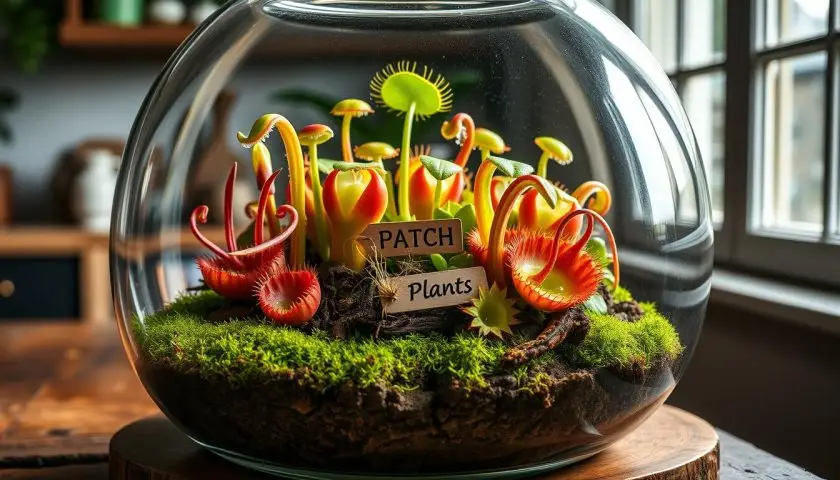
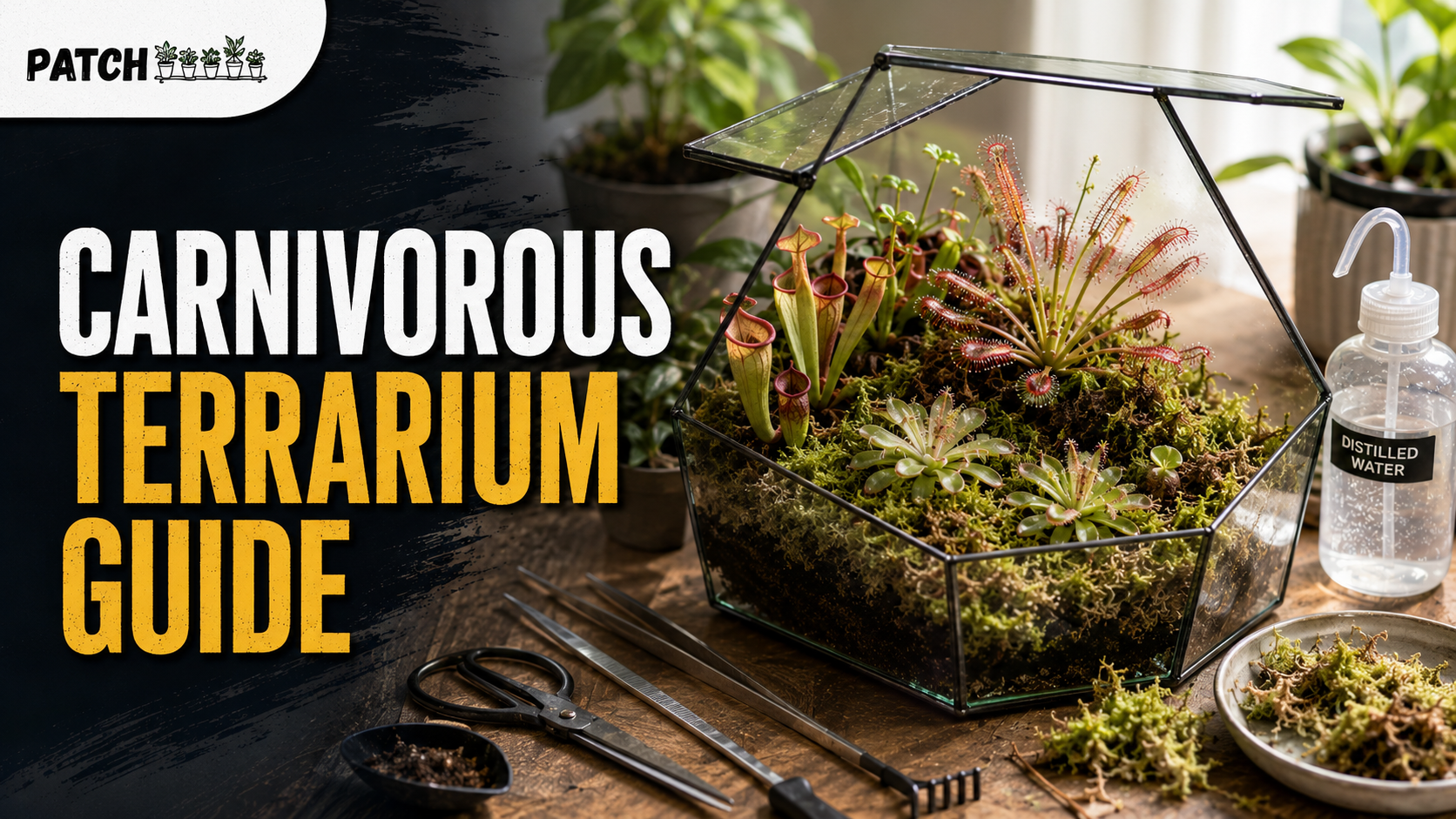
A carnivorous plant terrarium is a container garden designed for insect-eating plants. It usually uses a glass bowl, open terrarium, shallow tank, or ventilated container filled with low-nutrient growing media and moisture-loving plants.
The goal is not to make a fully sealed ecosystem. Most carnivorous plants need humidity, but they also need fresh air. A closed jar may look attractive for a few days, but it can quickly create stagnant air, fungal growth, and weak plants.
A better beginner setup is an open or partly ventilated terrarium. This gives you moisture around the roots while still allowing air to move around leaves, traps, and crowns.
Why Carnivorous Plants Need Different Care
Most houseplants get nutrients from soil. Carnivorous plants evolved in places where soil is poor, acidic, and low in nutrients. They adapted by catching insects and absorbing nutrients from prey instead.
That is why regular plant care can harm them. Compost, fertilizer, hard tap water, and rich potting mix can overload their roots with minerals. A good carnivorous plant care tips routine keeps the setup simple: poor soil, pure water, bright light, and no fertilizer.
If you enjoy unusual houseplants, you may also like unusual indoor plants and rare houseplants worth the hunt.
Carnivorous Plant Terrarium Essentials
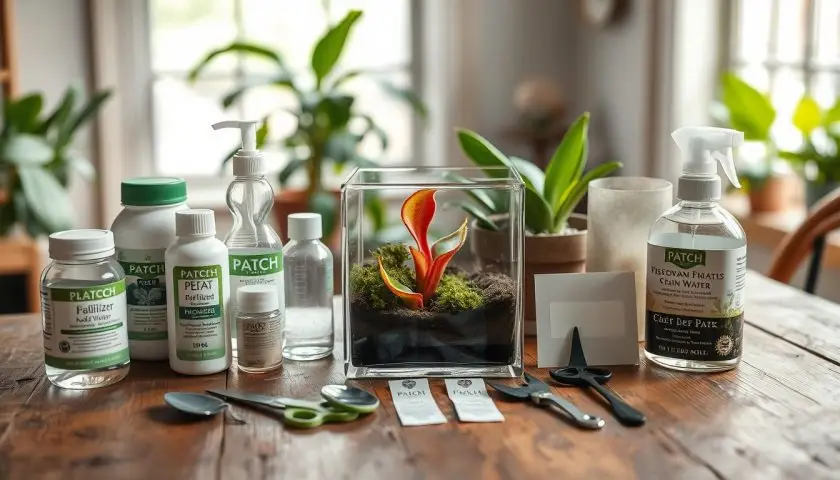
Before you start a diy carnivorous plant terrarium, gather the right supplies. This avoids the common mistake of using normal houseplant materials.
| Supply | Why It Matters | Best Beginner Choice |
|---|---|---|
| Container | Holds humidity and creates the display | Open glass bowl, shallow tank, or ventilated terrarium |
| Water | Roots are sensitive to minerals | Distilled water, rainwater, or reverse osmosis water |
| Growing medium | Must be low-nutrient and acidic | Sphagnum moss, silica sand, or carnivorous plant mix |
| Plants | Species must like similar conditions | Tropical sundews, butterworts, small pitcher plants |
| Light | Traps and colour need strong light | Bright window or full-spectrum grow light |
| Tools | Helps plant without damaging roots | Small scoop, tweezers, clean scissors, spray bottle |
Best Plants for a Carnivorous Terrarium
The best plants for carnivorous terrarium setups are not always the most dramatic ones. Beginners should choose plants that enjoy humidity, stay small enough for the container, and do not need extreme seasonal changes.
1. Tropical Sundews
Sundews are among the best top carnivorous plant species for terrariums. They have sticky leaves that catch tiny insects, and many tropical types do well in bright, humid indoor conditions.
They are useful for a sundew terrarium setup because they stay compact, look interesting, and give quick visual feedback. If they are happy, their leaves usually produce sparkling dew. If conditions are wrong, the dew often disappears.
2. Butterworts
Butterworts are small, attractive, and easier than many people expect. Their sticky leaves catch small insects, and many species look neat in shallow terrarium displays.
They are a good choice for a beginner who wants something unusual but not too aggressive or oversized. Just make sure the species you choose matches your humidity and light conditions.
3. Small Tropical Pitcher Plants
Pitcher plants can look incredible in a terrarium. Their hanging or upright pitchers make the display feel alive and sculptural. For a pitcher plant terrarium setup, choose small or young tropical species rather than large outdoor bog plants.
Pitcher plants need bright filtered light, humidity, and airflow. Avoid cramming them into a tiny sealed jar. Give them space so the pitchers can develop naturally.
4. Bladderworts
Bladderworts are less famous, but they can work well in damp terrarium settings. Some types spread through the medium and produce delicate flowers above the surface.
They are not always the main feature, but they can add variety to a carnivorous plant terrarium when paired with sundews and moss.
5. Venus Flytraps
A venus flytrap terrarium guide needs one important warning: Venus flytraps are not ideal for a permanently warm, sealed terrarium. They need bright light and a winter dormancy period to stay healthy long term.
You can use Venus flytraps in an open bog-style container, but avoid a closed decorative jar. If you want a simple first terrarium, tropical sundews and butterworts are usually easier.
Plants to Avoid in a Beginner Carnivorous Plant Terrarium
Not every insect-eating plant suits a beginner setup. Some grow too large, need cold dormancy, demand very high light, or dislike still air.
- Large Sarracenia: Better for outdoor bog gardens than small indoor terrariums.
- Large Nepenthes: Can outgrow the container quickly.
- Temperate Venus flytraps in sealed jars: Dormancy and airflow become problems.
- Mixed plants with different needs: Do not combine tropical and cold-dormant plants in one setup.
- Normal terrarium plants: Fittonia, pothos, and ferns may enjoy humidity, but they do not need the same low-nutrient bog conditions.
For regular terrarium and indoor options, read indoor gardening systems and how to create an indoor jungle.
Step-by-Step Carnivorous Plant Terrarium Setup Guide
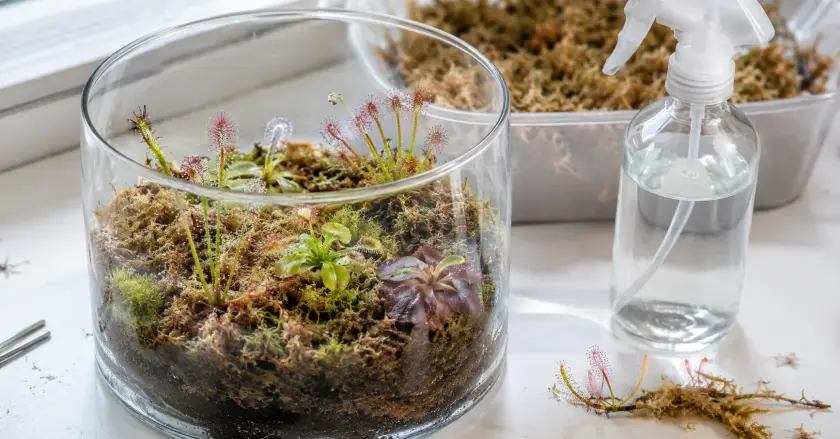
Use this step-by-step carnivorous plant terrarium guide when setting up your container. Take your time. These plants are delicate around the roots and crowns.
Step 1: Choose the Right Container
Choose an open or ventilated glass container. A shallow bowl, small aquarium, open terrarium, or wide glass vessel works better than a sealed jar.
The container should be deep enough for roots and moisture, but open enough for air movement. If you use a lid, keep it partly open or remove it regularly to prevent stale air.
Step 2: Skip the Regular Drainage Layer
Many normal terrarium guides recommend pebbles at the bottom. For carnivorous plants, this is not always needed and can create stagnant water if the setup is too deep.
Instead, keep the medium evenly damp and monitor water levels. If you do use a thin drainage layer, do not let dirty standing water sit there for weeks.
Step 3: Prepare the Soil Mix
The best soil for carnivorous plant terrariums is low in nutrients. Good options include long-fiber sphagnum moss, sphagnum peat mixed with silica sand, or a ready-made carnivorous plant mix.
Do not use potting soil, compost, garden soil, cactus mix, or fertilizer-added mixes. These can damage sensitive roots.
Step 4: Wet the Medium With Pure Water
Moisten the medium before planting. Use distilled water, rainwater, or reverse osmosis water. The medium should feel damp, not dry and dusty.
Avoid mineral-heavy tap water. Carnivorous plants are sensitive to dissolved minerals, and damage can build up slowly.
Step 5: Place Plants Before Filling Every Gap
Set the plants in position before packing the medium around them. This lets you plan the display. Put taller pitcher plants toward the back and smaller sundews or butterworts near the front.
Leave space between plants. A crowded setup looks full at first but becomes harder to maintain.
Step 6: Plant Gently
Handle roots carefully. Many carnivorous plants have fine, sensitive roots that do not like rough handling.
Keep the crown above the surface. If the crown is buried too deeply, the plant may rot. Press the medium lightly around the roots without compacting it.
Step 7: Add Moss Carefully
Live or dried sphagnum moss can help hold moisture and improve the natural look. Use it lightly around plants, not piled over crowns.
Moss can also help reduce splash and keep humidity near the surface. Just avoid smothering small plants.
Step 8: Place the Terrarium in Bright Light
Most carnivorous plants need more light than people expect. A bright windowsill may work, but a grow light is often easier to control.
Watch for heat under glass. Direct sun through a glass container can overheat quickly, especially in summer.
Step 9: Start a Simple Care Routine
After setting up, keep the medium evenly damp, remove dead leaves, watch for mold, and avoid fertilizer. Your main jobs are light, water, airflow, and patience.
Lighting Requirements for Indoor Carnivorous Gardens
Light is one of the biggest reasons a carnivorous plant terrarium succeeds or fails. Weak light leads to pale growth, poor trap colour, fewer pitchers, and weak sticky dew on sundews.
Natural Light
A bright windowsill can work if the plants receive several hours of strong light. East or west-facing windows are often easier than harsh south-facing glass, depending on your climate.
Grow Lights
A full-spectrum grow light can make indoor terrarium care for carnivorous plants much easier. Keep the light close enough to be effective but not so close that leaves scorch.
Photoperiod
Most indoor setups do well with around 12 to 14 hours of light during active growth. Plants that need dormancy will need seasonal adjustment.
For more indoor lighting basics, use the indoor light guide.
Watering and Humidity Management
Good terrarium care tips start with water quality. Carnivorous plants do not like mineral buildup, so the type of water matters as much as the amount.
Use Distilled Water or Rainwater
Use distilled water, rainwater, or reverse osmosis water whenever possible. If you only have tap water, test it first. Hard tap water is one of the most common slow killers of carnivorous plants.
Keep the Medium Damp
The medium should stay consistently damp. It should not dry out like normal potting mix. At the same time, avoid deep stagnant water in a sealed container.
Balance Humidity With Airflow
Humidity helps, but stale air hurts. Keep the setup open or ventilated. If you see mold, improve airflow and remove dead plant material quickly.
Feeding and Nutrient Management
Carnivorous plants do not need daily feeding. In fact, overfeeding can stress them. These plants are adapted to catch small insects when needed.
Do Not Fertilize
Normal fertilizer can burn roots and damage plants. Avoid pellets, liquid houseplant feed, compost tea, and nutrient-rich soil.
Feed Only Healthy Plants
If your plants are indoors and never catch insects, you can occasionally offer a tiny live or dried insect. Do this sparingly and only when the plant is actively growing.
Do Not Trigger Traps for Fun
Venus flytrap traps use energy when they close. Repeatedly triggering them without food weakens the plant.
Common Problems in Carnivorous Plant Terrariums
Mold
Mold usually means too much stale humidity, dead leaves, or poor airflow. Remove affected material and ventilate the container better.
Brown Leaves
Some leaf browning is normal, especially as traps age. If many leaves brown at once, check water quality, heat, light, and soil.
No Sticky Dew on Sundews
Sundews often stop producing dew when light is too weak, humidity is unstable, or the plant is stressed after repotting.
Weak Pitcher Growth
Pitcher plants may fail to form pitchers if humidity is too low, light is too weak, or the plant is adjusting to a new environment.
Algae
Algae can grow in wet, bright setups. Reduce excess standing water, improve airflow, and avoid overlighting the wet surface.
For broader troubleshooting, read leaf curl, browning, and droop, why plant leaves turn yellow, and how to revive a dying plant.
Carnivorous Plant Terrarium Maintenance Guide
A good carnivorous plant terrarium maintenance guide is simple. Check the terrarium often, but do not keep changing everything.
- Check moisture every few days.
- Use only distilled water, rainwater, or reverse osmosis water.
- Remove dead traps and leaves with clean scissors.
- Watch for mold near crowns and moss.
- Keep the container open or ventilated.
- Adjust light if plants look pale or stretched.
- Do not add fertilizer.
- Do not mix plants with opposite care needs.
Unique Carnivorous Plant Terrarium Ideas
If you want unique carnivorous plant terrarium ideas, keep the design natural and practical. These plants are already interesting. You do not need bright gravel, painted stones, or decorative chemicals.
Mini Bog Bowl
Use a shallow open bowl with sphagnum moss, sundews, and butterworts. This is one of the easiest beginner setups.
Pitcher Plant Display
Use a taller ventilated container for small pitcher plants. Let the pitchers hang or stand naturally without crowding them.
Sundew Collection
Create a bright tray-style terrarium with several tropical sundews. Group them by light and moisture needs.
Natural Moss Scene
Use sphagnum moss, a few small stones, and compact carnivorous plants for a soft bog-inspired look.
Expert Tips from Sawera Shahid
Start with fewer plants than you think you need. A sparse terrarium is easier to manage, and the plants will fill in over time.
Choose plants with similar needs. Do not mix a tropical pitcher plant, Venus flytrap, and random closed-terrarium fern unless you understand how each one grows.
Pure water matters more than fancy decorations. If you use the wrong water or soil, the prettiest terrarium will still fail.
Finally, keep the setup open enough to breathe. Humidity is useful, but stale air is not.
Frequently Asked Questions
What is the best soil for carnivorous plant terrariums?
The best soil is a low-nutrient acidic mix. Long-fiber sphagnum moss, sphagnum peat with silica sand, or a specialist carnivorous plant mix can work. Do not use regular potting soil, compost, or fertilizer-added mixes.
Can I use regular tap water when growing carnivorous plants indoors?
It is safer not to use regular tap water unless it is very low in minerals. Distilled water, rainwater, or reverse osmosis water is best for growing carnivorous plants indoors.
What are the essential supplies for carnivorous terrarium setup?
The essential supplies for carnivorous terrarium setup include an open or ventilated container, distilled water, sphagnum moss or carnivorous plant soil mix, suitable plants, bright light, clean tools, and a simple watering routine.
Is a closed or open container better for a DIY carnivorous plant terrarium?
An open or ventilated container is usually better. A closed container may hold humidity, but it can also trap stale air and encourage mold.
What are the best plants for a carnivorous terrarium if I am a beginner?
Tropical sundews, butterworts, and small pitcher plants are good beginner choices. Venus flytraps can work in open bog-style setups, but they need dormancy and strong light.
Do carnivorous plants need bugs indoors?
They do not need constant feeding. Healthy plants can catch small insects on their own. Indoors, you can feed very occasionally, but do not overfeed and do not use human food.
How do I prevent mold in an indoor carnivorous plant terrarium?
Use an open or ventilated container, remove dead leaves quickly, avoid overcrowding, and do not let the setup become stale and soggy.
Can I fertilize carnivorous plants in a terrarium?
No. Most carnivorous plants do not need normal fertilizer. Fertilizer can damage their sensitive roots.
Related Guides
- PATCH Plants homepage
- PATCH Plants blog
- Plant Care hub
- Indoor Plants hub
- Outdoor Plants hub
- Moss pole for plants
- Monstera plant care guide
- Pothos plant care guide
- Philodendron care guide
- Hoya plant care guide
- Orchid care guide
- Anthurium care guide
- Calathea care guide
- Peace lily care guide
- Snake plant care guide
- ZZ plant care guide
- Spider plant care guide
- Boston fern care guide
- Bird of paradise care guide
- Rubber plant care guide
- Fiddle leaf fig care guide
- Dracaena care guide
- Jade plant care guide
- African violet care guide
- String of pearls care
- Cactus care guide
- Succulent care guide
- Money tree care guide
- Christmas cactus care guide
- Complete guide to indoor light
- Complete watering guide
- Worst times to water plants
- Signs you are overwatering
- Root rot guide
- How to revive a dying plant
- Leaf curl, browning, and droop
- Why plant leaves turn yellow
- How to clean plant leaves
- Best soil mix for every type of plant
- Repotting mistakes to avoid
- How to repot a plant
- Fertilizing indoor vs outdoor plants
- Self-watering pots guide
- DIY indoor humidity tray
- Humidity hacks for plants
- Pruning basics
- Dog-friendly plant guide
- Cat-friendly plant guide
- 35 low-maintenance plants
- Air-purifying indoor plants
- Blooming indoor plants
- Colorful foliage indoor plants
- Rare houseplants worth the hunt
- Unusual indoor plants
- Best indoor plants for tiny apartments
- Best indoor plants for first-time plant parents
- Best indoor plants for beginners
- Statement plants for minimalist interiors
- Indoor plants as room dividers
- Scandi home with plants
- Feng Shui indoor plants
- How to style indoor plants by room
- Bedroom plants for style and calm
- Indoor jungle without overcrowding
- Trailing plants for shelves
- Low-light hanging plants
- Indoor plants that smell amazing
- Best office plants
- Office-friendly plants for fluorescent lighting
- 20 oversized indoor plants
- Indoor gardening systems
- Best bathroom plants
- Garden calendar
- Seasonal plant care in autumn
- Edible flowers to grow outdoors
- Color themes for outdoor gardens
- How to keep outdoor plants alive
- Best low-maintenance outdoor plants
- Container gardening on patios
- Hardy outdoor plants
- Hardy plants for minimal watering
- Outdoor plants that survive British winters
- Coastal and windy outdoor plants
- Top drought-resistant plants
- Plants for storms and heatwaves
- Pollinator-friendly urban plants
- Wildlife-friendly garden guide
- Native plants that thrive in your region
- Create a colourful garden for all seasons
- Shade-loving plants for outdoor spaces
- Grow your own edible plants
- Plants that bloom at night
- Plants that keep bugs away naturally
- Mosquito repellent plants
- How to keep pests away from outdoor plants
- Best plants for small outdoor spaces
- Year-round balcony plants
- Christmas plant ideas
Final Thoughts
A carnivorous plant terrarium setup guide should make the process easier, not more confusing. Start with a simple open container, safe water, low-nutrient soil, bright light, and beginner-friendly plants.
The Royal Horticultural Society explains that most carnivorous plants come from low-nutrient conditions and do not need extra fertiliser, which is why normal houseplant feeding can cause problems: RHS carnivorous plants growing guide.
Keep the setup clean, damp, bright, and breathable. Once you understand those basics, a carnivorous plant terrarium becomes much easier to maintain.
Final Recap
This carnivorous plant terrarium setup guide covered the best plants for a terrarium, growing carnivorous plants indoors, terrarium setup for insect-eating plants, DIY carnivorous plant terrarium steps, terrarium care tips, carnivorous plant care tips, essential supplies, best soil, water quality, lighting, feeding, and maintenance. The best beginner setup is simple: an open or ventilated container, distilled water, low-nutrient growing medium, bright light, and plants with similar needs.